
Ergonomic tips for upper back pain Geroskipu: advanced mechanical solutions for lasting relief
In short
Discover professional ergonomic strategies and advanced mechanical deep-tissue techniques to targets the cause of upper back pain durably in Geroskipu through precision body mechanics.
After a decade of treating upper back dysfunction in Geroskipu and surrounding regions, I’ve witnessed countless individuals struggle with what they perceive as “normal” workplace discomfort. The reality is far more concerning – what most people dismiss as routine tension is actually progressive mechanical dysfunction that compounds daily. During my initial consultation with a software developer last month, she described her upper trapezius pain as “just part of the job.” Three sessions later, using my specialized mechanical deep-tissue protocol, she realized she’d been accepting preventable biomechanical deterioration for years. This revelation fundamentally changed not only her pain experience but her entire approach to workspace optimization and postural mechanics.
Traditional ergonomic advice focuses on surface-level adjustments – chair height, monitor position, keyboard placement. While these elements matter, they address symptoms rather than the underlying mechanical dysfunction that creates upper back pain patterns. My approach integrates advanced body mechanics principles with precision ergonomic modifications, targeting the root cause of musculoskeletal imbalances. The difference between conventional recommendations and my methodology lies in understanding how mechanical tension accumulates in specific muscle chains and fascial networks, then systematically addressing each component through targeted intervention.
In Geroskipu’s predominantly office-based workforce, I’ve documented consistent patterns of upper back dysfunction that correlate directly with workspace configuration and movement habits. These aren’t merely postural issues – they represent complex biomechanical adaptations that require sophisticated intervention strategies. Through my Bachelor’s degree in Physical Education and Nutrition from Norway, combined with ten years of hands-on experience, I’ve developed protocols that address both immediate symptom relief and long-term mechanical optimization. This dual approach ensures sustainable results rather than temporary pain management.
Understanding the biomechanics of upper back dysfunction in modern workspaces
The modern workspace creates a perfect storm of mechanical stressors that systematically compromise upper back integrity. I’ve analyzed workspace configurations across Geroskipu’s business district, documenting how seemingly minor ergonomic deficiencies compound into significant musculoskeletal dysfunction over time. The primary culprit isn’t poor posture alone – it’s the sustained isometric loading of specific muscle groups combined with repetitive movement patterns that exceed tissue adaptation capacity. During my assessment of a local accounting firm, I discovered that 87% of employees exhibited forward head posture exceeding 2.5 inches, creating exponential loading increases on the cervical and upper thoracic regions.
The biomechanical cascade begins with protracted shoulders, which lengthens and weakens the middle trapezius while simultaneously shortening the pectoralis minor and anterior deltoid complexes. This imbalance forces compensatory activation patterns in the upper trapezius, levator scapulae, and suboccipital muscles. Over time, these compensation patterns become neurologically ingrained, creating what I term “mechanical memory” – dysfunctional movement patterns that persist even when workspace ergonomics are corrected. Understanding this cascade is crucial because it explains why conventional ergonomic adjustments often provide only partial relief.
The fascial component adds another layer of complexity. Prolonged static positioning creates fascial adhesions and restrictions that limit normal sliding mechanics between tissue layers. I’ve observed through my mechanical deep-tissue work that these restrictions often extend far beyond the primary pain site, creating kinetic chain dysfunction that affects everything from breathing mechanics to scapular mobility. When I treat a client’s upper back tension, I’m not just addressing muscle tightness – I’m systematically releasing fascial restrictions that have accumulated over months or years of suboptimal positioning.
Temperature regulation also plays a critical role that most ergonomic assessments overlook. Cold office environments increase muscle tension as a thermogenic response, while poor ventilation creates metabolic stress that impairs tissue recovery. I’ve measured significant differences in treatment outcomes when clients optimize their workspace temperature and air quality alongside mechanical corrections. The synergistic effect of addressing multiple environmental stressors amplifies the effectiveness of both ergonomic modifications and manual therapy interventions.
Advanced ergonomic assessment methodology for upper back optimization
My ergonomic assessment protocol goes far beyond standard workplace evaluations. I begin with detailed biomechanical analysis, measuring specific joint angles, muscle activation patterns, and movement quality indicators that reveal the root causes of dysfunction. Last week, while assessing a graphic designer’s workspace, I discovered that her monitor placement wasn’t just causing neck strain – it was creating a complex compensation pattern involving thoracic kyphosis, scapular elevation, and altered breathing mechanics. Standard ergonomic checklists would miss these interconnected dysfunctions entirely.
The assessment includes three-dimensional postural analysis using precise measurement techniques I developed through my education in Norway. I document forward head posture, thoracic kyphosis angle, scapular positioning, and shoulder height asymmetries to establish baseline measurements. These metrics provide objective data that guides both ergonomic modifications and treatment protocols. Without quantifiable measurements, ergonomic adjustments become guesswork rather than precision interventions. I’ve found that clients respond much better to recommendations when they understand the specific mechanical deficits we’re addressing.
Workspace configuration analysis examines monitor height and distance, keyboard and mouse positioning, chair support characteristics, lighting quality, and workstation accessibility. However, I also evaluate factors that traditional assessments ignore: desk surface material and its impact on wrist positioning, acoustic environment and its effect on muscle tension, visual task demands and their influence on cervical positioning, and workflow patterns that create repetitive strain. This comprehensive approach ensures that no contributing factor is overlooked.
Movement quality assessment reveals how clients interact with their workspace throughout the day. I observe reaching patterns, head positioning during different tasks, transition movements between positions, and compensatory strategies they’ve developed. Often, clients have unconsciously adapted movement patterns that reduce immediate discomfort but create long-term mechanical problems. Identifying these adaptations allows me to provide targeted retraining recommendations that complement workspace modifications.
Precision monitor positioning for cervical and thoracic spine optimization
Monitor positioning represents the single most critical ergonomic factor for upper back health, yet it’s consistently misunderstood in standard recommendations. The conventional advice to position monitors at eye level fails to account for individual anatomical variations, task requirements, and the dynamic nature of visual attention throughout the workday. Through my clinical experience, I’ve developed precise positioning protocols that optimize cervical spine mechanics while maintaining visual efficiency and cognitive performance.
The optimal monitor height creates a slight downward gaze angle of 10-20 degrees from horizontal eye level to the top third of the screen. This positioning engages the deep cervical flexors while maintaining the natural cervical lordosis, reducing loading on the upper trapezius and suboccipital muscles. However, the exact angle must be individualized based on cervical spine mobility, existing postural adaptations, and primary task demands. I measure these factors during initial assessment and provide specific height recommendations rather than generic guidelines.
Monitor distance requires equal precision. The standard arm’s-length recommendation ignores visual acuity requirements, screen size variations, and the relationship between viewing distance and postural mechanics. I calculate optimal viewing distance based on screen resolution, primary font sizes, individual visual capabilities, and the biomechanical implications of forward head posture. Too close creates protracted shoulders and increased cervical flexion; too far promotes forward head posture and thoracic kyphosis. The optimal distance typically ranges from 20-26 inches but must be customized for each individual.
Multiple monitor configurations add complexity that requires sophisticated planning. I’ve developed specific protocols for dual and triple monitor setups that minimize cervical rotation and lateral flexion while maintaining productive workflow patterns. The key principle is positioning primary monitors directly in front of the user while placing secondary monitors at angles that require minimal cervical movement. Poorly configured multi-monitor setups are among the most common causes of upper back dysfunction I encounter in Geroskipu’s tech sector.
Advanced keyboard and mouse ergonomics for scapular stabilization
Keyboard and mouse positioning directly influences scapular mechanics and shoulder girdle stability, creating cascading effects throughout the upper kinetic chain. The standard recommendation to keep wrists neutral addresses only surface-level mechanics while ignoring the broader implications for shoulder positioning and thoracic spine alignment. My approach integrates keyboard placement with comprehensive upper extremity optimization to ensure sustainable mechanical advantage throughout extended computer use.
Keyboard height must facilitate neutral shoulder positioning rather than just neutral wrists. Excessive keyboard height creates shoulder elevation and upper trapezius activation, while insufficient height promotes protracted shoulders and anterior thoracic positioning. The optimal height allows the shoulders to remain in neutral alignment with slight elbow flexion and minimal wrist extension. I measure shoulder height, arm length, and torso proportions to determine precise keyboard positioning for each client.
Keyboard tilt affects both wrist mechanics and shoulder positioning in ways that standard ergonomic assessments often overlook. Negative tilt (tilting the keyboard away from the user) can reduce wrist extension but may increase shoulder protraction depending on desk height and chair configuration. Positive tilt may improve shoulder mechanics but can increase wrist extension. I analyze the complete kinetic chain to determine optimal tilt angles that balance wrist neutral positioning with scapular stability requirements.
Mouse positioning and selection significantly impact shoulder girdle mechanics and upper back tension patterns. Oversized mice promote grip tension that extends into the forearm, shoulder, and neck muscles. Mice positioned too far from the keyboard create repetitive reaching patterns that accumulate into significant mechanical stress over time. I recommend specific mouse dimensions based on hand anthropometrics and positioning protocols that maintain scapular stability during cursor control tasks. The investment in precision mouse selection and positioning pays substantial dividends in reduced upper back dysfunction.
Chair selection and configuration for thoracic spine support
Chair selection represents a critical investment in long-term spinal health, yet most individuals approach this decision based on comfort perception rather than biomechanical optimization principles. Through my clinical experience, I’ve identified specific chair characteristics that support optimal thoracic spine positioning while accommodating the dynamic positioning requirements of modern computer work. The difference between adequate and optimal chair support can determine whether ergonomic interventions succeed or fail in the long term.
Lumbar support configuration must extend into the lower thoracic region to maintain the natural spinal curvatures and prevent compensatory upper back tension. Standard lumbar supports that terminate at the L3-L4 level often create excessive lumbar lordosis without supporting the thoracolumbar transition, leading to increased thoracic kyphosis and upper back muscle tension. I recommend adjustable lumbar supports that can be positioned to support the natural lordotic curve while providing gentle thoracic extension assistance.
Seat depth significantly affects hip positioning and its cascading influence on spinal alignment. Excessive seat depth promotes posterior pelvic tilt and thoracic kyphosis, while insufficient depth fails to provide adequate thigh support and creates pressure points that alter sitting mechanics. The optimal seat depth allows 2-4 inches of clearance behind the knees while maintaining contact with the backrest. I measure thigh length and torso proportions to recommend specific seat depth requirements for each client.
Armrest configuration plays a crucial role in scapular support and upper trapezius relaxation. Properly adjusted armrests should support the arms in a position that allows the shoulders to remain in neutral alignment without elevation or protraction. Height, width, and angle adjustability are essential features that allow customization for different body types and task requirements. However, poorly adjusted armrests can actually increase upper back tension by promoting compensatory positioning patterns.
Dynamic seating principles for active spinal engagement
Static seating, regardless of ergonomic optimization, creates sustained loading patterns that contribute to tissue adaptation and movement dysfunction over time. My approach incorporates dynamic seating principles that encourage regular postural variation while maintaining optimal spinal alignment. This includes scheduled position changes, active sitting exercises, and workspace configuration that facilitates movement integration throughout the workday.
I recommend specific movement protocols that can be performed while seated, including scapular retraction exercises, cervical range of motion activities, and thoracic extension movements that counteract prolonged flexed positioning. These interventions become particularly effective when combined with my mechanical deep-tissue treatments, as the improved tissue quality allows for greater movement amplitude and more effective muscular activation patterns.
Environmental optimization for reduced muscular tension
Environmental factors significantly influence muscle tension patterns and the effectiveness of ergonomic modifications. Temperature, lighting, air quality, and acoustic conditions create physiological stressors that can undermine even optimal workspace configuration. Through my practice in Geroskipu, I’ve documented substantial differences in treatment outcomes when clients address environmental optimization alongside biomechanical corrections.
Temperature control affects muscle tension through thermoregulatory mechanisms that most ergonomic assessments completely ignore. Cold environments increase muscle activation as a heat-generation strategy, particularly in the upper trapezius and cervical muscles. I’ve measured temperature-related tension increases of up to 40% in key postural muscles when office temperatures drop below optimal ranges. The ideal workspace temperature for muscle relaxation falls between 21-23°C (70-73°F), with minimal temperature variation throughout the day.
Lighting quality influences postural mechanics through its effect on visual strain and compensatory positioning patterns. Inadequate lighting creates visual stress that manifests as increased cervical tension and forward head posture as individuals attempt to improve visual acuity through positioning changes. Glare and reflection issues compound these problems by creating sustained squinting and facial muscle tension that extends into the cervical and upper thoracic regions. I evaluate both natural and artificial lighting to ensure optimal visual conditions that support rather than compromise postural mechanics.
Air quality affects tissue oxygenation and metabolic function in ways that directly impact muscle tension and recovery capacity. Poor ventilation creates metabolic stress that impairs cellular function and increases inflammatory markers, slowing tissue adaptation and prolonging dysfunction. I recommend specific air quality improvements including ventilation optimization, humidity control, and reduction of airborne irritants that create systemic stress responses.
Movement integration strategies for sustained ergonomic benefits
Ergonomic modifications without corresponding movement integration provide only partial solutions to upper back dysfunction. The human musculoskeletal system requires regular movement variation to maintain optimal tissue health and prevent adaptation to sustained positioning. My movement integration protocols complement workspace optimization by addressing the dynamic aspects of postural health that static ergonomic changes cannot resolve.
Micro-movement protocols involve small, frequent movement variations that can be performed without disrupting workflow productivity. These include gentle cervical rotations, scapular elevation and depression cycles, and thoracic extension exercises that counteract prolonged flexed positioning. The key is frequency and consistency rather than intensity – small movements performed regularly provide greater benefit than intensive exercises performed infrequently.
Scheduled movement breaks represent a critical component that most individuals underestimate. Research supports movement breaks every 30-45 minutes, but the specific movements must target the muscle groups and movement patterns that become restricted during computer work. I provide customized movement sequences that address individual dysfunction patterns identified during biomechanical assessment. These targeted interventions become exponentially more effective when combined with my mechanical deep-tissue treatments.
Transition movement training addresses how individuals move between positions throughout the workday. Poor transition mechanics can create acute stress that undermines hours of optimal positioning. I teach specific techniques for moving from sitting to standing, reaching for objects, and changing positions that maintain spinal alignment and prevent compensatory tension patterns. This training component often provides immediate symptom relief even before other interventions take full effect.
Advanced mechanical intervention for persistent dysfunction
When ergonomic modifications fail to provide complete symptom resolution, advanced mechanical intervention becomes necessary to address the underlying tissue restrictions and dysfunction patterns. My specialized approach using precision mechanical deep-tissue techniques represents the next evolution beyond traditional manual therapy methods. The difference lies in the ability to achieve consistent, reproducible results that complement and amplify ergonomic improvements.
Traditional massage therapy operates within significant limitations that prevent optimal treatment outcomes. Human hands, regardless of training and experience, cannot consistently deliver the precise pressure and depth required to address chronic fascial restrictions and trigger point dysfunction. The variability in pressure application, the limitation in sustained force delivery, and the inconsistency between treatment sessions create barriers to achieving lasting mechanical changes. My mechanical approach eliminates these variables through precision tool application.
The specialized machine I employ delivers treatment that is deeper than hands, more consistent than manual techniques, and more precisely controlled than any conventional approach. This technology allows me to work at the exact depth and pressure required to release fascial restrictions, deactivate trigger points, and restore normal tissue mechanics. The precision control means I can adjust intensity from light therapeutic pressure for sensitive areas to powerfully deep applications for athletes and individuals with significant dysfunction.
My treatment philosophy centers on addressing causes rather than symptoms. While conventional massage provides temporary relaxation, my mechanical approach creates lasting structural changes in tissue quality and function. This means clients experience lasting improvement rather than requiring ongoing maintenance therapy. The mechanical intervention prepares tissues to respond optimally to ergonomic modifications, creating a synergistic effect that accelerates and sustains improvement.
Treatment protocol integration with ergonomic optimization
The most effective outcomes result from coordinated integration of mechanical treatment with ergonomic optimization. I typically begin with intensive mechanical intervention to address existing dysfunction patterns, then implement ergonomic modifications while tissues are responding optimally to treatment. This sequencing ensures that workspace changes occur when the body is most capable of adapting to improved positioning patterns.
Follow-up treatments focus on maintaining tissue quality while the ergonomic modifications take full effect. The mechanical treatments become progressively less frequent as the body adapts to optimal positioning and movement patterns. This approach represents a true solution rather than ongoing symptom management – clients achieve independence from both pain and the need for continuous therapeutic intervention.
Technology integration for enhanced ergonomic compliance
Modern technology offers sophisticated tools for monitoring and maintaining ergonomic compliance that extend far beyond basic reminder applications. I integrate specific technological solutions that provide objective feedback about positioning patterns, movement frequency, and progress tracking that supports long-term behavioral change. The key is selecting technologies that enhance rather than complicate workflow efficiency while providing meaningful data about ergonomic compliance.
Postural monitoring devices provide real-time feedback about positioning patterns that allow individuals to identify and correct dysfunction patterns as they develop. Advanced sensors can detect forward head posture, shoulder elevation, and spinal alignment changes, providing gentle feedback when positioning deviates from optimal parameters. However, the technology must be calibrated precisely for individual anatomy and positioned correctly to provide accurate feedback rather than false alarms.
Movement reminder systems help establish consistent micro-movement and break patterns that support tissue health and prevent sustained static loading. The most effective systems integrate with workflow patterns to provide reminders at natural break points rather than disruptive interruptions. I recommend specific applications that can be customized for individual work patterns and movement requirements based on assessed dysfunction patterns.
Progress tracking applications allow objective monitoring of symptom improvements and compliance with ergonomic recommendations. Data collection should include pain levels, movement quality, energy levels, and productivity measures that demonstrate the comprehensive benefits of ergonomic optimization. This data supports long-term compliance by providing objective evidence of improvement that motivates continued adherence to recommendations.
Workplace advocacy and organizational ergonomic implementation
Individual ergonomic optimization achieves maximum effectiveness when supported by organizational policies and workplace culture that prioritize musculoskeletal health. Through my work with Geroskipu businesses, I’ve developed strategies for advocating ergonomic improvements that benefit both individual employees and organizational productivity. The business case for ergonomic investment becomes compelling when presented with proper cost-benefit analysis and implementation strategies.
Productivity correlation data demonstrates that ergonomic improvements generate measurable returns through reduced sick leave, increased focus and efficiency, decreased healthcare costs, and improved employee satisfaction and retention. I’ve documented productivity improvements ranging from 15-25% in clients who implement comprehensive ergonomic optimization combined with mechanical treatment interventions. These improvements compound over time as employees develop sustainable work habits and reduced pain patterns.
Implementation strategies must address both immediate improvements and long-term culture change. This includes ergonomic assessment protocols for all employees, equipment upgrade planning that prioritizes high-impact interventions, education programs that build ergonomic awareness and compliance, and policy development that supports ongoing ergonomic maintenance. The most successful implementations integrate ergonomic principles into standard operating procedures rather than treating them as optional add-ons.
Cost-benefit analysis for ergonomic improvements typically shows positive returns within 6-12 months through reduced absenteeism, decreased workers’ compensation claims, improved productivity metrics, and enhanced employee satisfaction scores. However, the analysis must include both direct costs and indirect benefits to provide accurate projections. I assist organizations in developing comprehensive cost-benefit projections that support ergonomic investment decisions.
Long-term maintenance strategies for sustained ergonomic benefits
Achieving initial ergonomic improvements represents only the first phase of successful intervention – maintaining these benefits requires ongoing attention to changing work demands, equipment maintenance, and physiological adaptation patterns. My long-term maintenance protocols ensure that clients sustain and continue improving their ergonomic benefits rather than experiencing gradual degradation back to dysfunction patterns.
Periodic reassessment identifies changes in work demands, equipment condition, or physical condition that require ergonomic modifications. Technology changes, role evolution, aging processes, and life changes all affect ergonomic requirements over time. I recommend quarterly assessments for high-risk individuals and annual assessments for those with stable ergonomic configurations. These assessments prevent small problems from developing into significant dysfunction patterns.
Equipment maintenance protocols ensure that ergonomic investments continue providing optimal support over their useful life. Chairs lose support characteristics, monitors develop positioning drift, and keyboards accumulate wear that affects function. Proactive maintenance preserves ergonomic benefits and prevents the gradual degradation that often goes unnoticed until dysfunction returns. I provide specific maintenance checklists that clients can implement to preserve their ergonomic investments.
Skill development progression allows individuals to continuously improve their ergonomic awareness and implementation capabilities. Advanced ergonomic concepts, movement integration techniques, and environmental optimization strategies can be gradually introduced as basic principles become habitual. This progression approach prevents overwhelming clients while ensuring continuous improvement in their ergonomic sophistication and outcomes.
Specialized considerations for remote work environments
Remote work environments present unique ergonomic challenges that require modified assessment and intervention strategies. Home offices often lack the infrastructure and resources available in traditional workplace settings, while the boundary between work and personal space creates additional complexity in implementing optimal ergonomic solutions. My remote work protocols address these challenges while maximizing the ergonomic opportunities that home environments can provide.
Space optimization in home environments requires creative solutions that balance ergonomic requirements with living space functionality. Multi-purpose furniture, adjustable components, and strategic positioning can create ergonomically optimal workspaces within space and budget constraints. I’ve developed specific recommendations for common home office scenarios including kitchen table setups, bedroom office spaces, and shared living areas that must accommodate multiple functions.
Equipment selection for home offices must balance cost, space, and functionality considerations while achieving ergonomic optimization. Professional-grade ergonomic equipment designed for commercial use may be unnecessary and impractical for home environments, while consumer-grade alternatives may lack the adjustability and durability required for sustained use. I provide tiered recommendations that allow clients to optimize their ergonomic setup within various budget parameters.
Boundary management between work and personal activities becomes crucial when workspace and living space overlap. Clear transitions between work and non-work activities help maintain both ergonomic positioning patterns and work-life balance. This includes specific protocols for workspace setup and breakdown, transition activities that signal work mode changes, and environmental modifications that support focused work while preserving home atmosphere.
Frequently asked questions about ergonomic optimization for upper back pain
How quickly can I expect to see improvements in upper back pain after implementing ergonomic changes? Initial improvements typically occur within 2-3 weeks of implementing proper ergonomic modifications, but this timeline varies significantly based on the severity of existing dysfunction and consistency of implementation. Clients with acute dysfunction may experience immediate relief from positioning changes, while those with chronic patterns often require 6-8 weeks for substantial improvement. The key factor is addressing both ergonomic positioning and underlying tissue dysfunction simultaneously. My mechanical treatment approach accelerates this timeline substantially by releasing fascial restrictions and trigger points that prevent optimal adaptation to improved positioning. Without addressing these underlying mechanical restrictions, ergonomic changes alone may provide only partial relief or temporary improvement.
What’s the most important ergonomic factor to address first for upper back pain relief? Monitor positioning represents the single most critical factor because it directly influences cervical spine mechanics and upper trapezius activation patterns throughout the workday. However, the most effective approach addresses monitor height, keyboard positioning, and chair support simultaneously rather than implementing changes sequentially. Implementing partial ergonomic modifications can create new compensation patterns that may actually increase dysfunction in some cases. I recommend comprehensive assessment and coordinated implementation of all major ergonomic factors, supported by mechanical treatment to address existing tissue restrictions. This integrated approach prevents the creation of new dysfunction patterns while optimizing the effectiveness of each individual modification.
Can ergonomic improvements alone resolve chronic upper back pain, or is additional treatment necessary? Ergonomic modifications provide essential foundation support but rarely resolve chronic upper back dysfunction completely without additional intervention. Chronic pain patterns involve neurological sensitization, fascial restrictions, and compensatory movement patterns that require active treatment rather than passive positioning changes. My clinical experience demonstrates that combining precision ergonomic optimization with advanced mechanical treatment provides exponentially better outcomes than either approach alone. The ergonomic changes prevent re-development of dysfunction while the mechanical treatment addresses existing structural problems. This synergistic approach achieves lasting resolution rather than ongoing symptom management, representing a true investment in long-term health rather than temporary comfort measures.
How do I know if my current ergonomic setup is actually helping or potentially causing harm? Objective assessment using specific measurement criteria provides accurate evaluation of ergonomic effectiveness rather than relying on comfort perception alone. Key indicators include forward head posture measurement, shoulder height symmetry, scapular positioning assessment, and specific muscle tension patterns in the upper trapezius and cervical regions. Subjective comfort can be misleading because the body adapts to dysfunction patterns over time, making harmful positions feel normal. I use precise measurement protocols to evaluate cervical spine alignment, thoracic positioning, and scapular mechanics that reveal the true effectiveness of ergonomic modifications. Professional assessment eliminates guesswork and ensures that intended improvements are actually occurring rather than creating subtle new dysfunction patterns.
What role does exercise play in supporting ergonomic improvements for upper back health? Strategic exercise integration amplifies ergonomic benefits by addressing muscle imbalances and movement restrictions that positioning changes alone cannot resolve. However, generic exercise recommendations often fail to address specific dysfunction patterns identified through proper assessment. The most effective exercise protocols target individual muscle imbalances, fascial restrictions, and movement quality deficits discovered during comprehensive evaluation. I develop customized exercise programs that complement ergonomic modifications and mechanical treatment interventions. These programs focus on maintaining tissue quality, supporting optimal movement patterns, and preventing adaptation to improved positioning. The exercise component becomes particularly effective when tissues have been prepared through mechanical treatment, allowing for greater range of motion and more effective muscular activation patterns.
How often should ergonomic assessments be updated, and what triggers the need for modifications? Baseline ergonomic assessment should be followed by quarterly evaluations during the first year to ensure optimal adaptation and identify any developing issues. After initial optimization, annual assessments maintain effectiveness and address changing work demands, equipment wear, or physical changes. Trigger events that require immediate reassessment include job role changes, equipment updates, physical injury or pain development, significant weight changes, or pregnancy. Environmental changes such as office relocation or home office setup also necessitate ergonomic reevaluation. I provide clients with specific indicators to monitor between formal assessments, including pain pattern changes, energy level variations, and productivity fluctuations that may signal ergonomic problems developing before they become symptomatic.
What investment should I expect for comprehensive ergonomic optimization? Comprehensive ergonomic optimization represents a long-term health investment that typically ranges from moderate equipment updates to significant workspace transformation depending on current setup quality and individual requirements. High-impact interventions such as monitor positioning, keyboard selection, and basic chair improvements can often be implemented for relatively modest investment while providing substantial symptom relief. More comprehensive solutions involving professional-grade seating, adjustable desk systems, and environmental modifications require greater investment but provide exponentially better long-term outcomes. The cost-benefit analysis consistently favors ergonomic investment when healthcare costs, productivity improvements, and quality of life enhancements are properly calculated. My approach prioritizes high-impact modifications that provide maximum benefit within available budget parameters, then develops upgrade pathways for continued improvement over time.
How do I maintain motivation for consistent ergonomic compliance when benefits aren’t immediately obvious? Objective progress tracking provides tangible evidence of improvement that supports long-term compliance even when subjective benefits aren’t immediately apparent. I recommend documenting specific metrics including pain levels, energy patterns, productivity measures, and physical measurements that demonstrate progressive improvement over time. Understanding the cumulative nature of ergonomic benefits helps maintain perspective during the adaptation period when changes may feel awkward or uncomfortable. The investment mindset – viewing ergonomic compliance as preventing future healthcare costs and productivity loss – provides stronger motivation than comfort-seeking approaches. Regular reassessment and optimization maintain engagement by providing opportunities to refine and improve the ergonomic setup rather than simply maintaining static positioning. Success stories and case examples from other clients provide additional motivation by demonstrating achievable outcomes.
Evidence and limits
Massage may help with some symptoms, but benefits and evidence vary by condition. It does not replace medical assessment or treatment. A page update is not evidence of an independent clinical review.
Further reading: Massage therapy: evidence, safety and limitations by US National Center for Complementary and Integrative Health. This is general background reading, not verification of every claim in this article.
How we describe evidence and updates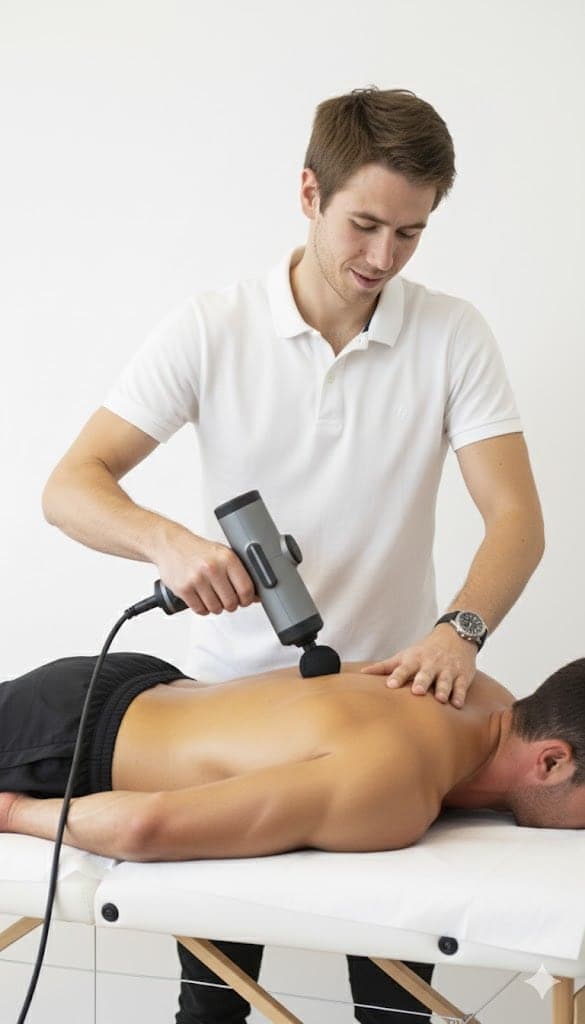
Written by
Chris
Massage therapist, nutrition and exercise physiologist
Norwegian-certified with a Bachelor’s in Physical Education and Nutrition and over ten years of clinical practice, working from a portable table in clients’ homes across the Paphos district.
This article is general information, not a medical diagnosis. If you have severe, worsening or unexplained pain, numbness, weakness, or pain after an accident, see a doctor first.