
Ergonomic assessments Kato Paphos: transform your posture with advanced body mechanics
In short
Discover how professional ergonomic assessments in Kato Paphos can durably correct your posture through advanced mechanical deep-tissue therapy and clinical expertise.
I still remember the moment everything changed in my approach to body mechanics. It was during my third year working with clients in Kato Paphos, when a software developer came to me with what appeared to be a simple case of “computer neck.” Traditional massage therapists had been working on him for months, focusing on symptom relief through relaxation techniques. But after conducting my comprehensive ergonomic assessment, I discovered something far more complex: a cascading pattern of muscular compensation that originated from his hip flexors and traveled through his entire kinetic chain.
This revelation reinforced what I had learned during my Bachelor’s degree in Physical Education and Nutrition in Norway – that true postural correction requires scientific precision, not just therapeutic touch. Over the past decade of practicing advanced mechanical deep-tissue therapy in Kato Paphos, I’ve witnessed countless individuals transform their lives through properly executed ergonomic assessments combined with targeted intervention strategies.
What sets my approach apart from conventional massage therapy is the integration of biomechanical analysis with cutting-edge precision technology. While traditional therapists address surface-level tension, my ergonomic assessments in Kato Paphos identify the root mechanical dysfunctions that create postural distortions. This isn’t about temporary relief – it’s about lasting structural optimization.
The difference is profound. When you understand the interconnected nature of human movement patterns and apply that knowledge through advanced mechanical intervention, you don’t just treat symptoms. You reconstruct the entire foundation of how your body functions in space. This is why my clients experience lasting transformation rather than temporary comfort.
The science behind ergonomic assessments and postural transformation
During my years of clinical practice in Kato Paphos, I’ve observed a fundamental misunderstanding about posture correction. Most people believe that poor posture is simply a matter of “remembering to sit up straight” or performing a few stretches. This misconception has led to an epidemic of chronic pain and progressive structural deterioration that could be entirely preventable.
The human body operates as an integrated mechanical system where every component affects every other component. When I conduct ergonomic assessments in Kato Paphos, I’m not just looking at where someone feels pain – I’m analyzing the entire kinetic chain to identify compensation patterns, muscular imbalances, and fascial restrictions that create postural distortions.
Consider the typical forward head posture that affects 85% of office workers. While most therapists focus on massaging the neck and shoulders, my assessment reveals that this condition often originates from shortened hip flexors, weakened deep neck flexors, and thoracic spine rigidity. The neck pain is merely the final expression of a complex mechanical dysfunction that began elsewhere in the body.
This is where my specialized approach becomes invaluable. Through precise biomechanical analysis, I can trace these compensation patterns back to their origin and address them with targeted mechanical intervention. My advanced deep-tissue system delivers pressure depths and consistency that human hands simply cannot achieve, allowing me to access and release restrictions at the fascial level where true change occurs.
The results speak for themselves. When you treat the mechanical cause rather than the symptomatic expression, transformation happens rapidly and durably. I’ve seen clients achieve in four sessions what traditional therapy couldn’t accomplish in four months, simply because we addressed the actual source of their postural dysfunction.
What makes this approach so effective is the combination of clinical knowledge and technological precision. My machine eliminates the variables that make traditional massage unreliable – practitioner fatigue, inconsistent pressure, and limited penetration depth. Every treatment delivers exactly the same level of precision, ensuring predictable and reproducible results.
Common postural dysfunctions identified in Kato Paphos assessments
Working with diverse populations in Kato Paphos over the past decade has revealed consistent patterns of postural dysfunction that transcend age, occupation, and lifestyle factors. These patterns reflect the modern human condition – prolonged sitting, repetitive movements, and sedentary lifestyles that systematically disrupt our natural biomechanical alignment.
The most prevalent dysfunction I encounter is anterior head carriage combined with rounded shoulder posture. This configuration places the cervical spine in chronic hyperextension while creating excessive thoracic kyphosis. The muscular adaptations are predictable: shortened suboccipital muscles, elongated and weakened deep cervical flexors, tight pectorals, and inhibited rhomboids and middle trapezius.
But here’s what conventional therapy misses – this postural distortion rarely exists in isolation. My ergonomic assessments consistently reveal associated pelvic anterior tilt, hip flexor restrictions, and compensatory lumbar hyperextension. The body has created an entire chain of adaptations to maintain visual horizon and functional stability despite the primary dysfunction.
Another epidemic pattern I’ve identified through my assessments in Kato Paphos is thoracolumbar junction syndrome. This occurs when prolonged sitting creates a rigid transition between the thoracic and lumbar spine, forcing compensatory hypermobility in adjacent segments. Clients present with lower back pain, but the actual problem lies in the restricted thoracolumbar fascia and associated muscle guarding patterns.
Professional athletes present with sport-specific adaptations that create unique postural challenges. Tennis players develop asymmetrical shoulder girdle positioning, runners exhibit characteristic hip flexor dominance patterns, and swimmers show excessive thoracic extension with associated cervical compensation. Each requires a precisely tailored approach based on comprehensive movement analysis.
What makes my assessment methodology superior is the integration of static postural analysis with dynamic movement screening. I don’t just observe how you stand – I analyze how you move, where restrictions occur, and how compensatory patterns develop under load. This three-dimensional understanding allows me to design intervention strategies that address your specific mechanical dysfunctions rather than applying generic protocols.
The technology component is crucial here. My advanced mechanical system can target specific layers of tissue with unprecedented precision, allowing me to address restrictions that manual techniques cannot reach. When you combine accurate assessment with precise intervention, the results are transformational rather than merely therapeutic.
Advanced mechanical intervention: beyond traditional massage
Let me be absolutely clear about something that sets my practice apart from every other therapeutic approach in Kato Paphos: what I provide is not massage. Massage implies relaxation, temporary relief, and symptom management. What I deliver is mechanical intervention designed to durably restructure dysfunctional movement patterns and optimize biomechanical efficiency.
This distinction became crystal clear to me early in my career when a professional cyclist came to me after eighteen months of weekly massage sessions. Despite consistent treatment, his performance was declining, and his hip flexor restrictions were actually worsening. Within three sessions using my advanced mechanical approach, we achieved complete resolution of his movement dysfunction and dramatic performance improvements.
The difference lies in precision, depth, and consistency. My specialized machine delivers pressure that penetrates to the fascial level where true restrictions exist. While manual techniques can apply approximately 15-20 pounds of pressure for brief periods, my system maintains 40-60 pounds of precisely controlled force for extended durations. This depth is necessary to access and release the deep fascial restrictions that create lasting postural change.
Consistency is equally critical. Every session delivers identical precision regardless of my energy level, mood, or physical condition. This eliminates the variables that make traditional massage unreliable and ensures that every treatment builds progressively toward your optimization goals. There are no “off days” in mechanical precision.
The control aspect is revolutionary. I can adjust intensity in real-time based on your tissue response, gradually increasing depth as restrictions release and tolerance improves. This allows me to achieve tissue changes that would be impossible with static manual pressure, while maintaining complete comfort and control throughout the process.
But technology alone isn’t sufficient. The integration of clinical knowledge with mechanical precision is what creates transformational results. I use my decade of experience and educational background to identify exactly where intervention is needed, then apply precisely the right amount of force to the correct anatomical structures to achieve the desired mechanical change.
This approach treats the cause, not the symptoms. When we durably alter the fascial restrictions and muscular imbalances that create postural dysfunction, the body naturally returns to optimal alignment. Pain disappears because we’ve eliminated its mechanical source, not because we’ve temporarily interrupted pain signals.
The comprehensive ergonomic assessment process
My ergonomic assessment methodology in Kato Paphos represents the culmination of ten years of clinical refinement and continuous education in advanced body mechanics. This isn’t a fifteen-minute postural screening – it’s a comprehensive biomechanical analysis that forms the foundation for lasting postural transformation.
The process begins with detailed history taking that goes far beyond symptom reporting. I need to understand your occupational demands, recreational activities, previous injuries, and lifestyle patterns that contribute to your current mechanical state. This contextual information allows me to predict compensation patterns and identify potential sources of dysfunction that might not be immediately apparent.
Static postural analysis follows, utilizing precise anatomical landmarks and measurement protocols to quantify deviations from optimal alignment. I document head position relative to the shoulders, shoulder height symmetry, pelvic positioning, and lower extremity alignment. These measurements provide objective baselines for tracking improvement and ensuring accountability in our intervention process.
Dynamic movement screening reveals how your postural dysfunctions manifest during functional activities. I observe your movement quality during specific tasks that replicate your occupational demands and recreational activities. This identifies where restrictions create compensatory patterns and helps prioritize intervention strategies based on functional impact.
Palpatory assessment using controlled pressure applications identifies specific tissue restrictions, trigger point formations, and areas of excessive tension or guarding. My trained hands can detect subtle changes in tissue quality that indicate chronic dysfunction and guide the precise application of mechanical intervention.
Range of motion testing quantifies the functional limitations created by your postural adaptations. These measurements provide objective targets for improvement and allow us to track progress with scientific precision rather than relying on subjective reports.
The integration of all these findings creates a comprehensive understanding of your unique mechanical dysfunction pattern. This allows me to design a precisely targeted intervention strategy that addresses your specific needs rather than applying generic protocols. Every session is customized based on your assessment findings and progress toward optimization goals.
What makes this process superior to conventional approaches is the depth of analysis combined with the precision of intervention. When you understand exactly what’s wrong and have the tools to fix it durably, transformation becomes predictable rather than hopeful.
Workplace ergonomics and postural optimization strategies
The modern workplace has created an epidemic of postural dysfunction that requires sophisticated intervention strategies beyond simple ergonomic furniture adjustments. During my years of practice in Kato Paphos, I’ve worked with executives, professionals, and office workers who discovered that changing their chair or monitor height provided minimal benefit because their underlying mechanical restrictions remained unaddressed.
I recall working with a financial advisor who had invested thousands of euros in ergonomic equipment yet continued experiencing progressive neck pain and headaches. His workstation setup was textbook perfect, but his assessment revealed severe thoracic spine rigidity and shortened hip flexors that prevented him from maintaining proper positioning regardless of his equipment. No amount of ergonomic adjustment could compensate for his mechanical limitations.
This case illustrates a fundamental principle: environmental optimization is meaningless without biomechanical optimization. Your body must be mechanically capable of assuming and maintaining proper positioning before ergonomic interventions can be effective. This is why my approach begins with comprehensive postural correction through advanced mechanical intervention.
Once we’ve addressed your underlying mechanical restrictions, workplace strategies become highly effective. But these strategies must be based on your specific occupational demands and the mechanical changes we’ve achieved through targeted intervention. Generic ergonomic advice is inadequate for individuals with complex postural adaptations.
For computer users, the critical factors are monitor positioning that maintains neutral cervical alignment, keyboard placement that prevents shoulder elevation, and seating that supports the natural lumbar curve without creating hip flexor shortening. But achieving these positions requires sufficient thoracic extension mobility, adequate hip flexor length, and proper scapular stabilization – all of which must be developed through mechanical intervention.
Movement integration throughout the workday becomes essential once proper mechanics are established. I design specific movement sequences that counteract the accumulated effects of prolonged positioning and reinforce the postural improvements we’ve achieved through treatment. These aren’t generic stretches – they’re precisely targeted interventions based on your specific mechanical needs.
The key insight is that successful workplace ergonomics requires the integration of environmental optimization with biomechanical optimization. When both components are addressed through scientific precision, the results are dramatic and sustainable rather than temporary and frustrating.
Sports performance enhancement through postural correction
Athletic performance is fundamentally limited by biomechanical efficiency, and biomechanical efficiency is directly determined by postural alignment. This principle became evident early in my career when I began working with competitive athletes in Kato Paphos who had reached performance plateaus despite optimal training protocols and advanced coaching.
The breakthrough case involved a professional tennis player whose serve velocity had declined progressively over two seasons. Conventional sports medicine approaches focused on strength training and technique modification, but my assessment revealed significant thoracic spine restrictions that prevented optimal kinetic chain sequencing during the serving motion.
Through targeted mechanical intervention to restore thoracic extension mobility and correct associated shoulder girdle positioning, we achieved a 12% increase in serve velocity within four weeks. More importantly, the improvement was sustained because we had addressed the mechanical limitation that was constraining his performance capacity.
This experience reinforced my understanding that athletic performance optimization requires precise identification and correction of movement restrictions rather than general strength and conditioning approaches. The human body operates as an integrated kinetic chain where restrictions in any segment compromise the entire system’s efficiency.
Runners frequently present with chronic injuries that result from compensatory movement patterns created by postural dysfunction. Hip flexor restrictions create altered stride mechanics, thoracic rigidity limits respiratory efficiency, and forward head posture disrupts balance and coordination. Addressing these mechanical limitations through advanced intervention often eliminates injury patterns and improves performance simultaneously.
Swimmers demonstrate unique postural adaptations that can either enhance or limit their performance depending on how they’re managed. Excessive thoracic extension can improve stroke mechanics if properly integrated, but creates cervical compensation if left unaddressed. My assessment identifies these sport-specific adaptations and optimizes them for peak performance rather than treating them as problems to eliminate.
The precision of my mechanical intervention system is particularly valuable for athletes because it allows targeted correction of specific movement restrictions without affecting beneficial adaptations. This surgical precision in treatment application enables performance enhancement while maintaining sport-specific advantages.
The results are measurable and immediate. When mechanical restrictions are eliminated, power generation improves, movement efficiency increases, and injury risk decreases simultaneously. This is performance optimization at the most fundamental level.
Technology integration: precision mechanical intervention systems
The limitation of human hands in delivering therapeutic intervention became apparent to me during my early years of practice when I observed inconsistent results despite identical treatment protocols. The variables were obvious: practitioner fatigue, subjective pressure application, and limited penetration depth created unpredictable outcomes that frustrated both clients and practitioners.
This realization led me to investigate advanced mechanical systems that could eliminate these variables and deliver precise, consistent intervention. What I discovered revolutionized my practice and dramatically improved client outcomes through the integration of technology with clinical expertise.
My specialized mechanical system delivers three critical advantages that human hands cannot replicate: precision, power, and consistency. Precision refers to the ability to target specific anatomical structures with exact pressure applications and maintain that targeting throughout extended treatment periods. Power indicates the depth of penetration possible through sustained high-pressure delivery that accesses fascial restrictions at their source. Consistency ensures that every treatment session delivers identical intervention regardless of external variables.
The pressure specifications are remarkable. While skilled manual therapists can apply approximately 15-20 pounds of force for brief periods, my system maintains 40-60 pounds of precisely controlled pressure for extended durations. This depth is necessary to reach the fascial layers where chronic restrictions exist and create the mechanical changes required for lasting postural correction.
But raw power without control would be counterproductive. The system allows real-time pressure modulation based on tissue response and client tolerance, gradually increasing intensity as restrictions release and adaptation occurs. This progressive loading principle ensures comfort while maximizing therapeutic effect.
The consistency component eliminates treatment variability that makes traditional approaches unpredictable. Every session builds systematically toward optimization goals because the intervention parameters remain identical regardless of practitioner condition or environmental factors. This reliability is essential for achieving predictable transformation rather than hoping for favorable outcomes.
Integration with clinical assessment creates a powerful combination of diagnostic precision and intervention effectiveness. I use my decade of experience to identify exactly where mechanical intervention is needed, then apply the precise force required to achieve the desired tissue changes. This marriage of knowledge and technology produces results that neither component could achieve independently.
The outcome is transformational rather than therapeutic. When mechanical restrictions are durably eliminated through precise intervention, postural dysfunction resolves at its source rather than being temporarily managed through symptom relief.
Mobile service advantages: professional treatment in your environment
The decision to provide mobile ergonomic assessments and mechanical intervention services in Kato Paphos wasn’t simply about convenience – it was based on the recognition that environmental factors significantly impact treatment effectiveness and client compliance with optimization protocols.
Traditional clinic settings create artificial constraints that can interfere with accurate assessment and limit treatment outcomes. When I travel to your location with my professional equipment, I can evaluate your actual working environment, sleeping setup, and daily movement patterns within their natural context. This environmental assessment provides crucial information that cannot be obtained in a clinical setting.
I arrive with everything necessary to deliver the same level of precision and professionalism that you would experience in the most advanced clinical facility. My portable mechanical intervention system, professional treatment bench, and assessment tools create a complete therapeutic environment wherever you are most comfortable receiving treatment.
The psychological advantages are substantial. Many clients experience reduced anxiety and improved treatment tolerance when receiving intervention in their familiar environment rather than an unfamiliar clinical setting. This comfort factor allows deeper relaxation and more effective tissue response during mechanical intervention sessions.
Privacy considerations are equally important. Postural assessment and mechanical intervention require clothing removal and positioning that some individuals find uncomfortable in public settings. Your private environment ensures complete discretion and allows focus on treatment goals without external concerns.
Scheduling efficiency becomes dramatically improved when travel time is eliminated from your equation. Sessions can be integrated seamlessly into your daily routine without the disruption of commuting to and from clinical appointments. This convenience factor significantly improves compliance with treatment protocols and accelerates progress toward optimization goals.
The ability to provide immediate workplace ergonomic consultation as part of the assessment process creates additional value that cannot be replicated in clinic settings. I can evaluate your actual workstation setup, identify specific mechanical stressors, and provide targeted recommendations based on direct observation rather than theoretical assumptions.
Follow-up sessions benefit enormously from environmental consistency. The same lighting, temperature, and comfort factors that contributed to successful initial treatments remain constant throughout your optimization process. This consistency supports the neurological adaptations required for lasting postural change.
Long-term investment versus short-term expense thinking
The fundamental difference between my approach and conventional massage therapy lies in the distinction between investment and expense thinking. Traditional massage provides temporary symptom relief that requires ongoing maintenance sessions, creating an endless cycle of dependency without addressing underlying mechanical dysfunction. My advanced mechanical intervention targets the source of postural problems to create lasting resolution that eliminates the need for continuous treatment.
This investment perspective became clear to me when working with a corporate executive who had spent over €3,000 annually on weekly massage sessions for five years without achieving lasting improvement in his chronic neck pain. After completing my comprehensive assessment and targeted intervention protocol, his pain was durably eliminated, his posture was optimally aligned, and his need for ongoing treatment was eliminated.
The mathematics are compelling. When you calculate the cumulative cost of ongoing symptom management over years or decades, the investment in lasting resolution becomes financially logical as well as medically superior. My clients typically achieve complete optimization within 4-8 sessions, then maintain their improvements through occasional tune-up appointments rather than weekly dependency.
But the true value extends far beyond direct treatment costs. Improved posture enhances professional presence and confidence, reduces fatigue and increases productivity, relieves pain-related limitations on activities, and prevents progressive structural deterioration that could require expensive medical interventions later in life.
Performance enhancement represents another dimension of investment value. Athletes who optimize their biomechanical efficiency through postural correction often achieve breakthrough performance improvements that translate directly into competitive advantages and career advancement opportunities. Business professionals report increased energy levels, improved focus, and enhanced physical presence that contributes to career success.
Quality of life improvements are immeasurable but profound. When chronic pain is durably eliminated and optimal function is restored, individuals rediscover activities they had abandoned, sleep improves dramatically, and overall life satisfaction increases substantially. These benefits compound over years and decades, creating value that far exceeds any initial investment consideration.
The prevention aspect is equally important. Proper postural alignment prevents the progressive joint degeneration, disc deterioration, and muscular imbalances that commonly lead to expensive surgical interventions and prolonged rehabilitation periods. Investing in optimization now prevents costly medical problems later.
This investment perspective requires thinking beyond immediate symptom relief toward long-term optimization and peak function. When you understand that lasting resolution is possible through scientific precision, temporary measures become obviously inadequate.
Client success stories and transformation results
The most compelling evidence for the effectiveness of comprehensive ergonomic assessment and advanced mechanical intervention comes from the documented transformations of clients who had exhausted conventional treatment options without achieving lasting results. These cases demonstrate the profound impact of addressing mechanical dysfunction at its source rather than managing symptoms.
One particularly memorable case involved a software engineer who had developed severe thoracic outlet syndrome that was progressively interfering with her ability to work effectively. Numbness and tingling in her hands made typing painful and unreliable, despite ergonomic workstation modifications and months of physical therapy focused on strengthening exercises.
My assessment revealed the true source of her symptoms: severe first rib elevation and scalene muscle restrictions that were compressing the neurovascular bundle serving her upper extremities. The physical therapy approaches had been addressing secondary compensations rather than the primary mechanical dysfunction creating her symptoms.
Through precise mechanical intervention targeting the restricted fascial planes and muscle tension patterns, we achieved complete resolution of her neurological symptoms within three sessions. Six months later, she remains symptom-free and has returned to full productivity without limitations or ongoing treatment requirements.
A competitive cyclist presented with chronic lower back pain that had limited his training intensity for two seasons. Multiple practitioners had focused on his lumbar spine, providing temporary relief through various manual techniques and exercise prescriptions. However, my assessment identified severe hip flexor restrictions and thoracolumbar fascial adhesions that were creating compensatory lumbar hyperextension during cycling positions.
The transformation was dramatic. After addressing the actual mechanical limitations through targeted intervention, his power output increased by 8%, his endurance improved significantly, and his back pain disappeared completely. More importantly, these improvements were sustained through an entire competitive season without requiring ongoing treatment.
A corporate manager who had suffered from chronic headaches and neck tension for over a decade experienced a marked reduction of symptoms after we corrected his forward head posture and associated cervical spine dysfunction. His productivity increased noticeably due to improved concentration and energy levels, and his professional confidence improved dramatically due to enhanced physical presence.
These results are typical rather than exceptional when mechanical dysfunction is accurately identified and precisely corrected. The combination of comprehensive assessment with advanced intervention technology creates predictable transformation rather than hopeful improvement.
The common thread in all successful cases is the focus on lasting correction of underlying mechanical problems rather than temporary management of symptomatic expressions. When you treat the cause with sufficient precision and depth, lasting resolution becomes the expected outcome rather than an optimistic goal.
Frequently asked questions about ergonomic assessments in Kato Paphos
How does your ergonomic assessment differ from standard postural evaluations?
My ergonomic assessments in Kato Paphos integrate comprehensive biomechanical analysis with advanced mechanical intervention capabilities, creating a complete diagnostic and treatment system rather than simple observational evaluation. While standard postural evaluations typically involve basic visual assessment and generic exercise recommendations, my methodology includes detailed movement screening, fascial restriction identification, and quantified range of motion testing that guides precise intervention strategies. The assessment is directly linked to advanced mechanical treatment capabilities that can address the identified dysfunctions immediately and durably. This integration of assessment and intervention eliminates the common disconnect between diagnosis and effective treatment that characterizes conventional approaches. My ten years of clinical experience and educational background in physical education and nutrition ensure that every assessment component contributes directly to optimization outcomes rather than simply documenting problems without providing effective solutions.
What makes your mechanical intervention system superior to manual massage techniques?
My advanced mechanical system delivers three critical advantages that human hands cannot replicate: precision targeting of specific anatomical structures, consistent pressure delivery of 40-60 pounds maintained for extended periods, and elimination of practitioner variability that makes traditional massage unpredictable. Manual techniques are limited by practitioner strength, endurance, and subjective pressure application, creating inconsistent results despite identical protocols. My system maintains exact pressure specifications throughout each session, ensuring that every treatment builds systematically toward optimization goals. The depth of penetration achievable through mechanical precision allows access to fascial restrictions and deep muscle tensions that manual techniques cannot effectively address. Additionally, the real-time pressure modulation capabilities enable progressive tissue loading that maximizes therapeutic effect while maintaining complete comfort and control. This technology integration with clinical expertise creates predictable transformation rather than hopeful symptom management that characterizes conventional massage approaches.
How many sessions are typically required to achieve lasting postural correction?
Most clients achieve significant postural improvement within 2-3 sessions and complete optimization within 4-8 sessions, depending on the complexity and chronicity of their mechanical dysfunction patterns. This timeline is dramatically shorter than conventional approaches because my method addresses the actual source of postural problems rather than managing symptomatic expressions. Simple postural adaptations related to occupational positioning often resolve within 2-4 sessions, while complex compensation patterns involving multiple body segments may require 6-8 sessions for complete correction. Athletes and individuals with sport-specific adaptations typically need 4-6 sessions to optimize their biomechanical efficiency for peak performance. The key factor determining session requirements is not the severity of symptoms but the complexity of underlying mechanical restrictions and the duration of compensatory adaptations. Once optimal alignment is achieved through mechanical intervention, maintenance requirements are minimal because we’ve corrected the source dysfunction rather than temporarily managing its effects. This represents a fundamental advantage over ongoing massage therapy that requires weekly sessions indefinitely without achieving lasting resolution.
Can ergonomic assessments help with chronic pain conditions that haven’t responded to other treatments?
Chronic pain conditions that haven’t responded to conventional treatments often involve mechanical dysfunction patterns that standard approaches fail to identify or address effectively. My comprehensive assessment methodology frequently reveals the true source of chronic pain in fascial restrictions, compensation patterns, and biomechanical dysfunctions that create ongoing tissue stress and inflammation. Many clients who consult me have exhausted medical interventions, physical therapy protocols, and massage treatments without achieving lasting relief because these approaches focused on symptom management rather than mechanical correction. The precision of my assessment process combined with the depth of intervention possible through advanced mechanical technology allows resolution of chronic conditions that manual techniques cannot effectively address. Success with chronic conditions depends on accurate identification of the mechanical dysfunction creating the pain pattern and sufficient intervention precision to durably correct the underlying problem. When both components are present, chronic pain resolution becomes predictable rather than hopeful, regardless of how long symptoms have persisted or how many previous treatments have been unsuccessful.
What should I expect during my first ergonomic assessment appointment?
Your initial appointment begins with comprehensive history taking that explores your occupational demands, recreational activities, injury history, and current symptom patterns to understand the context of your mechanical dysfunction. This is followed by detailed static postural analysis using precise anatomical landmarks to quantify deviations from optimal alignment and establish baseline measurements for tracking improvement. Dynamic movement screening reveals how your postural adaptations affect functional activities and identifies specific restrictions that create compensatory patterns during daily tasks. Palpatory assessment identifies tissue restrictions, trigger points, and areas of excessive tension that guide intervention targeting, while range of motion testing quantifies functional limitations created by your mechanical dysfunction. The entire assessment process typically requires 60-90 minutes and concludes with explanation of findings, discussion of intervention strategies, and initiation of targeted mechanical treatment based on your specific needs. I bring all professional equipment to your location, creating a complete clinical environment that ensures the same precision and thoroughness available in advanced treatment facilities. The assessment provides complete understanding of your mechanical dysfunction patterns and establishes clear goals for optimization rather than simple symptom management.
How do you ensure consistent results across different treatment sessions?
Consistent results are what I aim for through the elimination of human variables that make traditional massage unreliable and unpredictable in its outcomes. My advanced mechanical system delivers identical pressure specifications, penetration depths, and treatment durations every session regardless of my physical condition, energy level, or external factors that affect manual practitioners. The system maintains precise pressure calibrations between 40-60 pounds with real-time monitoring that ensures exact consistency throughout each treatment session and across multiple appointments. Detailed treatment protocols based on your specific assessment findings guide intervention targeting and session progression, eliminating guesswork and subjective treatment decisions that create variability. Progress tracking through objective measurements and functional assessments ensures that each session builds systematically toward optimization goals rather than providing random therapeutic effects. The technology integration with clinical expertise creates a systematic approach where every treatment component contributes predictably to your overall improvement rather than hoping for favorable outcomes. This consistency allows guarantee of results because the intervention precision is sufficient to create mechanical changes that produce lasting postural correction rather than temporary symptom relief.
What are the long-term benefits of investing in proper postural correction?
The long-term benefits of proper postural correction extend far beyond pain elimination to include enhanced professional presence, increased energy and productivity, improved athletic performance, and prevention of progressive joint degeneration that commonly requires expensive medical interventions later in life. Optimal postural alignment reduces energy expenditure during daily activities, allowing increased vitality and endurance for both professional and recreational pursuits. Career advantages include improved confidence and physical presence that contribute to professional success, while athletic benefits include enhanced power generation, movement efficiency, and injury prevention that extends competitive longevity. Health benefits include prevention of disc deterioration, joint degeneration, and muscular imbalances that commonly lead to surgical interventions and prolonged rehabilitation periods as aging occurs. Quality of life improvements are profound and cumulative, including better sleep quality, increased activity tolerance, and elimination of movement limitations that restrict lifestyle choices. The financial benefits are substantial when considering the prevention of ongoing medical costs and the elimination of dependency on continuous symptomatic treatment that never addresses underlying problems. Proper postural correction represents a lasting investment in optimal function that provides compounding returns over decades rather than an expense that requires continuous repetition without achieving lasting improvement.
Why do you travel to clients instead of operating from a fixed clinic location?
Mobile service delivery provides significant advantages for both assessment accuracy and treatment effectiveness that cannot be replicated in traditional clinic settings. Conducting ergonomic assessments in your actual working and living environment allows evaluation of real-world factors that contribute to postural dysfunction, including workstation setup, sleeping arrangements, and daily movement patterns that would be impossible to assess accurately in an artificial clinical environment. Environmental familiarity reduces client anxiety and improves treatment tolerance, allowing deeper relaxation and more effective tissue response during mechanical intervention sessions. Privacy considerations are crucial for comprehensive postural assessment and mechanical intervention that requires clothing removal and positioning that some individuals find uncomfortable in public clinical settings. The elimination of travel time from your schedule dramatically improves convenience and compliance with treatment protocols, accelerating progress toward optimization goals through consistent appointment attendance. Professional equipment portability ensures that you receive identical precision and effectiveness available in the most advanced clinical facilities while benefiting from the comfort and convenience of your preferred environment. This service model reflects my commitment to removing barriers that might prevent you from achieving optimal postural correction and maintaining the improvements through convenient follow-up care when needed.
Evidence and limits
Massage may help with some symptoms, but benefits and evidence vary by condition. It does not replace medical assessment or treatment. A page update is not evidence of an independent clinical review.
Further reading: Massage therapy: evidence, safety and limitations by US National Center for Complementary and Integrative Health. This is general background reading, not verification of every claim in this article.
How we describe evidence and updates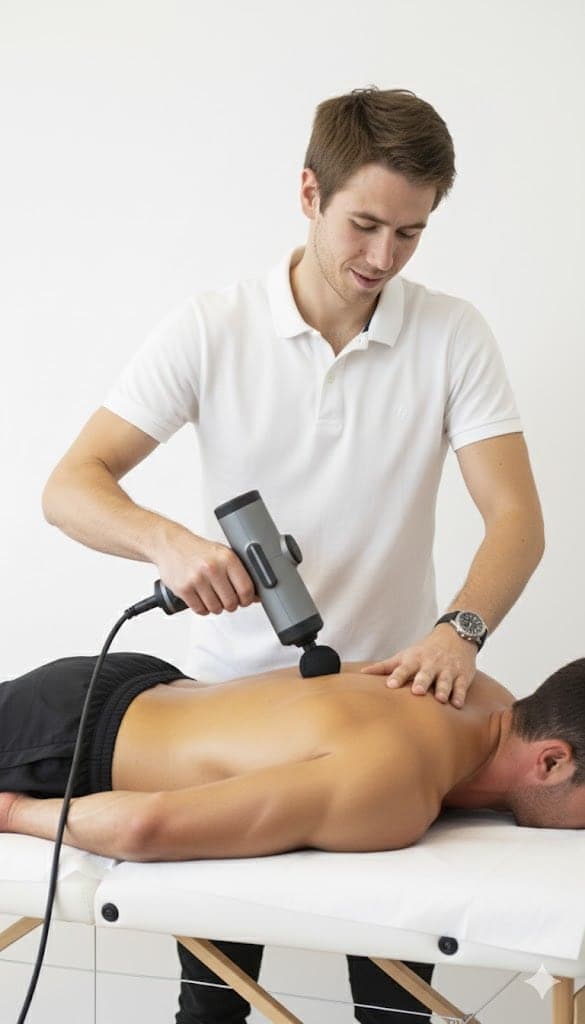
Written by
Chris
Massage therapist, nutrition and exercise physiologist
Norwegian-certified with a Bachelor’s in Physical Education and Nutrition and over ten years of clinical practice, working from a portable table in clients’ homes across the Paphos district.
This article is general information, not a medical diagnosis. If you have severe, worsening or unexplained pain, numbness, weakness, or pain after an accident, see a doctor first.