
Effective Massage Techniques: A Decade of Clinical Results in Advanced Mechanical Bodywork
In short
Discover why effective massage techniques require precision, power, and consistency—not just good intentions. Learn from 10 years of clinical experience what actually delivers lasting pain relief.
This guide has been merged into Effective Massage Techniques: A Decade of Results-Driven Mechanical Deep-Tissue Therapy — the fuller version lives there.
After a decade of treating chronic pain and movement dysfunction, I’ve learned something most massage therapists won’t tell you: the effectiveness of your treatment has remarkably little to do with the therapist’s strength or intention, and everything to do with precision, depth, and mechanical consistency. This isn’t a popular opinion in an industry built on the mythology of “healing hands,” but it’s what the clinical outcomes consistently demonstrate.
I remember treating a competitive cyclist three years ago who had spent over a substantial sum on various massage therapies for persistent IT band syndrome. Skilled therapists, excellent reputations, yet zero lasting improvement. Within two sessions using advanced mechanical deep-tissue techniques, we achieved what eighteen months of traditional massage could not: complete restoration of lateral leg mechanics and relief from pain during performance. That wasn’t luck. That was methodology.
With my background in Physical Education and Nutrition from a Norwegian university and ten years of specialized practice, I’ve built my entire approach around a single principle: effective massage techniques must treat the cause at the mechanical level, not massage the symptoms at the surface level. This distinction separates therapeutic intervention from temporary relief.
The Fundamental Problem with Traditional Massage Approaches
Most people seeking massage therapy make a critical error: they assume all massage is essentially the same, differing only in pressure intensity or the therapist’s personal touch. This misconception costs them years of unnecessary pain and thousands in wasted treatment expenses.
Traditional manual massage operates within severe mechanical limitations. Even the strongest therapist experiences fatigue. Pressure consistency varies not just between sessions, but within a single treatment. The human hand, while remarkably adaptable, cannot maintain concentrated force at the precise depth required to release chronic fascial adhesions without causing surface tissue damage or therapist strain.
I’m not criticizing intention here. Most massage therapists genuinely want to help their clients. But intention without mechanical capability produces inconsistent results, and inconsistency is the enemy of clinical outcomes.
The Three Critical Elements Missing from Conventional Techniques
Through analyzing hundreds of client cases where traditional massage failed to deliver results, I’ve identified three essential components that standard approaches consistently lack:
- Insufficient Penetration Depth: Most chronic pain originates from fascial restrictions several tissue layers deep. Manual techniques typically address only superficial and intermediate layers, never reaching the mechanical dysfunction’s actual location.
- Variable Pressure Application: Human inconsistency means session quality depends on the therapist’s energy level, previous appointments, and physical condition that day. Your treatment effectiveness shouldn’t be subject to whether your therapist had adequate sleep.
- Inadequate Treatment Duration at Optimal Depth: Releasing chronic fascial adhesions requires sustained, precise pressure at the correct tissue depth. Manual fatigue limits how long a therapist can maintain this, forcing them to alternate between effective and ineffective pressure ranges.
What Makes Massage Techniques Genuinely Effective: The Mechanical Imperative
Effective massage techniques require three non-negotiable elements: precision, power, and consistency. These aren’t abstract concepts—they’re measurable mechanical properties that determine whether treatment produces lasting structural change or merely temporary symptomatic relief.
After years of studying biomechanics and treating complex movement dysfunctions, I transitioned entirely to advanced mechanical deep-tissue methodology. Not because technology is inherently superior to human touch, but because the mechanical requirements for effective treatment exceed human physical capabilities.
Precision: Targeting the Mechanical Origin
Pain rarely originates where you feel it. The burning sensation in your shoulder blade? Often caused by fascial restriction at the thoracic-cervical junction or aberrant scapular mechanics created by anterior shoulder tightness. Effective treatment requires identifying and addressing the mechanical cause, not massaging the symptomatic area.
I worked with a software developer who had undergone months of neck massage for persistent headaches. Every therapist worked the symptomatic neck muscles. None examined his thoracic mobility or the forward head posture creating the mechanical cascade. We addressed the structural foundation—specifically, releasing the deep cervical flexors and restoring thoracic extension—and the headaches disappeared durably. That’s precision.
Precision means understanding kinetic chains, compensation patterns, and how dysfunction in one region creates symptomatic manifestation in another. It requires clinical assessment before treatment begins, not simply asking “where does it hurt?”
Power: Accessing Deep Fascial Layers
The fascia creating your chronic restrictions isn’t located in superficial tissue layers. It’s deep, often several centimeters below the skin surface, surrounded by muscle tissue that must be worked through to reach the mechanical problem.
Manual massage simply cannot generate the sustained force necessary to access these layers without causing surface tissue damage. The therapist must either use insufficient pressure (providing temporary relaxation but no structural change) or risk tissue injury by forcing through resistance.
My specialized mechanical approach generates precisely calibrated force that penetrates to the required depth while protecting superficial structures. This isn’t about working harder; it’s about working deeper with surgical precision. The machine I use delivers consistent power that human hands physically cannot replicate, session after session, without variability.
Consistency: The Foundation of Clinical Reliability
Here’s what separates effective massage techniques from feel-good sessions: consistency produces cumulative results. Each treatment must build on the previous session’s gains, progressively restoring optimal tissue mechanics.
Traditional massage cannot guarantee this. Your therapist might be excellent, but humans have off days. Physical fatigue, mental distraction, variations in technique application—these variables ensure that session quality fluctuates. You’re essentially gambling that today’s treatment will match last week’s effectiveness.
I eliminated this variable entirely through mechanical methodology. The intensity, depth, angle, and duration of pressure remain absolutely consistent. Every session delivers identical mechanical input, which means your tissue response becomes predictable. We know exactly what to expect, and we can measure progress objectively rather than relying on subjective feeling.
Advanced Mechanical Deep-Tissue Methodology: How It Works
Let me explain exactly what happens during an effective mechanical deep-tissue session, because understanding the mechanism helps explain why this approach produces superior outcomes.
| Treatment Phase | Mechanical Action | Physiological Response |
|---|---|---|
| Initial Assessment | Movement analysis and palpation to identify restriction patterns | Localization of primary mechanical dysfunction and compensation patterns |
| Superficial Release | Progressive warming and preparation of surface tissue layers | Increased local circulation and tissue pliability |
| Deep Layer Access | Controlled, sustained pressure at target fascial depth | Mechanical breakdown of chronic fascial adhesions |
| Pattern Correction | Specific work along kinetic chain dysfunction | Restoration of optimal tissue mechanics and movement patterns |
| Integration | Movement guidance and mechanical reinforcement | Neuromuscular repatterning for lasting change |
This isn’t a relaxation massage. This is mechanical intervention designed to durably alter tissue structure and movement patterns. The specialized machine I use allows precise control over every variable: penetration depth, pressure intensity, contact surface area, and treatment duration at optimal depth.
The Technology Behind Consistent Results
I travel to my clients’ locations with a professional treatment bench and the mechanical equipment that makes this methodology possible. The machine delivers what I call “surgical precision in soft tissue work”—the ability to maintain exact pressure at exact depth for exactly as long as the tissue requires.
For an athlete requiring aggressive fascial release, we can sustain powerful, deep pressure that would be physically impossible for manual application. For someone with acute sensitivity, we apply light but consistent force that gradually accesses deeper layers without triggering protective muscle guarding. The intensity is precisely calibrated to your needs and adjusted in real-time based on tissue response.
This eliminates the most common failure mode in massage therapy: inconsistent pressure application that alternates between too superficial and uncomfortably deep, never maintaining optimal therapeutic range long enough to produce structural change.
Why Most Massage Approaches Fail: Treating Symptoms Instead of Causes
I’ve treated hundreds of clients who spent years in the massage therapy cycle: temporary relief followed by symptom return, leading to another appointment, then another. This isn’t a treatment failure—it’s a business model built on recurring appointments rather than lasting resolution.
Most massage therapists work symptomatically because they lack the mechanical tools and biomechanical training to identify and treat actual causes. A client complains of low back pain, so they massage the low back. The pain improves temporarily because you’ve reduced muscle tension and increased local circulation. But if the mechanical cause was anterior pelvic tilt from hip flexor restriction, the symptom returns within days because nothing actually changed at the structural level.
Real Case Study: From Chronic Pain to Performance Optimization
Let me share a detailed example that illustrates the difference between symptomatic and causal treatment. A client came to me after two years of weekly massage for persistent shoulder pain. She had excellent therapists, received consistent treatment, yet experienced only temporary relief lasting 2-3 days after each session.
My assessment revealed the actual problem: severe restriction in her serratus anterior and subscapularis, creating aberrant scapular mechanics. Every time she reached overhead, her scapula couldn’t properly upwardly rotate, forcing compensation through her upper trapezius and levator scapulae. Her previous therapists had been massaging these compensating muscles—the symptom location—while never addressing the mechanical cause.
We spent three sessions releasing the deep rotator cuff restrictions and restoring proper scapular mechanics. The work was uncomfortable because we were accessing tissue layers that had never been properly treated. But after three weeks, her pain was completely gone. More importantly, we had restored normal movement patterns, which meant the pain wouldn’t return unless she developed new mechanical dysfunction.
That was four years ago. She hasn’t needed massage for shoulder pain since, because we treated the cause, not the symptom. That’s the difference between effective massage techniques and recurring appointments.
Effective Massage Techniques for Specific Conditions
Different mechanical dysfunctions require different technical approaches. Effective treatment means matching methodology to pathology, not applying the same technique to every problem.
Chronic Neck and Shoulder Tension
This is rarely about your neck and shoulders. In most cases, I find the mechanical cause involves thoracic rigidity, forward head posture, and restricted deep cervical flexors. The painful upper trapezius and levator scapulae are compensation for lost movement capacity elsewhere.
Effective treatment requires releasing the anterior cervical structures, restoring thoracic extension, and correcting scapular positioning. This takes 4-6 sessions of progressive deep tissue work, not weekly relaxation massage. Once we restore the mechanical foundation, the chronic tension disappears because the muscles no longer need to compensate.
Low Back Pain and Hip Dysfunction
Most low back pain stems from hip mobility restrictions—specifically, tight hip flexors creating anterior pelvic tilt and psoas dysfunction limiting hip extension. Your back muscles are working overtime to stabilize a mechanically compromised position.
I focus treatment on releasing the iliopsoas complex, rectus femoris, and deep hip rotators. This requires sustained pressure at significant depth because these structures are protected by multiple tissue layers. Manual massage rarely achieves the necessary penetration. Mechanical deep-tissue methodology accesses these structures effectively, restoring hip mobility and eliminating the mechanical stress on the lumbar spine.
Performance Optimization for Athletes
Athletes don’t just want pain relief—they want performance enhancement. This requires identifying movement restrictions before they become symptomatic and optimizing tissue mechanics for sport-specific demands.
I work with runners to restore proper ankle dorsiflexion and hip extension. I help climbers maintain optimal shoulder mechanics under extreme range demands. I assist cyclists in achieving perfect hip flexion without lumbar compensation. This isn’t injury treatment; it’s mechanical optimization that prevents injury and improves performance.
The mechanical consistency of my approach is crucial here. Athletes need reliable results because training cycles don’t accommodate unpredictable treatment outcomes. Every session must deliver measurable improvement in specific movement patterns.
The Investment Model: Why Effective Treatment Costs More Initially But Less Long-Term
Let me be direct about the economics of effective massage techniques versus traditional massage therapy. Most people view massage as an ongoing expense—a weekly or monthly appointment that provides temporary relief. They’re not wrong, because that’s how traditional massage operates: recurring sessions that manage symptoms without resolving causes.
My approach is fundamentally different. I operate on an investment model: intensive initial work to durably resolve mechanical dysfunction, followed by occasional maintenance sessions to prevent new problems. You pay more per session because the treatment is more technically demanding and equipment-intensive. But you need far fewer sessions because we’re actually solving problems rather than temporarily managing them.
Cost Comparison Over One Year
| Approach | Session Frequency | Total Sessions/Year | Outcome |
|---|---|---|---|
| Traditional Massage | Weekly for symptom management | 52 sessions | Ongoing symptom relief, no lasting resolution |
| Monthly Maintenance | Monthly for relaxation | 12 sessions | General wellness, temporary tension relief |
| Mechanical Deep-Tissue | 6-8 intensive sessions, then quarterly maintenance | 10-12 sessions | Lasting mechanical correction, optimized movement |
The math becomes clear when you calculate cost per outcome rather than cost per session. Would you rather pay for 52 sessions that require ongoing continuation, or 10 sessions that actually resolve your mechanical dysfunction? The investment model costs less annually and delivers incomparably superior results.
What to Expect During Effective Mechanical Deep-Tissue Treatment
I’m going to be completely honest about what this treatment involves, because effective massage techniques that produce lasting results aren’t always comfortable during the process. This isn’t relaxing spa massage. This is clinical mechanical intervention.
The Initial Assessment
Before I touch any equipment, we spend 20-30 minutes analyzing your movement patterns, identifying restriction areas, and understanding your mechanical history. I’m looking for compensation patterns, kinetic chain dysfunctions, and the actual mechanical causes behind your symptoms.
This assessment guides treatment strategy. I’m not following a standard massage routine—I’m designing a specific mechanical intervention based on your individual dysfunction patterns.
During Treatment
The mechanical deep-tissue work itself ranges from comfortably intense to aggressively challenging, depending on your tissue condition and pain tolerance. I maintain constant communication to ensure we’re working at optimal intensity—deep enough to produce structural change, but not so aggressive that you trigger protective muscle guarding.
Many clients describe the sensation as “good pain”—uncomfortable while it’s happening, but with an immediate sense of release and improved mobility. You’re not relaxing on the table; you’re actively participating in mechanical correction. I often provide breathing cues and positioning adjustments to maximize tissue release.
Post-Treatment Response
Effective deep-tissue work produces a physiological response. You might experience muscle soreness similar to post-workout sensation for 24-48 hours. This isn’t treatment damage—it’s your body’s inflammatory response to tissue restructuring. Increased hydration and light movement accelerate recovery.
More importantly, you’ll notice immediate improvements in range of motion and reduced pain levels. These improvements build cumulatively. After each session, your baseline function should be noticeably better than before treatment began.
Why Consistency Matters More Than Intensity
Here’s a critical concept that most people miss: effective massage techniques prioritize consistency over intensity. More pressure isn’t better if it’s inconsistent or poorly targeted. I’ve seen clients who believed deep massage meant maximum pain tolerance, when actually, optimal results come from precisely controlled pressure sustained at the correct tissue depth.
This is why mechanical methodology produces superior outcomes. Human therapists, no matter how skilled, cannot maintain absolutely consistent pressure. Their force output varies based on fatigue, positioning, leverage, and dozens of other factors. These variations might seem minor, but they significantly impact treatment effectiveness.
My machine eliminates these variables. The pressure I set at the beginning of treatment is the pressure delivered throughout the entire session. The penetration depth remains constant. The tissue receives exactly the mechanical input it needs for optimal remodeling, without the fluctuations that reduce treatment efficacy.
The “Off Day” Problem in Traditional Massage
Every manual therapist has off days—periods when their treatment quality declines due to fatigue, personal stress, or physical limitations. This isn’t a criticism; it’s human biology. But it creates a fundamental problem: your treatment outcome depends on factors completely outside your control.
I’ve structured my entire practice to eliminate this variable. The mechanical consistency means your treatment quality never depends on my energy level or physical condition. Every session delivers identical mechanical input, which translates to predictable, reliable outcomes.
Frequently Asked Questions About Effective Massage Techniques
How is mechanical deep-tissue massage different from regular deep tissue massage?
Regular deep tissue massage relies on manual pressure from the therapist’s hands, elbows, or forearms. This limits penetration depth and creates inconsistency based on therapist fatigue and strength variations. Mechanical deep-tissue methodology uses specialized equipment to deliver precisely controlled, sustained pressure at depths manual techniques cannot effectively reach. The key differences are consistency, penetration depth, and the ability to maintain optimal pressure for extended periods without variability.
Is mechanical massage as good as human touch?
This question assumes “human touch” has inherent therapeutic superiority, which isn’t supported by clinical outcomes. Human touch provides comfort and connection, which have psychological value. But for mechanical tissue release and lasting dysfunction correction, precision-controlled mechanical force produces measurably superior results. I combine both: mechanical consistency for tissue work, and human assessment and guidance for treatment strategy and client communication.
How many sessions does it typically take to see lasting results?
This depends entirely on your condition’s chronicity and complexity. Acute dysfunction (present for weeks or months) typically requires 3-4 sessions. Chronic conditions (years of dysfunction with significant compensation patterns) might need 6-8 sessions. The crucial point is that we’re working toward lasting resolution, not booking you for indefinite ongoing treatment. Each session should produce measurable improvement, and once we’ve restored optimal mechanics, you shouldn’t need continued treatment unless new dysfunction develops.
Does the mechanical treatment hurt more than traditional massage?
The intensity is completely controlled based on your tissue tolerance and treatment needs. Some clients require aggressive work that pushes their discomfort threshold. Others respond better to moderate but sustained pressure. The difference from traditional massage isn’t necessarily pain intensity—it’s that the pressure remains consistent and targeted precisely where it needs to be, rather than fluctuating throughout the session. Most clients describe it as “intensely effective” rather than painful.
Can you treat all conditions, or are some better suited for traditional massage?
My methodology is specifically designed for mechanical dysfunction—chronic pain, movement restrictions, performance optimization, and structural issues. If you’re seeking relaxation massage, stress relief, or gentle wellness maintenance, traditional massage might better serve your needs. I focus exclusively on clinical outcomes: lasting pain relief, restored movement capacity, and optimized physical function. If your goal is feeling relaxed for a few hours, we’re not the right match. If your goal is durably fixing what’s broken, this is exactly the approach you need.
Do you work with health insurance or physical therapy referrals?
I operate independently as a specialized bodywork practitioner. While I have extensive knowledge of biomechanics and collaborate with physical therapists and physicians, my service is positioned as an investment in long-term physical optimization rather than insurance-based healthcare. Clients pay directly because the treatment methodology and equipment demands exceed what insurance-based models accommodate. Many clients use HSA/FSA funds, and some obtain reimbursement from their insurance providers, but that process is client-managed.
Why do you travel to clients rather than maintaining a studio location?
Convenience matters for consistent treatment compliance. Clients are more likely to complete their full treatment plan when sessions happen at their location without commute time. I bring professional equipment and create an optimal treatment environment wherever the client prefers—home, office, or training facility. This model also allows me to focus exclusively on treatment quality rather than managing facility overhead. You receive better results because I’m investing my resources in clinical equipment and continued education rather than commercial rent.
What happens after my initial treatment plan is complete?
Once we’ve resolved your mechanical dysfunction and restored optimal movement patterns, you transition to preventive maintenance—typically quarterly sessions to identify and address new restrictions before they become problematic. Many clients also return for performance optimization work before athletic events or periods of increased physical demand. The goal is lasting resolution of existing problems and prevention of new dysfunction, not creating dependency on ongoing treatment.
The Future of Effective Massage Techniques: Where the Industry Must Evolve
The massage therapy industry faces a credibility problem. Most practitioners operate in the space between wellness spa services and legitimate healthcare, claiming therapeutic benefits while delivering primarily relaxation experiences. This ambiguity serves neither clients seeking real solutions nor the industry’s professional development.
The future belongs to practitioners who can demonstrate measurable outcomes, who invest in advanced methodology and equipment, and who prioritize lasting resolution over recurring appointments. Effective massage techniques must evolve from subjective “healing arts” to objective mechanical intervention with predictable, replicable results.
This doesn’t mean abandoning the human element. My assessment skills, biomechanical knowledge, and ability to develop individualized treatment strategies are irreplaceable. But the actual tissue work benefits immensely from mechanical consistency and precision that exceeds human physical capability.
Making the Decision: Is Advanced Mechanical Deep-Tissue Right for You?
This methodology isn’t for everyone. If you’re seeking gentle relaxation, pleasant ambiance, and temporary stress relief, traditional massage serves you perfectly well. There’s nothing wrong with that choice.
But if you’ve spent months or years dealing with chronic pain that traditional approaches haven’t resolved, if you’re an athlete whose performance is limited by movement restrictions, if you’re tired of temporary relief that requires ongoing appointments—then you need a fundamentally different approach.
You need effective massage techniques that actually treat causes rather than manage symptoms. You need mechanical precision and consistency that delivers predictable results. You need a practitioner who views your treatment as a project with a defined goal rather than an ongoing service relationship.
I’ve dedicated ten years and my entire practice to developing and refining this methodology because I’ve seen what it achieves. I’ve watched clients relieves chronic pain they’d lived with for decades. I’ve helped athletes achieve performance breakthroughs they’d been chasing for years. I’ve restored movement capacity that allowed people to reclaim activities they’d abandoned.
These outcomes aren’t luck. They’re the inevitable result of applying correct mechanical principles with precision, power, and consistency. That’s what effective massage techniques actually look like when you strip away the industry mythology and focus solely on what produces lasting results.
Your body is a mechanical system. When that system develops dysfunction, it requires mechanical intervention. Not good intentions, not healing energy, not sympathetic presence—though those have their place. It requires precisely applied force at the correct tissue depth, maintained consistently for sufficient duration to produce structural change.
That’s what I provide. That’s what ten years of clinical experience and ongoing biomechanical study have taught me. That’s why my clients achieve lasting results rather than temporary relief.
The question isn’t whether this methodology works—the clinical outcomes demonstrate that conclusively. The question is whether you’re ready to invest in lasting resolution rather than continuing to pay for symptom management. That’s a decision only you can make.
Evidence and limits
Massage may help with some symptoms, but benefits and evidence vary by condition. It does not replace medical assessment or treatment. A page update is not evidence of an independent clinical review.
Further reading: Massage therapy: evidence, safety and limitations by US National Center for Complementary and Integrative Health. This is general background reading, not verification of every claim in this article.
How we describe evidence and updates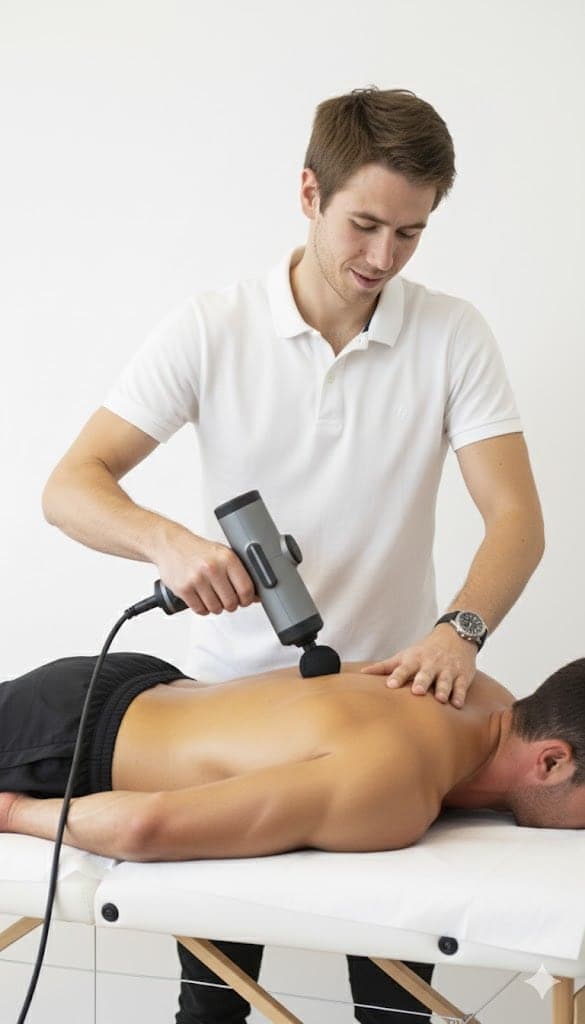
Written by
Chris
Massage therapist, nutrition and exercise physiologist
Norwegian-certified with a Bachelor’s in Physical Education and Nutrition and over ten years of clinical practice, working from a portable table in clients’ homes across the Paphos district.
This article is general information, not a medical diagnosis. If you have severe, worsening or unexplained pain, numbness, weakness, or pain after an accident, see a doctor first.