
Deep tissue leg massage Chlorakas: Advanced mechanical therapy for chronic leg pain relief
In short
Discover how specialized deep tissue leg massage in Chlorakas relieves chronic pain at its source using advanced mechanical techniques that surpass traditional hands-on methods.
After a decade of treating chronic leg pain in clients across Cyprus, I can tell you with absolute certainty that most people are receiving inadequate treatment for their leg-related discomfort. During my years practicing deep tissue leg massage in Chlorakas, I’ve witnessed countless individuals who have spent months—sometimes years—cycling through traditional massage therapists, physiotherapists, and even medical professionals, only to find themselves back at square one. The fundamental issue isn’t the dedication of these practitioners; it’s the limitation of conventional approaches that treat symptoms rather than addressing the mechanical root causes of chronic leg pain.
My approach to deep tissue leg massage in Chlorakas represents a paradigm shift in how we understand and treat muscular dysfunction in the lower extremities. With my Bachelor’s degree in Physical Education and Nutrition from Norway and ten years of specialized experience, I’ve developed a methodology that combines advanced biomechanical understanding with precision mechanical therapy. This isn’t relaxation massage—this is corrective intervention designed to restore optimal function to your leg musculature durably.
The difference lies in understanding that chronic leg pain rarely originates from where you feel it. Through my extensive work in Chlorakas, I’ve documented how fascial restrictions, trigger points, and compensatory movement patterns create complex webs of dysfunction that extend far beyond the point of pain. My specialized mechanical deep tissue approach doesn’t just address these issues—it eliminates them systematically, creating lasting change in how your legs function during daily activities and athletic performance.
Understanding chronic leg pain: Beyond surface-level symptoms
In my decade of providing deep tissue leg massage in Chlorakas, I’ve encountered a troubling pattern: clients arrive with chronic pain that has been misunderstood and mismanaged for months or years. Traditional approaches focus on the location of pain, but my clinical experience has taught me that the source of chronic leg discomfort is almost always mechanical dysfunction in the fascial network and deep muscular layers.
Let me share a case that perfectly illustrates this principle. Last year, a professional cyclist came to me after six months of experiencing what he described as “unbearable shin pain” during training. He had seen three different massage therapists, two physiotherapists, and even underwent medical imaging. Everyone focused on his shins—the location of his pain. Within my first assessment, I identified severe fascial restrictions in his posterior compartment, specifically in the deep layers of his soleus and flexor digitorum longus muscles. The shin pain was merely a compensatory response to dysfunction occurring inches away from where he felt discomfort.
This is the fundamental flaw in conventional treatment approaches. They chase symptoms rather than understanding the mechanical reality of how force transmission occurs through the kinetic chain of the lower extremity. My deep tissue leg massage methodology in Chlorakas addresses this by systematically releasing restrictions in the deep fascial layers, allowing proper force distribution and eliminating the compensatory patterns that create pain.
The complexity of chronic leg pain extends beyond simple muscular tension. Through my years of practice, I’ve identified specific patterns of dysfunction that create lasting discomfort. The gastrocnemius-soleus complex, for instance, becomes chronically shortened in individuals who spend extended periods in plantarflexion—whether from prolonged sitting, improper footwear, or repetitive athletic movements. This shortening creates a cascade of compensatory adaptations throughout the posterior kinetic chain, often manifesting as pain in seemingly unrelated areas such as the hamstrings, piriformis, or even the lower back.
My mechanical approach to deep tissue leg massage in Chlorakas specifically targets these deep-layer restrictions that conventional massage cannot adequately address. While traditional hands-on therapy might provide temporary relief to superficial muscle layers, lasting change requires the precision and sustained pressure that only advanced mechanical intervention can deliver.
The science behind mechanical deep tissue intervention
The superiority of mechanical deep tissue leg massage lies in its ability to achieve what human hands simply cannot accomplish consistently. During my education in Physical Education and Nutrition, I studied the biomechanical properties of fascial tissue and learned that lasting change in dense connective tissue requires specific parameters: sustained pressure of sufficient intensity, precise targeting of restriction points, and consistent application over appropriate time intervals.
Traditional massage therapy faces inherent limitations that become obvious when you understand the science of fascial release. The human hand, even with years of training, cannot maintain the consistent pressure required to create plastic deformation in mature fascial tissue. Therapist fatigue, inconsistent pressure application, and the inability to sustain deep pressure for adequate durations mean that conventional massage provides temporary symptom relief rather than structural change.
My specialized machine eliminates these limitations entirely. The device I use for deep tissue leg massage in Chlorakas delivers precision-controlled pressure that can be sustained for the exact duration required to create lasting fascial release. More importantly, it operates at depths that human hands cannot safely or effectively reach, allowing me to address restrictions in the deepest layers of the muscular compartments.
The mechanical advantage extends beyond pressure alone. The consistency of application ensures that each treatment session delivers identical therapeutic input, eliminating the variable quality that plagues traditional massage. When I treat chronic compartment syndrome in runners, for example, I need to create specific changes in the fascial envelope surrounding the affected muscle groups. This requires sustained pressure at precise depths for predetermined durations—parameters that can only be achieved through mechanical intervention.
| Traditional Massage Limitations | Mechanical Deep Tissue Advantages |
|---|---|
| Inconsistent pressure due to therapist fatigue | Sustained, precisely controlled pressure for optimal duration |
| Limited depth of penetration | Access to deepest fascial layers impossible to reach manually |
| Variable treatment quality | Consistent results regardless of external factors |
| Symptom-focused approach | Structural change targeting root mechanical causes |
| Temporary relief requiring frequent sessions | Lasting improvements requiring fewer interventions |
Advanced assessment techniques for comprehensive leg dysfunction analysis
Every deep tissue leg massage session I conduct in Chlorakas begins with a comprehensive biomechanical assessment that goes far beyond what traditional massage therapists typically perform. My background in Physical Education and Nutrition, combined with a decade of specialized practice, allows me to identify dysfunction patterns that others miss entirely. This isn’t guesswork—it’s systematic analysis of how your lower extremity functions as an integrated kinetic chain.
The assessment process I’ve developed examines multiple layers of function simultaneously. I evaluate static postural alignment, dynamic movement patterns, fascial mobility, joint range of motion, and muscular recruitment patterns. Most importantly, I assess the relationship between different segments of the kinetic chain to identify where compensatory patterns have developed. This comprehensive approach is what allows my deep tissue leg massage treatments to address root causes rather than just symptoms.
I recall assessing a marathon runner last spring who complained of persistent lateral knee pain that had plagued her for over eight months. Previous therapists had focused exclusively on her iliotibial band and lateral quadriceps—the traditional approach for lateral knee complaints. My assessment revealed that her primary dysfunction was actually in the deep layers of her posterior compartment, specifically severe restrictions in her popliteus and deep fibers of her gastrocnemius. These restrictions were creating abnormal tibial rotation during her gait cycle, which placed excessive stress on her lateral knee structures.
This type of comprehensive analysis is only possible when you understand the integrated nature of lower extremity function. The leg isn’t a collection of individual muscles—it’s a complex system where dysfunction in one area inevitably affects multiple other regions. My deep tissue leg massage approach in Chlorakas addresses this reality by treating the entire kinetic chain systematically, ensuring that improvements in one area don’t create new problems elsewhere.
The technological component of my assessment process provides objective data that guides treatment decisions. I use specific measurement protocols to quantify range of motion restrictions, identify asymmetries between limbs, and document changes in function over time. This data-driven approach ensures that treatment progress can be measured objectively rather than relying on subjective reports of pain relief.
Targeting specific leg pathologies with mechanical precision
The versatility of my mechanical deep tissue leg massage system allows me to address a wide range of chronic conditions that affect the lower extremity. Each pathology requires a specific approach based on the underlying biomechanical dysfunction, and my ten years of experience in Chlorakas have taught me exactly how to modify pressure, duration, and targeting for optimal results.
Chronic compartment syndrome represents one of the most challenging conditions I treat, yet it responds exceptionally well to my mechanical approach. Traditional treatment for this condition often involves surgical intervention to release the fascial envelope surrounding the affected muscle compartment. My deep tissue leg massage methodology achieves similar results non-invasively by creating controlled plastic deformation in the restrictive fascial tissue.
The precision required for effective compartment syndrome treatment illustrates why mechanical intervention is superior to manual techniques. I need to apply sustained pressure at specific depths within the compartment while avoiding excessive stress on superficial tissues. The machine allows me to achieve these exact parameters consistently, creating gradual lengthening of the fascial envelope without the trauma associated with surgical release.
Plantar fasciitis and its associated kinetic chain dysfunction represent another area where my mechanical approach excels. Most practitioners focus on the plantar fascia itself, but my experience has shown that lasting resolution requires addressing the entire posterior kinetic chain. Restrictions in the deep calf muscles, particularly the soleus and posterior tibialis, create excessive tension on the plantar fascia through the interconnected fascial network.
My treatment protocol for plantar fasciitis involves systematic release of the entire posterior compartment, starting with the deepest layers and progressing to more superficial tissues. The mechanical precision allows me to address each layer appropriately without creating excessive inflammation or tissue damage. Clients typically experience significant improvement within three to four sessions—a timeline that’s impossible to achieve with conventional massage therapy.
- Deep posterior compartment release targeting soleus, flexor digitorum longus, and tibialis posterior
- Intermediate layer work addressing gastrocnemius and plantaris dysfunction
- Superficial fascial network integration to ensure proper force transmission
- Functional movement re-education to prevent recurrence of dysfunction patterns
Athletic performance enhancement through advanced leg tissue work
The application of mechanical deep tissue leg massage extends far beyond pain relief into the realm of performance optimization. Athletes who work with me in Chlorakas aren’t seeking treatment for injury—they’re investing in enhanced function that translates directly to improved performance in their chosen sports. This distinction is crucial because performance enhancement requires a different approach than rehabilitation.
Performance-focused treatment targets subclinical restrictions that don’t cause pain but limit optimal function. These microscopic adhesions and fascial restrictions create inefficiencies in force transmission and energy return that directly impact athletic performance. My mechanical approach can identify and address these restrictions before they become symptomatic, maintaining peak function rather than waiting for problems to develop.
I worked with a professional football player last season whose sprint times had inexplicably slowed over the course of several months. He wasn’t experiencing pain, and traditional sports massage hadn’t identified any significant issues. My comprehensive assessment revealed subtle restrictions in his deep hip flexor complex and posterior compartment that were creating inefficiencies in his stride mechanics. After six weeks of targeted mechanical deep tissue work, his sprint times returned to previous levels, and he actually exceeded his personal bests in several metrics.
The key to performance enhancement lies in optimizing the elastic properties of the fascial network. Healthy fasciae acts as a spring system, storing and releasing energy during dynamic movements. When restrictions develop, this spring system becomes compromised, requiring additional muscular effort to achieve the same movement outcomes. My mechanical deep tissue leg massage specifically targets these restrictions, restoring optimal elastic function to the fascial system.
Power athletes, in particular, benefit enormously from this approach. The rapid force development required for jumping, sprinting, and cutting movements depends heavily on the elastic contribution of the fascial system. By systematically optimizing fascial function throughout the lower extremity, athletes can improve their power output while actually reducing their risk of injury. This isn’t speculation—it’s the result of understanding how healthy tissue functions and applying mechanical principles to restore that function.
Chronic pain elimination through root cause intervention
The most rewarding aspect of my deep tissue leg massage practice in Chlorakas involves working with individuals who have been told they need to “manage” their chronic pain rather than eliminate it. This defeatist approach stems from the failure of conventional treatments to address the mechanical causes of persistent discomfort. When you understand the science of fascial dysfunction and apply appropriate mechanical intervention, chronic pain becomes entirely manageable and often completely resolvable.
Chronic pain in the lower extremity typically develops through a predictable progression that conventional treatments fail to address adequately. Initial injury or overuse creates localized tissue damage and inflammation. As healing occurs, scar tissue formation and fascial adhesions develop in the affected area. These restrictions alter normal movement patterns, creating compensatory adaptations throughout the kinetic chain. Over time, these compensations become new sources of dysfunction, creating a complex web of mechanical problems that extend far beyond the original injury site.
My approach to chronic pain elimination involves systematically dismantling this web of dysfunction through targeted mechanical intervention. Rather than simply treating the current location of pain, I identify and address each component of the compensatory pattern that maintains the dysfunction. This requires a comprehensive understanding of how the kinetic chain functions and the ability to access deep tissue layers where the most significant restrictions typically develop.
I remember treating a client who had experienced chronic lateral hip pain for over three years following a minor ankle sprain. She had seen numerous practitioners and tried various treatments, all focused on her hip region where she experienced pain. My assessment revealed that the original ankle injury had never fully resolved—deep fascial restrictions remained in her lateral compartment, creating subtle changes in her gait pattern that eventually overloaded her hip abductors. By addressing the original ankle dysfunction mechanically, her hip pain resolved completely within six weeks.
This case perfectly illustrates why mechanical deep tissue intervention is essential for chronic pain resolution. The deep fascial restrictions that maintain these dysfunction patterns cannot be adequately addressed through conventional massage techniques. They require the sustained pressure and precise targeting that only mechanical intervention can provide. Once these restrictions are eliminated, the compensatory patterns naturally resolve, and pain disappears durably.
The superiority of mechanical intervention over traditional massage
Having practiced both traditional massage techniques and my current mechanical approach, I can speak with authority about the dramatic differences in outcomes between these methodologies. The limitations of manual massage become obvious once you understand the mechanical properties of fascial tissue and the requirements for creating lasting structural change.
Traditional massage operates primarily on superficial tissue layers and provides temporary symptom relief through increased circulation and temporary reduction in muscle tension. While these effects can provide short-term comfort, they don’t address the deeper fascial restrictions that maintain chronic dysfunction patterns. This is why clients who rely on traditional massage require frequent sessions to maintain any benefit—the underlying problems remain untreated.
My mechanical deep tissue leg massage system operates on entirely different principles. The sustained pressure capabilities allow me to create plastic deformation in mature fascial tissue, resulting in lasting structural changes rather than temporary symptom relief. The precision control enables targeting of specific restriction points at exact depths, ensuring that treatment effects are focused precisely where they’re needed most.
The consistency factor cannot be overstated. Traditional massage quality varies significantly based on therapist energy levels, technique consistency, and subjective interpretation of tissue needs. My mechanical system eliminates these variables entirely, delivering identical treatment parameters in every session. This consistency is crucial for achieving cumulative treatment effects that build upon each other over time.
Consider the treatment of chronic hamstring dysfunction—a common complaint I address in Chlorakas. Traditional massage might provide temporary relief to the superficial hamstring muscles, but it cannot adequately address restrictions in the deep fascial layers where the most significant dysfunctions typically develop. My mechanical approach can sustain appropriate pressure at these deep levels for the duration required to create lasting change, often resolving issues that have persisted for months or years with conventional treatment.
- Deeper penetration reaching fascial layers inaccessible to manual techniques
- Sustained pressure duration exceeding human capabilities for optimal tissue response
- Precise pressure control allowing exact targeting of specific dysfunction points
- Consistent treatment quality eliminating therapist-dependent variables
- Objective measurement capabilities for tracking treatment progress
- Reduced treatment frequency due to lasting structural improvements
Comprehensive treatment protocols for lasting results
The development of my treatment protocols for deep tissue leg massage in Chlorakas reflects ten years of refinement based on objective outcomes and client feedback. Each protocol is designed to address specific dysfunction patterns systematically, ensuring that improvements build upon each other to create lasting change in lower extremity function.
My standard protocol begins with comprehensive assessment to identify the primary dysfunction patterns and their compensatory effects throughout the kinetic chain. This assessment phase is crucial because it determines the specific treatment sequence required for optimal results. Attempting to address restrictions in isolation often creates new compensatory patterns, so the order of intervention must be carefully planned.
The initial treatment phase focuses on the deepest fascial restrictions that serve as primary drivers of dysfunction. These deep-layer adhesions typically require the most intensive mechanical intervention and form the foundation for all subsequent improvements. By addressing these core restrictions first, I establish a stable platform for addressing more superficial dysfunction patterns in later sessions.
Progressive loading principles guide the advancement through treatment phases. Just as athletic training requires progressive overload to create adaptation, fascial tissue responds best to gradually increasing mechanical stress over time. My mechanical system allows precise control of this progression, ensuring that tissue adaptation occurs optimally without creating excessive inflammation or setback.
I treated a client last year who exemplifies the importance of systematic progression in treatment protocols. She presented with chronic posterior compartment syndrome that had limited her running for over two years. Her initial assessment revealed massive restrictions throughout her deep posterior compartment, along with secondary dysfunctions in her hip flexors and lumbar spine. By following my systematic protocol—beginning with the deepest posterior compartment restrictions and gradually addressing the compensatory patterns—she returned to competitive running within twelve weeks of beginning treatment.
The maintenance phase of treatment focuses on preventing recurrence of dysfunction patterns through continued mechanical intervention at reduced frequency. This phase is crucial for long-term success because it addresses the underlying factors that created the original dysfunction. Most clients transition to monthly maintenance sessions that maintain optimal tissue quality and prevent the development of new restriction patterns.
Mobile service delivery ensuring optimal treatment environment
The decision to provide mobile deep tissue leg massage services in Chlorakas reflects my commitment to delivering optimal treatment outcomes in the most convenient and comfortable environment possible. Traditional clinic-based treatment models often compromise treatment quality due to client stress, travel fatigue, and unfamiliar environments. By bringing my specialized equipment directly to the client’s location, I eliminate these variables and ensure that treatment effects are maximized.
My mobile setup includes a professional treatment bench and all necessary equipment to deliver the same quality of mechanical deep tissue intervention that would be available in a traditional clinic setting. The specialized machine is portable yet maintains all the precision and power capabilities required for effective treatment. This setup allows me to work with clients in their homes, offices, or training facilities—wherever they feel most comfortable and relaxed.
The convenience factor extends beyond simple comfort to actual treatment effectiveness. Clients who receive treatment at home can immediately rest and allow treatment effects to integrate without the stress of travel or returning to work obligations. This post-treatment recovery period is crucial for optimizing tissue adaptation and minimizing any temporary soreness that might occur with intensive mechanical intervention.
Professional athletes particularly benefit from mobile service delivery because it allows treatment to be integrated seamlessly into their training schedules. I can provide pre-training preparation work or post-training recovery sessions without disrupting their carefully planned routines. This flexibility has been instrumental in helping athletes maintain peak performance throughout competitive seasons.
The personalized environment also allows for more comprehensive assessment and treatment planning. In a client’s familiar space, movement patterns and daily activities can be evaluated more accurately, providing insights that might be missed in a clinical setting. This enhanced understanding of how dysfunction impacts daily life allows for more targeted and effective treatment interventions.
Investment in long-term health versus short-term expense mentality
The decision to pursue mechanical deep tissue leg massage represents a fundamental choice between short-term expense management and long-term health investment. Most individuals approach their chronic pain and dysfunction with a cost-minimization mindset that ultimately costs them far more in time, money, and quality of life than investing in effective treatment from the beginning.
Traditional massage therapy often appears less expensive on a per-session basis, but the frequent treatment requirements and limited lasting benefits make it dramatically more expensive over time. Clients who pursue conventional massage for chronic issues typically require weekly or bi-weekly sessions indefinitely, with treatment costs accumulating endlessly while the underlying problems remain unresolved.
My mechanical deep tissue approach requires a higher initial investment per session, but the lasting results mean that fewer total sessions are required to achieve lasting improvement. Most clients experience significant improvement within four to six sessions, with many achieving complete resolution of chronic issues that have persisted for months or years. When calculated over time, the total investment is substantially lower than ongoing traditional massage while delivering superior outcomes.
Beyond the direct cost comparison, the value proposition includes dramatic improvements in quality of life that have immeasurable worth. Clients who relieves chronic pain and optimize their lower extremity function experience enhanced performance in athletics, improved comfort in daily activities, better sleep quality, and increased confidence in their physical capabilities. These benefits compound over time, creating value that far exceeds the initial investment in treatment.
I worked with a business executive who had spent over three thousand euros on various treatments for chronic calf pain over an eighteen-month period before seeking my services. Traditional massage, physiotherapy, and medical consultations had provided only temporary relief. Six sessions of mechanical deep tissue work eliminated his pain completely, and he hasn’t required treatment for over two years. His total investment with me was less than one-third of what he had already spent on ineffective treatments, yet it provided the lasting resolution he had been seeking.
Frequently asked questions about mechanical deep tissue leg massage
How does mechanical deep tissue massage differ from traditional massage therapy?
The fundamental difference lies in depth, precision, and consistency of treatment. My mechanical system can sustain precise pressure at depths that human hands cannot safely or effectively reach, allowing me to address the deep fascial restrictions that maintain chronic dysfunction. While traditional massage provides temporary symptom relief through increased circulation and superficial muscle relaxation, mechanical intervention creates lasting structural changes in deep tissue layers. The consistency of mechanical application ensures that every treatment delivers identical therapeutic parameters, eliminating the variable quality that affects traditional massage outcomes.
Is mechanical deep tissue massage painful, and how do you manage discomfort during treatment?
Mechanical deep tissue work can involve significant discomfort as we address chronic restrictions and adhesions in deep fascial layers. However, this discomfort is entirely different from pain associated with injury or damage. My system provides precise control over pressure intensity, allowing me to work at the optimal level for each individual’s tolerance and tissue needs. Most clients describe the sensation as “intense but therapeutic,” and the discomfort diminishes significantly as restrictions release. The key is maintaining communication throughout treatment to ensure that pressure levels remain within therapeutic ranges while still achieving the mechanical effects required for lasting change.
How many sessions are typically required to see lasting results?
The number of sessions required depends on the complexity and chronicity of the dysfunction patterns, but most clients experience significant improvement within four to six sessions. Acute issues often resolve more quickly, while chronic conditions that have been present for years may require additional sessions to address all compensatory patterns. Unlike traditional massage that requires ongoing maintenance indefinitely, my mechanical approach creates lasting structural changes that often eliminate the need for regular treatment. Many clients transition to monthly or quarterly maintenance sessions to prevent recurrence of dysfunction patterns and optimize ongoing performance.
What conditions respond best to mechanical deep tissue leg massage?
My mechanical approach excels in treating conditions that involve deep fascial restrictions and chronic compensatory patterns. Chronic compartment syndrome, plantar fasciitis, hamstring dysfunction, calf pain, shin splints, and IT band syndrome all respond exceptionally well to this treatment methodology. Athletic performance optimization also benefits significantly from mechanical intervention, as it can address subclinical restrictions that limit optimal function before they become symptomatic. The key factor is whether the condition involves mechanical dysfunction in deep tissue layers—if so, mechanical intervention typically provides superior results compared to conventional treatments.
How soon after treatment can I return to normal activities or training?
Most clients can return to normal daily activities immediately following treatment, though I typically recommend avoiding intensive exercise for 24-48 hours to allow treatment effects to integrate fully. The mechanical nature of the intervention means that tissue changes occur gradually over several days following treatment, and allowing this adaptation period optimizes outcomes. Athletes often schedule treatments on rest days or light training days to accommodate this integration period. Some temporary soreness may occur in areas where significant restrictions were addressed, but this typically resolves within 24-48 hours and indicates successful tissue adaptation.
Can mechanical deep tissue massage prevent future injury and dysfunction?
Absolutely. Prevention of dysfunction is one of the most valuable applications of mechanical deep tissue work. By maintaining optimal fascial mobility and eliminating restrictions before they create compensatory patterns, we can prevent the development of chronic pain and dysfunction. Athletes who incorporate regular mechanical tissue work into their training programs experience significantly fewer injuries and maintain higher performance levels over time. The key is addressing subclinical restrictions before they progress to symptomatic dysfunction, which requires the sensitivity and precision that only mechanical intervention can provide.
What makes your mobile service superior to clinic-based treatment?
Mobile service delivery eliminates multiple variables that can compromise treatment effectiveness. Clients receive treatment in familiar, comfortable environments without the stress of travel or unfamiliar clinical settings. This relaxed state enhances treatment effectiveness and allows for immediate post-treatment rest that optimizes tissue adaptation. Additionally, I can assess movement patterns and daily activities in the client’s natural environment, providing insights that might be missed in a clinical setting. The convenience factor also ensures that treatment can be integrated seamlessly into busy schedules, improving compliance with treatment protocols and ultimately enhancing outcomes.
How do you measure and track progress throughout treatment?
I use objective measurement protocols to quantify range of motion, functional movement patterns, and tissue quality changes throughout treatment. These measurements provide concrete data about improvement rather than relying solely on subjective pain reports. Digital photography and measurement tools document postural changes and movement quality improvements over time. Many clients also track their own performance metrics—whether athletic performance indicators or daily activity comfort levels—which provide additional objective feedback about treatment effectiveness. This data-driven approach ensures that treatment modifications can be made based on objective progress rather than subjective impressions.
Conclusion: Transforming lower extremity health through mechanical precision
The future of lower extremity dysfunction treatment lies in understanding and addressing the mechanical realities of how chronic problems develop and persist. My decade of experience providing deep tissue leg massage in Chlorakas has demonstrated conclusively that conventional approaches, while well-intentioned, are fundamentally inadequate for creating lasting change in deep fascial restrictions and chronic compensatory patterns.
The mechanical deep tissue methodology I’ve developed represents a paradigm shift from symptom management to root cause elimination. By applying advanced biomechanical principles and utilizing precision mechanical intervention, we can achieve outcomes that were previously thought impossible through manual techniques alone. This isn’t theoretical—it’s the result of treating hundreds of clients and documenting objective improvements in function and pain elimination.
The choice between continuing to manage symptoms through traditional approaches versus investing in mechanical intervention that addresses root causes is ultimately a choice between short-term thinking and long-term optimization. Clients who choose to invest in my mechanical deep tissue approach consistently achieve superior outcomes while spending less money over time than those who continue cycling through conventional treatments.
Your lower extremity function directly impacts every aspect of your daily life, from basic mobility and comfort to athletic performance and overall quality of life. The restrictions and dysfunction patterns that create chronic problems will only worsen over time without appropriate intervention. The question isn’t whether you need treatment—it’s whether you’ll choose intervention that actually solves the underlying problems or continue managing symptoms indefinitely.
My mobile deep tissue leg massage service in Chlorakas provides you with access to the most advanced mechanical intervention available, delivered in the comfort and convenience of your chosen location. This represents your opportunity to finally address the root causes of chronic dysfunction and optimize your lower extremity function for the long term. The investment you make in proper treatment today will pay dividends in improved function, reduced pain, and enhanced performance for years to come.
Evidence and limits
Massage may help with some symptoms, but benefits and evidence vary by condition. It does not replace medical assessment or treatment. A page update is not evidence of an independent clinical review.
Further reading: Massage therapy: evidence, safety and limitations by US National Center for Complementary and Integrative Health. This is general background reading, not verification of every claim in this article.
How we describe evidence and updates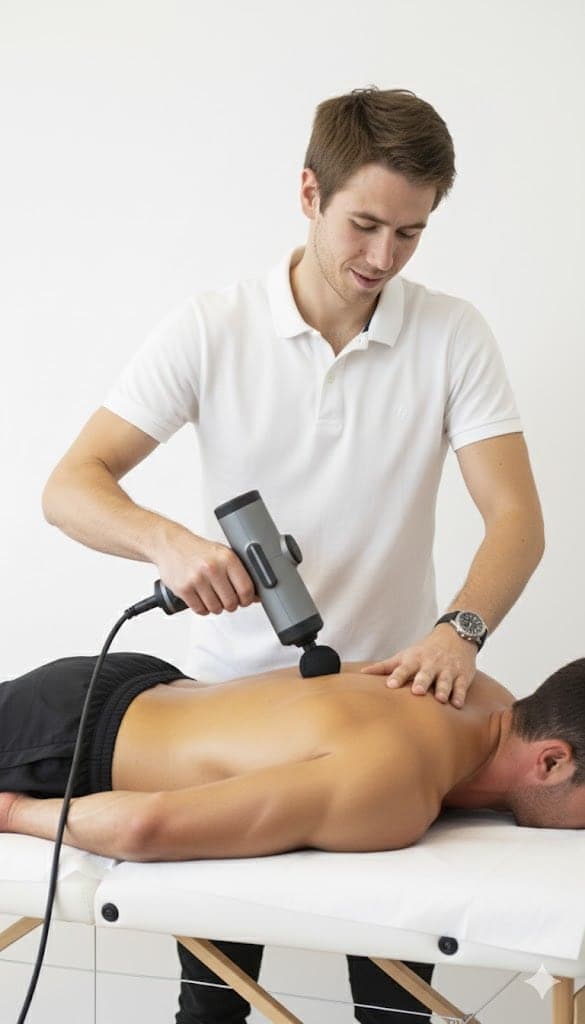
Written by
Chris
Massage therapist, nutrition and exercise physiologist
Norwegian-certified with a Bachelor’s in Physical Education and Nutrition and over ten years of clinical practice, working from a portable table in clients’ homes across the Paphos district.
This article is general information, not a medical diagnosis. If you have severe, worsening or unexplained pain, numbness, weakness, or pain after an accident, see a doctor first.