
Coral Bay Massage Therapy Benefits: A Clinical Approach to Lasting Pain Relief
In short
Discover the science-backed Coral Bay massage therapy benefits that go beyond relaxation. Expert mechanical deep-tissue treatment delivers lasting pain relief through precision targeting of dysfunction.
Most people approach massage therapy with a fundamentally flawed expectation. They’re seeking temporary relaxation, an hour of stress reduction, perhaps some superficial muscle loosening. What they should be seeking—what they desperately need but don’t yet realize—is lasting correction of the mechanical dysfunction causing their pain. After a decade of clinical practice specializing in advanced mechanical deep-tissue therapy, I’ve witnessed the profound Coral Bay massage therapy benefits that occur when we treat the cause, not merely the symptoms.
The difference isn’t semantic. It’s physiological, measurable, and life-altering. When you understand what professional massage therapy can actually accomplish at the muscular, fascial, and structural level, you begin to see it not as a luxury or occasional indulgence, but as essential maintenance for optimal human performance.
The Scientific Reality Behind Coral Bay Massage Therapy Benefits
Let me be clear about what we’re addressing here. Chronic pain, restricted mobility, postural dysfunction, athletic underperformance—these aren’t random occurrences or inevitable aspects of aging. They are mechanical problems with mechanical solutions. My education in Physical Education and Nutrition from Norway, combined with ten years of hands-on clinical experience, has taught me that the human body operates according to predictable biomechanical principles.
When muscle tissue becomes chronically contracted—whether from repetitive strain, compensation patterns, trauma, or sustained poor posture—it creates adhesions in the fascia, restricts blood flow, compresses nerves, and establishes dysfunctional movement patterns. This isn’t theory. This is observable, palpable reality that I encounter in nearly every client who comes to me after years of accepting their pain as “normal.”
The most significant Coral Bay massage therapy benefits emerge when treatment penetrates to the actual depth where dysfunction exists. Surface-level manipulation might feel pleasant temporarily, but it cannot reach the deep myofascial restrictions that anchor chronic pain patterns. This is where traditional approaches fall short, and where my specialized methodology demonstrates clear superiority.
Why Depth and Precision Matter
I use advanced mechanical deep-tissue techniques delivered through specialized equipment that achieves three critical factors simultaneously: precision, power, and consistency. Human hands, no matter how skilled, have physiological limitations. Therapists fatigue. Pressure varies. Angle and penetration depth fluctuate based on the practitioner’s energy level, hand positioning, and leverage.
The machine I utilize eliminates these variables entirely. It delivers:
- Deeper penetration than manual therapy: Working at depths of 8-12 millimeters into muscle tissue where chronic tension actually resides
- Precise force calibration: From gentle fascial release to powerfully deep athletic work, adjusted in real-time to tissue response
- Consistent treatment quality: No “off days,” no fatigue-related variation, every session delivering identical effectiveness
- Targeted angular approach: Accessing muscle fiber orientation and fascial planes that manual techniques simply cannot reach
This isn’t about replacing the human element—my decade of experience guides every treatment decision, every adjustment, every strategic choice about which structures to address and in what sequence. The technology amplifies my clinical knowledge, allowing me to achieve outcomes that were previously impossible.
Comprehensive Coral Bay Massage Therapy Benefits: Beyond Pain Management
When clients first contact me, they typically describe one or two specific complaints: lower back pain, shoulder tension, neck stiffness, hip restrictions. What they discover through treatment is that addressing mechanical dysfunction creates cascading benefits throughout multiple body systems.
Musculoskeletal System Optimization
The primary and most immediate benefits occur in the musculoskeletal system itself. Chronic muscle tension doesn’t exist in isolation—it creates compensation chains that affect posture, gait, and movement efficiency throughout the kinetic chain.
I worked with a 42-year-old software developer who had accepted chronic upper back and neck pain as the inevitable price of his profession. His initial assessment revealed severe trapezius hypertonicity, levator scapulae restrictions, and compensatory thoracic spine immobility. Traditional massage had provided temporary relief, but within days his symptoms returned.
Through six targeted sessions using mechanical deep-tissue methodology, we systematically released the fascial restrictions anchoring his dysfunction. The depth of treatment—working into the rhomboids, serratus posterior, and deep cervical stabilizers—addressed tissue layers that had never been properly treated. Four months later, he remains pain-free. His posture has fundamentally changed. He no longer requires ongoing treatment, only occasional maintenance.
This represents the true potential of Coral Bay massage therapy benefits: lasting correction, not temporary management.
| Musculoskeletal Benefits | Mechanism of Action | Timeline for Results |
|---|---|---|
| Chronic pain elimination | Release of deep myofascial adhesions and trigger points | 3-6 sessions for most conditions |
| Improved range of motion | Restoration of normal tissue length and joint mobility | Noticeable within 1-2 sessions |
| Postural correction | Balancing of antagonistic muscle groups and fascial tension | Progressive improvement over 4-8 sessions |
| Enhanced athletic performance | Optimization of movement patterns and force transmission | 2-4 sessions for performance gains |
| Injury prevention | Elimination of compensation patterns and movement dysfunction | Ongoing with proper maintenance |
Neurological and Pain Science Applications
Understanding pain neuroscience has transformed how I approach treatment. Chronic pain isn’t simply about tissue damage—it involves central sensitization, where the nervous system becomes hyperresponsive to normal sensory input. Effective treatment must address both the peripheral tissue dysfunction and the central nervous system’s pain processing.
Mechanical deep-tissue therapy achieves this through multiple pathways. The precise, sustained pressure stimulates mechanoreceptors that essentially “override” pain signals traveling to the brain—the gate control theory in practical application. Simultaneously, releasing chronic muscle tension eliminates the actual nociceptive input that has been reinforcing the central sensitization pattern.
I’ve treated clients whose pain had persisted for years despite extensive medical intervention—physical therapy, medication, injections, even surgical consultation. Many had developed significant kinesiophobia (fear of movement) and had substantially reduced their physical activity. The Coral Bay massage therapy benefits in these cases extend far beyond mechanical correction. We’re literally retraining the nervous system’s relationship with movement and sensation.
Circulatory and Lymphatic Enhancement
Chronic muscle tension creates mechanical compression of blood vessels and lymphatic channels. This isn’t trivial—it substantially reduces nutrient delivery to tissues, impairs waste removal, and creates local hypoxic conditions that perpetuate dysfunction and pain.
Deep mechanical treatment forcibly breaks this cycle. The pressure and release create a pumping action that flushes stagnant interstitial fluid, enhances venous return, and dramatically improves local circulation. I’ve observed this in real-time: tissue that initially appears pale, cool, and exhibits poor elasticity transforms over the course of treatment, becoming warm, pink, and palpably more resilient.
For clients with conditions like chronic fatigue, slow recovery from exercise, or peripheral edema, these circulatory improvements represent significant quality-of-life enhancements. One triathlete I worked with had struggled with persistent calf tightness and slow recovery between training sessions. After addressing deep posterior compartment restrictions and improving tissue perfusion, his recovery time decreased by approximately 40%, allowing higher training volume without increased injury risk.
Specialized Populations: Tailored Coral Bay Massage Therapy Benefits
Different client populations experience distinct benefit profiles based on their specific mechanical demands and dysfunction patterns. My approach adapts to these varying needs while maintaining the core principle: treat causation, achieve lasting results.
Athletes and Performance Optimization
Athletic populations require a fundamentally different treatment paradigm than the general public. These clients aren’t seeking pain elimination—they’re pursuing performance optimization, competitive advantage, and accelerated recovery protocols.
The mechanical demands of sport create predictable adaptation patterns. Runners develop specific hip flexor and tibialis anterior dysfunction. Swimmers accumulate rotator cuff and scapular stabilizer restrictions. Cyclists face chronic hip external rotator and thoracolumbar tension. Understanding these sport-specific patterns allows preemptive treatment before dysfunction becomes limiting.
I work with several competitive athletes who schedule treatment as strategic preparation for competition. We identify and address emerging restrictions before they impact performance or create injury vulnerability. This isn’t maintenance in the traditional sense—it’s systematic optimization of biomechanical efficiency.
The specialized machine I utilize offers particular advantages for athletic populations. It can deliver significantly deeper pressure than manual techniques, accessing tissue layers that store chronic training-related tension. The consistent force application allows graduated intensity progression without fatigue—crucial when treating heavily muscled athletes who require substantial pressure to achieve tissue release.
Office Workers and Postural Syndrome
If athletes represent one end of the mechanical demand spectrum, office workers occupy the opposite extreme. Their dysfunction arises not from excessive loading, but from sustained static positioning and chronic underactivation of postural stabilizers.
The typical office worker presentation: forward head posture, rounded shoulders, thoracic kyphosis, hip flexor shortening, and gluteal amnesia. This constellation creates predictable pain patterns—cervicogenic headaches, interscapular pain, lower back discomfort, and hip stiffness. Traditional approaches might address individual symptoms, but lasting correction requires systematic treatment of the entire postural compensation chain.
I developed a specific protocol for this population that addresses dysfunction in strategic sequence. We begin with thoracic spine mobility restoration—the keystone of upper body posture. Then address the deep cervical flexors and posterior cervical extensors that maintain head position. Next, release the chronic hip flexor shortening that anteriorly rotates the pelvis. Finally, reactivate the gluteal complex and deep core stabilizers through targeted release of inhibitory tension patterns.
The results are remarkable. Clients report not just pain elimination, but increased energy, reduced mental fatigue, and improved breathing mechanics. Several have noted that colleagues comment on their “different” appearance—standing taller, appearing more confident. These secondary benefits emerge naturally when we correct fundamental mechanical dysfunction.
Chronic Pain Sufferers and Complex Cases
The clients who experience the most profound Coral Bay massage therapy benefits are often those who have exhausted conventional treatment options. They arrive with extensive medical histories, multiple failed interventions, and understandable skepticism about whether anything can truly help.
These cases require sophisticated clinical reasoning. Chronic pain creates neuroplastic changes—the nervous system literally reorganizes around the pain experience. Treatment must address both peripheral tissue dysfunction and central sensitization patterns. This demands patience, systematic progression, and realistic expectation management.
I recall a client with chronic regional pain syndrome affecting her left shoulder and arm following a relatively minor injury three years prior. Her pain was disproportionate to tissue findings, involved allodynia (pain from normally non-painful stimuli), and had resulted in substantial functional limitation. Multiple medical specialists had provided limited benefit.
Our approach combined mechanical treatment of actual tissue restrictions with graded exposure to pressure and movement. We progressed slowly, respecting the sensitized nervous system while systematically addressing the mechanical dysfunctions that were maintaining the pain cycle. After three months of weekly treatment, her pain levels had decreased by approximately 70%, and she had resumed most normal activities.
This case illustrates a crucial principle: even complex, neuroplastically-maintained pain responds to appropriate mechanical intervention when applied with clinical sophistication and patience.
The Investment Framework: Understanding Coral Bay Massage Therapy Benefits as Health Capital
Most people fundamentally misunderstand the economics of healthcare. They perceive treatment as an expense—money leaving their accounts for services consumed. This perspective leads to underinvestment in preventive and corrective interventions, with predictable consequences: progressive dysfunction, escalating medical costs, and deteriorating quality of life.
I position my services differently. This is health capital investment. You’re purchasing lasting mechanical correction that eliminates ongoing pain, prevents future injury, optimizes performance, and enhances daily function. The return on investment becomes apparent when you calculate avoided costs: reduced medication use, eliminated physical therapy copays, prevented surgical interventions, and maintained work productivity.
Consider the actual mathematics. Chronic back pain costs the average sufferer approximately a wide range of costs annually in direct medical expenses, plus indirect costs from lost productivity, reduced recreation, and diminished quality of life. Lasting correction through systematic mechanical treatment—achieved in 6-8 sessions—represents a fraction of one year’s ongoing management costs, while delivering benefits that extend indefinitely.
This isn’t marketing rhetoric. This reflects the actual economic reality that most people discover only after achieving results. One client calculated that his investment in treatment was recouped within four months simply through eliminated chiropractor visits, reduced medication use, and one prevented emergency department visit for acute back pain exacerbation.
The Partnership Model: Customized Treatment Plans
I don’t offer one-off sessions. This isn’t a massage service in the traditional sense—it’s a clinical partnership focused on achieving specific, measurable outcomes. Before accepting any client, I conduct a thorough assessment: pain history, functional limitations, mechanical testing, and outcome goal definition.
Based on this assessment, I develop a customized treatment plan that outlines:
- Specific mechanical dysfunctions requiring correction
- Treatment sequence and session frequency
- Predicted timeline for improvement
- Measurable outcome markers to track progress
- Maintenance protocol following correction
This structured approach ensures accountability—both mine and the client’s. We’re working toward defined goals with clear success metrics. Progress is documented, adjustments made based on tissue response, and outcomes verified through objective functional testing.
The partnership extends beyond the treatment table. I provide education about movement patterns, postural strategies, and self-care protocols that support long-term results. My goal isn’t creating dependent clients who require ongoing treatment indefinitely. I’m pursuing mechanical correction that enables independence, requiring only occasional maintenance to sustain optimal function.
Practical Logistics: Accessing Coral Bay Massage Therapy Benefits
One significant barrier to effective treatment is access. The traditional model—clients traveling to a clinic, navigating parking, adjusting schedules—creates friction that reduces compliance and limits outcomes. I’ve eliminated this barrier entirely through a mobile service model.
I travel to your location with a professional treatment bench and all necessary equipment. This approach offers multiple advantages beyond mere convenience. Treatment occurs in your own environment, eliminating travel stress and allowing immediate rest following intensive sessions. The time efficiency means treatment integrates seamlessly into busy schedules—particularly valuable for professionals and athletes with substantial time demands.
The mobile model also enables longer sessions when clinically indicated. Without the constraints of clinic scheduling and turnover pressure, I can extend treatment duration based on tissue response and therapeutic need, not arbitrary time blocks. This flexibility significantly enhances treatment effectiveness.
What to Expect During Treatment
Initial sessions typically require 90-120 minutes to allow comprehensive assessment and treatment. I begin with detailed discussion of pain history, functional limitations, and outcome goals. Then perform mechanical assessment—postural analysis, range of motion testing, palpation of tissue quality, and identification of specific dysfunctional patterns.
Treatment itself involves systematic application of mechanical deep-tissue techniques using specialized equipment. The pressure is substantial—significantly deeper than traditional massage—but precisely controlled to remain within your tolerance while achieving necessary tissue release. You maintain complete control over intensity through direct feedback.
The sensation differs markedly from conventional massage. This isn’t relaxing in the traditional sense—it’s mechanical work being performed on restricted tissue. Clients typically describe it as “intense but productive,” “uncomfortable but effective,” or “challenging but worthwhile.” The discomfort is temporary and purposeful, not arbitrary or excessive.
Following treatment, tissue soreness similar to post-exercise muscle fatigue is common and typically resolves within 24-48 hours. This represents the inflammatory healing response to fascial restrictions being physically broken apart—necessary for remodeling and lasting correction.
Scientific Evidence Supporting Coral Bay Massage Therapy Benefits
The clinical effectiveness of mechanical deep-tissue therapy is supported by substantial research literature. Multiple studies have demonstrated:
- Significant pain reduction: Systematic reviews show moderate to large effect sizes for massage therapy in treating chronic pain conditions
- Improved functional outcomes: Documented improvements in range of motion, strength, and activity tolerance
- Neurological mechanisms: Demonstrated effects on pain gate control, central sensitization, and autonomic nervous system regulation
- Tissue-level changes: Evidence of fascial release, improved tissue extensibility, and enhanced local circulation
- Long-term benefits: Studies showing sustained improvements months after treatment completion
The research validates what I observe clinically: appropriately applied mechanical treatment creates measurable, lasting physiological changes. This isn’t placebo or temporary symptom suppression—it’s documented biological modification of tissue structure and nervous system function.
Limitations and Realistic Expectations
Professional integrity requires acknowledging limitations. Mechanical deep-tissue therapy is profoundly effective for musculoskeletal dysfunction arising from tissue restrictions, compensation patterns, and movement dysfunction. It is not appropriate for inflammatory arthritis, acute injury in the initial inflammatory phase, malignancy, severe osteoporosis, or certain neurological conditions.
Additionally, outcomes depend partially on factors beyond my control: your tissue quality, chronicity of dysfunction, compliance with recommended activity modifications, and genetic variability in healing response. While I achieve lasting correction in the majority of clients, some cases require longer treatment courses or periodic maintenance to sustain results.
Setting realistic expectations is crucial. I will never promise what I cannot deliver, and I commit to transparent communication about progress, challenges, and prognosis throughout treatment. This honesty is foundational to the partnership model—you deserve accurate information to make informed decisions about your health investment.
Frequently Asked Questions About Coral Bay Massage Therapy Benefits
How is this different from regular massage therapy?
The fundamental difference lies in treatment objectives and methodology. Traditional massage focuses primarily on relaxation, stress reduction, and temporary symptom relief through relatively superficial techniques. My approach targets lasting correction of mechanical dysfunction through advanced deep-tissue methods that access the actual depth where chronic restrictions exist. The specialized equipment I use delivers deeper, more consistent pressure than human hands can achieve, enabling treatment of tissue layers that conventional massage cannot effectively reach. This isn’t simply “harder” massage—it’s a fundamentally different clinical methodology producing lasting rather than temporary results.
How many sessions will I need to see results?
This depends on dysfunction chronicity, complexity, and your specific condition. Most clients notice significant improvement within 3-4 sessions, with substantial correction achieved in 6-8 sessions. However, chronic conditions that have existed for years may require longer treatment courses—possibly 10-12 sessions for complete resolution. During your initial assessment, I provide a specific treatment plan with predicted timelines based on your particular presentation. Progress is monitored at each session, and the plan is adjusted based on your tissue response and functional improvement.
Will the treatment be painful?
The treatment is intensive but not painful in the sense of causing harm or damage. You’ll experience substantial pressure—significantly deeper than traditional massage—and some discomfort as chronically restricted tissue is released. However, you maintain complete control over intensity through direct feedback, and I constantly monitor your response to ensure we’re working within therapeutic tolerance. Most clients describe the sensation as “good pain”—uncomfortable but clearly productive, similar to deep stretching or targeted exercise. Post-treatment soreness similar to muscle fatigue after exercise is normal and typically resolves within 24-48 hours.
Can massage therapy really provide lasting pain relief?
Yes, when applied correctly to appropriate conditions. Chronic musculoskeletal pain typically arises from mechanical dysfunction—restricted fascia, shortened muscles, compensation patterns, and poor movement mechanics. These are mechanical problems with mechanical solutions. By systematically releasing tissue restrictions, correcting postural imbalances, and restoring normal movement patterns, we eliminate the causation of pain. This produces lasting results, not temporary symptom suppression. However, permanence also depends on maintaining functional movement patterns and avoiding recreating the dysfunctional habits that caused initial problems. I provide education and strategies to support long-term results.
Do you treat athletes or only people with chronic pain?
I work with both populations—and everyone in between. Athletes benefit from performance optimization, accelerated recovery, and preemptive treatment of emerging restrictions before they limit performance or cause injury. My methodology is equally effective for competitive athletes seeking marginal gains and recreational exercisers wanting to maintain activity without pain. Chronic pain sufferers benefit from systematic mechanical correction that conventional treatment often fails to achieve. Office workers gain from postural correction and prevention of computer-related dysfunction. The common thread is mechanical dysfunction requiring skilled correction—regardless of whether that manifests as pain, performance limitation, or reduced quality of life.
Why do you use a machine instead of just your hands?
Human hands have physiological limitations that constrain treatment effectiveness. Therapists fatigue, pressure varies, penetration depth is limited by hand strength and leverage, and consistency fluctuates based on the practitioner’s physical state. The specialized mechanical equipment I use eliminates these variables entirely. It delivers deeper penetration—working 8-12 millimeters into tissue—with precise force calibration and zero variability between sessions. This isn’t about replacing clinical skill—my decade of experience guides every treatment decision. The technology amplifies my knowledge, allowing me to achieve outcomes that manual techniques simply cannot match. The machine is a tool that enhances effectiveness, just as a surgeon’s instruments enable procedures that bare hands cannot perform.
What should I do to prepare for my first session?
Arrive hydrated and avoid eating a heavy meal within two hours of treatment. Wear comfortable, loose clothing that allows easy access to treatment areas—or be comfortable with draping arrangements. Prepare to discuss your pain history, functional goals, and any relevant medical information in detail during assessment. Following treatment, plan for relative rest the remainder of the day—avoid strenuous exercise or prolonged standing. Increased water intake supports the body’s processing of released metabolic waste. Many clients find it beneficial to schedule first sessions on days when they can rest afterward, though this isn’t strictly necessary.
Is this treatment covered by insurance?
Coverage varies significantly by insurance provider and policy specifics. Some policies cover massage therapy when prescribed by a physician for specific medical conditions. However, many do not cover massage services, or impose restrictions that make coverage impractical. I provide detailed receipts that you can submit for potential reimbursement, but I recommend verifying your specific coverage before beginning treatment. Regardless of insurance status, I position this service as a direct health investment—the value derives from results achieved, not from cost distribution across insurance systems that often incentivize ongoing management rather than lasting correction.
Taking Action: Your Path to Lasting Results
Understanding the comprehensive Coral Bay massage therapy benefits represents the first step. Taking action—committing to systematic correction rather than continued symptom management—represents the crucial second step. The decision isn’t whether you can afford treatment; it’s whether you can afford to continue living with dysfunction, pain, and mechanical limitations that progressively worsen without proper intervention.
I work with clients who have made this decision: that their physical function, quality of life, and long-term health deserve investment. They recognize that the cost of inaction—continued pain, lost productivity, progressive dysfunction, and eventual medical escalation—far exceeds the investment in lasting correction.
The mobile service model eliminates logistical barriers. The customized treatment approach ensures we’re addressing your specific needs, not applying generic protocols. The results-focused methodology means we’re pursuing measurable outcomes, not indefinite ongoing management.
If you’re experiencing chronic pain, movement limitations, postural dysfunction, or athletic performance plateaus—if you’re frustrated with temporary fixes and marginal improvements—the comprehensive benefits of properly applied mechanical deep-tissue therapy offer a fundamentally different path forward. One that leads to lasting correction, optimized function, and genuine resolution rather than endless management.
My decade of clinical experience, advanced education, and specialized methodology create outcomes that conventional approaches cannot match. The specialized equipment I utilize enables treatment depth and consistency that manual techniques cannot achieve. The partnership model ensures we’re working collaboratively toward your specific goals with clear accountability and progress tracking.
This is the reality of what professional, clinically sophisticated massage therapy can accomplish when applied with appropriate knowledge, methodology, and commitment to lasting results. The Coral Bay massage therapy benefits extend far beyond temporary relaxation—encompassing pain elimination, performance optimization, postural correction, and enhanced quality of life through systematic mechanical correction of dysfunction.
The question is simply whether you’re ready to pursue actual solutions rather than continued symptom management. Whether you’re prepared to invest in your physical function with the same strategic thinking you apply to other important life domains. And whether you value long-term results enough to commit to the intensive process required to achieve lasting correction.
For those who answer yes to these questions, the comprehensive benefits await—documented, reproducible, and transformative.
Evidence and limits
Massage may help with some symptoms, but benefits and evidence vary by condition. It does not replace medical assessment or treatment. A page update is not evidence of an independent clinical review.
Further reading: Massage therapy: evidence, safety and limitations by US National Center for Complementary and Integrative Health. This is general background reading, not verification of every claim in this article.
How we describe evidence and updates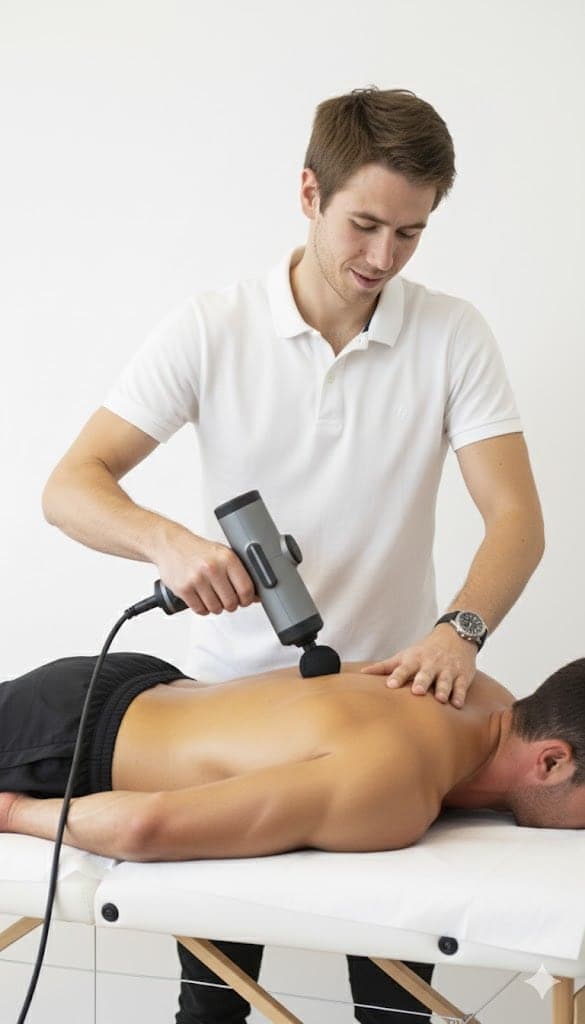
Written by
Chris
Massage therapist, nutrition and exercise physiologist
Norwegian-certified with a Bachelor’s in Physical Education and Nutrition and over ten years of clinical practice, working from a portable table in clients’ homes across the Paphos district.
This article is general information, not a medical diagnosis. If you have severe, worsening or unexplained pain, numbness, weakness, or pain after an accident, see a doctor first.