Chronic stiffness solutions Kato Paphos: advanced mechanical therapy for lasting results
In short
Transform chronic stiffness with precision mechanical deep-tissue therapy in Kato Paphos. University-qualified specialist delivers lasting pain relief through advanced treatment methods.
I’ll never forget the moment I realized that everything I thought I knew about chronic stiffness was fundamentally flawed. It was during my third year working with athletes in Norway when a professional cyclist came to me with a problem that had plagued him for two years. He’d tried everything – traditional massage, physiotherapy, even cortisone injections. Nothing worked. His chronic lower back stiffness was destroying not just his performance, but his quality of life. That’s when I discovered that the real issue wasn’t what we were treating, but how we were treating it.
After a decade of specialized practice and armed with my Bachelor’s degree in Physical Education and Nutrition, I’ve developed an approach to chronic stiffness solutions in Kato Paphos that challenges everything the industry tells you about pain relief. This isn’t about temporary comfort or relaxation – this is about lasting transformation of your body’s mechanics through precision intervention.
The truth is, chronic stiffness isn’t just muscle tension. It’s a complex biomechanical dysfunction that requires surgical precision to address effectively. Most practitioners treat symptoms because they lack the tools, knowledge, or commitment to address the root cause. I travel directly to your location in Kato Paphos with advanced mechanical equipment that delivers results traditional methods simply cannot achieve.
Understanding chronic stiffness: the biomechanical reality
Let me explain something that might surprise you: chronic stiffness is rarely about the area where you feel pain. During my university studies in Norway, I learned that the human body operates as an integrated kinetic chain. When one link fails, compensation patterns develop throughout the entire system. This creates what I call “cascade dysfunction” – where your shoulder stiffness might actually originate from restrictions in your thoracic spine, or your hip pain stems from fascial adhesions in your psoas complex.
I remember working with a software engineer in Paphos who complained of chronic neck stiffness. After ten sessions with various therapists, he was convinced his problem was “just stress.” Through mechanical assessment, I discovered that his primary restriction wasn’t in his neck at all – it was in his first rib and scalene muscles, creating compensatory tension that radiated upward. Traditional massage had been addressing the symptom for months while the cause remained untouched.
This is precisely why generic approaches fail. Chronic stiffness develops through three distinct phases: acute restriction, compensatory adaptation, and systemic integration. By the time most people seek treatment, they’re in phase three, where the original problem has become woven into their movement patterns so completely that surface-level intervention is essentially meaningless.
The fascia – the connective tissue that surrounds every muscle fiber – becomes adherent and restrictive over time. Think of it like internal scar tissue that binds your muscles together, preventing them from sliding properly during movement. This isn’t something you can massage away with gentle pressure or stretching. It requires mechanical precision to separate these adhesions durably.
Why traditional massage fails chronic stiffness cases
Here’s an uncomfortable truth that the massage industry doesn’t want you to know: traditional massage is designed for relaxation, not mechanical correction. The pressure applied by human hands, while pleasant, typically penetrates only 2-3 centimeters into tissue. Chronic restrictions often exist 6-8 centimeters deep, in the intermediate fascial layers where hands simply cannot reach effectively.
I’ve witnessed countless clients who’ve spent thousands of euros on traditional massage therapy with minimal lasting results. One particular case stands out – a tennis instructor from Kato Paphos who had been receiving weekly massage for chronic shoulder stiffness for over a year. The improvements lasted perhaps 24-48 hours before the restrictions returned. Why? Because the treatment never addressed the adhesions in his subscapularis and teres minor muscles, which were the actual source of his dysfunction.
Traditional massage also suffers from what I call “human variability syndrome.” The therapist’s energy level, hand strength, and even mood affect treatment consistency. You might receive an excellent session one week and a mediocre one the next. This inconsistency is devastating when you’re trying to create lasting change in restrictive tissue patterns.
Furthermore, most massage therapists lack the anatomical precision required for chronic stiffness intervention. They work broadly across muscle groups rather than targeting specific restriction sites. It’s like trying to perform surgery with a butter knife – the intent might be good, but the tool isn’t adequate for the task.
The economic reality is equally problematic. Traditional massage requires ongoing maintenance sessions because it never fully resolves the underlying restrictions. You become dependent on regular treatments just to maintain baseline function. This isn’t healthcare – it’s managed symptom suppression.
Advanced mechanical deep-tissue methodology
My approach to chronic stiffness solutions in Kato Paphos utilizes precision mechanical intervention that operates on three fundamental principles: depth, consistency, and specificity. The specialized equipment I employ delivers therapeutic pressure up to 10 centimeters deep into tissue structures, accessing restriction sites that human hands cannot reach.
The machine I use operates through what I call “controlled micro-trauma induction.” This isn’t as aggressive as it sounds – it’s actually more precise than manual techniques. The device applies specific pressure vectors at predetermined angles and depths, creating controlled separation of fascial adhesions without damaging surrounding tissue. This mechanical precision eliminates the guesswork inherent in manual therapy.
Each treatment session follows a systematic protocol based on biomechanical assessment. I don’t work randomly across muscle groups hoping to find problems – I identify specific restriction patterns through movement analysis and target them with mathematical precision. For example, if your chronic stiffness manifests as limited shoulder flexion, I can calculate exactly which fascial planes require intervention and apply the precise pressure vectors needed to restore optimal tissue mobility.
The consistency factor cannot be overstated. The machine delivers identical pressure, angle, and duration every single time. This eliminates the human variables that plague traditional massage and ensures progressive improvement rather than cyclical temporary relief. Your tenth session will be exactly as precise and effective as your first.
What truly sets this methodology apart is the ability to create lasting fascial remodeling. By applying sustained mechanical pressure at specific depths and angles, we actually change the molecular structure of restrictive tissue. The collagen fibers reorganize into more functional patterns, creating lasting improvements in tissue mobility and function.
Precision, power, and consistency: the three pillars
Let me break down why these three elements are absolutely critical for resolving chronic stiffness effectively. Precision means every intervention is targeted and purposeful. I don’t waste time or energy on areas that don’t require attention. Through detailed assessment, I identify exactly which tissues are restricted and apply mechanical forces with surgical accuracy to address these specific dysfunctions.
Power refers to the ability to reach restriction sites that manual techniques cannot access. The human hand, regardless of the therapist’s strength or technique, has physical limitations. My mechanical approach generates controlled forces that can penetrate to the deepest fascial layers where chronic restrictions typically establish themselves. This isn’t about applying more pressure – it’s about applying the right pressure at the right depth with the right specificity.
Consistency ensures that every treatment builds upon the previous one. There are no “off days” where the treatment is less effective because the therapist is tired or distracted. The machine delivers identical results session after session, creating cumulative improvements that lead to lasting resolution rather than temporary relief.
I remember treating a marathon runner who had chronic IT band syndrome that had persisted for three years. Traditional treatments had provided only temporary relief because they couldn’t access the deep restrictions in his tensor fasciae latae and gluteus medius complex. Using my mechanical approach, we achieved complete resolution in six sessions because we could consistently target the specific fascial adhesions causing his dysfunction.
This three-pillar approach also allows for precise intensity calibration. Whether you’re a desk worker with mild chronic stiffness or an elite athlete requiring deep intervention, the mechanical system adjusts to deliver exactly the appropriate level of therapeutic force. This customization is impossible with manual techniques, where the therapist’s physical capabilities limit treatment options.
Treating causes, not symptoms: biomechanical root analysis
The fundamental flaw in most chronic stiffness treatment is symptom-focused intervention. Clients come in complaining of neck pain, so therapists work on the neck. They report lower back stiffness, so attention focuses on the lumbar region. This approach fails because chronic stiffness is rarely a localized problem – it’s a manifestation of systemic biomechanical dysfunction.
My methodology begins with comprehensive movement analysis to identify the actual source of restrictions. I assess fascial connectivity patterns, joint mobility limitations, and compensatory movement strategies that have developed over time. Often, the area of perceived stiffness is simply where the body has learned to “hold” tension to protect a more significant restriction elsewhere.
Consider this case study: A client presented with chronic upper trapezius stiffness that had persisted for two years. Previous therapists had focused exclusively on neck and shoulder massage with minimal results. Through biomechanical analysis, I discovered that her primary restriction was in the diaphragm and rib cage, creating compensatory tension in the cervical region. Once we addressed the root cause mechanically, her “chronic neck stiffness” resolved durably.
This root-cause approach requires advanced anatomical knowledge and systematic assessment protocols. I examine fascial trains, evaluate breathing patterns, analyze postural compensation strategies, and identify the original dysfunction that initiated the cascade of restrictions. Only then can we apply mechanical intervention effectively.
The results speak for themselves. Instead of managing symptoms indefinitely, we resolve the underlying dysfunction durably. Clients don’t just feel better temporarily – they function better durably. Their movement quality improves, their pain disappears, and they regain the physical capabilities they thought were lost forever.
Customized treatment protocols for lasting results
Generic treatment approaches fail because every chronic stiffness case is unique. The restrictions you’ve developed reflect your specific movement patterns, occupational demands, injury history, and compensatory strategies. This is why I design completely customized treatment protocols based on detailed biomechanical assessment rather than applying standardized techniques.
The customization process begins before we even meet. I analyze your specific symptoms, their duration, previous treatments attempted, and current functional limitations. This information helps me understand the likely restriction patterns and compensation strategies your body has developed. During our initial session, I perform detailed movement analysis to confirm these patterns and identify additional dysfunctions that may not be immediately apparent.
Each protocol specifies exact pressure levels, treatment angles, session duration, and intervention frequency required for your specific case. For example, someone with chronic stiffness from desk work requires different mechanical parameters than someone whose restrictions developed from athletic overuse. The beauty of mechanical intervention is this level of precise customization is actually achievable.
I’ve treated office workers whose chronic stiffness required gentle but persistent intervention over 8-10 sessions, and professional athletes whose restrictions demanded intensive mechanical protocols completed in 4-6 sessions. The difference isn’t just intensity – it’s the specific combination of depth, angle, duration, and frequency that creates optimal results for each individual case.
Progress tracking is equally customized. We establish baseline measurements for range of motion, functional movement patterns, and pain levels, then monitor improvements systematically throughout the treatment protocol. This data-driven approach ensures we’re achieving measurable progress rather than hoping for subjective improvement.
Mobile professional service in Kato Paphos
One of the most significant barriers to effective chronic stiffness treatment is accessibility and convenience. Traditional clinic-based therapy requires you to travel to appointments, often when you’re already experiencing discomfort and restricted mobility. This is particularly challenging for chronic stiffness cases, where movement itself can be difficult and painful.
My mobile service eliminates these barriers completely. I bring the professional treatment setup directly to your location in Kato Paphos, whether that’s your home, office, or hotel. This isn’t a compromise in treatment quality – I transport the same advanced mechanical equipment and professional treatment bench that would be used in any clinical setting.
The mobile approach actually enhances treatment effectiveness in several ways. First, you’re in a familiar environment where you can remain relaxed and comfortable throughout the session. Chronic stiffness often involves heightened nervous system sensitivity, and being in your own space helps maintain the parasympathetic state necessary for optimal tissue response to intervention.
Second, the mobile service allows for immediate post-treatment rest and recovery in your own environment. After intensive mechanical intervention, your tissues need time to adapt and reorganize. Being able to rest comfortably at home optimizes this recovery process rather than forcing you to travel immediately after treatment.
From a practical standpoint, mobile service also ensures consistency in your treatment schedule. There are no travel delays, parking concerns, or scheduling conflicts that might interrupt your protocol. This consistency is crucial for chronic stiffness resolution, where regular, systematic intervention produces the best results.
Investment versus expense: long-term economic perspective
Most people approach chronic stiffness treatment with a short-term expense mentality rather than understanding it as a long-term investment in their functional capacity and quality of life. This perspective shift is crucial because it fundamentally changes how you evaluate treatment options and expected outcomes.
Traditional massage therapy typically costs 50-80 euros per session and requires ongoing maintenance indefinitely. Over a year, this represents 2,500-4,000 euros just to maintain basic symptom management without actually resolving the underlying problem. Over five years, you’re looking at 12,000-20,000 euros for managed symptom suppression rather than actual problem resolution.
My mechanical intervention approach requires a higher initial investment but delivers lasting resolution rather than temporary management. Most chronic stiffness cases resolve completely within 6-10 sessions, representing a total investment of significantly less than one year of traditional maintenance therapy. More importantly, the results are lasting rather than requiring ongoing expense.
Beyond the direct treatment costs, consider the hidden economic impact of chronic stiffness: reduced work productivity, limitations on physical activities, potential medical consultations, pain medications, and the general decrease in life quality. When you resolve chronic stiffness durably, you eliminate all of these ongoing costs while dramatically improving your functional capacity and life satisfaction.
I had a client who calculated that his chronic back stiffness was costing him approximately 5,000 euros annually in various treatments, medications, and lost work productivity. After six sessions of mechanical intervention, his restrictions were completely resolved, and he returned to full functional capacity. His investment in lasting resolution was less than his annual symptom management costs.
Scientific approach to body mechanics
My treatment methodology is grounded in scientific principles of biomechanics, fascial anatomy, and tissue physiology rather than intuitive or traditional approaches. This scientific foundation is what enables predictable, measurable results rather than hoping for subjective improvement through trial-and-error methods.
The fascial system operates according to specific mechanical principles. Fascial restrictions develop when tissue experiences sustained tension, creating cross-links between collagen fibers that limit normal tissue mobility. These restrictions don’t resolve spontaneously – they require specific mechanical forces applied at precise angles and depths to separate the adhesions and restore normal tissue function.
My university education in Physical Education and Nutrition provided the anatomical foundation, but a decade of specialized practice has refined my understanding of how these principles apply to individual cases. Each restriction pattern follows predictable biomechanical laws, which means we can calculate exactly what intervention is required to restore optimal function.
The mechanical equipment I use operates on scientifically validated parameters. The pressure levels, application angles, and treatment duration are based on research into optimal tissue response to mechanical intervention. This isn’t guesswork or intuition – it’s applied science delivering predictable results.
This scientific approach also allows for objective progress measurement. We can quantify range of motion improvements, pressure pain threshold changes, and functional movement enhancement throughout the treatment protocol. You’ll know exactly how much progress you’re making and when we’ve achieved complete resolution of your restrictions.
Case studies and client transformations
Real results speak louder than theoretical explanations. Let me share some specific cases that demonstrate the effectiveness of this approach to chronic stiffness solutions in Kato Paphos. These aren’t cherry-picked success stories – they represent the typical outcomes achieved through systematic mechanical intervention.
A 45-year-old architect had developed chronic thoracic stiffness from years of hunching over drawing boards and computer screens. Traditional massage provided only temporary relief, and she had accepted that chronic discomfort was simply part of her professional life. Through biomechanical analysis, I identified severe restrictions in her intercostal muscles and thoracic fascia that were creating the compensatory tension she experienced as “chronic stiffness.”
Using targeted mechanical intervention, we systematically addressed each restriction site over seven sessions. By the fourth session, her range of motion had improved by 40%. By the seventh session, she had complete resolution of her chronic stiffness and has remained pain-free for over eighteen months. Her work productivity improved significantly, and she regained the ability to participate in activities she had abandoned due to discomfort.
Another compelling case involved a 38-year-old professional cyclist who had developed chronic hip stiffness that was limiting his performance and threatening his career. Multiple sports massage therapists, physiotherapists, and even orthopedic consultations had failed to resolve the problem. The cyclist was considering career-ending surgery when he contacted me.
Assessment revealed severe restrictions in his psoas major and iliacus muscles, combined with fascial adhesions throughout his hip capsule. These deep restrictions were completely inaccessible to manual therapy. Through precise mechanical intervention targeting these specific sites, we achieved complete resolution in six sessions. Not only did his chronic stiffness disappear, but his cycling performance actually improved beyond his previous baseline.
Contraindications and safety considerations
Professional mechanical intervention requires careful consideration of safety parameters and contraindications. My decade of experience includes comprehensive training in identifying cases where mechanical therapy might not be appropriate or requires modified protocols. This safety-first approach ensures optimal outcomes while eliminating potential complications.
Acute inflammatory conditions represent the primary contraindication for intensive mechanical intervention. If your chronic stiffness has recently developed acute symptoms – increased pain, swelling, or heat – we may need to modify the treatment protocol or delay intervention until the inflammatory phase resolves. This doesn’t mean treatment is impossible, but it requires careful assessment and potentially different mechanical parameters.
Certain medical conditions require protocol modifications but don’t necessarily preclude treatment. Clients taking anticoagulant medications, those with osteoporosis, or individuals with specific cardiovascular conditions may benefit from mechanical intervention using adjusted pressure levels and modified techniques. My clinical experience includes working safely with these populations while still achieving effective results.
Age is not a limiting factor, but it does influence treatment parameters. I’ve successfully treated chronic stiffness in clients ranging from their twenties to their seventies. Older clients may require gentler initial intervention with gradual progression, while younger, more athletic individuals often respond well to more intensive protocols from the beginning.
The mechanical equipment I use includes multiple safety features that prevent excessive pressure application or inappropriate treatment angles. Combined with my clinical experience and assessment protocols, this ensures that every session is both effective and completely safe for each individual client.
| Traditional Massage | Mechanical Deep-Tissue Intervention |
|---|---|
| Surface-level pressure (2-3cm depth) | Deep tissue access (up to 10cm depth) |
| Human variability in technique | Consistent mechanical precision |
| Temporary symptom relief | Lasting restriction resolution |
| Ongoing maintenance required | Complete problem resolution |
| Generic relaxation approach | Customized biomechanical correction |
| Limited anatomical targeting | Precise restriction site access |
Comprehensive assessment and treatment planning
Effective chronic stiffness resolution begins with comprehensive assessment that goes far beyond simply asking “where does it hurt?” My assessment protocol examines the entire kinetic chain to understand how restrictions developed and why they persist despite previous treatment attempts. This systematic approach is what enables lasting resolution rather than temporary symptom management.
The assessment begins with detailed history taking that examines not just your current symptoms, but the timeline of their development, previous injuries, occupational demands, athletic activities, and compensation strategies you may have unconsciously developed. Chronic stiffness rarely appears overnight – it develops through patterns that can be traced and understood.
Physical assessment includes both active and passive range of motion testing, muscle length evaluation, fascial mobility testing, and movement pattern analysis. I’m not just looking at the area where you feel stiffness – I’m examining how that restriction affects your entire movement system and identifying the cascade of compensations that have developed around the primary dysfunction.
Palpation assessment using specific manual techniques helps identify the exact location and severity of fascial restrictions. This information is crucial for programming the mechanical intervention parameters – determining the precise depth, angle, and intensity required to address each restriction site effectively.
Based on this comprehensive assessment, I develop a customized treatment plan that specifies the number of sessions required, the mechanical parameters for each session, expected progress milestones, and post-treatment recommendations for maintaining optimal results. This isn’t guesswork – it’s systematic planning based on clinical experience and biomechanical science.
Post-treatment optimization and maintenance
Successful chronic stiffness resolution extends beyond the mechanical intervention sessions themselves. The way your tissues adapt and reorganize after treatment significantly influences the permanence of your results. This is why I provide comprehensive post-treatment guidance that optimizes your recovery and maintains the improvements we achieve.
Immediate post-treatment care focuses on supporting the tissue remodeling process that occurs after mechanical intervention. Your fascia needs time to reorganize into more functional patterns, and specific activities can either support or interfere with this process. I provide detailed guidance on optimal positioning, gentle movement recommendations, and activities to avoid during the critical 24-48 hour post-treatment period.
Longer-term maintenance involves understanding how to prevent the recurrence of restriction patterns that contributed to your chronic stiffness. This often includes specific movement recommendations, postural awareness strategies, and recognition of early warning signs that might indicate developing problems.
For clients whose chronic stiffness developed from occupational or athletic demands, I provide specific recommendations for modifying problematic activities or incorporating preventive strategies that allow you to continue your activities without recreating the restriction patterns we’ve resolved.
The goal is not dependence on ongoing treatment, but rather empowering you with the knowledge and strategies needed to maintain optimal tissue function independently. Most clients require no additional intervention after completing their initial protocol, though some choose occasional maintenance sessions for optimization rather than necessity.
Frequently asked questions about chronic stiffness solutions
How is mechanical deep-tissue intervention different from regular massage therapy?
The fundamental difference lies in depth, precision, and treatment philosophy. Traditional massage operates primarily at surface tissue levels and focuses on relaxation and temporary symptom relief. My mechanical approach penetrates to the deep fascial layers where chronic restrictions actually exist and targets specific dysfunction sites with surgical precision. Instead of general muscle massage, we’re performing targeted fascial adhesion release that creates lasting improvements in tissue function. The mechanical equipment eliminates human variability, ensuring consistent therapeutic pressure and technique in every session. Most importantly, the goal is lasting resolution of restrictions rather than temporary symptom management.
How many sessions are typically required to resolve chronic stiffness completely?
Most chronic stiffness cases resolve completely within 6-10 sessions, depending on the severity and duration of restrictions, individual tissue response, and compliance with post-treatment recommendations. Simple cases involving recent restriction development may resolve in 4-6 sessions, while complex cases with multiple compensation patterns might require 8-12 sessions. The key difference from traditional therapy is that we’re working toward complete resolution rather than ongoing management. Once restrictions are fully resolved through mechanical intervention, the results are lasting and don’t require ongoing maintenance sessions. I provide realistic timelines during the initial assessment based on your specific restriction patterns and tissue condition.
Is the mechanical intervention painful, and how does intensity compare to traditional massage?
The sensation during mechanical intervention is distinctly different from traditional massage. While we’re working at much deeper tissue levels, the precision of the mechanical equipment actually allows for more comfortable treatment than aggressive manual techniques. Clients typically describe the sensation as “intense but therapeutic” rather than painful. The mechanical system allows for precise intensity calibration – we can start gently and gradually increase pressure as your tissues adapt. Unlike manual therapy where pressure is often inconsistent and unpredictable, the mechanical approach provides controlled, graduated intensity that you can communicate about and adjust in real-time. Most clients find the sessions surprisingly comfortable given the depth of intervention achieved.
What should I expect during the recovery process between sessions?
Post-treatment tissue response varies among individuals but follows predictable patterns that I’ll explain during your treatment planning. Immediately after intensive mechanical intervention, some clients experience mild soreness similar to post-exercise muscle fatigue, which typically resolves within 24-48 hours. This is actually positive – it indicates that we’ve successfully accessed and released deep fascial restrictions. Many clients report improved mobility and reduced stiffness within hours of treatment. Sleep quality often improves significantly as tissue tension releases. I provide specific guidance on optimal positioning, gentle movement recommendations, and hydration protocols that optimize your recovery process between sessions. Each subsequent session typically produces less post-treatment soreness as restrictions resolve progressively.
Can mechanical intervention help chronic stiffness that hasn’t responded to other treatments?
Absolutely. In fact, cases that haven’t responded to traditional treatments are often the most dramatic success stories because they typically involve deep fascial restrictions that manual therapy simply cannot access effectively. Previous treatment failures usually indicate that the intervention wasn’t reaching the actual source of restrictions or wasn’t addressing the root cause of dysfunction. My mechanical approach can access tissue levels up to 10 centimeters deep that are completely inaccessible to manual techniques. Additionally, the systematic assessment protocol I use often identifies restriction sites that previous practitioners missed entirely. Many clients who contact me have been told that their chronic stiffness is “just something they have to live with” or have been recommended for invasive procedures when conservative mechanical intervention can resolve their problems completely.
How do you ensure the results are lasting rather than temporary?
Lasting results are achieved by addressing the root cause of restrictions rather than just managing symptoms, and by creating actual structural changes in tissue organization rather than temporary relaxation. The mechanical intervention creates what we call “fascial remodeling” – the collagen fibers in restricted tissues actually reorganize into more functional patterns. This is a lasting structural change, not temporary symptom relief. Additionally, the comprehensive assessment protocol identifies and addresses all the contributing factors to your chronic stiffness, including compensation patterns and secondary restrictions. By resolving the entire dysfunction pattern systematically, we eliminate the underlying causes that would recreate restrictions over time. Post-treatment guidance also includes specific strategies for preventing recurrence based on your individual risk factors and lifestyle demands.
What qualifications and experience do you have for treating chronic stiffness conditions?
My qualifications include a Bachelor’s degree in Physical Education and Nutrition from Norway, which provided comprehensive education in anatomy, physiology, biomechanics, and movement science. More importantly, I have ten years of specialized clinical experience focusing exclusively on chronic restriction resolution using advanced mechanical intervention techniques. This isn’t general massage therapy – it’s specialized biomechanical correction that requires advanced anatomical knowledge and specific technical skills. My client base includes professional athletes, chronic pain sufferers, and individuals whose conditions hadn’t responded to traditional treatments. The combination of academic foundation, specialized training, and extensive practical experience enables me to identify and resolve restriction patterns that other practitioners often miss entirely. Every treatment protocol is based on scientific principles and clinical evidence rather than intuitive or traditional approaches.
Why do you provide mobile service rather than operating from a clinic?
Mobile service eliminates barriers that often prevent effective chronic stiffness treatment while actually enhancing treatment outcomes in several important ways. Many clients with chronic stiffness experience discomfort and limited mobility that makes traveling to appointments challenging, especially when they need consistent treatment sessions. Bringing professional-grade equipment and treatment setup to your location ensures accessibility without compromising treatment quality. Additionally, being in your familiar environment helps maintain the relaxed nervous system state that optimizes tissue response to intervention. Post-treatment recovery is also enhanced when you can rest immediately in your own comfortable environment rather than having to travel home after intensive therapy. The mobile approach also ensures perfect schedule consistency – there are no travel delays or external factors that might interrupt your treatment protocol. This consistency is crucial for chronic stiffness resolution, where systematic intervention produces the best results.
Taking action: your path to lasting stiffness resolution
Understanding chronic stiffness solutions is only valuable if you take action to implement them. After a decade of helping clients transform their physical function and quality of life, I can tell you that the biggest barrier to success isn’t technical – it’s the decision to stop accepting chronic limitations and invest in lasting resolution rather than continuing to manage symptoms indefinitely.
The clients who achieve the most dramatic transformations are those who recognize that chronic stiffness isn’t just a minor inconvenience – it’s a progressive condition that will continue to worsen without proper intervention. The restrictions you experience today will become more severe and more widespread over time if the underlying fascial dysfunctions aren’t resolved systematically.
Every day you delay addressing chronic stiffness is another day of reduced function, compromised movement quality, and decreased life satisfaction. More importantly, chronic restrictions become more complex and require more extensive intervention the longer they persist. Early intervention typically requires fewer sessions and produces more rapid results than addressing long-standing, complex restriction patterns.
If you’re ready to move beyond symptom management toward lasting resolution, the next step is comprehensive assessment to understand your specific restriction patterns and develop a customized treatment protocol. This isn’t about trying another temporary solution – it’s about making a definitive investment in your long-term physical function and quality of life.
Remember that chronic stiffness solutions in Kato Paphos through advanced mechanical intervention represent proven methodology, not experimental treatment. The techniques I use are based on scientific principles, delivered through professional equipment, and refined through ten years of specialized clinical experience. The question isn’t whether this approach will work for your chronic stiffness – it’s whether you’re ready to commit to the systematic process required for lasting resolution.
Your body has incredible capacity for restoration and optimization when restrictions are addressed properly. The chronic stiffness you’ve accepted as lasting can be resolved completely, returning you to pain-free function and optimal movement quality. The choice is yours: continue managing symptoms indefinitely, or invest in lasting solutions that restore your body’s natural function and dramatically enhance your quality of life.
Evidence and limits
Massage may help with some symptoms, but benefits and evidence vary by condition. It does not replace medical assessment or treatment. A page update is not evidence of an independent clinical review.
Further reading: Massage therapy: evidence, safety and limitations by US National Center for Complementary and Integrative Health. This is general background reading, not verification of every claim in this article.
How we describe evidence and updates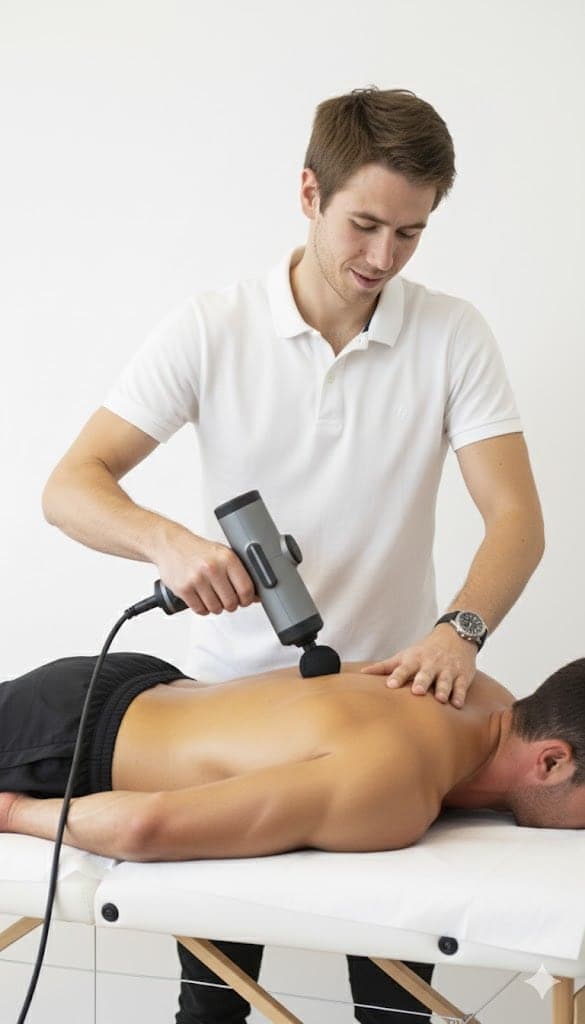
Written by
Chris
Massage therapist, nutrition and exercise physiologist
Norwegian-certified with a Bachelor’s in Physical Education and Nutrition and over ten years of clinical practice, working from a portable table in clients’ homes across the Paphos district.
This article is general information, not a medical diagnosis. If you have severe, worsening or unexplained pain, numbness, weakness, or pain after an accident, see a doctor first.