Chlorakas Spa Treatments: A Clinical Analysis of Effective Body Therapy Options
In short
Discover the most effective spa treatments in Chlorakas through the lens of a body mechanics specialist with 10 years of experience and a scientific approach to lasting pain relief.
When I first arrived in Chlorakas after a decade of working with athletes and chronic pain patients across Scandinavia, I was struck by something troubling: the disconnect between what people think spa treatments should deliver and what they actually receive. The warm Mediterranean climate here draws thousands seeking relief from tension, chronic pain, and stress-related conditions. Yet most leave with nothing more than temporary relaxation—a pleasant afternoon that evaporates by Tuesday morning.
This isn’t acceptable. Not when we understand body mechanics at a clinical level. Not when we know that muscular dysfunction, fascial restriction, and compensatory movement patterns can be durably addressed through evidence-based mechanical intervention.
After examining the landscape of Chlorakas spa treatments available to residents and visitors, I’ve identified a critical gap between traditional wellness approaches and results-driven therapeutic bodywork. This analysis draws from my Bachelor’s degree in Physical Education and Nutrition from Norway, combined with ten years of clinical practice treating everything from office workers with devastating postural dysfunction to professional athletes requiring performance optimization.
The Current Chlorakas Spa Treatment Landscape: What’s Actually Available
Chlorakas offers a predictable array of spa treatments that mirror the global wellness industry’s standard menu. Walk into any established facility in the area, and you’ll encounter Swedish massage, hot stone therapy, aromatherapy sessions, and various facial treatments. These services have their place in the relaxation economy, but we need to be honest about their therapeutic limitations.
Traditional Massage Modalities in Chlorakas
The most common offerings include Swedish massage, which uses long, flowing strokes designed to increase circulation and promote general relaxation. Therapists typically apply light to medium pressure, working superficially across muscle tissue without addressing the deeper mechanical dysfunctions that cause chronic pain. I’ve treated dozens of clients who’ve received Swedish massage weekly for years while their underlying conditions—myofascial trigger points, adhesions, compensatory muscle patterns—remain completely untouched.
Deep tissue massage appears on nearly every menu, but here’s where terminology becomes dangerously misleading. What most facilities label “deep tissue” is simply Swedish massage with slightly more pressure. True deep tissue work requires understanding of anatomical layers, the ability to work through superficial structures to access problem areas, and—critically—the sustained mechanical force necessary to create lasting change in dense, restricted tissue. Human hands, regardless of the therapist’s intention, have physiological limitations that prevent consistent depth and precision.
Specialized Treatment Options
Some Chlorakas establishments offer hot stone massage, where heated basalt stones are placed on the body or used as massage tools. The warmth increases superficial blood flow and feels pleasant, but thermal therapy alone cannot release the mechanical restrictions that cause dysfunction. Aromatherapy massage incorporates essential oils chosen for their purported psychological effects. Again: pleasant, potentially mood-enhancing, therapeutically insufficient for structural problems.
Thai massage and reflexology occasionally appear, bringing different philosophical frameworks but facing the same fundamental limitation—they work within constraints that prevent them from addressing the root mechanical causes of chronic pain and restricted movement.
Why Traditional Chlorakas Spa Treatments Fail to Deliver Lasting Results
I need to be direct about this because the misconception costs people years of unnecessary suffering. The spa industry has conditioned clients to expect and accept temporary relief. You book a treatment, feel better for 48 to 72 hours, then return to baseline discomfort. This cycle repeats indefinitely, generating revenue for facilities while your underlying condition remains unchanged or gradually worsens.
This isn’t the therapist’s fault—it’s a limitation of the methodology.
The Mechanical Reality of Human Hands
Human hands, even well-trained ones, cannot generate the consistent mechanical force required to durably alter dense fascial tissue and release deeply embedded trigger points. I’ve watched skilled therapists exhaust themselves trying to work through layers of restriction in a client’s thoracolumbar fascia or address chronic tension in the quadratus lumborum. They simply cannot maintain the necessary pressure, precision, and angle of attack for the duration required to create lasting change.
Additionally, human performance varies. Every therapist has off days—fatigue, personal stress, minor injuries affecting their technique. This variability means the treatment you receive on Monday differs from the one you get on Friday, making consistent progress impossible.
Superficial Approach to Complex Problems
Most spa treatments address symptoms rather than causes. A client presents with chronic lower back pain. The therapist works on the lower back, perhaps the glutes. They miss the compensatory hip flexor shortening, the dysfunctional breathing pattern creating thoracic rigidity, the weak deep core stabilizers forcing the superficial back muscles into constant overwork. These interconnected mechanical failures require systematic, comprehensive intervention—not 60 minutes of general muscle kneading.
I treated a 43-year-old executive from Paphos last year who’d spent over €3,000 on traditional massage for chronic neck and shoulder pain. Eighteen months of weekly treatments, zero lasting improvement. Within three sessions using precision mechanical deep-tissue work, we’d identified and released the key restrictions—scalene dysfunction, upper trap overactivation from forward head posture, restricted thoracic outlet. Six weeks later, he was pain-free for the first time in five years. That’s not exceptional; that’s what happens when you treat causes instead of symptoms.
Advanced Mechanical Deep-Tissue Treatment: The Scientific Alternative
After a decade of clinical practice, I work exclusively with advanced mechanical deep-tissue massage because it’s the only methodology that consistently delivers lasting results. This isn’t traditional spa treatment—it’s clinical bodywork focused entirely on identifying and eliminating the mechanical dysfunctions causing your pain, restriction, and performance limitations.
Precision: Targeting the Actual Problem
My specialized machine allows me to work with millimeter-level precision, accessing specific structures that hands cannot effectively reach. When I identify a trigger point in the infraspinatus or a fascial restriction in the iliotibial band, I can apply focused mechanical force to that exact location, maintaining optimal angle and pressure for the duration necessary to create tissue change.
This precision eliminates the scattershot approach of traditional massage, where therapists work generally across regions hoping to stumble upon problem areas. I map your mechanical dysfunctions systematically, then address them with surgical accuracy.
Power: Deeper Than Hands Can Reach
The machine generates consistent mechanical force that exceeds human capability while remaining completely controllable. This allows me to work through superficial layers to access deep restrictions that conventional massage cannot touch. I’m not trying to relax you—I’m mechanically altering tissue structure, breaking down adhesions, releasing trigger points at their source, and restoring optimal fascial glide between muscle layers.
For athletes and individuals with dense, well-developed musculature, this depth is absolutely essential. I’ve worked with powerlifters whose tissue density makes traditional massage nearly useless. The mechanical advantage of the tool allows me to create meaningful change where hands would simply slide across the surface.
Consistency: Eliminating the Variable
Every treatment delivers identical precision and power. There are no off days, no fatigue affecting technique, no variation in pressure or angle. This consistency is crucial for progressive treatment protocols. When we identify a restriction requiring four sessions to fully release, I know I can deliver exactly the same mechanical input each time, allowing your tissue to respond predictably and progressively.
My Clinical Approach to Chlorakas Spa Treatments
I don’t operate like traditional spa services in Chlorakas because I’m not providing the same product. I offer dedicated partnerships with clients who want lasting solutions to mechanical problems, not temporary escape from symptoms.
Comprehensive Assessment and Customized Treatment Plans
We begin with detailed functional assessment. I evaluate your movement patterns, postural habits, occupation-specific stress patterns, athletic demands if applicable, and injury history. This isn’t a brief intake form—it’s clinical examination designed to understand the complete mechanical picture of how your body creates and compensates for dysfunction.
From this assessment, I develop a customized treatment protocol targeting your specific issues in a logical progression. We don’t just book random appointments; we execute a strategic plan designed to systematically eliminate the mechanical causes of your pain or restriction.
Treatment Execution and Progressive Adaptation
Each session builds on the previous one. As we release restrictions and restore function in primary areas, compensatory patterns change, revealing secondary dysfunctions that were previously masked. I adapt the treatment plan in real-time based on your tissue response and functional improvement.
This requires expertise that most spa therapists don’t possess. I hold a Bachelor’s degree in Physical Education and Nutrition, giving me deep understanding of biomechanics, kinesiology, and systemic physiology. I don’t just push on muscles—I understand the mechanical relationships between structures and how dysfunction propagates through kinetic chains.
Mobile Service: Professional Treatment at Your Location
I travel to your location in Chlorakas with a professional treatment bench and all necessary equipment. This eliminates the logistical friction of spa appointments while ensuring you receive treatment in a comfortable, private environment. More importantly, it allows me to serve clients who are dealing with pain severe enough that traveling to a facility would be genuinely difficult.
Comparing Treatment Outcomes: Traditional Spa vs. Advanced Mechanical Therapy
The difference in outcomes between traditional Chlorakas spa treatments and advanced mechanical deep-tissue work isn’t marginal—it’s categorical. We’re not comparing good massage to slightly better massage; we’re comparing temporary symptom management to lasting problem resolution.
| Aspect | Traditional Spa Treatment | Advanced Mechanical Deep-Tissue |
|---|---|---|
| Primary Goal | Relaxation and temporary relief | Lasting elimination of mechanical dysfunction |
| Treatment Depth | Superficial to moderate, limited by hand strength | Deep and precise, exceeding manual capability |
| Consistency | Variable based on therapist condition | Identical precision and power every session |
| Assessment Approach | General intake, standard protocols | Comprehensive functional evaluation, customized strategy |
| Results Duration | 48-72 hours typical | Lasting when protocol completed properly |
| Treatment Focus | Symptom-based, works where pain is felt | Cause-based, addresses mechanical origin of dysfunction |
| Therapist Expertise | Certificate-level training, technique-focused | University degree, biomechanics and physiology understanding |
| Suitable For | Stress relief, general wellness maintenance | Chronic pain, injury recovery, performance optimization |
Real Outcomes: What Advanced Treatment Delivers
Let me share what this methodology accomplishes when properly applied, drawing from my decade of clinical experience and specifically from cases I’ve treated in Cyprus.
Chronic Pain Elimination
I worked with a 56-year-old woman from Chlorakas suffering from debilitating plantar fasciitis that had resisted two years of conventional treatment. Every morning began with excruciating first steps, limiting her ability to walk her dogs or enjoy the beach lifestyle that drew her to Cyprus. Traditional massage therapists had worked on her feet and calves with no lasting effect.
The actual problem wasn’t in her feet—it was a complex chain of dysfunction starting with tight hip flexors from prolonged sitting, creating compensatory anterior pelvic tilt, which altered her gait mechanics and created excessive tension through her posterior chain down to the plantar fascia. We systematically released the restrictions starting at the hip, progressed through the hamstrings and calves, and finally addressed the fascial restrictions in her feet themselves.
Eight weeks later, she was pain-free. Two years after treatment, she remains asymptomatic because we eliminated the mechanical cause, not just the inflammatory symptom.
Athletic Performance Enhancement
A competitive cyclist based in Paphos came to me with persistent power loss in his left leg and chronic tightness that wasn’t responding to his team’s sports massage protocol. His performance metrics showed clear asymmetry—his left leg was producing 23% less power than his right, and he couldn’t understand why.
Functional assessment revealed severe restriction in his left psoas and iliacus, combined with fascial adhesions throughout his hip complex. These restrictions were limiting his hip flexion range and preventing optimal force transfer during the pedal stroke. The mechanical deep-tissue work released these restrictions over six sessions, and his power output asymmetry disappeared. More importantly, his overall power numbers increased because both legs were now functioning optimally.
Posture Correction and Movement Quality
A software developer working remotely in Chlorakas presented with the typical modern epidemic: severe forward head posture, rounded shoulders, chronic tension headaches, and the beginning stages of thoracic outlet syndrome with numbness in his hands. He’d tried yoga, ergonomic equipment, and regular massage. All provided temporary relief, none addressed the fundamental mechanical problem.
The issue was multi-layered: his scalenes and upper traps were chronically shortened and hypertonic from compensating for poor head position; his pectoralis minor was restricting his shoulder mechanics; his thoracic spine had lost extension mobility. We systematically restored optimal length-tension relationships in these structures while educating him on movement patterns that wouldn’t recreate the dysfunction.
Three months later, his posture had transformed, his headaches were gone, and the numbness had resolved completely. He’d invested in addressing the cause, and his body responded exactly as biomechanics predicts it will when you remove the restrictions preventing optimal function.
Who Benefits Most from Advanced Mechanical Deep-Tissue Treatment
Not everyone requires this level of intervention. If you’re genuinely seeking relaxation—a pleasant afternoon escaping daily stress with no particular physical dysfunction—traditional spa treatments in Chlorakas serve that purpose adequately. But if you’re dealing with any of these situations, advanced mechanical work isn’t just beneficial; it’s essential.
Chronic Pain Sufferers
If you’ve lived with persistent pain for months or years, cycling through conventional treatments without lasting improvement, you’re dealing with mechanical dysfunction that superficial approaches cannot address. Lower back pain, neck and shoulder tension, hip restrictions, knee problems that aren’t structural—these respond predictably to systematic mechanical intervention when properly applied.
Athletes and Active Individuals
Performance optimization requires eliminating restrictions that limit your movement efficiency and force production. Whether you’re a competitive athlete or simply someone who wants to continue hiking, cycling, swimming, or playing tennis without pain or limitation, addressing mechanical restrictions dramatically improves your capability and reduces injury risk.
People with Occupational Dysfunction
If your work creates repetitive stress patterns—desk work causing upper body dysfunction, manual labor creating overuse injuries, prolonged standing causing lower body problems—you need intervention that corrects these patterns rather than temporarily relieving their symptoms.
Post-Injury Recovery
After acute injury healing, residual restrictions and compensatory patterns often persist, limiting your return to full function. Mechanical deep-tissue work systematically eliminates these restrictions, allowing complete recovery rather than leaving you with lasting limitation or chronic vulnerability to re-injury.
Investment vs. Expense: The Economic Reality of Effective Treatment
Traditional spa treatments represent an ongoing expense—regular sessions providing temporary relief but requiring indefinite repetition. Advanced mechanical deep-tissue work represents an investment—concentrated treatment that eliminates problems durably.
Consider the mathematics. If you’re receiving weekly massage at €60 per session, you’ll spend €3,120 over one year with no lasting improvement in your condition. Alternatively, a typical treatment protocol for resolving chronic mechanical dysfunction runs 6-12 sessions over 2-3 months. The investment is concentrated, but the outcome is lasting resolution rather than indefinite maintenance.
I’m not interested in creating dependency. My goal is solving your problem completely so you can return to optimal function and get on with your life. Some clients require periodic maintenance—athletes might benefit from quarterly sessions to prevent new restrictions from accumulating—but the foundation we build is lasting.
Frequently Asked Questions About Chlorakas Spa Treatments and Advanced Bodywork
What’s the difference between deep tissue massage at a spa and your mechanical approach?
What spas label “deep tissue” is typically moderately firm Swedish massage. True mechanical deep-tissue work uses specialized tools to generate consistent force that exceeds manual capability, allowing access to restrictions that hands cannot effectively address. More importantly, it’s systematically applied based on biomechanical assessment rather than general technique application.
Is mechanical deep-tissue treatment painful?
We’re working at depths that conventional massage doesn’t reach, so the sensation is more intense than relaxation massage. However, I maintain complete control over pressure and constantly communicate with you to ensure we’re working at the optimal intensity—deep enough to create change, never so aggressive that your nervous system guards against it. Most clients describe it as “good pain”—uncomfortable in the moment but obviously therapeutic.
How many sessions will I need to see lasting results?
This depends entirely on your specific condition. Acute problems with clear mechanical causes might resolve in 3-4 sessions. Chronic conditions with multiple compensatory patterns typically require 8-12 sessions. During your assessment, I’ll provide an honest projection based on what I find. If I don’t believe I can help you durably, I’ll tell you that directly rather than wasting your time and money.
Can you treat specific conditions like sciatica, frozen shoulder, or plantar fasciitis?
If your condition has a mechanical component—dysfunction in muscle, fascia, or movement patterns rather than structural damage—then yes, systematic mechanical intervention can address it. Many conditions labeled as specific diagnoses are actually manifestations of mechanical dysfunction that respond predictably to proper treatment.
Why should I choose your service over established spa facilities in Chlorakas?
Choose based on your goal. If you want a relaxing afternoon with temporary relief, established spas serve that purpose well. If you want lasting resolution of a mechanical problem that’s affecting your quality of life, you need clinical intervention based on biomechanical expertise and tools capable of creating lasting tissue change. I offer the latter, not the former.
Do you work with people who have never had massage before?
Absolutely. I adjust the intensity appropriately for your tissue condition and previous experience. First-time clients often respond even better than those who’ve received extensive traditional massage because their nervous systems haven’t adapted to ineffective superficial work.
What should I expect during my first session?
We’ll spend the first portion on comprehensive assessment—discussing your history, evaluating your movement patterns, and identifying the mechanical dysfunctions causing your problems. Then I’ll begin treatment, typically focusing on the primary restrictions we’ve identified. You’ll receive clear explanation of what I’m doing and why throughout the session. After treatment, I’ll outline the recommended protocol for addressing your condition completely.
How quickly will I notice improvement?
Most clients notice immediate changes in range of motion and reduction in pain following the first session. However, lasting improvement requires completing the treatment protocol—your tissue needs time to adapt to its restored mechanical state, and compensatory patterns need systematic correction. Think of it like physical therapy: one session produces detectable change, but lasting results require following through with the complete program.
The Path Forward: Choosing Effective Treatment in Chlorakas
The spa industry has conditioned people to accept temporary relief as the best possible outcome for mechanical pain and dysfunction. This acceptance is unnecessary. When you understand body mechanics at a clinical level and apply appropriate mechanical intervention, chronic problems resolve durably.
I’ve spent ten years refining this methodology because I’m not satisfied with making people feel better for a few days. My standard is lasting elimination of the mechanical dysfunctions causing their problems. This requires expertise beyond standard massage training—hence my Bachelor’s degree in Physical Education and Nutrition. It requires tools capable of generating consistent force at depths hands cannot reach—hence my specialized equipment. And it requires commitment to treating causes rather than symptoms—hence my focus on comprehensive assessment and customized protocols.
If you’re dealing with chronic pain, movement restriction, or athletic performance limitations, you deserve intervention that actually solves the problem. Traditional Chlorakas spa treatments have their place in the wellness economy, but they’re not designed to deliver lasting solutions to mechanical dysfunction. Advanced mechanical deep-tissue work, properly applied, consistently produces outcomes that conventional approaches cannot match.
The choice is yours: continue cycling through temporary relief, or invest in lasting resolution. I travel to your location in Chlorakas with professional equipment, conduct thorough assessment, and execute systematic treatment protocols designed to eliminate your mechanical problems completely. No spa ambiance, no essential oils, no pretense—just clinical expertise applied to solving your problem durably.
That’s what a decade of experience and proper education delivers: not better massage, but lasting solutions to mechanical dysfunction. If that’s what you’re looking for, let’s address your problem systematically and get you back to optimal function.
Evidence and limits
Massage may help with some symptoms, but benefits and evidence vary by condition. It does not replace medical assessment or treatment. A page update is not evidence of an independent clinical review.
Further reading: Massage therapy: evidence, safety and limitations by US National Center for Complementary and Integrative Health. This is general background reading, not verification of every claim in this article.
How we describe evidence and updates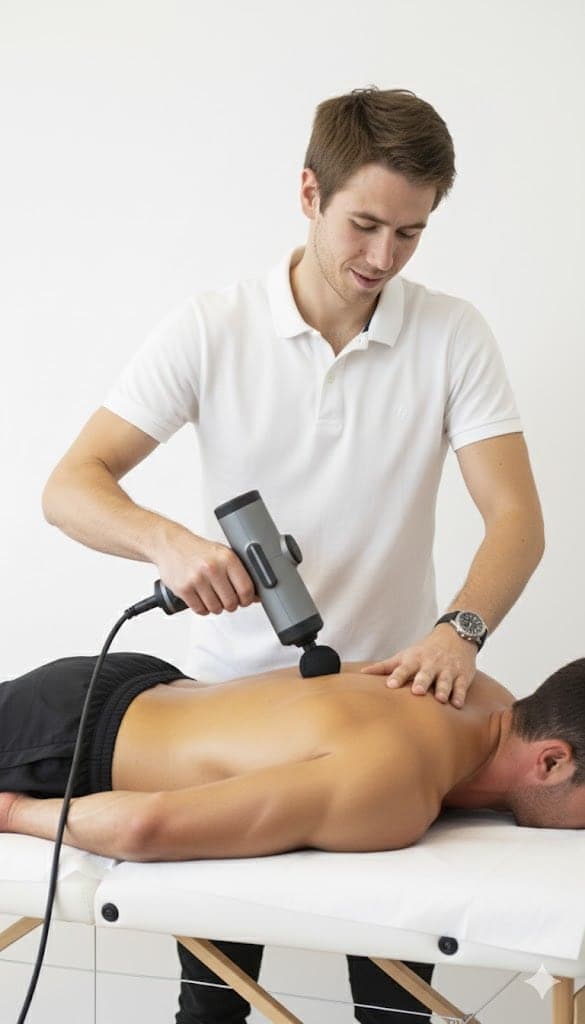
Written by
Chris
Massage therapist, nutrition and exercise physiologist
Norwegian-certified with a Bachelor’s in Physical Education and Nutrition and over ten years of clinical practice, working from a portable table in clients’ homes across the Paphos district.
This article is general information, not a medical diagnosis. If you have severe, worsening or unexplained pain, numbness, weakness, or pain after an accident, see a doctor first.