
Affordable Massage Options for Cyclists Tala: Investment-Grade Solutions That Actually Work
In short
Discover how cyclists in Tala can access affordable, results-driven massage therapy without compromising quality. Expert guidance on finding mechanical deep-tissue treatments that durably resolve pain.
I’ve spent the last decade witnessing a troubling pattern among cyclists in Tala and throughout the region. You’re spending money—sometimes significant amounts—on massage services that feel pleasant but deliver temporary results at best. Three days later, that familiar tightness in your hip flexors returns. The tension in your lower back reappears. Your performance plateaus again.
This isn’t about finding the cheapest massage in Tala. It’s about understanding what “affordable” truly means when your body’s mechanical function is at stake. After treating hundreds of cyclists with varying budgets, I can tell you definitively: the most expensive massage is the one you have to keep repeating because it never actually fixed anything.
Why Traditional Affordable Massage Options Fail Cyclists
Let me be direct about something most massage therapists won’t tell you: the traditional hands-on approach has fundamental limitations that no amount of training can overcome. I say this as someone with a Bachelor’s degree in Physical Education and Nutrition from Norway and ten years of specialized practice. The human hand, regardless of skill level, cannot consistently deliver the depth, precision, and sustained pressure required to release the chronically contracted tissue that develops in competitive and recreational cyclists alike.
When you’re searching for “affordable massage options for cyclists Tala,” you’re typically finding one of three scenarios. First, there are the budget relaxation centers where therapists rotate frequently, consistency is impossible, and the approach treats symptoms rather than causes. Second, you encounter mid-range therapists offering Swedish or sports massage who genuinely care but lack the mechanical capability to address deep fascial restrictions. Third, you find expensive specialists whose premium pricing doesn’t necessarily correlate with superior outcomes.
I’ve treated clients who came to me after spending thousands of pesos monthly on traditional massage without achieving lasting relief. The cycling community in Tala deserves better than this cycle of temporary relief and recurring investment.
The Real Cost of Ineffective Massage Therapy
Let’s examine the economics honestly. When you pay ₱800 for a massage that provides 48 hours of relief, you’re not making an affordable choice—you’re entering a subscription model with no exit strategy. Over six months, that’s ₱9,600 minimum, often much more when you increase frequency trying to maintain results.
| Service Type | Cost Per Session | Relief Duration | 6-Month Total | Problem Resolution |
|---|---|---|---|---|
| Budget Relaxation Massage | ₱500-700 | 24-48 hours | ₱13,000+ | None |
| Traditional Sports Massage | ₱800-1,200 | 3-5 days | ₱9,600+ | Minimal |
| Mechanical Deep-Tissue (My Method) | ₱1,500-2,000 | Progressive improvement | ₱6,000-8,000 | Lasting |
The numbers tell a clear story. My clients typically require 4-6 sessions to achieve lasting resolution of mechanical issues. That’s ₱6,000-12,000 for a lasting solution versus the endless cycle of temporary treatments that cost substantially more while delivering inferior outcomes.
Understanding Mechanical Dysfunction in Cyclists
Your body isn’t designed for the repetitive motion patterns that cycling demands. I’m not criticizing the sport—I’m stating biomechanical reality. Every pedal stroke reinforces specific muscular recruitment patterns, creating predictable areas of chronic tension and compensatory dysfunction.
The hip flexors remain in shortened positions for extended periods, developing adhesions within the psoas major and iliacus. Your quadriceps, particularly the vastus lateralis and rectus femoris, accumulate microtrauma from repetitive concentric and eccentric loading. The thoracolumbar fascia becomes restricted from maintaining fixed postures, creating referral patterns that manifest as lower back discomfort.
Traditional massage approaches these issues superficially. A therapist’s hands, no matter how skilled, cannot sustain the 15-20 pounds of precisely directed pressure required to release deep fascial restrictions without fatigue affecting consistency. This is why you feel better temporarily but return to baseline within days—the root cause remains unaddressed.
The Machine-Assisted Mechanical Advantage
I utilize a specialized mechanical device that fundamentally changes what’s possible in deep-tissue treatment. This isn’t a massage gun or vibration tool—it’s a precision instrument designed for sustained, controlled pressure delivery that human hands simply cannot replicate.
The mechanical advantage provides three critical elements:
Depth Without Compromise: The device works through superficial layers to access the actual source of dysfunction. When I treat a cyclist’s piriformis, I’m reaching the tissue interfaces where restrictions actually exist, not just addressing surface tension.
Precision Control: Every millimeter of pressure is deliberately calibrated to your tissue’s current state. I can maintain 18 pounds of pressure on a specific trigger point for three minutes without variation—impossible manually. This consistency allows proper myofascial release rather than temporary compression.
Reproducible Results: I don’t have “off days” where my effectiveness diminishes. Every session delivers identical technical capability, ensuring progressive improvement rather than unpredictable outcomes.
What Makes Massage “Affordable” for Cyclists in Tala
Affordability isn’t determined by the price tag on a single session. It’s measured by cost-per-resolution—what you invest to durably solve a mechanical problem versus temporarily managing symptoms.
I structure my services around this principle. Rather than selling individual sessions that create dependency, I offer dedicated partnership programs where we systematically address your body’s specific dysfunction patterns. This typically involves an initial assessment followed by 3-5 treatment sessions scheduled strategically to allow tissue remodeling between appointments.
Here’s what distinguishes this approach from typical “affordable massage options for cyclists Tala”:
- I travel to your location, eliminating transportation costs and time investment
- Each session targets documented mechanical restrictions, not general relaxation
- Treatment plans have defined endpoints based on measurable improvement, not indefinite continuation
- You receive education about maintaining results through specific movement patterns and self-care protocols
Case Study: Investment Versus Expense
Last year, I worked with a competitive cyclist from Tala who had been receiving bi-weekly massage for eighteen months. He was spending ₱1,800 monthly—₱21,600 annually—and still experiencing chronic IT band tension that limited his training intensity. His previous therapist was skilled within traditional methodologies but couldn’t access the lateral fascial restrictions causing his symptoms.
We completed an initial mechanical assessment identifying specific adhesions in his vastus lateralis, tensor fasciae latae, and gluteus medius. Over four sessions spanning six weeks, I systematically released these restrictions using precise mechanical intervention. His total investment: ₱6,000. The result: complete resolution of his IT band syndrome, which has remained resolved for over a year without requiring maintenance treatments.
That’s not just more affordable—it’s fundamentally different economics. One-time resolution versus perpetual management.
Finding Quality Mechanical Deep-Tissue Treatment in Tala
If you’re serious about resolving mechanical issues rather than temporarily managing them, your search criteria need to change. Stop looking for “affordable massage” and start seeking “effective mechanical intervention.” The distinction is critical.
When evaluating any massage service in Tala, ask these specific questions:
- What is your approach to chronic muscular tension—do you treat symptoms or address mechanical causes?
- Can you maintain consistent deep pressure throughout an entire session without fatigue affecting quality?
- Do you work with defined treatment plans that have endpoints, or do you assume indefinite client relationships?
- What mechanical tools or devices do you use to achieve results beyond manual capability?
- What is your educational background in biomechanics, anatomy, and movement science?
Most massage therapists in Tala cannot answer these questions in ways that indicate true mechanical competency. That doesn’t make them dishonest—it reflects the limitations of traditional training and methodology.
Why My Approach Delivers Superior Value
I hold a Bachelor’s degree in Physical Education and Nutrition from Norway and have dedicated ten years exclusively to advanced mechanical deep-tissue work. This isn’t supplementary to relaxation services or a specialty within broader practice—it’s my entire professional focus.
The specialized mechanical device I use isn’t available in typical massage settings throughout Tala. I invested substantially in equipment specifically because I witnessed the limitations of manual approaches and refused to offer clients anything less than optimal outcomes.
My commitment extends beyond the treatment table. I provide comprehensive education about the mechanical factors contributing to your specific dysfunction. You learn why your cycling position creates certain tension patterns, which muscle groups require targeted self-care, and how to modify training loads to prevent recurrence.
The Mobile Advantage
I travel to your location with a professional treatment bench and all necessary equipment. This eliminates several hidden costs that make traditional “affordable” massage options less economical than they appear:
- Transportation time and fuel costs traveling to clinics
- Schedule disruption and lost productive hours
- Post-treatment fatigue that makes immediate driving undesirable
- Inability to rest properly after deep mechanical work
When I complete a session at your home, you can immediately rest, hydrate properly, and allow your tissue to begin remodeling in a comfortable environment. This significantly enhances treatment effectiveness while providing practical convenience.
Understanding the Investment Framework
Let me share how I structure partnerships with cyclists in Tala, because transparency matters when discussing affordability and value.
Initial sessions involve comprehensive mechanical assessment. I’m identifying specific restrictions, evaluating movement patterns, documenting range-of-motion limitations, and determining which tissue structures require intervention. This typically takes 90-120 minutes and costs ₱2,000. You’re not paying for massage—you’re investing in diagnostic precision that informs everything that follows.
Subsequent treatment sessions are 60-90 minutes, priced at ₱1,500-1,800 depending on session length and treatment complexity. These aren’t relaxing experiences in the traditional sense—we’re performing mechanical work that requires your active participation and feedback.
Most cyclists require 3-5 treatment sessions to achieve lasting resolution of their primary mechanical issues. Your total investment ranges from ₱6,500-11,000 for lasting results. Compare this to the ₱800-1,200 you’d spend monthly on traditional massage that never actually resolves anything.
What “Lasting Resolution” Actually Means
I need to be precise about terminology. When I say “lasting resolution,” I’m referring to the elimination of specific mechanical restrictions that were causing your symptoms. Your body will continue accumulating new tension from ongoing cycling—that’s unavoidable given the sport’s biomechanical demands.
However, the difference is fundamental. After properly releasing chronic adhesions and fascial restrictions, your body functions mechanically as designed. New tension accumulates more slowly, remains superficial rather than developing into deep dysfunction, and responds quickly to simple self-care protocols I teach you.
Clients who complete treatment programs with me typically don’t require professional intervention again unless they significantly change training volume, experience acute injury, or allow mechanical problems to progress for extended periods without attention. This is radically different from needing bi-weekly massage indefinitely to maintain basic function.
Common Misconceptions About Affordable Massage for Cyclists
The cycling community in Tala has been conditioned to accept certain assumptions that don’t align with biomechanical reality. Let me address the most problematic:
Misconception: More frequent massage is better. Reality: Tissue remodeling requires time. Excessive treatment prevents proper healing and can increase inflammation. Strategic intervention with adequate recovery produces superior outcomes to frequent superficial work.
Misconception: Painful treatment indicates effectiveness. Reality: Pain is a communication signal, not a goal. My mechanical approach works at your tolerance threshold—sometimes intense, always controlled. Causing unnecessary pain creates protective guarding that prevents proper release.
Misconception: Maintenance massage is inevitable for serious cyclists. Reality: This reflects treatment failure, not physiological necessity. When mechanical restrictions are properly resolved and you understand prevention protocols, ongoing professional treatment shouldn’t be required.
Misconception: Affordable means lower cost per session. Reality: Affordable means lower total investment to achieve actual resolution. A ₱500 massage that accomplishes nothing is infinitely more expensive than a ₱2,000 treatment that durably fixes a problem.
The Science Behind Mechanical Deep-Tissue Intervention
I want to explain precisely why this methodology produces results that traditional approaches cannot achieve. Understanding the mechanism helps you make informed decisions about where to invest your resources.
Chronic muscular tension in cyclists isn’t simple tightness—it’s physiological adaptation. Repeated contraction under load causes sarcomere shortening, fascial adhesion development, and altered proprioceptive signaling. Your nervous system accepts this dysfunction as the new baseline, perpetuating the restriction even during rest.
Manual massage primarily affects superficial tissue and temporarily increases local blood flow. This feels pleasant and provides short-term relief but doesn’t address the architectural changes in deep tissue structure. The adhesions, trigger points, and fascial restrictions remain intact at the mechanical level.
Mechanical deep-tissue intervention with sustained, precisely calibrated pressure creates different physiological responses:
- Direct mechanical disruption of adhesions between tissue layers
- Sustained pressure triggering autogenic inhibition through Golgi tendon organ stimulation
- Increased local tissue temperature facilitating collagen remodeling
- Neurological reset of proprioceptive feedback normalizing muscle tone
These aren’t temporary effects—they represent actual structural and neurological changes that persist after treatment concludes.
Practical Steps for Tala Cyclists Seeking Affordable Solutions
If you’re ready to move beyond the cycle of temporary relief and recurring expense, here’s your action framework:
Step 1: Identify Your Primary Mechanical Issues
Don’t seek massage for general “tightness.” Be specific. Is it chronic hip flexor restriction limiting your pedal stroke? IT band tension causing lateral knee pain? Thoracolumbar restriction affecting your riding position? Specific problems require targeted intervention.
Step 2: Evaluate Practitioners Based on Methodology, Not Price
Ask about their approach to chronic mechanical dysfunction. Request information about their educational background and specialized training. Inquire about treatment tools and technologies. The cheapest option will cost you far more through ineffectiveness.
Step 3: Demand Treatment Plans with Defined Endpoints
Any competent mechanical specialist should be able to estimate treatment duration based on your specific conditions. If a practitioner assumes you’ll need indefinite ongoing sessions, they’re planning to manage your symptoms, not resolve your mechanical problems.
Step 4: Commit to the Process
Mechanical intervention isn’t passive relaxation. You’ll need to participate actively, provide precise feedback, and follow specific protocols between sessions. Half-hearted engagement produces half-results regardless of methodology.
Why Location Matters: The Tala Context
I specifically serve cyclists in Tala because I understand the unique challenges this community faces. The terrain demands significant muscular output. The climate affects tissue hydration and recovery. The cycling culture here emphasizes performance and endurance, creating specific mechanical stress patterns.
You’re not dealing with casual recreational cycling—many of you are training seriously, competing, or simply pushing your physical limits regularly. This creates mechanical demands that require professional-grade intervention, not spa-style relaxation.
The good news: Tala’s cycling community is sophisticated enough to recognize the difference between massage as entertainment and treatment as investment. You understand that your body is equipment requiring proper maintenance, and you’re willing to invest appropriately when the value proposition is clear.
Frequently Asked Questions
How do I know if I need mechanical deep-tissue treatment versus regular massage?
If you’re experiencing chronic issues that persist despite regular massage, if your performance is limited by mechanical restrictions rather than cardiovascular fitness, or if you have specific dysfunction patterns that recur predictably, you need mechanical intervention. Regular massage is appropriate for general relaxation and recovery but cannot resolve established mechanical problems.
Is the mechanical approach more painful than traditional massage?
It’s more intense but not more painful. I work at your tolerance threshold with precise control. You experience significant pressure, but it’s therapeutic discomfort, not damaging pain. Most clients describe it as “hurts so good”—you feel the release happening and recognize it’s addressing the actual problem.
How quickly will I see results from affordable massage options for cyclists Tala?
Depends on chronicity and severity. Acute issues often respond within 1-2 sessions. Chronic restrictions that have been developing for years typically require 4-6 sessions for complete resolution. You’ll notice meaningful improvement after the first session, but lasting results require completing the full treatment protocol.
Can I continue training while undergoing treatment?
Yes, with modifications. I provide specific guidance about training intensity and volume during treatment. Generally, you’ll maintain cardiovascular fitness while reducing mechanical stress to allow tissue remodeling. Complete rest isn’t necessary and can actually be counterproductive.
What happens if my mechanical issues return after treatment?
If restrictions return, it indicates either incomplete initial treatment, premature return to full training loads, or new mechanical stress patterns. I offer reassessment to determine the cause. However, properly resolved mechanical restrictions don’t simply “return”—new dysfunction must develop through new mechanical stress.
How does traveling to my location work logistically?
I bring a professional treatment bench, all necessary tools and equipment, and handle complete setup and breakdown. You simply provide space adequate for the bench and treatment. I schedule appointments with adequate travel time, so there’s never rushing or time pressure affecting session quality.
What makes your method different from other mechanical devices like massage guns?
Massage guns deliver percussion, not sustained pressure. They’re useful for superficial work and general recovery but cannot access deep restrictions or maintain the precise, controlled force required for mechanical release. My specialized equipment is designed specifically for deep-tissue intervention with graduated pressure control.
Is this approach covered by health insurance in the Philippines?
Coverage varies by policy and provider. I provide detailed receipts that clients can submit for reimbursement consideration. However, because this is results-driven mechanical treatment rather than traditional massage, classification can be complex. I recommend verifying with your specific insurer.
Making the Decision: Investment or Expense
You’re at a decision point that will significantly impact your cycling performance, physical comfort, and long-term health trajectory. Continue with traditional affordable massage options that provide temporary relief while perpetuating dysfunction, or invest in mechanical intervention that durably resolves your specific issues.
I’m not suggesting my approach is the only valid methodology—I’m stating definitively that it produces superior outcomes for mechanical dysfunction in cyclists. Ten years of specialized practice, a degree in Physical Education and Nutrition, and hundreds of successfully treated clients validate this assertion.
The economics are clear. The methodology is scientifically sound. The results are documentable and reproducible. What remains is your decision to stop managing symptoms and start resolving mechanical problems.
Your Next Steps Toward Lasting Resolution
If you’re a cyclist in Tala tired of the temporary relief cycle, ready to address mechanical dysfunction at its source, and prepared to invest in lasting results rather than ongoing expense, the path forward is straightforward.
Schedule an initial mechanical assessment where we’ll identify your specific restrictions, evaluate your movement patterns, and develop a targeted treatment protocol. You’ll understand exactly what’s causing your mechanical issues and receive a clear roadmap to lasting resolution.
I travel to your location with professional equipment, ensuring convenience while delivering clinical-grade intervention. You’re not paying for ambiance or atmosphere—you’re investing in mechanical expertise and results-driven treatment that changes how your body functions.
The cyclists I work with in Tala don’t return for endless maintenance sessions. They complete treatment protocols, resolve their mechanical issues, learn prevention strategies, and return to training and competition without the chronic restrictions that previously limited them.
That’s what truly affordable massage for cyclists looks like—not the lowest price per session, but the smartest investment per resolution. Your body deserves better than perpetual symptom management. It deserves actual mechanical restoration.
The choice, as always, is yours. Continue the cycle, or break it durably.
Evidence and limits
Massage may help with some symptoms, but benefits and evidence vary by condition. It does not replace medical assessment or treatment. A page update is not evidence of an independent clinical review.
Further reading: Massage therapy: evidence, safety and limitations by US National Center for Complementary and Integrative Health. This is general background reading, not verification of every claim in this article.
How we describe evidence and updates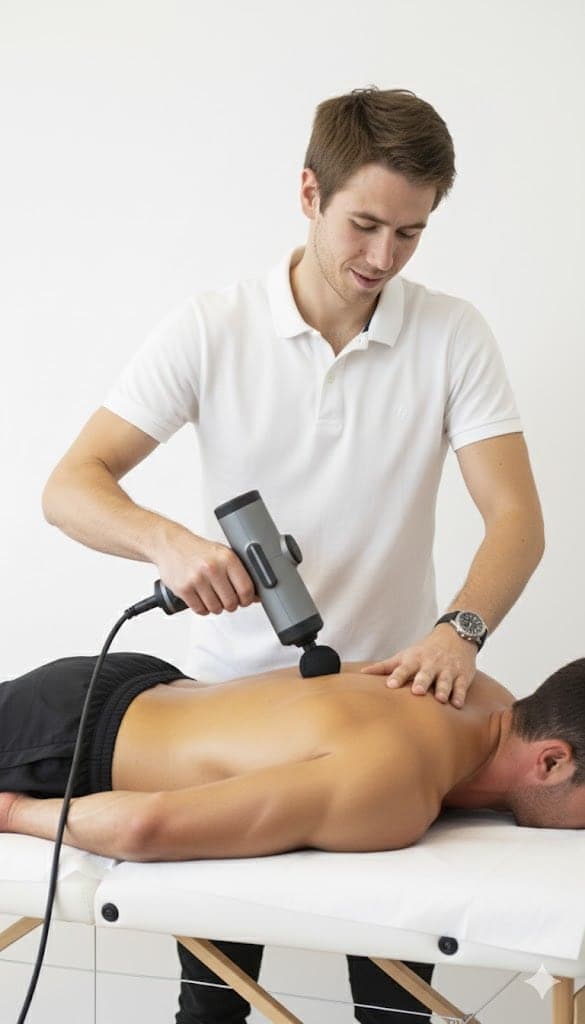
Written by
Chris
Massage therapist, nutrition and exercise physiologist
Norwegian-certified with a Bachelor’s in Physical Education and Nutrition and over ten years of clinical practice, working from a portable table in clients’ homes across the Paphos district.
This article is general information, not a medical diagnosis. If you have severe, worsening or unexplained pain, numbness, weakness, or pain after an accident, see a doctor first.