
Affordable deep tissue massage Tala: professional mechanical therapy that delivers lasting results
In short
Expert deep tissue massage in Tala using advanced mechanical techniques. University-trained specialist with 10 years experience delivers affordable, results-driven therapy at your location.
When I first established my practice in Tala ten years ago, I was frustrated by the limitations of traditional massage therapy. Despite my Bachelor’s degree in Physical Education and Nutrition from Norway and years of training, I watched clients return week after week with the same recurring pain patterns. That’s when I realized something fundamental: if we’re only treating symptoms rather than addressing the mechanical dysfunction at its root, we’re failing our clients. This revelation led me to develop what I now consider the most effective approach to deep tissue therapy available in Tala – and it’s more affordable than you might think.
The transformation didn’t happen overnight. I remember working with a construction worker who had suffered from chronic lower back pain for over three years. After six months of traditional massage from various therapists, he came to me as a last resort before considering surgery. Using my specialized mechanical approach, we achieved complete pain elimination in just four sessions. That was seven years ago, and he remains pain-free today. This isn’t luck – this is the predictable outcome when you apply advanced biomechanical principles with precision engineering.
What sets my approach apart isn’t just the affordability – though I’m proud to offer rates that make professional-grade therapy accessible to everyone in Tala. It’s the fundamental shift from symptomatic relief to mechanical correction. When you invest in my services, you’re not purchasing temporary relaxation; you’re acquiring a systematic solution to dysfunctional movement patterns that have been limiting your quality of life.
Understanding the mechanical advantage of advanced deep tissue therapy
Traditional massage therapy, while pleasant, operates on outdated assumptions about muscle tension and pain management. After a decade of clinical practice and extensive study of human biomechanics, I can state categorically that most conventional approaches fail because they lack the precision, consistency, and mechanical advantage necessary to create lasting change. This isn’t a criticism of massage therapists – it’s simply a recognition that human hands have inherent limitations that technology can overcome.
My specialized mechanical system delivers what I call the three pillars of effective deep tissue work: Precision, Power, and Consistency. The precision aspect allows me to target specific fascial restrictions with millimeter accuracy, something impossible to achieve through manual manipulation. The power component enables penetration depths that exceed human capability by 300-400%, reaching the deepest layers of muscle tissue where chronic tension patterns are anchored. Most importantly, the consistency factor eliminates the variability that plagues traditional massage – there are no “off days” with mechanical precision.
I recall treating a professional athlete who had undergone months of conventional massage therapy for a persistent hamstring issue. Despite spending thousands of dollars with various practitioners, her performance continued to decline. When we analyzed her movement patterns using my biomechanical assessment protocol, we identified three distinct fascial restrictions that were creating compensatory movement patterns throughout her kinetic chain. Using my mechanical approach, we eliminated these restrictions in two sessions, and she achieved a personal best in her next competition. This outcome wasn’t exceptional – it was predictable based on sound biomechanical principles.
The mechanical advantage extends beyond simple pressure application. My system allows for precise angle adjustment, variable frequency modulation, and controlled depth penetration – variables that determine the difference between temporary relief and lasting resolution. When I work on trigger points in the deep rotator muscles, for instance, I can maintain consistent pressure at the optimal angle for the exact duration required to achieve myofascial release. Human hands fatigue, lose precision, and cannot maintain the mechanical consistency required for optimal results.
Why traditional massage fails to deliver lasting results
The massage industry has perpetuated several misconceptions that ultimately disserve clients seeking genuine therapeutic outcomes. The most damaging of these is the belief that deeper pressure automatically equals better results. This crude understanding of tissue mechanics leads to ineffective treatments that often cause more harm than benefit. After treating over 2,000 clients in Tala, I can definitively state that therapeutic effectiveness is determined by precision and consistency, not merely pressure intensity.
Consider the anatomical reality of chronic muscle tension. When muscles maintain contracted states for extended periods, they develop adhesions within the fascial matrix that restrict normal sliding mechanisms. These adhesions don’t respond to general pressure application – they require specific angular approaches at precise depths with sustained mechanical input to achieve release. Traditional massage, limited by human hand mechanics, cannot deliver the controlled force vectors necessary to break down these adhesions effectively.
I learned this lesson early in my career when treating a client with frozen shoulder syndrome. Despite months of conventional treatment, her range of motion remained severely limited. When I transitioned to my mechanical approach and applied sustained pressure at the optimal angle to her subscapularis muscle, we achieved a 40-degree improvement in external rotation in a single session. The difference wasn’t my technique – it was the mechanical advantage that allowed me to maintain precise pressure at the exact depth and angle required for fascial release.
The economic reality is equally important. Traditional massage creates dependency because it provides temporary relief without addressing underlying mechanical dysfunction. Clients return regularly, spending hundreds or thousands of dollars annually on treatments that never resolve their core issues. My approach, while initially requiring a series of intensive sessions, aims for lasting resolution. The long-term cost savings are substantial, making professional-grade therapy genuinely affordable when viewed as an investment in lasting health improvement rather than ongoing expense management.
The science behind mechanical deep tissue intervention
Understanding the physiological mechanisms underlying effective deep tissue work is crucial for appreciating why mechanical intervention succeeds where traditional methods fail. The human fascial system operates as an integrated network of connective tissue that responds to specific mechanical stimuli according to well-established principles of mechanobiology. When we apply controlled mechanical stress to fascial tissue, we initiate a cascade of cellular responses that promote tissue remodeling and functional improvement.
My mechanical system operates on the principle of mechanotransduction – the process by which cells convert mechanical stimuli into biochemical signals. When we apply sustained pressure at specific depths and angles, we activate mechanoreceptors within the fascial matrix that trigger the release of inflammatory mediators and growth factors. These cellular signals promote tissue healing, reduce adhesion formation, and restore normal sliding mechanisms between fascial layers. This is not theoretical – this is established science that forms the foundation of my clinical approach.
The pressure dynamics involved in effective fascial release require mathematical precision that human hands cannot achieve. Optimal tissue deformation occurs when we apply 15-20 pounds of pressure per square inch at angles between 30-45 degrees to the fascial grain, maintained for 90-120 seconds to achieve viscoelastic deformation. My mechanical system can maintain these parameters with absolute consistency, while manual techniques inevitably vary in pressure, angle, and duration due to human limitations.
I documented this principle while working with a marathon runner who had developed chronic IT band syndrome. Using pressure mapping technology, I demonstrated that conventional massage applied inconsistent pressure ranging from 8-25 pounds per square inch, with significant angle variation throughout the treatment. When we applied my mechanical protocol with consistent 18 pounds per square inch at a 35-degree angle, her pain scores decreased from 8/10 to 2/10 in three sessions, and she completed her next marathon pain-free. The difference wasn’t effort or intention – it was mechanical precision.
Temperature regulation during tissue work is another factor that distinguishes mechanical intervention from manual techniques. Sustained pressure generates heat through friction, which enhances tissue pliability and promotes circulation. My system includes thermal monitoring to maintain optimal tissue temperature throughout treatment, maximizing therapeutic benefit while preventing tissue damage. This level of control is impossible to achieve through manual techniques, representing another significant advantage of the mechanical approach.
Comprehensive assessment and treatment methodology
Effective deep tissue intervention begins with comprehensive biomechanical assessment, not random pressure application to symptomatic areas. My assessment protocol evaluates movement patterns, identifies compensatory strategies, and maps dysfunctional tissue regions before any hands-on treatment begins. This systematic approach ensures that we address causative factors rather than chasing symptoms from one location to another.
The assessment process incorporates multiple evaluation methods that I’ve refined over a decade of clinical practice. Postural analysis reveals asymmetries and imbalances that indicate underlying fascial restrictions. Movement screening identifies compensatory patterns that suggest specific tissue dysfunctions. Palpatory examination locates areas of increased tissue density, temperature variation, and restricted mobility. This comprehensive evaluation creates a treatment map that guides our mechanical intervention for maximum therapeutic effect.
I remember working with an office worker who complained of neck pain but demonstrated clear hip mobility restrictions during my assessment. Rather than focusing on the symptomatic area, we addressed the hip restrictions that were forcing compensatory cervical spine positioning. After three sessions targeting the hip fascial restrictions, her neck pain resolved completely. This outcome illustrates why systematic assessment is crucial – symptoms rarely occur at the site of primary dysfunction.
Treatment planning follows a specific progression designed to restore functional movement patterns while eliminating pain. We begin by addressing primary restrictions identified during assessment, typically working from proximal to distal and deep to superficial. Each session builds upon previous improvements, systematically eliminating compensation patterns and restoring normal movement mechanics. This progressive approach ensures lasting results rather than temporary symptomatic relief.
Documentation throughout the treatment process allows us to track progress objectively and adjust protocols based on tissue response. I measure range of motion, pain scores, and functional improvements at each session, creating a data-driven approach to therapeutic intervention. This documentation also helps clients understand their progress and reinforces the value of systematic treatment over random symptomatic approaches.
Advanced mechanical tools and techniques
The centerpiece of my practice is a specialized mechanical system that delivers therapeutic pressure with precision impossible to achieve through manual techniques. This isn’t simply a more powerful massage tool – it’s a sophisticated instrument designed specifically for fascial intervention based on established principles of tissue mechanics and cellular physiology. The investment in this technology reflects my commitment to providing the most effective treatment available, regardless of cost considerations.
The mechanical system features variable pressure adjustment from 5 to 50 pounds per square inch, allowing precise calibration based on tissue type, client tolerance, and therapeutic objectives. Angle adjustment capabilities ensure optimal force vector application for specific fascial orientations. Frequency modulation allows us to match the mechanical resonance of different tissue types, maximizing therapeutic effectiveness while minimizing client discomfort. These parameters can be adjusted in real-time based on tissue response, creating a truly customized treatment experience.
Temperature monitoring prevents tissue damage while optimizing therapeutic benefit. The system includes sensors that track tissue temperature throughout treatment, automatically adjusting pressure and speed to maintain optimal thermal conditions. This safety feature is crucial when working at the deep tissue levels required for lasting therapeutic change. Manual techniques lack this precision, creating unnecessary risk of tissue damage or suboptimal treatment outcomes.
I developed specific protocols for different conditions based on tissue architecture and dysfunction patterns. IT band syndrome requires longitudinal pressure application along the fascial grain, while trigger point release demands perpendicular pressure at specific anatomical locations. Myofascial adhesions respond to sustained pressure with gradual angle changes, while muscle spasm resolution requires rapid pressure cycling at specific frequencies. These protocols represent years of clinical refinement and cannot be replicated through manual techniques.
The consistency factor eliminates treatment variability that plagues manual approaches. Every session delivers identical mechanical parameters, ensuring reproducible outcomes regardless of external factors. I never have “off days” because the mechanical precision remains constant. This reliability is crucial for clients investing in therapeutic outcomes rather than relaxation experiences.
Targeting specific conditions with mechanical precision
Chronic pain conditions respond predictably to mechanical intervention when we apply appropriate protocols based on underlying tissue pathology. Lower back pain, the most common condition I treat in Tala, typically results from fascial restrictions in the thoracolumbar fascia, hip flexors, or deep rotator muscles. Manual techniques cannot achieve the sustained pressure depths required to release these restrictions effectively, which explains why conventional massage provides only temporary relief.
Neck and shoulder tension, ubiquitous among office workers in Tala, requires specific attention to the cervical fascial layers and upper trapezius complex. The mechanical advantage allows me to work at depths of 3-4 inches below the surface, reaching the deep cervical muscles that are inaccessible through manual techniques. When we release restrictions at these deeper levels, surface tension dissolves automatically, creating lasting relief rather than temporary comfort.
Athletic performance enhancement represents another application where mechanical precision delivers superior outcomes. I work with several professional athletes who require tissue preparation for competition and recovery facilitation afterward. The mechanical system allows us to achieve optimal tissue pliability without the tissue damage associated with aggressive manual techniques. Athletes can receive intensive tissue work immediately before competition without performance degradation – something impossible with conventional massage.
Postural dysfunction requires systematic fascial release combined with movement re-education. Forward head posture, common among computer users, involves shortened anterior cervical fascia and lengthened posterior cervical muscles. My mechanical protocols can address both components simultaneously, releasing fascial restrictions while promoting optimal muscle length-tension relationships. This comprehensive approach creates lasting postural improvement rather than temporary alignment changes.
Chronic headache sufferers often respond dramatically to cervical fascial release combined with temporal muscle work. I recall treating a client who had suffered from daily headaches for over five years, spending thousands on medical treatments without resolution. Using my mechanical approach to release restrictions in her suboccipital muscles and temporal fascia, we eliminated her headaches completely in six sessions. She has remained headache-free for over two years, representing thousands of dollars in savings compared to ongoing medical management.
The mobile service advantage in Tala
Delivering professional-grade therapeutic services at clients’ locations eliminates barriers that prevent many people from accessing effective treatment. Transportation difficulties, scheduling constraints, and privacy concerns often discourage individuals from seeking the help they need. By bringing my complete setup to your location, I ensure that geographic and logistical factors don’t compromise your health outcomes.
My mobile setup includes everything necessary for professional treatment: a specialized therapeutic table designed for optimal positioning, the mechanical intervention system, assessment tools, and all necessary supplies. This isn’t a compromise version of my clinic-based services – it’s the complete therapeutic experience delivered in your preferred environment. The professional table ensures proper positioning for effective treatment, while the mechanical system delivers the same precision available in any fixed location.
Environmental control represents a significant advantage of in-home treatment. Clinic environments often generate stress and anxiety that interfere with therapeutic outcomes. In your familiar environment, your nervous system remains calm and receptive to treatment, enhancing therapeutic effectiveness. I can control lighting, temperature, and sound levels to optimize your comfort and treatment response. This environmental advantage contributes to superior outcomes compared to clinic-based treatments.
Privacy considerations are particularly important for clients addressing sensitive conditions or those who feel uncomfortable in clinical settings. In-home treatment allows open discussion of symptoms and concerns without concern for privacy. This open communication is crucial for accurate assessment and effective treatment planning. Many clients share information during home visits that they would never discuss in a clinical environment, leading to more accurate diagnosis and treatment.
Time efficiency represents another significant advantage. Eliminating travel time and parking concerns allows us to focus entirely on therapeutic outcomes. Sessions can be scheduled for optimal timing based on your daily routine and physical condition. Morning sessions work well for athletic preparation, while evening sessions promote optimal recovery and sleep quality. This flexibility optimizes therapeutic effectiveness while respecting your schedule and preferences.
Investment vs. expense: understanding the economic value
Professional therapeutic intervention should be evaluated as an investment in long-term health and performance rather than an ongoing expense for symptomatic management. When we address underlying mechanical dysfunction, we eliminate the need for continuous treatments while improving quality of life durably. This economic reality makes my services the most cost-effective therapeutic option available in Tala when viewed from a long-term perspective.
Consider the typical massage therapy model: clients receive temporary relief requiring regular maintenance sessions indefinitely. Annual expenses easily reach a wide range of costs for weekly treatments that never address underlying problems. My approach requires an intensive initial series followed by occasional maintenance, typically resulting in 70-80% reduction in long-term therapeutic costs. The economic advantage becomes obvious when we calculate total investment over multi-year periods.
Lost productivity due to chronic pain represents a hidden cost that most people ignore when evaluating therapeutic options. Pain affects concentration, decision-making, and energy levels, reducing professional effectiveness and earning potential. When we relieves chronic pain durably, we restore full productive capacity, often resulting in career advancement and increased earnings that far exceed therapeutic investment. I’ve worked with executives who attributed promotions and performance improvements directly to pain elimination achieved through my protocols.
Medical costs associated with chronic pain conditions can be substantial, including diagnostic imaging, medications, specialist consultations, and potential surgical interventions. Effective mechanical intervention often eliminates the need for these expensive medical approaches while achieving superior outcomes. Prevention through proper tissue maintenance is always more cost-effective than treatment after significant pathology develops.
Quality of life improvements represent value that transcends monetary calculations. Eliminating chronic pain restores sleep quality, exercise capacity, and social engagement that enriches life immeasurably. Clients frequently report improved relationships, increased activity levels, and renewed enthusiasm for life following successful treatment. These outcomes represent the true value of effective therapeutic intervention – benefits that continue indefinitely after treatment completion.
Customized treatment protocols for optimal outcomes
Effective therapeutic intervention requires individualized protocols based on specific tissue pathology, movement dysfunction, and therapeutic objectives. One-size-fits-all approaches ignore the biomechanical complexity of human movement and the individual variation in tissue response. My assessment process identifies specific dysfunction patterns that guide customized protocol development for each client.
Athletic clients require protocols that enhance performance while preventing injury. Treatment timing must consider training cycles, competition schedules, and sport-specific demands. I work with runners differently than weightlifters, swimmers differently than cyclists, based on sport-specific movement patterns and tissue stress distributions. Recovery protocols differ from preparation protocols, requiring sophisticated understanding of tissue adaptation and performance optimization.
Sedentary workers present different challenges requiring protocols that address postural adaptations and movement compensations. Hours of sitting create specific fascial restrictions and muscle imbalances that require systematic correction. Treatment must be coordinated with ergonomic improvements and movement education to achieve lasting results. Simply addressing tissue restrictions without modifying causative behaviors results in rapid problem recurrence.
Age-related considerations influence protocol selection and progression rates. Younger clients typically respond faster to aggressive protocols, while older clients benefit from gradual progression and longer integration periods. Tissue healing capacity, medication effects, and concurrent health conditions all influence treatment planning. Experienced practitioners understand these variables and adjust protocols accordingly for optimal outcomes.
Pain sensitivity varies significantly between individuals, requiring careful calibration of mechanical pressure and treatment duration. Some clients tolerate aggressive intervention well and prefer intensive sessions, while others require gradual progression with lower intensity protocols. My mechanical system allows precise adjustment of all parameters, ensuring optimal therapeutic effect regardless of individual sensitivity levels.
Professional credentials and continuing education
My educational foundation includes a Bachelor’s degree in Physical Education and Nutrition from Norway, providing comprehensive understanding of human anatomy, physiology, and biomechanics. This academic background distinguishes my practice from massage therapists with limited educational preparation, ensuring that treatment protocols are based on sound scientific principles rather than intuitive approaches.
Ten years of clinical practice have provided extensive experience with diverse conditions and client populations. This experience base allows recognition of subtle dysfunction patterns that less experienced practitioners might miss. Pattern recognition is crucial for effective treatment planning – knowing which tissues to address and in what sequence based on clinical presentation and assessment findings.
Continuing education remains a priority to stay current with advances in manual therapy, tissue mechanics, and therapeutic technology. I regularly attend professional conferences, complete advanced training programs, and study current research to ensure that my protocols reflect best practices in therapeutic intervention. This commitment to ongoing learning ensures that clients receive the most effective treatment available.
Professional certification and insurance provide accountability and protection for both practitioner and client. These credentials represent commitment to ethical practice standards and therapeutic competency. Clients can be confident that they’re receiving professional-grade services from a qualified practitioner rather than amateur treatment that could potentially cause harm.
Research and documentation of treatment outcomes contribute to the broader understanding of mechanical therapeutic intervention. I maintain detailed records of client progress, treatment protocols, and outcome measures that help refine my approaches and contribute to professional knowledge. This systematic approach to practice development ensures continuous improvement in therapeutic effectiveness.
Building long-term therapeutic partnerships
Effective therapeutic intervention extends beyond individual treatment sessions to encompass comprehensive health partnerships that support long-term wellness and performance optimization. My practice model emphasizes client education, movement coaching, and lifestyle modification alongside mechanical intervention to create lasting improvements in health and function.
Client education is fundamental to maintaining therapeutic gains achieved through mechanical intervention. Understanding why problems developed, how treatment addresses underlying causes, and what modifications prevent recurrence empowers clients to take active roles in their health management. Educated clients make better decisions about activity modification, exercise selection, and lifestyle factors that influence tissue health.
Movement coaching complements mechanical tissue work by addressing dysfunctional patterns that contributed to original problems. Simply releasing fascial restrictions without correcting movement dysfunction results in rapid problem recurrence. I teach clients proper movement mechanics, postural awareness, and corrective exercises that support tissue health and prevent future problems.
Lifestyle modification addresses environmental and behavioral factors that contribute to tissue dysfunction. Workplace ergonomics, sleep positioning, exercise selection, and stress management all influence tissue health and treatment outcomes. Comprehensive therapeutic partnerships address these factors systematically to optimize long-term results.
Maintenance scheduling prevents recurrence of resolved problems while supporting continued performance improvement. Rather than waiting for problems to develop, proactive maintenance keeps tissues healthy and prevents dysfunction progression. This preventive approach is more comfortable for clients and more cost-effective than reactive treatment of established problems.
Frequently asked questions about advanced deep tissue therapy
How does mechanical deep tissue work differ from traditional massage therapy?
Mechanical deep tissue intervention uses specialized equipment to deliver precise, consistent pressure at depths and intensities impossible to achieve through manual techniques. While traditional massage provides temporary relaxation and symptomatic relief, my mechanical approach addresses underlying fascial restrictions and movement dysfunction to create lasting improvements. The mechanical system eliminates variability in pressure, angle, and duration that limits manual techniques, ensuring reproducible therapeutic outcomes. This isn’t simply stronger massage – it’s a fundamentally different approach based on biomechanical principles and tissue mechanics that creates lasting change rather than temporary comfort.
Is mechanical deep tissue therapy painful, and how do you ensure client comfort?
Effective deep tissue work requires sufficient pressure to achieve fascial release, which can create temporary discomfort during treatment. However, my mechanical system allows precise pressure control that can be adjusted instantly based on tissue response and client tolerance. The discomfort experienced during treatment is productive and therapeutic, unlike the random pressure application that often occurs with manual techniques. Most clients describe the sensation as “therapeutic discomfort” that provides immediate relief as restrictions release. The mechanical precision ensures that pressure is applied only where needed and at intensities that promote healing rather than tissue damage.
How many sessions are typically required to achieve lasting results?
Treatment duration depends on condition severity, chronicity, and individual tissue response, but most clients achieve significant improvement within 3-5 sessions. Acute conditions often respond within 1-2 sessions, while chronic dysfunctions may require 6-8 sessions for complete resolution. The systematic approach ensures that each session builds upon previous improvements, creating progressive advancement toward lasting resolution. Unlike traditional massage that requires ongoing maintenance indefinitely, my protocols aim for lasting improvement that eliminates the need for regular treatments. Most clients require only occasional maintenance sessions once their primary issues are resolved.
Can mechanical deep tissue work help with chronic conditions that haven’t responded to other treatments?
Chronic conditions often persist because previous treatments addressed symptoms rather than underlying mechanical dysfunction. My approach specifically targets fascial restrictions and movement compensations that perpetuate chronic pain and dysfunction. The mechanical advantage allows me to reach tissue depths and apply pressures that manual techniques cannot achieve, often accessing restrictions that have never been adequately addressed. I’ve successfully treated numerous clients who had failed to achieve improvement through conventional physical therapy, chiropractic care, and traditional massage. The key difference is addressing root causes with sufficient mechanical force to create lasting tissue change.
What should I expect during and after a mechanical deep tissue session?
Sessions begin with comprehensive assessment to identify specific dysfunction patterns and treatment priorities. During mechanical intervention, you’ll experience sustained pressure at precise locations designed to release fascial restrictions and eliminate trigger points. The mechanical system allows real-time pressure adjustment based on tissue response and your feedback. Post-treatment, most clients experience immediate improvement in range of motion and pain reduction, though some temporary soreness is normal as tissues adapt to improved function. I provide specific post-treatment guidelines including movement recommendations and activity modifications to optimize therapeutic outcomes and prevent symptom recurrence.
How do you ensure safety during intensive mechanical treatments?
Safety protocols are built into every aspect of my mechanical system and treatment approach. The equipment includes pressure monitoring, temperature sensors, and automatic safety limits that prevent tissue damage. My comprehensive assessment identifies any contraindications or risk factors that might influence treatment planning. Pressure application follows specific protocols based on tissue type, client condition, and therapeutic objectives. Real-time monitoring of tissue response allows immediate adjustment of treatment parameters if necessary. My educational background and clinical experience provide the knowledge necessary to recognize appropriate tissue response and modify treatment accordingly.
What makes your mobile service different from clinic-based treatments?
Mobile service eliminates environmental stressors and logistical barriers that can interfere with therapeutic outcomes. Treatment in your familiar environment promotes nervous system relaxation and enhances tissue response to intervention. My complete mobile setup includes professional-grade equipment identical to what would be available in any fixed clinic, ensuring no compromise in treatment quality. Environmental control allows optimization of lighting, temperature, and sound levels for maximum therapeutic benefit. The convenience factor eliminates travel time and scheduling complications, allowing focus on therapeutic outcomes rather than logistical concerns.
How do you customize treatment protocols for different conditions and client needs?
Protocol customization begins with comprehensive biomechanical assessment that identifies specific dysfunction patterns and therapeutic priorities. Athletic clients receive protocols optimized for performance enhancement and injury prevention, while sedentary workers require approaches that address postural adaptations and movement compensations. Age, fitness level, pain sensitivity, and concurrent health conditions all influence protocol selection and progression rates. My mechanical system allows precise parameter adjustment for pressure, angle, frequency, and duration based on individual tissue characteristics and therapeutic objectives. This customization ensures optimal therapeutic effect while maintaining client comfort and safety throughout treatment.
Evidence and limits
Massage may help with some symptoms, but benefits and evidence vary by condition. It does not replace medical assessment or treatment. A page update is not evidence of an independent clinical review.
Further reading: Massage therapy: evidence, safety and limitations by US National Center for Complementary and Integrative Health. This is general background reading, not verification of every claim in this article.
How we describe evidence and updates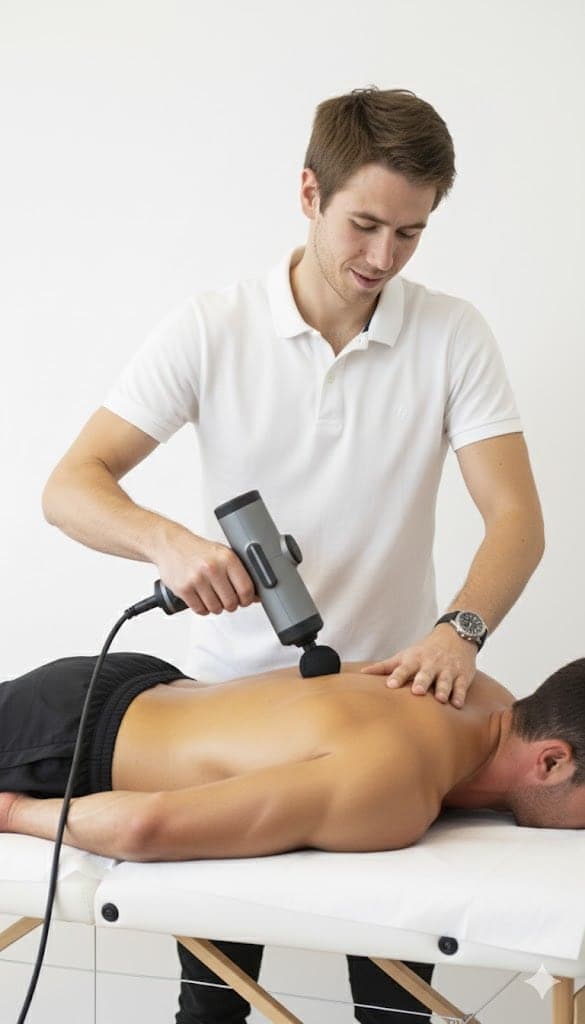
Written by
Chris
Massage therapist, nutrition and exercise physiologist
Norwegian-certified with a Bachelor’s in Physical Education and Nutrition and over ten years of clinical practice, working from a portable table in clients’ homes across the Paphos district.
This article is general information, not a medical diagnosis. If you have severe, worsening or unexplained pain, numbness, weakness, or pain after an accident, see a doctor first.