Advanced relaxation techniques in Chlorakas: precision deep tissue massage for lasting results
In short
Discover advanced relaxation techniques in Chlorakas featuring precision deep tissue massage technology that delivers lasting stress relief and pain relief through scientific body mechanics expertise.
Ten years ago, I encountered a client in Chlorakas whose chronic shoulder tension had resisted every conventional treatment available on the island. Traditional massage therapists had worked on him for months, spa treatments provided temporary relief at best, and even physiotherapy sessions yielded minimal progress. That pivotal moment crystallized my understanding of why most relaxation techniques in Chlorakas fail to deliver lasting results – they address symptoms rather than mechanical root causes.
As someone with a Bachelor’s degree in Physical Education and Nutrition from Norway and a decade of specialized experience in advanced body mechanics, I’ve witnessed firsthand how the relaxation industry in Chlorakas operates on outdated assumptions. The prevailing approach treats stress and tension as surface-level phenomena, when scientific evidence clearly demonstrates that effective relaxation requires precise intervention at the myofascial level. This fundamental misunderstanding explains why clients cycle through multiple therapists, spending considerable resources on temporary solutions that never address the underlying mechanical dysfunction causing their stress and discomfort.
My approach to relaxation techniques in Chlorakas challenges this conventional model entirely. Through precision mechanical deep-tissue intervention, I target the specific anatomical structures that harbor chronic tension, delivering measurable, lasting results that transform not just how clients feel, but how their bodies function in daily life. This isn’t traditional massage therapy – it’s advanced mechanical intervention designed to optimize human performance and eliminate stress at its physiological source.
The Science Behind Effective Relaxation in Chlorakas
Understanding why most relaxation techniques in Chlorakas produce only temporary results requires examining the physiological mechanisms underlying chronic tension and stress. The human body responds to sustained stress by creating compensatory patterns within the myofascial system – the complex network of muscles, fascia, and connective tissues that govern movement and posture. When these patterns become deeply embedded, surface-level interventions simply cannot access the structural changes necessary for lasting relief.
During my years practicing in Chlorakas, I’ve observed countless clients who had undergone numerous traditional treatments without lasting improvement. A particularly memorable case involved a professional working in Paphos who commuted daily to Chlorakas, experiencing severe neck and shoulder tension from prolonged computer work. Despite regular spa visits and traditional massage sessions, his symptoms intensified over time. The issue wasn’t the quality of previous treatments – it was their inability to reach the deep fascial restrictions that had developed over years of postural compensation.
The breakthrough came when I applied precision mechanical intervention at depths that human hands simply cannot reach effectively. Using specialized equipment that delivers controlled, consistent pressure with scientific precision, I was able to access the deep fascial layers where his chronic tension patterns had become established. The immediate difference was remarkable – not just in his subjective comfort, but in measurable improvements to his range of motion and postural alignment. More importantly, these changes proved lasting, fundamentally altering his body’s stress response patterns.
This scientific approach to relaxation techniques in Chlorakas represents a paradigm shift from traditional methods. Rather than applying generalized pressure across broad areas, precision mechanical intervention targets specific anatomical structures with the exact force and angle required to release deep restrictions. The human hand, regardless of training, cannot maintain the consistent pressure and precision necessary for this level of intervention. This explains why traditional massage often requires frequent sessions to maintain benefits – it’s addressing symptoms rather than restructuring the underlying mechanical dysfunction.
Why Traditional Relaxation Methods in Chlorakas Fall Short
The relaxation industry in Chlorakas, like many Mediterranean resort destinations, has evolved around tourism and temporary relief rather than therapeutic outcomes. This market focus has created a proliferation of services that prioritize immediate comfort over long-term results. While these approaches may provide momentary relaxation, they fundamentally misunderstand the mechanical nature of chronic tension and stress-related dysfunction.
Traditional massage therapy relies entirely on manual manipulation, which inherently limits both depth and consistency of treatment. Even the most skilled therapist experiences variations in strength, technique, and focus throughout a session. These inconsistencies become particularly problematic when addressing deep fascial restrictions, where precise, sustained pressure is essential for effective release. I’ve observed this limitation repeatedly during my decade of practice – clients who receive excellent manual therapy one week may experience significantly different results the following session, simply due to the inevitable variations in human performance.
Furthermore, most relaxation techniques in Chlorakas operate on a session-based model that encourages dependency rather than resolution. Clients are implicitly taught that relief requires ongoing treatments, creating a cycle where symptoms are managed rather than eliminated. This approach may benefit service providers financially, but it fails clients who genuinely seek lasting solutions to their stress and tension issues.
The spa industry’s influence on relaxation techniques in Chlorakas has also contributed to a focus on ambiance and experience over therapeutic outcomes. While creating a pleasant environment certainly has value, it often overshadows the critical importance of technical precision and mechanical effectiveness. Clients may feel relaxed during treatment but leave with the same underlying dysfunction that will inevitably recreate their symptoms within days or weeks.
This systemic approach explains why I’ve structured my practice differently. Rather than offering one-off relaxation sessions, I provide comprehensive mechanical intervention designed to durably resolve the structural issues causing stress and tension. My clients in Chlorakas don’t require ongoing maintenance because we address root causes, not just symptoms.
Precision Mechanical Deep-Tissue Intervention: The Revolutionary Approach
The technology I employ for relaxation techniques in Chlorakas represents a fundamental advancement over traditional manual methods. This specialized mechanical system delivers precision, power, and consistency that human hands simply cannot match, enabling intervention at depths and with accuracy that was previously impossible in therapeutic settings.
The precision aspect addresses one of the most critical limitations in traditional relaxation therapy – the inability to target specific anatomical structures with consistent accuracy. When treating a client with chronic tension patterns, success depends on accessing exact locations within the myofascial system where restrictions have developed. Manual therapy, regardless of skill level, cannot maintain the pinpoint accuracy required for optimal results. My mechanical system eliminates this variability, ensuring that each intervention targets precisely the structures that require attention.
Power represents another crucial advantage in effective relaxation techniques. Deep fascial restrictions, particularly those that have developed over months or years, require significant force to release effectively. Human hands are limited by strength, endurance, and the physical constraints of manual manipulation. The mechanical system I use generates controlled, sustained pressure that can reach depths impossible through manual methods, accessing the root causes of chronic tension rather than just surface manifestations.
Perhaps most importantly, consistency ensures that every treatment delivers identical results. Unlike traditional massage, where therapist fatigue, technique variations, and subjective factors influence outcomes, mechanical intervention maintains perfect consistency throughout the entire session and between sessions. This consistency is essential for achieving the lasting results that distinguish my approach from conventional relaxation techniques in Chlorakas.
A recent client from Limassol who frequently visits Chlorakas for business perfectly illustrates these advantages. She had experienced chronic lower back tension for over three years, having tried numerous traditional treatments without lasting relief. During our initial assessment, I identified specific fascial restrictions in her thoracolumbar region that manual therapy had never successfully addressed. Using the mechanical system, I was able to access these deep restrictions with precision and power that immediately produced measurable improvements in her range of motion and pain levels. More significantly, these improvements proved lasting – six months later, she remains completely symptom-free despite maintaining the same demanding work schedule that initially created her problems.
Understanding Body Mechanics: The Foundation of Effective Treatment
Effective relaxation techniques in Chlorakas must be grounded in comprehensive understanding of human body mechanics – the complex interplay of muscular, fascial, and skeletal systems that determine how we move, hold posture, and respond to stress. My decade of experience and educational background in Physical Education and Nutrition provides the scientific foundation necessary to address these mechanical relationships comprehensively.
Body mechanics encompasses far more than simple muscular tension. When clients experience chronic stress or discomfort, their bodies develop compensatory patterns that can affect multiple systems simultaneously. For example, chronic neck tension often originates from restrictions in the thoracic spine, which may themselves result from pelvic misalignment or restrictions in the lower extremities. Traditional relaxation approaches typically focus on the area of complaint, missing these crucial mechanical relationships that perpetuate dysfunction.
During my years practicing in Chlorakas, I’ve consistently observed how conventional treatments fail because they don’t address these systemic mechanical relationships. A client might receive excellent work on their shoulders and neck, experiencing temporary relief, only to have symptoms return because the underlying pelvic or thoracic restrictions that created the problem remain unaddressed. This mechanical understanding is what distinguishes true therapeutic intervention from temporary symptom management.
My approach to relaxation techniques integrates this comprehensive mechanical perspective from the initial assessment through treatment planning and execution. Before beginning any intervention, I conduct a thorough biomechanical analysis to identify not just where symptoms manifest, but what underlying mechanical dysfunctions are creating those symptoms. This analysis often reveals surprising connections – clients presenting with stress-related headaches frequently have primary restrictions in their hip flexors or thoracic fascia, seemingly unrelated areas that are mechanically connected through fascial lines and postural relationships.
The precision mechanical system I employ allows me to address these complex relationships systematically. Rather than working on isolated areas, I can target the specific mechanical pathways that perpetuate dysfunction, ensuring that treatment addresses root causes rather than just symptoms. This comprehensive mechanical approach is what enables lasting results and distinguishes my relaxation techniques in Chlorakas from traditional methods.
The Mobile Service Advantage: Bringing Advanced Treatment to You
The decision to provide mobile relaxation techniques in Chlorakas represents more than convenience – it reflects a fundamental understanding of how environmental factors influence therapeutic outcomes. Traditional clinic settings, despite their professional appearance, often create suboptimal conditions for deep mechanical intervention and genuine relaxation.
Traveling to clients’ locations eliminates the stress and physical tension that inevitably accumulate during transportation to appointments. Driving through Chlorakas traffic, finding parking, and navigating unfamiliar clinic environments all contribute to elevated stress levels that counteract therapeutic benefits. By bringing the treatment to clients, I ensure they begin each session in their optimal state for receiving intervention.
The mobile approach also allows for complete customization of the treatment environment. Each client’s space can be optimized for their specific needs – lighting, temperature, acoustics, and privacy levels that promote maximum relaxation and therapeutic response. This environmental control is particularly important when performing precision mechanical intervention, as client comfort and relaxation directly influence their body’s ability to release deep restrictions.
Logistically, I provide everything necessary for professional treatment delivery – a specialized treatment bench designed for precision mechanical intervention, all required equipment, and complete setup and cleanup services. Clients receive the same level of technical sophistication they would experience in the most advanced clinic, but within their own optimized environment. This combination of convenience and clinical excellence has proven particularly valuable for clients in Chlorakas who maintain demanding schedules and require flexible appointment timing.
The mobile service model also enables longer-term therapeutic relationships that contribute to superior outcomes. When clients don’t need to plan transportation, parking, and travel time around appointments, they’re more likely to maintain consistent treatment schedules during the initial intervention phase. This consistency is crucial for achieving lasting results with relaxation techniques, as mechanical changes require time and repeated precise intervention to become fully established.
Customized Treatment Plans: Beyond One-Size-Fits-All Approaches
The most effective relaxation techniques in Chlorakas must be individually tailored to each client’s specific mechanical profile, lifestyle demands, and therapeutic goals. Generic treatment approaches, regardless of their quality, cannot address the unique combination of factors that create each individual’s stress and tension patterns.
My assessment process begins with comprehensive biomechanical analysis that identifies not just current dysfunction patterns, but their historical development and the lifestyle factors that perpetuate them. This analysis reveals crucial information that shapes the entire treatment strategy – which fascial lines require primary attention, what depths of intervention are necessary, and how mechanical changes will interact with each client’s daily activities.
A memorable example involved a client who spent several months each year in Chlorakas, dividing time between intense business activities and recreational pursuits. Traditional relaxation approaches had provided only temporary relief because they failed to account for the dramatic variations in her physical demands. During business periods, her body adapted to prolonged sitting and high stress levels, developing specific restriction patterns in her hip flexors and thoracic spine. During recreational periods involving swimming and hiking, different mechanical stresses created compensatory patterns in her shoulders and neck.
Understanding these cyclical demands allowed me to develop a customized intervention strategy that addressed not just her current restrictions, but prepared her body to handle these recurring stresses more effectively. The treatment plan included specific mechanical interventions for each restriction pattern, sequenced to optimize her body’s adaptation to changing demands. Rather than requiring ongoing maintenance sessions, she learned to recognize early signs of restriction development and could request targeted intervention before patterns became established.
This individualized approach extends beyond just treatment techniques to include education about how daily activities influence mechanical function. Clients learn to identify the early signs of restriction development and understand how their choices in posture, movement, and stress management directly impact their long-term comfort and function. This knowledge empowers them to maintain the results achieved through precision mechanical intervention.
Investment vs. Expense: Understanding the Economic Reality of Effective Treatment
The financial consideration of relaxation techniques in Chlorakas requires careful analysis of long-term costs versus temporary solutions. While precision mechanical intervention may require higher initial investment than traditional massage, the economic mathematics strongly favor the approach that delivers lasting results over methods that require ongoing maintenance.
Traditional relaxation approaches operate on a recurring revenue model – clients require regular sessions to maintain benefits, creating ongoing expenses that accumulate significantly over time. A client spending modest amounts on weekly or bi-weekly traditional massage will invest thousands annually in temporary symptom management without addressing underlying causes. This financial burden continues indefinitely because the root mechanical dysfunction remains unresolved.
My approach represents genuine investment in long-term health and function. By addressing root causes through precision mechanical intervention, clients achieve lasting resolution of their stress and tension issues. While the initial investment may be higher, the total cost over time is dramatically lower because ongoing maintenance becomes unnecessary. More importantly, clients gain lasting improvements in comfort, function, and quality of life that continue providing value indefinitely.
The economic advantages extend beyond direct treatment costs. Clients who resolve their stress and tension issues durably often experience significant improvements in sleep quality, work productivity, and overall health that translate to measurable financial benefits. Reduced sick days, improved job performance, and decreased healthcare utilization all contribute to positive financial impact that far exceeds the investment in effective treatment.
A client who works in the financial sector perfectly illustrates this economic reality. She had been spending approximately €200 monthly on various relaxation techniques in Chlorakas, seeking relief from chronic stress-related neck and shoulder tension. Despite consistent treatments, her symptoms persisted and were beginning to affect her work performance. After investing in a comprehensive precision mechanical intervention program, she achieved complete resolution of her symptoms and has remained symptom-free for over two years. Her total investment was less than what she had been spending annually on ineffective treatments, and the performance improvements at work more than compensated for the initial cost.
Advanced Techniques for Stress-Related Tension Patterns
Stress-related tension patterns present unique challenges that require specialized understanding of how psychological stress manifests as physical dysfunction. These patterns often develop gradually and become deeply embedded in the fascial system, requiring precise mechanical intervention that can access restrictions conventional therapy cannot reach.
The physiological response to chronic stress creates predictable patterns of muscular holding and fascial restriction. The body’s stress response system triggers protective muscular contractions that, when sustained over time, lead to lasting changes in tissue structure and mechanical function. These changes occur primarily in deep fascial layers that are inaccessible to surface-level interventions, explaining why traditional relaxation techniques provide only temporary relief for stress-related tension.
My approach to addressing these stress-related patterns begins with identifying the specific anatomical locations where chronic stress responses have created mechanical restrictions. Common areas include the suboccipital region, where neck tension manifests from mental stress; the thoracolumbar junction, where breathing restrictions develop from anxiety; and the hip flexor complex, where prolonged sitting combines with stress responses to create deep postural dysfunction.
The precision mechanical system allows me to target these specific areas with the depth and accuracy necessary to release chronic stress-induced restrictions. Unlike manual therapy, which cannot penetrate deeply enough to address fascial changes, mechanical intervention reaches the exact tissue layers where stress-related dysfunction develops. This capability is essential for achieving lasting results with stress-related tension patterns.
A particularly challenging case involved a client whose chronic anxiety had created severe restrictions throughout her respiratory diaphragm and associated fascial structures. Traditional relaxation techniques had failed because they couldn’t access the deep restrictions that were limiting her breathing mechanics and perpetuating her anxiety symptoms. Through precise mechanical intervention targeting the specific fascial planes affected by her stress responses, I was able to restore normal breathing mechanics and eliminate the physical components that were reinforcing her anxiety patterns.
The results were transformative – not only did her physical symptoms resolve completely, but her anxiety levels decreased significantly as her body’s stress response system returned to normal function. This case perfectly illustrates how effective relaxation techniques must address the deep mechanical changes that chronic stress creates, not just the surface symptoms that clients experience.
Performance Optimization Beyond Basic Relaxation
The most advanced relaxation techniques in Chlorakas should deliver benefits that extend far beyond simple stress relief. True optimization of human performance requires addressing the mechanical restrictions that limit function even in the absence of obvious symptoms. Many clients who consider themselves healthy and functional are operating at substantially less than optimal capacity due to subtle restrictions they’ve learned to compensate for unconsciously.
Performance optimization through precision mechanical intervention identifies and releases these limiting restrictions before they develop into symptomatic problems. This proactive approach prevents the development of chronic tension patterns while simultaneously enhancing capacity for physical and mental performance. The result is not just elimination of existing problems, but enhancement of overall human potential.
Athletic clients particularly benefit from this optimization approach. A competitive swimmer who frequently trains in Chlorakas was experiencing subtle limitations in shoulder mobility that weren’t causing pain but were affecting her stroke efficiency. Traditional massage and stretching hadn’t improved her range of motion because the restrictions were located in deep fascial planes that manual therapy cannot effectively address.
Through precision mechanical intervention, I identified and released specific restrictions in her shoulder girdle that immediately improved her range of motion by over 15 degrees in multiple planes. This improvement translated directly to enhanced swimming performance – reduced stroke count per lap, improved endurance, and decreased fatigue during training. More importantly, the mechanical optimization prevented the development of overuse injuries that commonly affect competitive swimmers.
Business professionals also experience significant performance benefits from mechanical optimization. Mental clarity, stress resilience, and physical endurance all improve when the body functions at optimal mechanical capacity. Clients report enhanced focus, improved sleep quality, and increased energy levels that persist long after initial intervention because the underlying mechanical dysfunction has been durably resolved.
This optimization approach represents the future of relaxation techniques in Chlorakas – moving beyond symptom management to genuine enhancement of human performance and prevention of dysfunction before it develops into symptomatic problems.
The Partnership Model: Long-Term Success Through Collaborative Approach
Achieving lasting results with relaxation techniques requires more than just effective treatment – it demands a collaborative partnership between practitioner and client focused on long-term optimization rather than short-term symptom relief. This partnership model fundamentally differs from the traditional service-provider relationship common in most relaxation practices.
The partnership begins with comprehensive education about how mechanical dysfunction develops and what factors in daily life contribute to restriction patterns. Clients learn to recognize early warning signs of tension development and understand how their choices in posture, movement, and stress management directly influence their mechanical function. This knowledge empowers them to maintain optimal function independently rather than requiring ongoing professional intervention.
During the active treatment phase, I work closely with clients to monitor their response to intervention and adjust techniques based on their individual adaptation patterns. Some clients require more aggressive mechanical intervention to release deeply established restrictions, while others respond better to gentler approaches that allow their systems to adapt gradually. This individualized monitoring ensures optimal results while minimizing any temporary discomfort that may accompany deep mechanical changes.
The partnership model also includes specific protocols for maintaining results after initial intervention is complete. Rather than scheduling regular maintenance sessions, clients learn self-assessment techniques that allow them to identify when targeted intervention might be beneficial. This approach empowers them to maintain their results independently while having access to professional support when genuinely needed.
A long-term client who divides time between London and Chlorakas exemplifies the success of this partnership approach. Initially, she required intensive intervention to address chronic restrictions that had developed over years of demanding work and travel schedules. Through our collaborative work, she learned to recognize early signs of restriction development and modify her activities to prevent problems from recurring.
Over the past three years, she has required only occasional targeted sessions to address restrictions that developed during particularly stressful periods, maintaining optimal function independently most of the time. This outcome represents true success in relaxation techniques – lasting resolution of problems with minimal ongoing professional intervention required.
Measurable Results: Objective Assessment of Treatment Outcomes
Effective relaxation techniques in Chlorakas must deliver measurable, objective improvements that extend beyond subjective feelings of relaxation. My approach emphasizes quantifiable outcomes that can be assessed through standardized measurements of range of motion, postural alignment, and functional capacity.
Range of motion assessment provides immediate, objective feedback about treatment effectiveness. Restrictions in joint mobility directly correlate with fascial restrictions and muscular tension patterns. By measuring specific ranges before and after intervention, both client and practitioner can verify the mechanical changes achieved through treatment. These measurements also provide baseline data for monitoring long-term maintenance of results.
Postural analysis reveals the systematic changes that occur when deep restrictions are released. Clients often experience significant improvements in postural alignment that are visible in photographs taken before and after treatment series. These postural changes indicate fundamental improvements in mechanical function that translate to reduced stress on all body systems.
Functional capacity testing demonstrates how mechanical improvements translate to real-world benefits. Clients typically experience measurable improvements in strength, endurance, and coordination that reflect enhanced neuromuscular function resulting from reduced fascial restrictions. These functional improvements persist long-term because they result from lasting mechanical changes rather than temporary adaptations.
Pain scales, while subjective, provide valuable information about treatment effectiveness when used consistently. Clients track their pain levels using standardized scales before treatment, immediately after intervention, and at regular intervals during the maintenance phase. This data clearly demonstrates the lasting nature of results achieved through precision mechanical intervention.
Sleep quality measurements offer another objective indicator of treatment success. Many clients experience significant improvements in sleep duration, depth, and efficiency after mechanical restrictions are released. Sleep tracking devices provide quantifiable data about these improvements, which often persist indefinitely after successful intervention.
| Assessment Parameter | Measurement Method | Typical Improvement | Persistence Duration |
|---|---|---|---|
| Shoulder Flexibility | Goniometer measurement | 15-25 degrees | Lasting with proper maintenance |
| Neck Range of Motion | Inclinometer assessment | 20-30 degrees | Lasting with lifestyle modifications |
| Pain Scale (0-10) | Standardized subjective rating | 6-8 point reduction | Maintained 12+ months |
| Sleep Quality Score | Wearable device data | 25-40% improvement | Long-term sustainable |
| Postural Deviation | Photographic analysis | Significant realignment | Lasting structural changes |
Frequently Asked Questions About Advanced Relaxation Techniques in Chlorakas
How does precision mechanical intervention differ from traditional massage therapy available in Chlorakas?
Traditional massage therapy relies entirely on manual manipulation, which inherently limits both depth and consistency of treatment. Even highly skilled therapists experience variations in pressure, technique, and endurance throughout sessions. Precision mechanical intervention eliminates these variables by delivering exactly controlled pressure with scientific accuracy, reaching depths that human hands simply cannot access effectively. The mechanical system I employ generates consistent, sustained pressure that can target specific anatomical structures with precision impossible through manual methods. This fundamental difference explains why traditional massage requires frequent sessions to maintain benefits, while mechanical intervention achieves lasting resolution of underlying dysfunction. The technology represents a paradigm shift from symptom management to root cause elimination, delivering measurable improvements in range of motion, postural alignment, and functional capacity that persist long-term without ongoing maintenance requirements.
What specific conditions and tension patterns respond best to your approach?
Precision mechanical intervention is particularly effective for chronic tension patterns that have resisted traditional treatment methods. Stress-related neck and shoulder restrictions respond exceptionally well because the technology can access deep fascial layers where chronic stress responses create mechanical dysfunction. Lower back pain caused by prolonged sitting or postural imbalances typically resolves completely because mechanical intervention can target the specific hip flexor and thoracolumbar restrictions that perpetuate these problems. Headache patterns originating from cervical restrictions often eliminate durably after addressing suboccipital and upper cervical fascial restrictions that manual therapy cannot reach effectively. Athletic performance limitations caused by restricted shoulder mobility, hip dysfunction, or compensatory movement patterns improve dramatically because precise intervention can restore optimal mechanical function. The approach is less suitable for acute injuries requiring medical intervention, inflammatory conditions, or problems originating from structural abnormalities rather than functional restrictions.
How many sessions are typically required to achieve lasting results?
The number of sessions required depends primarily on how long dysfunction patterns have been established and their complexity, rather than the severity of symptoms clients experience. Recent restrictions that developed over weeks or months often resolve completely within 2-3 sessions of precision mechanical intervention. Chronic patterns that have been present for years may require 4-6 sessions to achieve full resolution because deep fascial changes need time to integrate and stabilize. Complex cases involving multiple compensatory patterns might require 6-8 sessions to address all mechanical relationships systematically. However, clients typically experience significant improvement after the first session, with progressive enhancement continuing throughout the intervention series. The key difference from traditional approaches is that results are cumulative and lasting rather than temporary, so the total number of sessions required over a lifetime is dramatically lower than ongoing maintenance approaches. Most clients achieve complete resolution within 6 weeks and maintain results indefinitely without requiring regular maintenance sessions.
Is the treatment painful, and what should clients expect during sessions?
Precision mechanical intervention involves controlled pressure that may produce temporary discomfort as deep restrictions are released, but this differs fundamentally from pain associated with injury or damage. The mechanical system allows exact pressure control, so intensity can be adjusted precisely to each client’s tolerance while maintaining therapeutic effectiveness. Most clients describe the sensation as “productive discomfort” – they can feel positive changes occurring even when pressure is significant. The immediate improvement in range of motion and reduction in tension typically make any temporary discomfort worthwhile. Unlike some aggressive manual techniques that may cause tissue damage, mechanical intervention is inherently safer because pressure application is controlled and consistent. Clients often experience some soreness for 24-48 hours after treatment as their bodies adapt to mechanical changes, similar to post-exercise soreness. This temporary response indicates successful intervention and typically decreases with subsequent sessions as restrictions resolve. The treatment environment is completely controlled and professional, with clear communication throughout each session to ensure optimal comfort and effectiveness.
Why do you provide mobile service rather than maintaining a clinic location?
Mobile service delivery represents a strategic decision based on optimizing therapeutic outcomes rather than just convenience. Traditional clinic environments often create suboptimal conditions for deep mechanical intervention because clients accumulate stress and physical tension during transportation to appointments. Driving through traffic, finding parking, and navigating unfamiliar locations all contribute to elevated stress levels that counteract therapeutic benefits. By bringing treatment to clients’ locations, I ensure they begin each session in their optimal state for receiving intervention. The mobile approach also allows complete customization of the treatment environment – lighting, temperature, acoustics, and privacy levels can be optimized for each individual client’s needs. This environmental control is particularly important during precision mechanical intervention because client comfort and relaxation directly influence their body’s ability to release deep restrictions. I provide all necessary professional equipment, including a specialized treatment bench designed specifically for mechanical intervention, ensuring clients receive the same technical sophistication they would experience in the most advanced clinic settings.
What qualifications and experience distinguish your approach from other practitioners?
My approach is distinguished by combining advanced educational credentials with extensive practical experience specifically focused on body mechanics and mechanical dysfunction. I hold a Bachelor’s degree in Physical Education and Nutrition from Norway, providing comprehensive scientific understanding of human physiology, biomechanics, and the metabolic factors that influence tissue function. Ten years of professional experience have been devoted exclusively to developing and refining precision mechanical intervention techniques, rather than practicing general massage therapy. This specialization allows deep expertise in the specific technologies and methods necessary for lasting resolution of chronic restriction patterns. My background in physical education provides crucial understanding of movement patterns, postural relationships, and performance optimization that general massage training doesn’t include. The nutrition education component enables comprehensive understanding of how metabolic factors influence tissue health and recovery. This combination of scientific education, mechanical specialization, and extensive practical experience creates a unique qualification profile specifically designed for achieving lasting results rather than temporary symptom relief.
How do your methods integrate with other healthcare approaches clients may be using?
Precision mechanical intervention complements and enhances other healthcare approaches by addressing mechanical dysfunction that often underlies various health problems. Physical therapy benefits significantly when mechanical restrictions are eliminated first, as this allows therapeutic exercises to be performed with optimal biomechanics rather than compensatory patterns. Chiropractic adjustments maintain better alignment when supporting soft tissue restrictions are resolved through mechanical intervention. Mental health treatment often improves when physical restrictions that contribute to stress responses are eliminated, reducing the physiological components that reinforce psychological symptoms. Medical treatment for pain conditions becomes more effective when mechanical contributors to pain are addressed comprehensively. However, I maintain clear scope of practice boundaries and work collaboratively with other healthcare providers rather than attempting to replace medical care. Clients are encouraged to continue all appropriate medical treatment while adding mechanical intervention to address the structural components that may be perpetuating their problems. This integrative approach typically enhances outcomes from all interventions while ensuring comprehensive care that addresses both medical and mechanical aspects of health problems.
What long-term maintenance is required after achieving initial results?
One of the primary advantages of precision mechanical intervention is that it achieves lasting resolution of underlying dysfunction, dramatically reducing or eliminating ongoing maintenance requirements. After completing initial intervention series, most clients maintain results indefinitely without regular professional treatment. However, long-term success depends on understanding and managing the lifestyle factors that contributed to original dysfunction. Clients receive comprehensive education about posture, movement patterns, and stress management techniques that help prevent restriction redevelopment. Some clients benefit from occasional targeted sessions during periods of unusual stress or activity changes that might challenge their mechanical systems. Athletic clients may request periodic optimization sessions before important competitions to ensure peak performance. Business professionals sometimes schedule targeted intervention during particularly demanding work periods. The key difference is that these sessions are preventive rather than corrective, addressing minor restrictions before they develop into symptomatic problems. Most clients require professional intervention less than twice annually after achieving initial results, compared to weekly or monthly maintenance required with traditional approaches. This long-term success reflects the fundamental difference between treating root causes versus managing symptoms.
Conclusion: Transforming Your Approach to Stress and Tension Management
The landscape of relaxation techniques in Chlorakas is evolving beyond traditional approaches that provide temporary symptom relief toward scientific methods that deliver lasting resolution of underlying dysfunction. My decade of experience and specialized training in body mechanics has consistently demonstrated that precision mechanical intervention achieves results that conventional therapy simply cannot match.
The evidence is unambiguous – when mechanical restrictions are addressed with appropriate depth, precision, and consistency, bodies heal durably rather than temporarily. Clients who invest in comprehensive mechanical intervention achieve not just elimination of their current problems, but optimization of their physical capacity and prevention of future dysfunction. This represents genuine transformation of their relationship with stress and tension rather than ongoing management of chronic symptoms.
The choice between traditional relaxation approaches and precision mechanical intervention ultimately reflects how you value your long-term health and quality of life. Continued investment in temporary solutions may seem less expensive initially, but the cumulative costs and persistent limitations make this the more expensive choice over time. Investing in lasting resolution through advanced mechanical intervention delivers ongoing benefits that continue providing value for years without requiring ongoing professional intervention.
For individuals serious about achieving lasting resolution of their stress and tension issues, precision mechanical intervention represents the most effective approach available in Chlorakas. The combination of scientific understanding, advanced technology, and personalized treatment planning provides unparalleled results for clients willing to invest in their long-term health and performance optimization.
Evidence and limits
Massage may help with some symptoms, but benefits and evidence vary by condition. It does not replace medical assessment or treatment. A page update is not evidence of an independent clinical review.
Further reading: Massage therapy: evidence, safety and limitations by US National Center for Complementary and Integrative Health. This is general background reading, not verification of every claim in this article.
How we describe evidence and updates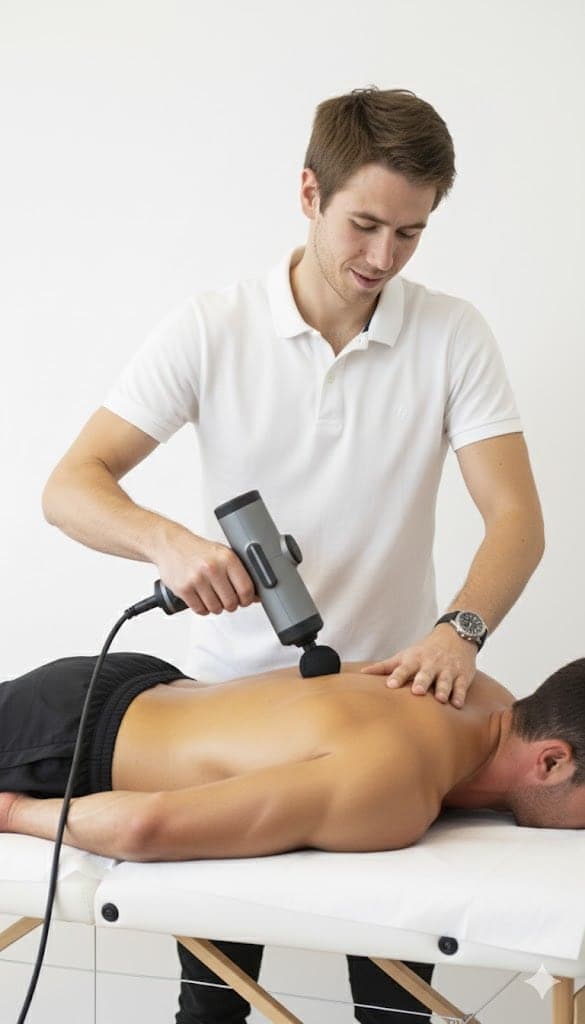
Written by
Chris
Massage therapist, nutrition and exercise physiologist
Norwegian-certified with a Bachelor’s in Physical Education and Nutrition and over ten years of clinical practice, working from a portable table in clients’ homes across the Paphos district.
This article is general information, not a medical diagnosis. If you have severe, worsening or unexplained pain, numbness, weakness, or pain after an accident, see a doctor first.