Top Gyms for Recovery Workouts in Paphos: A Professional’s Guide to Proper Restoration
In short
Discover the leading facilities in Paphos for recovery workouts and learn why most gyms fundamentally misunderstand the mechanics of proper tissue restoration and performance optimization.
After a decade working with athletes, fitness enthusiasts, and chronic pain sufferers across Paphos, I’ve witnessed a troubling pattern. Walk into any gym advertising “recovery programs,” and you’ll find foam rollers, gentle stretching classes, and perhaps a massage chair. What you won’t find is anyone addressing the mechanical dysfunction buried deep within your fascial system—the actual root cause of why your “recovery” never quite delivers the results you’re seeking.
The truth is this: recovery workouts alone cannot resolve the accumulated tension and compensatory patterns your body has developed. I learned this not from textbooks during my university studies in Physical Education and Nutrition in Norway, but from working with hundreds of clients who arrived frustrated after months of “recovery-focused” training programs that promised relief but delivered mediocrity.
Let me walk you through the top facilities in Paphos for recovery workouts, what they genuinely offer, and more importantly, what they’re missing—because understanding the gap between surface-level recovery and true mechanical restoration will transform how you approach your body’s needs.
Understanding What Recovery Actually Means: Beyond the Marketing
Before we examine specific facilities, we need to establish a critical distinction that most fitness professionals either don’t understand or deliberately obscure. Recovery workouts—low-intensity movement, mobility work, active rest days—serve a legitimate purpose in your training cycle. They reduce systemic fatigue, promote blood flow, and prevent overtraining syndrome.
But here’s what nobody tells you: these methods operate entirely at the surface level. They cannot and will not address the dense adhesions, restricted fascia, and trigger points that have accumulated in your tissue over years of training, poor posture, or compensatory movement patterns. I’ve treated competitive athletes who performed daily “recovery routines” religiously yet couldn’t understand why their performance plateaued or why certain areas remained chronically tight.
The answer is mechanical, not mystical. Your tissue has structural restrictions that require direct, precise, deep intervention—not gentle movement and stretching. This is the fundamental limitation of gym-based recovery programs, no matter how well-equipped the facility.
Top Gyms for Recovery Workouts in Paphos: Comprehensive Analysis
Eliada Gym & Fitness Centre
Located in Kato Paphos, Eliada offers one of the more comprehensive approaches to recovery-focused training in the region. Their facility includes:
- Dedicated stretching and mobility zones with adequate space for movement patterns
- Qualified physiotherapists available for consultation (though typically booked weeks in advance)
- Low-impact equipment including recumbent bikes, ellipticals, and aquatic training options
- Small-group recovery classes emphasizing controlled movement and breathing techniques
From a professional standpoint, Eliada understands the theoretical framework of recovery training. Their staff can articulate the difference between active and passive recovery, and they’ve structured their programming around legitimate periodization principles.
The limitation? They’re working within the constraints of what gym equipment and group classes can achieve. I’ve worked with three of their regular members who came to me specifically because months of “proper recovery protocols” at Eliada hadn’t resolved their underlying tissue dysfunction. The surface-level work helped them train more consistently, but it couldn’t reach the mechanical restrictions limiting their actual performance capacity.
Oxygen Health & Fitness Club
Oxygen has established itself as Paphos’s premium fitness destination, and their recovery-oriented offerings reflect that positioning:
- State-of-the-art recovery technology including compression therapy systems and cryotherapy chambers
- Dedicated yoga and Pilates studios with experienced instructors who understand anatomical principles
- Personal training staff with certifications in corrective exercise and functional movement screening
- An extensive sauna and steam room complex for thermal recovery protocols
Oxygen’s approach represents the pinnacle of what commercial gyms can offer for recovery. They’ve invested significantly in both equipment and education, and their personal trainers generally understand movement mechanics better than industry average.
Yet even here, with all these resources, we encounter the same fundamental limitation. One of my long-term clients—a former professional tennis player—spent eighteen months with Oxygen’s top corrective exercise specialist. He improved his movement quality, yes. His pain decreased moderately. But it wasn’t until we addressed the dense fascial restrictions in his shoulder girdle and thoracic spine with precision mechanical work that his serve velocity returned and his chronic discomfort resolved completely.
The equipment and expertise at Oxygen are excellent for maintaining tissue health and preventing acute overtraining. They cannot systematically dismantle the accumulated mechanical dysfunction that develops over years of athletic activity.
Fit4Less Paphos
For budget-conscious fitness enthusiasts, Fit4Less provides accessible recovery options without premium pricing:
- Basic stretching areas and foam rolling equipment available 24/7
- Functional training zones that can be utilized for low-intensity mobility work
- Swimming pool facilities for low-impact cardiovascular recovery
- Online programming resources that include recovery day protocols
Fit4Less operates on a different model—providing tools and space rather than extensive guidance or advanced recovery technologies. For individuals who understand recovery principles and simply need access to equipment, this represents solid value.
The challenge, predictably, lies in execution. Without professional guidance, most members default to ineffective recovery practices they’ve learned from social media or fitness influencers. I’ve treated multiple Fit4Less members who were foam rolling daily but applying insufficient pressure to create any meaningful tissue change, then wondering why their “recovery work” wasn’t improving their training capacity.
Aphrodite Hills Resort Fitness Centre
The resort’s fitness facility caters primarily to temporary residents and tourists, but locals with appropriate memberships access their recovery-focused amenities:
- Luxury spa integration with massage therapy options (though primarily relaxation-oriented rather than therapeutic)
- Outdoor recovery spaces allowing training in natural settings with scenic views
- Swimming and aquatic therapy facilities of exceptional quality
- Personal training services emphasizing low-impact, restoration-focused programming
Aphrodite Hills excels at creating an environment conducive to psychological recovery—the mental restoration that accompanies effective physical recovery protocols. Their setting and ambiance reduce stress hormones and promote parasympathetic nervous system activation, which genuinely supports tissue repair processes.
However, the massage services they offer typify the industry’s fundamental misunderstanding of therapeutic tissue work. I’ve spoken with several of their therapists—pleasant, well-intentioned professionals who learned Swedish massage techniques and relaxation protocols. They’re not equipped to address mechanical dysfunction because their training never included the biomechanical education necessary to understand how force, angle, and sustained pressure interact with fascial restrictions.
What These Facilities Get Right: The Value of Structured Recovery Programming
Despite my emphasis on their limitations, these gyms provide genuine value in specific contexts. Let me be clear about what they accomplish effectively:
Systematic Approach: Structured recovery programming prevents the haphazard approach most athletes take to rest days. Having scheduled mobility classes or designated recovery equipment creates consistency, which matters enormously for adaptation and injury prevention.
Education and Community: Quality facilities expose members to recovery concepts they might never encounter training alone. The social reinforcement of seeing others prioritize recovery can shift your entire training philosophy.
Active Recovery Benefits: Low-intensity cardiovascular work, gentle movement patterns, and controlled stretching do facilitate blood flow, nutrient delivery, and metabolic waste removal. These processes support tissue healing within their scope.
Mental Reset: The psychological benefits of dedicated recovery sessions—reducing training anxiety, providing structure to rest periods, maintaining gym routine without high intensity—these contributions to long-term adherence shouldn’t be dismissed.
I’ve seen these benefits manifest in my clients who maintain gym memberships alongside our work together. The combination of their gym’s recovery programming with our mechanical tissue work produces superior outcomes to either approach alone.
The Critical Gap: Why Gym Recovery Can’t Address Deep Tissue Dysfunction
Here’s where we must confront an uncomfortable truth that most fitness professionals won’t articulate, either because they don’t understand it or because acknowledging it undermines their business model.
Recovery workouts operate through systemic mechanisms—cardiovascular circulation, nervous system modulation, metabolic processes. These are valuable. But they cannot mechanically reorganize dense fascial adhesions, release trigger points embedded in muscle bellies, or restore proper tissue glide between restricted fascial planes.
Think of it this way: if you have a knot in a rope, gently moving the rope back and forth won’t untie it. You need direct, precise mechanical intervention at the knot itself. Your fascial system develops analogous restrictions—areas where collagen fibers have cross-linked improperly, where dehydrated fascia has created friction between tissue layers, where chronic tension has created densely contracted zones that won’t release through stretching or low-intensity movement.
I can identify these restrictions through palpation within seconds. Feeling the tissue quality—the density, the resistance, the specific texture of dysfunction—this requires both education and experience that goes far beyond fitness instructor certifications. My university training in physical education provided the anatomical foundation, but a decade of hands-on work taught me to read tissue the way a skilled craftsman reads wood grain.
The Machine-Assisted Precision Difference
Traditional massage therapy attempts to address these restrictions manually, with varying and unpredictable results depending on the therapist’s strength, fatigue level, and technique. This inconsistency frustrated me early in my career until I developed my current methodology.
I use a specialized machine that delivers something human hands simply cannot: absolute precision, unlimited power when necessary, and perfect consistency across every treatment. This isn’t a massage gun or percussion device—those create impact force, which actually triggers protective muscle tension. My machine applies sustained, controlled compressive force that can be adjusted with surgical precision from superficial to remarkably deep.
The technical advantage: I can maintain the exact pressure required to engage a specific fascial layer for the duration needed to create lasting tissue change—something physically impossible to sustain manually without sacrificing either precision or depth.
When working with an athlete recovering from chronic shoulder impingement, for example, I’m not performing “recovery massage.” I’m systematically addressing the restricted posterior capsule, releasing the densely adhered infraspinatus and teres minor, restoring proper scapular mechanics by freeing the rhomboids and serratus anterior. This is mechanical problem-solving, not relaxation therapy.
The results speak clearly: clients who’ve spent months in recovery-focused gym programs often experience complete resolution of limiting symptoms within our first few sessions. Not because gym recovery is worthless, but because we’re addressing different physiological systems entirely.
Comparing Approaches: Recovery Workouts vs. Mechanical Tissue Restoration
| Aspect | Gym Recovery Workouts | Advanced Mechanical Deep-Tissue Work |
|---|---|---|
| Primary Mechanism | Systemic circulation, nervous system modulation, active rest | Direct mechanical reorganization of fascial restrictions and trigger points |
| Depth of Intervention | Surface to moderate tissue layers | Precise targeting from superficial fascia through deep muscle bellies |
| Timeframe for Results | Weeks to months of consistent practice | Often noticeable improvement within single session; lasting change across 4-6 sessions |
| Addressing Root Causes | Manages symptoms and prevents acute overtraining | Resolves underlying mechanical dysfunction causing symptoms |
| Consistency | Variable based on instructor, personal energy, technique execution | Absolute consistency through machine-assisted precision application |
| Long-term Outcome | Improved training capacity and reduced acute fatigue | Lasting resolution of chronic restrictions and optimized movement patterns |
Real Recovery Stories: When Gym Programming Meets Mechanical Expertise
Let me share three cases that illustrate the distinction between recovery-focused training and mechanical tissue restoration:
Case One: The CrossFit Athlete A 34-year-old competitive CrossFit athlete came to me after eight months of “dedicated recovery protocols” at his gym, including twice-weekly mobility classes, foam rolling sessions, and reduced training volume. His chronic hip impingement persisted, limiting his squat depth and creating compensatory patterns that were now affecting his lower back.
Within our first session, I identified severely restricted hip capsule tissue and densely adhered hip flexors—mechanical restrictions that no amount of stretching or mobility work could resolve. The tissue simply wouldn’t yield to the forces applied during his recovery sessions. After four treatments targeting these specific structures with the precise, sustained pressure my machine provides, his hip range of motion normalized completely. His squat depth improved by four inches, and the compensatory lower back tension resolved as his movement pattern corrected itself.
His gym’s recovery program wasn’t wrong—it was incomplete. He continues those protocols now, but with the underlying mechanical restrictions removed, they actually work as intended.
Case Two: The Endurance Cyclist A 47-year-old long-distance cyclist maintained a rigorous recovery routine including weekly yoga, regular swimming for active recovery, and professional bike fitting to optimize his position. Yet his chronic thoracic outlet symptoms—numbness in his hands during rides, shoulder pain, restricted breathing—persisted despite these interventions.
The root cause was mechanical: severely restricted scalenes and pectoralis minor creating compression on his neurovascular bundle. No amount of yoga stretching would reorganize this dense tissue. During our second session, while working through his anterior neck and chest, he suddenly experienced complete resolution of symptoms he’d lived with for three years. “I can feel my hands,” he said, almost disbelieving.
His recovery protocols at the gym were valuable for managing training load and preventing overuse injuries. But they operated in a completely different domain than the mechanical restrictions limiting his performance and causing his symptoms.
Case Three: The Recreational Athlete A 29-year-old woman training for her first marathon followed her gym’s recovery program religiously—stretching, foam rolling, weekly massage appointments at the facility’s spa. Six weeks before her race, her IT band pain became severe enough to halt training entirely.
Her gym’s physiotherapist correctly identified the symptoms but couldn’t resolve the cause. I found the actual problem within minutes: her vastus lateralis was densely restricted and pulling on the IT band with every stride. Additionally, her TFL was chronically shortened from years of desk work, creating constant tension through the entire lateral chain.
After three focused sessions addressing these specific mechanical restrictions—work impossible to accomplish with hands alone due to the tissue density and depth required—she returned to full training. She completed her marathon pain-free and has maintained that status for eight months since, continuing her gym’s recovery protocols now that the underlying dysfunction has been resolved.
Creating an Integrated Approach: Combining Gym Recovery with Mechanical Restoration
The optimal strategy isn’t choosing between gym recovery programs and mechanical tissue work—it’s understanding how they complement each other within a comprehensive approach to performance optimization and injury prevention.
Use gym recovery for:
- Managing day-to-day training fatigue and preventing acute overtraining
- Maintaining general tissue health through movement variability and active recovery
- Building body awareness through mobility work and controlled movement practice
- Creating sustainable training rhythms that include structured rest periods
Utilize mechanical tissue restoration for:
- Resolving chronic restrictions that limit range of motion or create compensatory patterns
- Addressing persistent pain or discomfort that doesn’t respond to conventional recovery methods
- Optimizing tissue quality before major athletic events or training cycles
- Correcting movement dysfunction at its mechanical source rather than managing symptoms
I structure this integration deliberately with my clients. They maintain their gym memberships, continue their recovery-focused training sessions, and we address mechanical restrictions on a targeted schedule—typically every 2-3 weeks for maintenance after resolving initial dysfunction, more frequently when preparing for competitions or addressing acute issues.
The Investment Perspective: Understanding True Recovery Economics
Gym memberships in Paphos range from €30-100 monthly depending on facility quality. Most people rationalize this as a health investment without questioning whether they’re receiving optimal value for that expenditure.
Consider this calculation: If your gym’s recovery programming keeps you training consistently but never resolves the underlying mechanical restrictions limiting your performance, you’re investing in symptom management rather than problem resolution. You’ll pay that monthly fee indefinitely while operating at perhaps 70-80% of your actual capacity.
Now consider the alternative economic model: Invest in mechanical tissue restoration that durably resolves the restrictions limiting you, then maintain tissue quality with periodic treatments while continuing your gym’s recovery protocols. Initial investment is higher—proper tissue work cannot be cheap because it requires extensive education, specialized equipment, and significant time investment. But the return on investment is exponentially greater because you’re actually solving problems rather than managing them.
I’ve worked with clients who spent years trying “affordable” recovery options—massage chains, basic physiotherapy, endless gym recovery classes—accumulating thousands in expenditure without achieving lasting resolution. When they finally invested in proper mechanical work, they expressed frustration at not having done so earlier. The temporary discomfort of higher initial cost is vastly preferable to years of mediocre results from cheaper alternatives.
This is why I structure my services as partnerships rather than one-off sessions. We’re creating lasting change through a systematic approach, not providing temporary relief that requires endless repetition.
Technical Considerations: What to Look for in Recovery-Focused Facilities
If you’re evaluating gyms in Paphos for their recovery offerings, here are the specific factors that matter from a professional perspective:
Staff Education: Do their trainers and recovery specialists have formal education in biomechanics and anatomy, or just certification courses? Can they explain the physiological mechanisms behind their recommended protocols? Most importantly, do they know their limitations—can they identify when someone needs mechanical tissue work beyond what gym-based recovery can provide?
Equipment Quality: Recovery tools matter less than you’d think, but they’re not irrelevant. Quality foam rollers that maintain density, properly maintained stretching equipment, functional training tools that allow movement exploration—these indicate a facility takes recovery seriously rather than treating it as a marketing checkbox.
Programming Integration: Recovery should be integrated into training cycles, not treated as an optional add-on. Does the facility’s programming structure include periodized recovery protocols that adjust based on training intensity? Or is recovery just “show up to yoga class if you feel like it”?
Space and Environment: Proper recovery requires adequate space for movement patterns and an environment conducive to focused practice. Cramped areas with constant high-intensity activity surrounding them don’t serve recovery effectively, regardless of equipment availability.
Realistic Expectations: Perhaps most tellingly, does the facility make honest claims about what their recovery programming can achieve? Or do they promise comprehensive pain resolution and performance optimization that their methods can’t actually deliver?
Common Recovery Misconceptions That Gyms Perpetuate
My decade of experience has exposed numerous recovery myths that mainstream fitness facilities either don’t understand or actively promote for commercial reasons:
Misconception: “Stretching releases muscle tension” Reality: Stretching creates temporary length changes through neurological mechanisms. It cannot mechanically reorganize dense fascial restrictions or release trigger points embedded in muscle tissue. I see clients daily who’ve stretched religiously for years without resolving their underlying tissue restrictions.
Misconception: “Foam rolling breaks up adhesions” Reality: Foam rolling provides temporary pressure that may reduce perception of tightness through neurological gate control mechanisms. The pressure isn’t precise enough, sustained enough, or deep enough to create lasting fascial reorganization. It’s useful for tolerance-building and general tissue stimulation—not for resolving actual mechanical dysfunction.
Misconception: “Recovery massage is just lighter pressure therapeutic massage” Reality: Therapeutic tissue work requires specific force application at precise angles to engage restricted fascial layers and trigger points. “Recovery massage” typically means relaxation-oriented Swedish massage that, while pleasant, doesn’t create mechanical tissue change. These are fundamentally different interventions with different mechanisms and outcomes.
Misconception: “If I’m sore, I need more recovery time” Reality: Sometimes yes, sometimes no. Delayed onset muscle soreness (DOMS) is a poor indicator of tissue health or recovery needs. I’ve treated athletes with minimal soreness but severe underlying restrictions, and others with significant soreness but excellent tissue quality requiring only active recovery. The relationship isn’t straightforward.
Misconception: “Active recovery is always better than complete rest” Reality: Depends entirely on what you’re recovering from and your current tissue state. Sometimes complete rest is physiologically optimal. The fitness industry’s bias toward constant activity often prevents genuine recovery.
When to Prioritize Mechanical Work Over Gym Recovery
Certain signs indicate you need direct mechanical intervention rather than more recovery-focused training:
- Chronic pain or restriction that persists despite months of stretching, foam rolling, and recovery protocols
- Movement limitations that create compensatory patterns elsewhere in your body
- Performance plateaus that can’t be explained by programming or training load issues
- Acute injuries that have “healed” but left persistent tissue quality changes or movement restrictions
- Recurring injuries in the same area suggesting underlying mechanical dysfunction
- Preparation for major athletic events where tissue quality directly impacts performance
I can typically determine within 10 minutes of assessment whether someone needs mechanical work or whether gym-based recovery protocols will serve them adequately. The tissue tells the story clearly once you know how to read it.
The Mobile Advantage: Professional Treatment Without Facility Limitations
One significant limitation of gym-based recovery is the inherent constraint of facility-based service. You work around their schedule, in their environment, with their equipment limitations and time pressures.
I eliminated this constraint deliberately. I travel to your location with a professional treatment bench and all necessary equipment, creating a controlled environment optimized for tissue work without the complications of facility-based practice. This isn’t a luxury consideration—it’s a practical recognition that effective mechanical work requires time, focus, and an environment where both client and practitioner can concentrate exclusively on the tissue work without external pressures or distractions.
The practical advantages extend beyond convenience. I can assess your home or training environment, understand your daily movement patterns in context, and provide recommendations based on comprehensive understanding rather than isolated gym observations.
Frequently Asked Questions About Recovery Facilities in Paphos
Which gym in Paphos has the best recovery facilities?
Oxygen Health & Fitness Club offers the most comprehensive recovery-oriented equipment and programming in Paphos, including advanced recovery technologies, qualified staff, and dedicated spaces for recovery-focused training. However, understand that even the best gym-based recovery programming cannot address deep mechanical tissue restrictions that require direct intervention.
Are gym recovery programs worth the cost?
For managing training load, preventing overtraining, and maintaining general tissue health, quality gym recovery programming provides genuine value. But if you’re seeking resolution of chronic restrictions, movement limitations, or persistent pain, gym recovery alone will likely prove insufficient regardless of cost. The investment should match your actual needs rather than assumed solutions.
How often should I use gym recovery facilities?
This depends entirely on your training intensity, volume, and current tissue health. General guidelines suggest 1-2 dedicated recovery sessions weekly for moderate to high training loads, but individual needs vary significantly. More importantly, distinguish between active recovery sessions (light movement, mobility work) and complete rest days—both serve different physiological purposes.
Can gym recovery workouts prevent injuries?
They reduce injury risk associated with overtraining and acute fatigue accumulation. They cannot prevent injuries caused by underlying mechanical dysfunction, movement pattern issues, or tissue restrictions that require direct intervention. Comprehensive injury prevention requires both approaches—systematic recovery programming and periodic mechanical tissue assessment and treatment.
What’s the difference between gym-based massage and therapeutic tissue work?
Gym-based massage typically focuses on relaxation and general tension reduction using Swedish massage techniques. Therapeutic mechanical tissue work targets specific fascial restrictions, trigger points, and movement limitations using precise force application to create lasting tissue reorganization. The mechanisms, outcomes, and required practitioner education differ fundamentally between these approaches.
Should I choose a gym with recovery focus or invest in specialized tissue work?
This presents a false dichotomy. Optimal outcomes require both: gym-based recovery programming for managing training fatigue and maintaining general tissue health, combined with periodic specialized mechanical work to resolve restrictions and optimize tissue quality. They serve complementary rather than competing purposes.
How do I know if my recovery routine is actually working?
Evaluate objectively: Are you training consistently without accumulating fatigue? Has your performance improved across measurable metrics? Have chronic restrictions or discomfort resolved or merely remained stable? If you’re maintaining status quo rather than seeing progressive improvement, your current recovery approach is likely incomplete. Tissue quality should improve over time with proper intervention, not simply maintain.
What qualifications should recovery specialists at gyms have?
Minimum requirements should include formal education in anatomy and biomechanics—preferably university-level degrees in physical education, physiotherapy, or related fields. Certification courses alone provide insufficient depth. Additionally, specialists should demonstrate understanding of their scope limitations and refer out when issues require intervention beyond gym-based approaches.
The Path Forward: Building Your Optimal Recovery Strategy
Top gyms for recovery workouts in Paphos offer valuable resources for managing training load and maintaining tissue health through systematic movement-based approaches. Facilities like Oxygen, Eliada, and others provide professional environments, qualified instruction, and comprehensive equipment that support your recovery protocols effectively.
But recognize the fundamental limitation: these approaches operate at a systemic level that cannot resolve the mechanical tissue restrictions accumulating over years of training, poor posture, or compensatory movement patterns. No amount of foam rolling, stretching, or recovery-oriented classes will reorganize dense fascial adhesions or release deeply embedded trigger points.
After ten years working with athletes, fitness enthusiasts, and chronic pain sufferers in Paphos, my approach is unambiguous: utilize gym-based recovery programming for what it does well—systematic fatigue management and general tissue maintenance. When you encounter chronic restrictions, movement limitations, or persistent discomfort that doesn’t respond to conventional recovery methods, that’s when you need direct mechanical intervention delivered with the precision, power, and consistency that only specialized equipment and extensive clinical expertise can provide.
I’ve built my practice on lasting results, not temporary relief. On treating causes rather than managing symptoms. On partnership rather than transaction. My clients maintain their gym memberships and continue benefiting from recovery-focused training—but they do so with optimized tissue quality and resolved mechanical restrictions that allow those recovery protocols to work as intended.
The question isn’t which gym has the best recovery program. The question is: are you addressing your body’s actual needs comprehensively, or are you limiting yourself to whatever solutions fit within a gym membership? Your performance, your comfort, and ultimately your quality of life depend on answering that question honestly and acting accordingly.
Evidence and limits
Massage may help with some symptoms, but benefits and evidence vary by condition. It does not replace medical assessment or treatment. A page update is not evidence of an independent clinical review.
Further reading: Massage therapy: evidence, safety and limitations by US National Center for Complementary and Integrative Health. This is general background reading, not verification of every claim in this article.
How we describe evidence and updates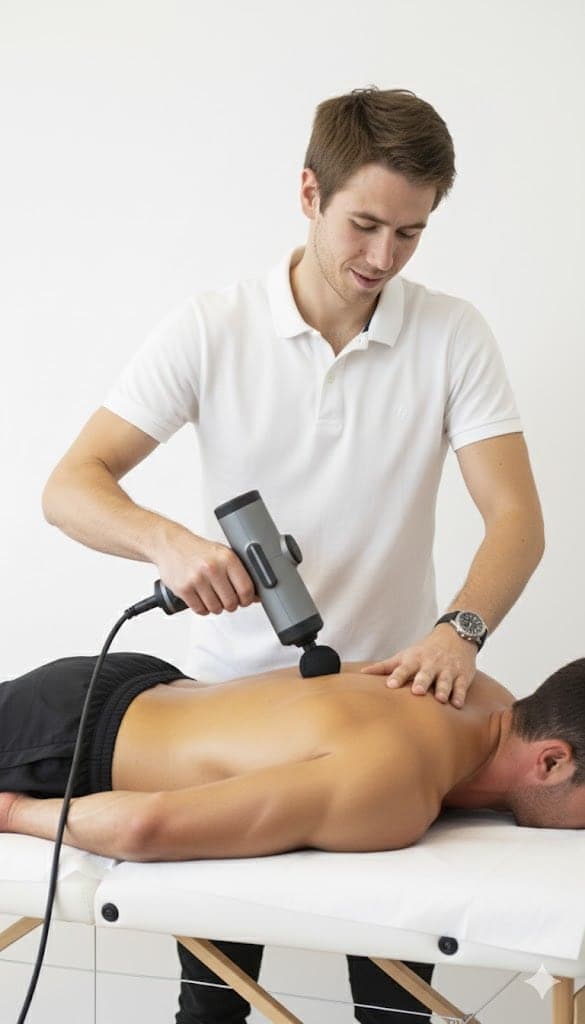
Written by
Chris
Massage therapist, nutrition and exercise physiologist
Norwegian-certified with a Bachelor’s in Physical Education and Nutrition and over ten years of clinical practice, working from a portable table in clients’ homes across the Paphos district.
This article is general information, not a medical diagnosis. If you have severe, worsening or unexplained pain, numbness, weakness, or pain after an accident, see a doctor first.