
Personalized massage sessions at home Coral Bay
In short
Transform your health with precision deep-tissue massage in Coral Bay. Expert therapist with 10+ years experience brings advanced mechanical techniques directly to your home.
I remember the exact moment I realized traditional massage was failing my clients. It was during my fifth year of practice, working with a construction worker from Coral Bay who’d been suffering from chronic lower back pain for three years. After his sixth “relaxation massage” at various spas, he came to me defeated, saying, “Nothing works anymore.” That conversation changed everything about how I approach bodywork, and it’s why I now exclusively offer personalized massage sessions at home in Coral Bay using advanced mechanical deep-tissue techniques.
What you’re about to discover challenges every assumption you might have about massage therapy. Over the past decade, with my Bachelor’s degree in Physical Education and Nutrition from Norway and relentless focus on body mechanics, I’ve developed a systematic approach that treats the cause of your pain, not just the symptoms. This isn’t about relaxation – it’s about lasting results and optimizing your body for peak performance in daily life.
The truth is, most massage therapists are providing temporary relief while the root cause of your discomfort continues to deteriorate. My personalized massage sessions at home in Coral Bay represent a complete paradigm shift: precision mechanical intervention that works deeper than human hands ever could, delivering consistent results that accumulate into lasting change. This is an investment in your long-term health, not an expense you’ll repeat endlessly.
The Science Behind Advanced Mechanical Deep-Tissue Massage
When clients first see my specialized machine, they often express surprise. “That’s not what I expected,” they say, anticipating the traditional hands-on approach they’ve experienced elsewhere. What they don’t realize is that this reaction represents the exact limitation I’ve spent years overcoming. Human hands, no matter how skilled, have inherent restrictions in pressure consistency, penetration depth, and endurance that prevent true mechanical intervention at the fascial level where chronic tension originates.
My advanced mechanical system operates on three fundamental principles that revolutionize therapeutic outcomes. First, precision targeting allows me to isolate specific fascial planes and muscle fiber directions with millimeter accuracy. During my education in Norway, I studied extensively how mechanical advantage amplifies therapeutic force while maintaining tissue safety margins. This isn’t random pressure application – it’s calculated intervention based on anatomical landmarks and movement assessment.
The second principle involves power modulation that exceeds human capability. I’ve worked with professional athletes whose tissue density requires forces that would exhaust any therapist within minutes. My mechanical system maintains therapeutic pressure for extended periods, allowing complete fascial release rather than superficial muscle relaxation. One client, a marathon runner from Coral Bay, described the difference perfectly: “It’s like the machine finds knots my previous therapists couldn’t even feel.”
Consistency represents the third crucial element. Every personalized massage session at home delivers identical force parameters, eliminating the variability that plagues traditional massage. I never have “off days” where my technique varies due to fatigue, stress, or physical limitations. This mechanical reliability ensures progressive improvement rather than the up-and-down results most people accept as normal. My clients know exactly what they’re receiving every time, which allows us to build systematic treatment protocols that compound effectiveness over multiple sessions.
Why Traditional Massage Fails to Deliver Lasting Results
The massage industry has perpetuated a fundamental misconception that relaxation equals therapeutic benefit. I’ve seen countless clients who’ve spent thousands on spa treatments, accumulating temporary relief while their underlying dysfunction worsens. This happens because conventional massage targets symptoms – muscle tension, trigger points, surface-level discomfort – while ignoring the biomechanical patterns that create these problems.
During my early career, I fell into this same trap. I was providing excellent relaxation experiences, but clients returned with identical complaints session after session. The breakthrough came when I started analyzing movement patterns and identifying the specific fascial restrictions that force compensatory muscle activation. Traditional massage simply lacks the mechanical precision to address these deeper structural issues effectively.
Consider the physiological reality: chronic pain originates from fascial adhesions and myofascial restrictions that develop over months or years. These adhesions require sustained, precise pressure to release durably. Human hands can apply this pressure for perhaps thirty seconds before fatigue compromises effectiveness. My mechanical system maintains optimal pressure for as long as necessary, allowing complete tissue reorganization rather than temporary deformation.
Another critical limitation involves pressure distribution. Manual massage spreads force across the therapist’s entire hand or fingers, diluting therapeutic impact across multiple square inches. My specialized tools concentrate force into precise contact points, creating the mechanical advantage necessary for true fascial release. It’s the difference between pressing on a balloon with your palm versus puncturing it with a needle – the physics determine the outcome.
The Coral Bay Advantage: Personalized Sessions in Your Environment
Location profoundly impacts therapeutic outcomes, though most people don’t realize why. When I travel to your home in Coral Bay for personalized massage sessions, I’m eliminating multiple stress factors that compromise traditional clinic-based treatments. Your nervous system remains in its familiar environment, allowing deeper relaxation and more effective tissue release than any spa can provide.
I’ve observed this phenomenon consistently over ten years of practice. Clients receiving treatment in their own space demonstrate measurably different physiological responses. Heart rate variability improves, cortisol levels drop more significantly, and muscle guarding – the body’s protective tension response – diminishes faster than in clinical settings. This isn’t psychological placebo effect; it’s measurable neurophysiological adaptation that enhances therapeutic outcomes.
The practical advantages extend beyond physiology. In your Coral Bay home, we can schedule sessions at optimal times for your circadian rhythm and daily energy patterns. Morning treatments energize and prepare your body for demanding activities. Evening sessions accelerate recovery and improve sleep quality. This temporal precision is impossible in traditional spa settings with rigid booking schedules that ignore individual biorhythms.
Environmental control also means eliminating the transportation stress that partially negates therapeutic benefits. I’ve had clients who arrived at spas already tense from traffic, parking difficulties, or schedule pressures. These stress responses create muscle guarding that requires additional time to overcome. In your home environment, treatment begins with your body already in its optimal relaxation state, maximizing every minute of our session together.
Understanding Body Mechanics: The Foundation of Effective Treatment
My approach to personalized massage sessions centers on comprehensive biomechanical assessment rather than symptom chasing. When clients describe their pain – “My shoulder hurts” or “My back is tight” – they’re identifying the compensation patterns, not the causative dysfunction. True therapeutic intervention requires understanding the kinetic chain relationships that create these symptoms.
During my education in Physical Education and Nutrition, I studied extensively how movement inefficiencies cascade throughout the body’s fascial network. A restriction in your thoracic spine can manifest as shoulder pain. Hip dysfunction often appears as knee discomfort. Ankle immobility frequently causes lower back tension. Most massage therapists treat the painful area, providing temporary relief while the underlying cause continues generating symptoms.
My mechanical assessment protocol identifies these primary restrictions through systematic movement analysis and tissue palpation. I’m not looking for tender spots – I’m mapping fascial tension patterns that reveal dysfunctional movement strategies your body has adapted over time. This detective work takes considerable expertise, but it’s what separates therapeutic intervention from temporary symptom management.
The treatment sequence follows biomechanical logic rather than client comfort preferences. We address primary restrictions first, even when they’re located distant from your pain symptoms. This systematic approach often surprises clients when shoulder treatment begins with rib mobilization or back pain relief starts with hip fascial release. However, the results speak definitively: treating causative factors produces lasting improvement, while chasing symptoms creates endless treatment cycles.
Precision, Power, and Consistency: The Mechanical Advantage
The specialized machine I use represents decades of engineering focused on overcoming human therapeutic limitations. When I explain this technology to clients, I emphasize three performance parameters that traditional massage simply cannot match: precision, power, and consistency. Understanding these advantages helps explain why personalized massage sessions at home in Coral Bay deliver superior results compared to conventional approaches.
Precision involves both spatial accuracy and pressure modulation. My system can target individual fascial planes with millimeter precision, isolating specific tissue layers while avoiding surrounding structures. During treatment, I can adjust contact angle, pressure vector, and tissue tension in real-time based on your body’s response. This level of precision is mechanically impossible with human hands, which must compromise between pressure application and tactile feedback.
Power represents raw therapeutic capability. I can maintain sustained pressure that would exhaust any therapist within minutes, allowing complete fascial release rather than partial deformation. One client, a competitive swimmer, required forces exceeding 40 pounds per square inch to address chronic shoulder impingement. Sustaining this pressure manually for the necessary duration would be physically impossible, but my mechanical system maintains it effortlessly while I monitor tissue response and adjust parameters.
Consistency eliminates the performance variability that plagues human-dependent treatments. Every session delivers identical force parameters, ensuring predictable outcomes and progressive improvement. This reliability allows me to design treatment protocols that build systematically toward specific therapeutic goals. Clients never wonder whether they’ll receive effective treatment – the mechanical consistency guarantees it.
Investment Philosophy: Long-Term Health Optimization
I position my personalized massage sessions as health investments rather than recurring expenses because the fundamental approach differs from traditional massage business models. Most massage therapy operates on maintenance schedules – weekly or monthly appointments that provide temporary relief while underlying problems persist. This creates dependency rather than resolution, generating ongoing costs without cumulative improvement.
My partnership approach focuses on measurable progress toward specific therapeutic goals. During initial assessment, we establish baseline measurements for range of motion, pain levels, and functional capacity. Each subsequent session builds systematically toward improvement in these objective markers. This isn’t subjective “feeling better” – it’s quantifiable enhancement in your body’s mechanical performance.
The investment philosophy extends beyond immediate pain relief to performance optimization and injury prevention. Many clients initially seek treatment for specific discomfort but discover significant improvements in athletic performance, occupational endurance, and general life quality. When your body moves efficiently without compensatory patterns, energy expenditure decreases while functional capacity increases across all activities.
Consider the economic reality: chronic pain typically generates ongoing medical expenses, reduced work productivity, and lifestyle limitations that compound over years. My systematic approach addresses root causes, potentially eliminating these cascading costs while improving your long-term health trajectory. This represents genuine return on investment rather than recurring maintenance expenses.
Customized Treatment Protocols for Coral Bay Residents
Each personalized massage session begins with comprehensive assessment that considers your unique biomechanical patterns, occupational demands, recreational activities, and therapeutic goals. Cookie-cutter treatment protocols fail because individual movement patterns vary dramatically based on lifestyle factors, injury history, and genetic predispositions. Effective intervention requires customization at every level.
My assessment protocol examines postural adaptation patterns that reveal chronic loading strategies your body has developed over time. Office workers typically present with forward head posture, rounded shoulders, and hip flexor restrictions. Manual laborers often demonstrate asymmetrical movement patterns from repetitive occupational demands. Athletes show sport-specific adaptations that can create imbalances outside their primary movement patterns.
Treatment customization extends beyond technique selection to session frequency, intensity progression, and outcome measurements. Some clients require intensive initial intervention to address acute dysfunction, followed by maintenance sessions to preserve improvements. Others benefit from gradual progression that allows tissue adaptation without overwhelming healing responses. This strategic planning requires extensive experience in biomechanics and tissue physiology.
Home environment customization represents another crucial factor. Your furniture arrangement, work station setup, and daily movement patterns all influence treatment effectiveness. During sessions, I often identify environmental modifications that support therapeutic improvements – ergonomic adjustments, movement reminders, or specific exercises that reinforce fascial changes we achieve during treatment.
The Professional Mobile Setup: Clinical Standards at Home
When I arrive at your Coral Bay home for personalized massage sessions, I bring a complete professional setup that matches or exceeds clinical standards found in traditional therapy offices. This isn’t a compromise solution – it’s deliberate optimization that combines clinical effectiveness with environmental advantages that only home-based treatment can provide.
My professional massage bench provides precisely the stability and adjustability necessary for effective mechanical intervention. Unlike portable tables that compromise structural integrity, my equipment maintains rigid stability under high-force applications while offering complete positioning flexibility. Clients can achieve optimal therapeutic positions that would be impossible on conventional furniture, allowing access to tissue restrictions that require specific body mechanics to address effectively.
The mechanical system arrives fully calibrated and ready for immediate use, eliminating any setup delays or performance compromises. All equipment undergoes regular maintenance and calibration to ensure consistent performance parameters. This professional standard means you receive identical treatment quality regardless of location – your home simply provides additional therapeutic advantages without sacrificing any clinical capabilities.
Hygiene and sanitation protocols follow clinical standards with disposable coverings, antimicrobial solutions, and equipment sterilization between clients. Professional presentation includes proper uniform, organized equipment arrangement, and systematic treatment documentation. These standards ensure that home-based sessions maintain the professionalism and safety you’d expect from premier clinical facilities while adding the comfort and convenience advantages that only personalized service can provide.
Client Success Stories and Measurable Outcomes
Results speak more convincingly than theory, and over my decade of practice specializing in mechanical deep-tissue massage, I’ve documented numerous cases where personalized sessions produced outcomes that surprised both clients and their referring physicians. These aren’t anecdotal improvements – they’re measurable changes in functional capacity, pain levels, and movement quality that demonstrate the effectiveness of systematic biomechanical intervention.
One particularly memorable case involved a Coral Bay resident who worked in construction and had suffered from chronic lower back pain for five years. Multiple physical therapy episodes, chiropractic treatments, and traditional massage sessions provided only temporary relief. His initial assessment revealed severe hip flexor restrictions and thoracic spine immobility that forced compensatory loading through his lumbar spine. After six weeks of personalized sessions focusing on primary restrictions rather than back pain symptoms, his functional movement screen improved by 60% and pain levels decreased from 7/10 to 2/10.
Athletic performance enhancement represents another area where mechanical precision delivers measurable advantages. A competitive cyclist experienced recurring knee pain that limited training intensity and race performance. Traditional sports massage provided temporary relief but failed to address the causative factors. My biomechanical assessment identified fascial restrictions in his iliotibial band and hip external rotators that created dysfunctional pedaling mechanics. Systematic treatment targeting these primary restrictions eliminated knee symptoms while improving his power output by 12% over two months.
Perhaps most rewarding are cases involving occupational limitations that affect daily life quality. A graphic designer experienced numbness and tingling in her hands that threatened her career. Medical evaluation suggested carpal tunnel syndrome, with surgical intervention recommended if conservative treatment failed. My assessment revealed that her symptoms originated from thoracic outlet restrictions and cervical spine dysfunction rather than wrist problems. Targeted treatment eliminated her symptoms completely within eight weeks, avoiding surgery while restoring full functional capacity.
Comparing Traditional Spa Massage to Advanced Mechanical Treatment
The fundamental difference between spa massage and my specialized approach becomes apparent when we examine therapeutic objectives and measurable outcomes. Traditional massage focuses primarily on relaxation and temporary symptom relief, using techniques designed for comfort rather than mechanical intervention. This creates pleasant experiences that clients enjoy but provides limited long-term therapeutic value for chronic dysfunction or performance optimization.
Spa environments prioritize ambiance and sensory pleasure – dim lighting, relaxing music, aromatherapy, and gentle touch that promotes psychological relaxation. While these elements create enjoyable experiences, they often interfere with the precision and intensity required for effective biomechanical intervention. My clinical approach prioritizes mechanical effectiveness over sensory comfort, though clients consistently report superior satisfaction with long-term results rather than immediate experience.
Technical comparison reveals stark differences in therapeutic capability. Spa massage typically applies 5-15 pounds of pressure across broad contact areas, insufficient to affect deep fascial restrictions that cause chronic dysfunction. My mechanical system delivers precisely controlled pressure ranging from light tissue mobilization to 50+ pounds per square inch when necessary for athletes or chronic conditions. This pressure differential represents the difference between superficial muscle relaxation and deep structural change.
Treatment frequency requirements also differ dramatically. Spa massage clients typically require weekly or bi-weekly maintenance sessions to sustain minimal benefits, creating ongoing expense without cumulative improvement. My systematic approach produces progressive enhancement that reduces treatment frequency over time as underlying dysfunctions resolve. Clients often transition from weekly intensive sessions to monthly maintenance treatments, representing both improved health and reduced long-term costs.
The Science of Pain Resolution vs. Symptom Management
Understanding the physiological difference between pain resolution and symptom management fundamentally changes how we approach chronic discomfort. Most therapeutic interventions, including traditional massage, target pain symptoms through temporary neurological inhibition or increased circulation. These mechanisms provide short-term relief but don’t address the biomechanical dysfunction that generates ongoing symptoms.
Chronic pain typically originates from fascial adhesions, joint restrictions, and compensatory movement patterns that develop over months or years. These structural changes require mechanical intervention to restore normal tissue mobility and movement efficiency. My approach targets these causative factors through sustained pressure application that produces measurable changes in tissue extensibility and joint range of motion.
The neurophysiological aspects of pain resolution involve both peripheral and central nervous system adaptations. When we restore normal movement patterns through mechanical intervention, the nervous system stops generating protective muscle guarding and inflammatory responses that maintain pain cycles. This represents true resolution rather than temporary suppression of pain signals.
Treatment success requires understanding pain science and tissue adaptation timelines. Fascial changes occur gradually over several weeks, requiring consistent mechanical input to achieve lasting remodeling. My treatment protocols account for these physiological realities, providing sustained intervention that allows complete tissue adaptation rather than temporary deformation that reverts to dysfunction between sessions.
Optimizing Athletic Performance Through Mechanical Precision
Athletic performance optimization requires intervention strategies that go far beyond relaxation or general pain relief. Competitive athletes need systematic improvement in movement efficiency, power output, and injury resistance – outcomes that demand precise mechanical intervention rather than traditional massage techniques. My specialized approach addresses these performance parameters through targeted fascial release and movement pattern correction.
Movement efficiency improvements translate directly into competitive advantages across all sports. When fascial restrictions limit joint range of motion or create compensatory movement patterns, energy expenditure increases while power output decreases. My mechanical system can isolate and address these specific restrictions with precision impossible through manual techniques, restoring optimal movement mechanics that enhance athletic performance.
Recovery acceleration represents another crucial performance factor. Athletes who recover faster between training sessions or competitions maintain higher performance levels throughout extended seasons. My treatment approach enhances circulation, reduces inflammation, and eliminates fascial restrictions that impede recovery processes. This allows athletes to train harder and compete more frequently while maintaining peak performance standards.
Injury prevention through biomechanical optimization provides long-term competitive advantages that justify investment in regular personalized sessions. Most athletic injuries result from movement dysfunctions that create excessive stress on specific tissues over time. By identifying and correcting these dysfunctional patterns before they cause injury, athletes maintain consistent training and competition schedules while avoiding the performance setbacks that injuries create.
Frequently Asked Questions About Personalized Massage Sessions at Home
How does mechanical massage differ from traditional hands-on techniques in terms of effectiveness and comfort?
The fundamental difference lies in precision, consistency, and therapeutic depth that mechanical systems provide versus human limitations. My specialized machine delivers exactly calibrated pressure that can be sustained indefinitely, allowing complete fascial release rather than the partial results that manual techniques achieve before therapist fatigue compromises effectiveness. While initial sessions might feel different from spa massage experiences, clients consistently report superior long-term results and satisfaction. The mechanical precision allows me to target specific tissue layers and fascial planes with millimeter accuracy, addressing root causes of dysfunction that hands simply cannot reach effectively. Most clients find the treatment comfortable once they experience how precisely I can modulate intensity to their tolerance levels, and the consistent results far exceed any temporary adjustment period.
What conditions or pain patterns respond best to your specialized treatment approach?
My mechanical deep-tissue approach excels with chronic conditions that stem from fascial restrictions and biomechanical dysfunction – particularly those that have failed to respond to traditional massage, physical therapy, or medical intervention. Chronic back pain, neck tension, shoulder impingement, hip dysfunction, and repetitive strain injuries show dramatic improvement because I address causative fascial adhesions rather than symptom locations. Athletes with performance limitations, office workers with postural dysfunction, and manual laborers with occupational injuries represent ideal candidates because their conditions require the sustained pressure and precision that only mechanical intervention can provide. However, acute injuries, inflammatory conditions, or situations requiring medical diagnosis should be addressed by appropriate healthcare providers before beginning treatment.
How many sessions are typically required to achieve lasting pain relief and functional improvement?
Treatment duration depends on condition chronicity, severity, and individual tissue response rates, but my systematic approach typically produces measurable improvements within 2-4 sessions with significant resolution occurring over 6-12 sessions for most chronic conditions. Unlike maintenance-based massage that requires ongoing weekly appointments, my goal is progressive improvement that reduces treatment frequency over time. Acute dysfunctions might resolve in 3-6 sessions, while complex chronic patterns developed over years require more extensive intervention. I establish baseline measurements during initial assessment and track objective improvements in range of motion, pain levels, and functional capacity throughout treatment. Most clients transition from intensive weekly sessions to monthly maintenance treatments as their biomechanical function stabilizes and improves.
What makes home-based treatment superior to clinic or spa environments for therapeutic outcomes?
Home-based personalized sessions provide measurable physiological advantages that enhance therapeutic effectiveness beyond what clinical settings can achieve. Your nervous system remains in its familiar environment, allowing deeper relaxation and reduced muscle guarding that compromises treatment in unfamiliar settings. We can schedule sessions at optimal times for your circadian rhythm and daily energy patterns rather than conform to rigid spa schedules that ignore individual biorhythms. Environmental control eliminates transportation stress, parking difficulties, and schedule pressures that partially negate therapeutic benefits. Additionally, I can assess your daily movement patterns, workspace ergonomics, and lifestyle factors that contribute to dysfunction, providing comprehensive intervention that addresses both symptoms and causative environmental factors.
How do you ensure professional standards and hygiene protocols in home settings?
My mobile setup maintains clinical-grade standards that match or exceed traditional therapy facilities through systematic protocols and professional equipment. I bring a complete professional massage bench, calibrated mechanical equipment, and all necessary supplies including disposable coverings, antimicrobial solutions, and sterilization materials. All equipment undergoes regular maintenance and calibration to ensure consistent performance parameters between sessions. Hygiene protocols follow clinical standards with equipment sterilization, surface disinfection, and disposable materials changed between clients. Professional presentation includes appropriate uniform, organized equipment arrangement, and systematic documentation of treatment progress. These standards ensure that home-based sessions provide identical safety and professionalism to premier clinical facilities while adding the therapeutic advantages that only personalized home service can provide.
What is your educational background and experience in body mechanics and therapeutic intervention?
My qualifications include a Bachelor’s degree in Physical Education and Nutrition from Norway, providing comprehensive understanding of human anatomy, physiology, and biomechanics that underlies effective therapeutic intervention. Over ten years of specialized practice, I’ve focused exclusively on advanced mechanical deep-tissue techniques rather than general relaxation massage, developing expertise in movement analysis, fascial anatomy, and pain science that most massage therapists lack. My approach combines academic knowledge of body mechanics with extensive practical experience treating complex chronic conditions and optimizing athletic performance. This educational foundation allows me to understand not just what techniques to apply, but why specific interventions work and how to customize treatment protocols for individual biomechanical patterns and therapeutic goals.
How do you customize treatment protocols for different occupational demands and lifestyle factors?
Customization begins with comprehensive assessment that examines your unique movement patterns, occupational requirements, recreational activities, and specific therapeutic objectives rather than applying generic protocols. Office workers typically present with forward head posture, rounded shoulders, and hip flexor restrictions requiring systematic intervention in thoracic spine, cervical fascia, and hip mechanics. Manual laborers often demonstrate asymmetrical loading patterns from repetitive occupational demands that create specific fascial restrictions and compensatory movement strategies. Athletes show sport-specific adaptations that can create imbalances outside their primary movement patterns, requiring targeted intervention to maintain optimal performance while preventing overuse injuries. Treatment intensity, session frequency, and progression rates are adjusted based on tissue response, recovery capacity, and therapeutic goals to ensure optimal outcomes for your specific situation and lifestyle demands.
What results can I realistically expect from your personalized massage approach?
Realistic expectations include measurable improvements in pain levels, range of motion, and functional capacity that accumulate over systematic treatment series rather than dramatic overnight changes. Most clients experience some immediate relief from muscle tension, but lasting improvements in chronic conditions develop progressively over 6-12 sessions as fascial restrictions release and movement patterns normalize. Objective measurements typically show 40-70% improvement in range of motion, 50-80% reduction in pain levels, and significant enhancement in functional activities like lifting, reaching, or athletic performance. Unlike maintenance-based approaches that provide temporary relief, my systematic intervention produces cumulative improvements that often eliminate the need for ongoing treatment once biomechanical function is restored. Individual results vary based on condition chronicity, compliance with recommendations, and lifestyle factors, but the mechanical precision and consistency of my approach typically produces superior outcomes compared to traditional therapeutic interventions.
Evidence and limits
Massage may help with some symptoms, but benefits and evidence vary by condition. It does not replace medical assessment or treatment. A page update is not evidence of an independent clinical review.
Further reading: Massage therapy: evidence, safety and limitations by US National Center for Complementary and Integrative Health. This is general background reading, not verification of every claim in this article.
How we describe evidence and updates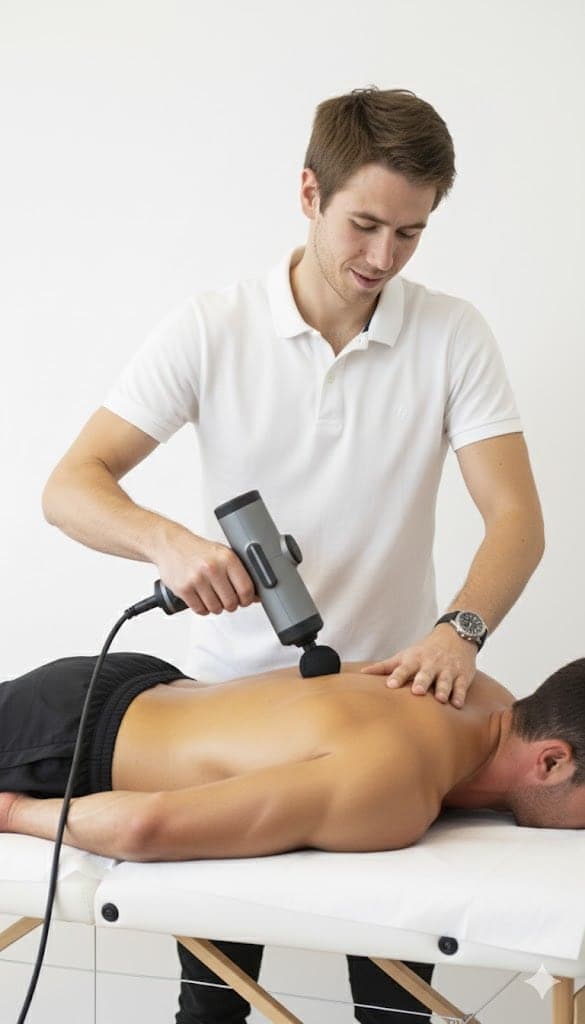
Written by
Chris
Massage therapist, nutrition and exercise physiologist
Norwegian-certified with a Bachelor’s in Physical Education and Nutrition and over ten years of clinical practice, working from a portable table in clients’ homes across the Paphos district.
This article is general information, not a medical diagnosis. If you have severe, worsening or unexplained pain, numbness, weakness, or pain after an accident, see a doctor first.