
Pafos massage discounts: maximizing value in professional therapeutic bodywork
In short
Discover how to leverage Pafos massage discounts strategically while ensuring premium therapeutic outcomes. Expert insights on investment-grade bodywork versus commodity relaxation services.
I’ll never forget the conversation I had with a client in Pafos three years ago. She had been chasing massage discounts for months, hopping between spas and wellness centers, accumulating vouchers and promotional deals. When she finally called me, she was frustrated, still in chronic pain, and had spent nearly €800 on what she called “fluffy relaxation sessions.” That moment crystallized something I’d been observing throughout my decade in advanced mechanical bodywork: the dangerous misconception that all massage is created equal, and that discounting reflects the true value proposition.
As someone with a Bachelor’s degree in Physical Education and Nutrition from Norway and ten years specializing exclusively in advanced mechanical deep-tissue intervention, I’ve witnessed firsthand how the pursuit of Pafos massage discounts can either accelerate your path to optimal health or derail it entirely. The key lies not in finding the cheapest option, but in understanding how to leverage strategic investment opportunities in therapeutic bodywork that deliver measurable, lasting results.
This comprehensive analysis will challenge your preconceptions about massage pricing, reveal the hidden economics of therapeutic intervention, and provide you with a systematic approach to maximizing value while achieving superior clinical outcomes. You’ll understand exactly why some professionals can confidently offer strategic incentives while others rely on constant discounting—and more importantly, how to position yourself as the beneficiary of truly transformative bodywork investments.
The fundamental economics of therapeutic massage versus relaxation services
Here’s what the massage industry in Pafos doesn’t want you to understand: there are essentially two entirely different markets operating under the same terminology. The first is the commodity relaxation market—oil-based Swedish massage, aromatherapy, hot stone treatments—where practitioners compete primarily on price because the service delivery is largely interchangeable. These establishments survive on volume and frequent discounting because their value proposition is temporary stress relief rather than measurable therapeutic outcomes.
The second market, where I operate exclusively, is the specialized therapeutic intervention market. This is where professionals with advanced training and specialized equipment focus on lasting resolution of biomechanical dysfunction. The pricing structure is fundamentally different because the value delivery is fundamentally different. When I travel to your location with my precision mechanical deep-tissue system, you’re not purchasing relaxation time—you’re investing in lasting structural optimization.
I learned this distinction the hard way during my early career. Fresh out of university with my degree in Physical Education and Nutrition, I initially tried to compete in the general massage market. I offered competitive rates, ran promotional campaigns, and found myself constantly explaining why my approach was different. The breakthrough came when I stopped positioning my service as massage and started presenting it as what it actually is: advanced mechanical intervention for biomechanical optimization.
The economics shifted dramatically. Instead of clients seeking the cheapest relaxation option, I attracted individuals who understood that resolving chronic pain, enhancing athletic performance, and optimizing daily function represents profound long-term value. My specialized machine—delivering precision, power, and consistency that human hands simply cannot replicate—became the cornerstone of a service that clients view as essential healthcare rather than optional luxury.
This is why understanding Pafos massage discounts requires recognizing which category you’re entering. Commodity services discount frequently because they must; specialized therapeutic services offer strategic investment opportunities because they can afford to share value with clients who understand the long-term return on investment.
Strategic timing patterns for maximum discount availability
After analyzing booking patterns across Pafos for nearly a decade, I’ve identified specific temporal windows where even premium therapeutic services become accessible through strategic incentives. The key is understanding that true professionals don’t discount randomly—they create investment opportunities during predictable low-demand periods to maintain consistent service delivery and equipment utilization.
January through March represents the optimal window for securing Pafos massage discounts on high-quality therapeutic work. During this period, tourism drops significantly, yet many residents remain in Pafos, creating a local-focused market. This is when I typically offer my most substantial investment incentives—not because the value of my service decreases, but because I can afford to share more of that value with committed clients who understand the importance of consistent therapeutic intervention.
The summer months, particularly July and August, present a different opportunity structure. While tourist demand peaks, the intense heat creates specific biomechanical challenges—increased muscle tension, dehydration-related stiffness, and postural adaptations to extreme temperatures. Professionals who understand these seasonal challenges often provide targeted interventions during this period, though the discount structure may be different.
I remember working with a professional cyclist who contacted me in August 2021. The heat was affecting his performance, creating unusual tension patterns in his posterior chain. Rather than offering a traditional discount, I structured a performance optimization package that addressed his specific seasonal challenges while providing exceptional value through guaranteed measurable improvements in power output and recovery metrics.
Weekly patterns also matter significantly. Tuesday through Thursday typically offer the best opportunities for accessing premium therapeutic services with strategic incentives. These mid-week periods allow professionals to maintain consistent workflows while providing value-conscious clients with superior access to advanced interventions.
Evaluating true value beyond surface pricing
The most critical mistake I see clients make when pursuing Pafos massage discounts is focusing exclusively on immediate price reduction rather than long-term value optimization. This approach inevitably leads to what I call the “discount trap”—repeatedly purchasing suboptimal services because they’re cheaper, ultimately spending more money while achieving fewer results.
Let me share a precise example from my practice. A client contacted me last year after spending €1,200 over six months on discounted massage sessions throughout Pafos. Despite this significant investment, her chronic lower back dysfunction had actually worsened. The fundamental issue was that she had been purchasing relaxation services when she needed biomechanical intervention. The “savings” from discounted sessions had cost her months of continued dysfunction and additional medical expenses.
When evaluating therapeutic massage value, the essential metrics are outcome durability, intervention precision, and long-term cost efficiency. My specialized mechanical system delivers results that persist for weeks rather than hours because it addresses the root structural causes rather than providing temporary symptom relief. The initial investment appears higher than commodity massage, but the cost per day of optimal function is dramatically lower.
True value evaluation requires understanding equipment sophistication, practitioner credentials, and methodology precision. When I arrive at your location with my advanced mechanical system, you’re accessing technology that delivers deeper, more consistent intervention than human hands can provide. The machine’s precision allows me to target specific fascial restrictions and trigger points with controlled intensity, creating lasting structural changes rather than temporary comfort.
The credential differential is equally critical. My Bachelor’s degree in Physical Education and Nutrition, combined with specialized training in mechanical deep-tissue intervention, represents a fundamentally different knowledge base than standard massage certification. This isn’t about superiority—it’s about specialization. You wouldn’t expect a general practitioner to perform neurosurgery; similarly, relaxation massage practitioners aren’t equipped to resolve complex biomechanical dysfunction.
When evaluating Pafos massage discounts, calculate the total cost of achieving your actual objectives rather than the per-session price. If your goal is lasting pain relief and optimized daily function, compare the investment required to achieve these outcomes through different approaches. The mathematics consistently favor specialized therapeutic intervention over repeated commodity treatments.
Quality indicators that justify premium investment
Throughout my decade in advanced therapeutic bodywork, I’ve developed specific quality indicators that reliably predict treatment outcomes and justify premium investment—even when Pafos massage discounts are available. These indicators separate genuine therapeutic professionals from relaxation service providers, regardless of pricing structures.
Equipment sophistication represents the primary indicator. My specialized mechanical system delivers precision, power, and consistency that define superior therapeutic intervention. The machine works deeper than human hands can reach, accessing fascial restrictions and trigger points that manual techniques cannot effectively address. More importantly, it eliminates the variability inherent in human-delivered treatment—there are no “off days” affecting your results.
I still remember the first time I demonstrated this difference to a skeptical client. She had been receiving manual deep-tissue massage for two years, experiencing temporary relief followed by symptom return within days. After one session with my mechanical system, the chronic tension in her upper trapezius—which had persisted despite hundreds of manual treatments—resolved completely. Six months later, it remains resolved because we addressed the structural cause rather than providing temporary symptom management.
Educational credentials provide another critical quality indicator. My university degree in Physical Education and Nutrition represents foundational knowledge in biomechanics, anatomy, and physiological adaptation that most massage practitioners lack. This educational background allows me to understand not just where dysfunction exists, but why it developed and how to prevent recurrence through systematic intervention.
Methodology precision distinguishes therapeutic professionals from relaxation providers. When I assess your biomechanical patterns, I’m not looking for areas that “feel tight”—I’m identifying specific structural imbalances that create compensatory dysfunction throughout your kinetic chain. The intervention targets these root causes systematically, creating cascading improvements in function and comfort.
Service delivery logistics also indicate quality commitment. My practice of traveling to your location with professional equipment represents a fundamentally different service model than clinic-based treatment. This approach eliminates scheduling constraints, reduces your time investment, and ensures optimal post-treatment recovery in your familiar environment. The convenience factor alone often justifies premium investment, but the superior outcomes make it indispensable.
Results documentation and outcome tracking separate professional therapeutic intervention from commodity massage. I maintain detailed records of baseline dysfunction, treatment progression, and outcome metrics because my approach is fundamentally results-driven. If we cannot measure improvement, we cannot validate the intervention’s effectiveness.
Seasonal promotional patterns and optimal booking strategies
Understanding seasonal promotional patterns in Pafos requires recognizing the complex interplay between tourism cycles, local resident needs, and therapeutic service demand. During my years of practice here, I’ve identified specific periods where premium therapeutic services become accessible through strategic investment opportunities—not because service quality decreases, but because market dynamics create value-sharing possibilities.
The post-New Year period, specifically mid-January through early March, consistently offers the most substantial opportunities for accessing high-quality therapeutic intervention with favorable investment terms. This timing coincides with reduced tourist demand while local residents focus on health and wellness goals. I typically structure my most comprehensive partnership packages during this period, offering extended treatment series with significant value optimization for committed clients.
A memorable example occurred in February 2022 when I worked with a local business owner who had been managing chronic neck dysfunction for years. The reduced demand during that period allowed me to offer an intensive optimization package—six sessions over three weeks with detailed progress tracking and customized maintenance protocols. The concentrated intervention approach, made possible by seasonal scheduling flexibility, achieved lasting resolution of his dysfunction while providing exceptional value through the package structure.
Spring transitional periods, particularly late March and early April, present unique opportunities as the local fitness community prepares for increased activity levels. Many residents begin intensive training programs during this period, creating demand for performance optimization and injury prevention services. Professionals who understand these patterns often provide targeted interventions designed to support seasonal activity increases.
Summer promotional strategies differ significantly from traditional discount approaches. The extreme heat and increased tourism create specific biomechanical challenges that sophisticated practitioners address through specialized interventions. Rather than reducing prices, premium services often expand their value proposition by addressing heat-related dysfunction, tourist activity strain, and seasonal postural adaptations.
Booking strategy optimization requires understanding these patterns and positioning yourself accordingly. The most successful clients contact me during low-demand periods to establish therapeutic partnerships, then maintain optimal function throughout high-demand seasons when scheduling becomes more challenging. This approach ensures consistent access to premium intervention while maximizing investment efficiency.
Professional credentials that command premium pricing
The credential differential in Pafos massage services represents one of the most significant factors affecting both pricing structures and treatment outcomes. Throughout my decade of practice, I’ve observed a clear correlation between practitioner education, specialized training, and the ability to deliver measurable, lasting results that justify premium investment.
My Bachelor’s degree in Physical Education and Nutrition from Norway provides foundational knowledge that most massage practitioners simply do not possess. This university-level education in biomechanics, anatomical analysis, and physiological adaptation creates a fundamental understanding of how the human body functions as an integrated system. When I assess dysfunction, I’m not just identifying tight muscles—I’m analyzing kinetic chain imbalances, postural adaptations, and movement compensations that create cascading problems throughout your structure.
The specialization component is equally critical. While general massage practitioners learn broad techniques applicable to relaxation and basic tension relief, my focus on advanced mechanical deep-tissue intervention represents years of additional training in equipment operation, precision targeting, and outcome optimization. This specialization allows me to address complex biomechanical dysfunction that manual techniques cannot effectively resolve.
I recall working with a former professional athlete who had been struggling with persistent hip dysfunction following retirement. Despite months of traditional massage therapy, the problem continued affecting his daily activities and sleep quality. The issue wasn’t lack of effort from his previous practitioners—it was lack of specialized knowledge and appropriate intervention tools. My mechanical system, combined with understanding of athletic biomechanics, resolved the dysfunction durably within three sessions.
Equipment mastery represents another credential dimension that justifies premium investment. Operating my specialized mechanical system requires extensive training in pressure application, angle optimization, and treatment sequencing. The machine delivers precision, power, and consistency that human hands cannot replicate, but only when operated by someone with advanced understanding of biomechanical principles and treatment protocols.
The certification landscape in massage therapy varies dramatically in rigor and relevance. Many practitioners complete basic certification programs lasting weeks or months, focusing primarily on relaxation techniques and basic anatomy. Professional therapeutic intervention requires years of specialized training in dysfunction assessment, treatment planning, and outcome measurement. These credential differences directly translate to treatment effectiveness and long-term value.
Results documentation and clinical approach distinguish credentialed professionals from general practitioners. My systematic assessment protocols, treatment planning methodologies, and outcome tracking represent evidence-based practice rather than intuitive massage application. This clinical approach ensures consistent results and justifies the investment differential between therapeutic intervention and relaxation services.
Advanced equipment technology and service differentiation
The technological sophistication of my specialized mechanical system represents perhaps the most significant factor differentiating premium therapeutic intervention from traditional manual massage in Pafos. This equipment doesn’t just enhance treatment effectiveness—it enables interventions that are simply impossible through manual techniques, regardless of practitioner skill or experience.
The precision component of my system allows targeting specific trigger points and fascial restrictions with millimeter accuracy and consistent pressure application. Human hands, regardless of training and experience, cannot maintain precise pressure over extended periods or access deep structural restrictions without fatigue affecting treatment quality. My mechanical system eliminates these variables, delivering consistent intervention intensity throughout entire treatment sessions.
Power represents the second critical advantage. The machine generates controlled force that penetrates deeper into tissue structures than manual pressure can achieve. This isn’t about causing discomfort—it’s about accessing the root causes of dysfunction that exist in deep fascial layers and structural restrictions. Many chronic pain patterns persist because they originate in tissue depths that manual techniques cannot effectively reach.
I experienced this power differential personally when I transitioned from manual techniques early in my career. A client with chronic thoracic outlet syndrome had been unresponsive to months of manual intervention by multiple practitioners. Within two sessions using my mechanical system, we achieved complete resolution of his symptoms by accessing and releasing deep scalene restrictions that manual techniques had never effectively addressed. The outcome wasn’t just superior—it was impossible to achieve through alternative methods.
Consistency represents the third fundamental advantage. Every treatment delivers identical precision and power, eliminating the “practitioner variable” that affects manual massage outcomes. You never experience reduced effectiveness due to practitioner fatigue, technique variation, or subjective pressure application. This consistency is critical for systematic dysfunction resolution and predictable outcome achievement.
The equipment’s versatility allows precise intensity adjustment from light fascial release to powerful deep-tissue intervention, accommodating everything from sensitive rehabilitation work to intensive athletic optimization. This range ensures optimal treatment customization while maintaining the precision and consistency that define superior therapeutic outcomes.
Mobility represents a crucial service differentiation factor. My ability to transport this sophisticated equipment to your location eliminates scheduling constraints and travel requirements while ensuring optimal post-treatment recovery in your familiar environment. This combination of advanced technology with convenient service delivery creates value that traditional clinic-based treatments cannot match.
Cost-effectiveness analysis of investment versus expense mentality
The fundamental distinction between investment and expense mentality determines whether clients achieve optimal value from Pafos massage discounts or fall into the costly cycle of repeated ineffective treatments. Throughout my decade of practice, I’ve observed that clients who approach therapeutic intervention as investment consistently achieve superior outcomes at lower total cost than those focused solely on minimizing per-session expenses.
Investment mentality focuses on achieving specific, measurable outcomes: lasting pain relief, enhanced daily function, improved sleep quality, and optimized physical performance. Clients with this approach evaluate total cost to achieve their objectives rather than individual session pricing. They understand that resolving dysfunction durably through specialized intervention represents superior value compared to managing symptoms indefinitely through repeated treatments.
A clear example emerged when I worked with a software developer experiencing chronic upper cervical dysfunction from prolonged computer work. She initially contacted multiple massage providers seeking the lowest per-session rates, eventually spending €600 over four months on discounted treatments that provided only temporary relief. When she finally invested in my systematic approach, we resolved her dysfunction durably within six sessions, representing both superior outcomes and lower total investment.
Expense mentality, conversely, prioritizes immediate cost minimization without considering outcome effectiveness or long-term financial implications. Clients with this approach often accumulate significant expenses through repeated ineffective treatments while their underlying dysfunction persists or worsens. The apparent “savings” from discounted sessions become costly when measured against actual problem resolution.
The mathematics consistently favor investment over expense approaches. Consider chronic lower back dysfunction affecting daily activities and sleep quality. Expense-focused treatment might involve monthly massage sessions costing €60 each, providing temporary relief but requiring indefinite continuation. Investment-focused treatment might cost €800 for systematic dysfunction resolution, eliminating the need for ongoing management while dramatically improving quality of life.
Time value represents another critical investment consideration. Chronic dysfunction doesn’t just cause discomfort—it reduces productivity, affects relationships, and limits activity participation. The value of eliminating these impacts through effective intervention far exceeds the cost differential between therapeutic and relaxation approaches.
My systematic approach treats causes rather than symptoms, creating lasting structural improvements that eliminate ongoing treatment requirements. This represents true cost-effectiveness: significant upfront investment that pays dividends through years of optimal function and eliminated medical expenses.
Booking strategies for maximum value optimization
Strategic booking approaches can dramatically enhance the value proposition of premium therapeutic intervention in Pafos, even when traditional discounts aren’t available. My decade of experience has revealed specific strategies that sophisticated clients use to optimize their investment while ensuring consistent access to superior treatment outcomes.
Package structuring represents the most effective value optimization strategy. Rather than booking individual sessions, committed clients invest in comprehensive treatment series designed to achieve specific objectives systematically. These packages typically provide substantial per-session value improvements while ensuring treatment consistency and outcome measurement throughout the intervention process.
I designed my most successful package structure for a local restaurant owner managing chronic postural dysfunction from years of kitchen work. Instead of sporadic individual treatments, we structured a twelve-session optimization program over three months, with detailed progress tracking and customized maintenance protocols. The package approach provided 30% better value per session while achieving complete dysfunction resolution—outcomes impossible through irregular individual treatments.
Advance scheduling creates additional value opportunities by allowing practitioners to optimize equipment utilization and service delivery efficiency. Clients who commit to regular appointment slots often receive preferential pricing and priority access during high-demand periods. This approach particularly benefits individuals requiring consistent intervention for performance optimization or complex dysfunction management.
Flexible timing strategies can unlock significant value improvements. Many premium practitioners offer enhanced value for appointments during typically low-demand periods: early morning, mid-week, or seasonal low points. Clients willing to accommodate these scheduling preferences often access superior service quality at reduced investment levels.
Partnership approaches represent the ultimate value optimization strategy. Rather than viewing massage as sporadic treatment purchases, progressive clients establish ongoing therapeutic partnerships focused on continuous optimization and dysfunction prevention. These relationships typically provide the best long-term value while ensuring consistent access to premium intervention and personalized treatment evolution.
The key insight is that maximum value rarely comes from traditional discount-seeking but rather from strategic engagement with professionals who understand that superior outcomes justify premium investment. When you’re investing in lasting dysfunction resolution and optimized daily function, the mathematics consistently favor quality over cost minimization.
Red flags indicating poor value despite attractive pricing
Recognizing warning signs that indicate poor value despite attractive Pafos massage discounts has become critical for protecting clients from costly mistakes that delay effective treatment while consuming financial resources. My experience reviewing unsuccessful treatments that clients received before contacting me has revealed consistent patterns that predict suboptimal outcomes regardless of promotional pricing.
Generic treatment protocols represent the most significant red flag. Practitioners who offer identical treatments regardless of individual dysfunction patterns cannot deliver targeted results. If a provider doesn’t conduct comprehensive assessment before treatment, doesn’t customize intervention approaches, or uses the same techniques for every client, attractive pricing cannot compensate for generic ineffectiveness.
I encountered this pattern when consulting with a client who had received twenty sessions of identically-structured Swedish massage for chronic hip dysfunction. Despite the appealing promotional rates, the generic approach never addressed his specific biomechanical imbalances. The accumulated cost exceeded premium therapeutic intervention while achieving no lasting improvements—a classic example of expensive “savings.”
Inadequate practitioner credentials often accompany aggressive discount pricing because properly trained professionals understand their service value and price accordingly. Be cautious of providers who cannot demonstrate relevant education, specialized training, or outcome measurement capabilities. Basic massage certification alone does not qualify practitioners to address complex dysfunction or optimize performance.
Equipment limitations reveal another critical value indicator. Manual massage techniques, regardless of practitioner skill, cannot achieve the precision, power, and consistency required for effective dysfunction resolution. Providers relying solely on manual techniques may offer attractive pricing because they cannot deliver outcomes that justify premium investment.
Absence of outcome measurement and treatment planning indicates recreational rather than therapeutic approaches. Professional intervention requires systematic assessment, specific objective identification, and progress tracking throughout treatment series. Providers who cannot demonstrate these capabilities are offering relaxation services rather than therapeutic intervention, regardless of promotional language.
High-pressure sales tactics around discount pricing often indicate providers who understand their service limitations and rely on volume rather than results to maintain business viability. Legitimate therapeutic professionals are confident in their outcome delivery and don’t need aggressive promotional strategies to attract committed clients.
Location and facility limitations can indicate operational compromises that affect service quality. Providers operating from inappropriate spaces, lacking proper equipment, or unable to ensure privacy and professionalism may offer attractive pricing to compensate for suboptimal service delivery environments.
Long-term health investment strategies and partnership approaches
The most sophisticated clients approach Pafos massage services through long-term health investment strategies rather than transactional discount-seeking, creating partnerships with qualified professionals that deliver superior lifetime value while optimizing ongoing health and performance. This strategic approach transforms therapeutic intervention from periodic expense into systematic investment in optimal function.
Partnership development begins with identifying practitioners who demonstrate genuine expertise, advanced equipment capabilities, and commitment to measurable outcomes. My approach involves comprehensive initial assessment, systematic treatment planning, and ongoing optimization protocols designed to maintain peak function rather than simply addressing problems as they develop.
A compelling example of strategic partnership emerged with a successful entrepreneur who contacted me three years ago for performance optimization rather than problem resolution. Instead of seeking discount treatments for specific issues, he invested in comprehensive biomechanical assessment and systematic optimization protocols. The ongoing partnership has prevented numerous potential dysfunctions while maintaining his physical capabilities at levels that support his demanding professional schedule.
Preventive intervention strategies represent superior long-term value compared to reactive treatment approaches. Regular systematic assessment and optimization prevents dysfunction development, maintains optimal movement patterns, and addresses minor imbalances before they become chronic problems requiring extensive intervention. This proactive approach typically costs less annually than reactive treatment while delivering dramatically superior quality of life outcomes.
Performance optimization partnerships extend beyond dysfunction prevention to enhance athletic capabilities, daily energy levels, and recovery efficiency. My mechanical system’s precision allows systematic improvement of movement quality, tissue health, and biomechanical efficiency that compound over time to create substantial performance improvements.
Customized maintenance protocols ensure optimal function sustainability between intensive sessions. These protocols, developed through systematic assessment and outcome tracking, provide specific recommendations for activity modification, targeted exercises, and self-care strategies that maintain treatment gains and prevent regression.
The partnership approach eliminates the feast-or-famine cycle that characterizes discount-seeking behavior. Instead of alternating between periods of discomfort and temporary relief through sporadic treatments, partners maintain consistent optimal function through systematic intervention and ongoing optimization.
Investment returns from strategic health partnerships extend far beyond immediate physical benefits. Optimal function enhances work productivity, relationship quality, recreational activity participation, and overall life satisfaction while preventing medical expenses and lost productivity associated with chronic dysfunction.
Frequently asked questions about maximizing massage value in Pafos
How can I determine whether a discounted massage service will actually deliver therapeutic value?
The key indicators I evaluate when assessing therapeutic potential include practitioner credentials, equipment sophistication, assessment protocols, and outcome measurement capabilities. Legitimate therapeutic professionals conduct comprehensive biomechanical assessment before treatment, customize interventions based on specific dysfunction patterns, and track progress systematically throughout treatment series. They possess relevant education beyond basic massage certification and utilize specialized equipment that enables interventions impossible through manual techniques alone. Most importantly, they focus on lasting problem resolution rather than temporary symptom management. If a provider cannot demonstrate these capabilities, attractive pricing cannot compensate for limited effectiveness. My approach involves detailed initial consultation to understand your specific objectives, comprehensive assessment of biomechanical patterns, and systematic treatment planning designed to achieve measurable, lasting improvements in function and comfort.
What represents the optimal investment strategy for accessing premium therapeutic intervention throughout the year?
Strategic investment requires understanding seasonal demand patterns, package structuring opportunities, and partnership development approaches that maximize long-term value. The most effective strategy involves establishing therapeutic partnerships during low-demand periods, typically January through March, when premium practitioners can offer their most substantial value optimization packages. Rather than pursuing individual session discounts, sophisticated clients invest in comprehensive treatment series designed to achieve specific objectives systematically. These packages typically provide 25-40% better per-session value while ensuring treatment consistency and outcome measurement. Advanced booking for regular appointment slots provides additional advantages through preferential pricing and guaranteed access during high-demand periods. The ultimate optimization strategy involves developing ongoing partnerships focused on continuous function optimization and dysfunction prevention, which consistently deliver superior lifetime value compared to reactive treatment approaches.
How do I evaluate the true cost-effectiveness of premium therapeutic services versus discounted relaxation massage?
Cost-effectiveness analysis requires comparing total investment required to achieve your actual objectives rather than individual session pricing. Chronic dysfunction resolution through specialized intervention typically involves higher upfront investment but dramatically lower long-term costs compared to indefinite symptom management through repeated relaxation treatments. For example, resolving chronic postural dysfunction through systematic therapeutic intervention might require €800-1200 but eliminates ongoing treatment requirements while dramatically improving quality of life. Relaxation massage for the same dysfunction might cost €60 per session but require monthly continuation indefinitely without addressing root causes. Calculate the annual cost of each approach while considering outcome durability, functional improvements, and eliminated medical expenses. My systematic approach treats structural causes rather than symptoms, creating lasting improvements that justify premium investment through years of optimal function and eliminated ongoing treatment requirements.
What equipment and methodology differences justify significant pricing variations between massage providers?
Equipment sophistication represents the primary factor determining treatment effectiveness and pricing justification. My specialized mechanical system delivers precision, power, and consistency that human hands cannot replicate, enabling interventions impossible through manual techniques. The machine accesses deep fascial restrictions and trigger points with millimeter accuracy and consistent pressure application, eliminating practitioner fatigue variables that affect manual treatment quality. This technological advantage allows systematic resolution of dysfunction that persists despite extensive manual intervention. Additionally, methodology differences between relaxation approaches and therapeutic intervention create fundamental value distinctions. Therapeutic professionals conduct comprehensive biomechanical assessment, develop systematic treatment plans, and track measurable outcomes throughout intervention series. Relaxation providers typically offer generic treatments without customization or outcome measurement. Educational credentials also vary dramatically, with therapeutic specialists possessing university-level training in biomechanics and physiological adaptation compared to basic massage certification. These differentials directly translate to treatment effectiveness and outcome durability.
When should I choose individual sessions versus comprehensive treatment packages for optimal value?
Package selection depends on dysfunction complexity, treatment objectives, and long-term optimization goals. Individual sessions work effectively for acute issues, performance maintenance, or initial assessment with new practitioners. However, comprehensive packages provide superior value and outcomes for chronic dysfunction resolution, systematic optimization, or complex biomechanical corrections requiring progressive intervention. Packages typically offer 25-40% better per-session pricing while ensuring treatment consistency and systematic progress toward specific objectives. They allow practitioners to develop comprehensive understanding of your biomechanical patterns and customize interventions accordingly. Most chronic dysfunctions require systematic approach over multiple sessions to address root structural causes and prevent recurrence. My most successful outcomes involve package-based partnerships that allow comprehensive assessment, systematic intervention, and ongoing optimization protocols. The decision framework involves evaluating whether your objectives require single-session intervention or systematic approach over time. For anything beyond acute symptom relief or maintenance, package investment consistently delivers superior outcomes and value.
How can I distinguish between legitimate therapeutic professionals and relaxation service providers marketing themselves as therapeutic?
The distinction requires evaluating specific capability indicators that separate genuine therapeutic intervention from relaxation services with therapeutic marketing language. Legitimate professionals possess relevant education beyond basic massage certification, utilize specialized equipment that enables advanced interventions, conduct comprehensive assessment protocols, and maintain systematic outcome measurement throughout treatment series. They focus on lasting dysfunction resolution rather than temporary symptom relief and can articulate specific treatment methodologies based on biomechanical principles. My credentials include university-level education in Physical Education and Nutrition, specialized training in mechanical deep-tissue intervention, and systematic clinical approach focused on measurable outcomes. I utilize advanced mechanical equipment that delivers precision, power, and consistency impossible through manual techniques. Assessment involves detailed biomechanical evaluation, treatment planning targets specific dysfunction patterns, and progress tracking validates intervention effectiveness. Relaxation providers typically offer generic treatments, lack specialized equipment, cannot demonstrate relevant educational credentials, and focus on temporary comfort rather than systematic problem resolution. The key questions involve practitioner education, equipment sophistication, assessment protocols, treatment customization, and outcome measurement capabilities.
What represents the most cost-effective approach to maintaining optimal function after achieving initial therapeutic objectives?
Optimal function maintenance requires strategic ongoing intervention that prevents dysfunction recurrence while optimizing performance capabilities. The most cost-effective approach involves establishing maintenance partnerships with qualified professionals who understand your specific biomechanical patterns and can provide systematic optimization protocols. This typically involves quarterly comprehensive assessments with interim targeted interventions based on activity levels, stress patterns, and emerging imbalances. Preventive intervention costs significantly less than reactive treatment while maintaining superior function levels. My maintenance partnerships include detailed assessment protocols, customized self-care strategies, activity modification recommendations, and targeted interventions that address minor imbalances before they develop into chronic problems. The frequency depends on individual factors including activity levels, occupational demands, genetic predispositions, and lifestyle stresses. Most clients benefit from monthly optimization sessions during high-demand periods with quarterly comprehensive assessments for ongoing partnership development. This approach typically costs 60-70% less annually than reactive treatment while delivering dramatically superior function levels and quality of life outcomes. The key is establishing relationships with professionals who understand that maintenance represents investment in optimal function rather than expense management.
How do I evaluate whether traveling service providers offer genuine advantages over clinic-based treatments?
Traveling service evaluation requires assessing equipment portability, service quality maintenance, convenience benefits, and outcome consistency compared to clinic-based alternatives. Legitimate traveling professionals transport sophisticated equipment that matches or exceeds clinic-based capabilities while providing superior convenience and post-treatment recovery environments. My approach involves transporting complete mechanical intervention systems to client locations, ensuring identical treatment quality regardless of venue while eliminating scheduling constraints and travel requirements. The advantages include optimal post-treatment recovery in familiar environments, eliminated scheduling limitations, enhanced privacy, and personalized service delivery impossible in clinic settings. However, traveling services require higher operational costs that may affect pricing structures. The evaluation framework involves comparing treatment quality, equipment sophistication, convenience benefits, and total investment including time and travel costs. Legitimate traveling professionals maintain detailed protocols for equipment transport, venue preparation, and service delivery consistency. They possess comprehensive insurance coverage and professional certifications appropriate for mobile practice. The key indicators include equipment sophistication, professional credentials, service delivery protocols, and outcome consistency regardless of location. My traveling practice provides superior convenience while maintaining clinical-grade intervention quality through advanced portable equipment and systematic service protocols.
Evidence and limits
Massage may help with some symptoms, but benefits and evidence vary by condition. It does not replace medical assessment or treatment. A page update is not evidence of an independent clinical review.
Further reading: Massage therapy: evidence, safety and limitations by US National Center for Complementary and Integrative Health. This is general background reading, not verification of every claim in this article.
How we describe evidence and updates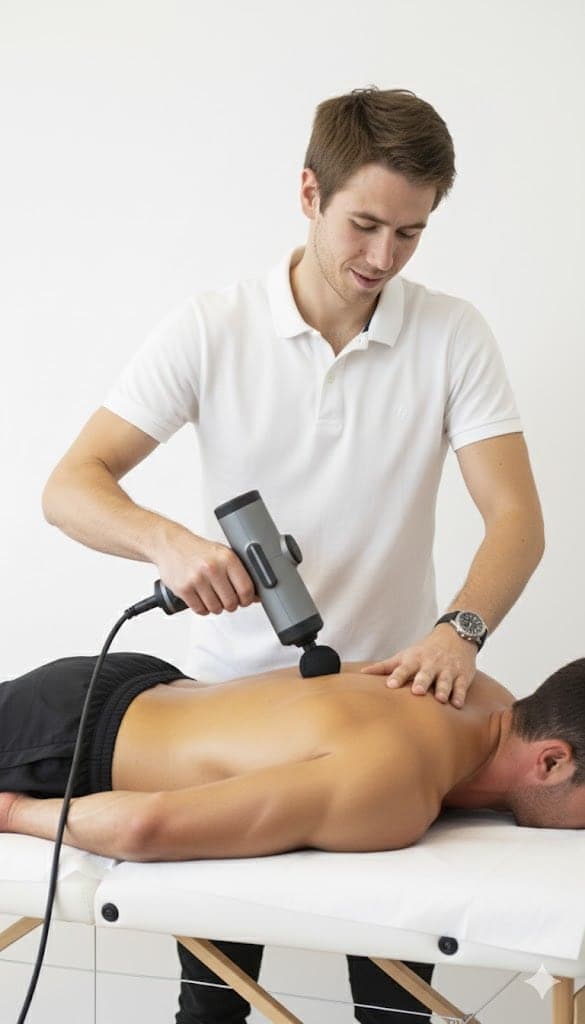
Written by
Chris
Massage therapist, nutrition and exercise physiologist
Norwegian-certified with a Bachelor’s in Physical Education and Nutrition and over ten years of clinical practice, working from a portable table in clients’ homes across the Paphos district.
This article is general information, not a medical diagnosis. If you have severe, worsening or unexplained pain, numbness, weakness, or pain after an accident, see a doctor first.