
Mobile Massage for Elderly: Advanced Mechanical Therapy Delivered to Your Home in Tsada
In short
Discover how specialized mobile massage for elderly residents in Tsada combines clinical precision with convenience, addressing chronic pain at its source through advanced mechanical deep-tissue therapy.
After a decade of treating hundreds of elderly clients across Cyprus, I’ve observed a troubling pattern: most seniors accept chronic pain as an inevitable part of aging. They shouldn’t. What appears as “natural deterioration” is often accumulated mechanical dysfunction—tension patterns that have calcified over decades, restricting movement, compromising circulation, and diminishing quality of life. The encouraging reality? These patterns respond remarkably well to targeted mechanical intervention, particularly when we address the structural cause rather than simply masking symptoms.
Mobile massage for elderly clients in Tsada represents more than convenience. It removes the logistical barriers—transportation challenges, unfamiliar environments, physical exertion—that prevent many seniors from accessing the therapeutic care they need. When I bring my specialized equipment to your residence, we create an optimal treatment environment where the body can respond fully to deep mechanical therapy without the stress of travel.
My approach differs fundamentally from traditional relaxation massage. With a Bachelor’s degree in Physical Education and Nutrition from Norway and ten years specializing exclusively in advanced mechanical deep-tissue work, I treat the musculoskeletal system as an interconnected mechanical structure. My method targets the root cause of pain and restricted mobility, not merely the surface-level symptoms that most therapists address.
Understanding the Mechanical Reality of Aging Tissue
Let me be direct about what happens to connective tissue as we age. The fascia—the continuous web of connective tissue that encases every muscle, nerve, and blood vessel in your body—becomes progressively less hydrated and more adhesed. Movement patterns become restricted. Compensation patterns develop. What began as a minor limitation in one area creates cascading dysfunction throughout the kinetic chain.
I witnessed this clearly with Margaret, a 73-year-old former teacher in Tsada who contacted me about persistent hip pain. She’d accepted reduced mobility as “just getting older.” During our initial assessment, I identified significant fascial restriction not in her hip, but in her thoracolumbar junction and quadratus lumborum. Her body had been compensating for upper-body restrictions by overloading her hip joint for years. We didn’t need to “manage” her pain. We needed to systematically release the mechanical restrictions creating it.
After eight weeks of targeted treatment, Margaret walked without pain for the first time in five years. This isn’t exceptional—it’s the expected outcome when we address structural cause rather than treating symptoms.
Why Conventional Massage Falls Short for Elderly Clients
Traditional manual massage, regardless of the therapist’s skill, faces fundamental limitations when treating age-related tissue dysfunction. Human hands tire. Pressure becomes inconsistent. Deep fascial layers remain inaccessible. The therapist’s physical capacity dictates treatment depth, not the tissue’s actual needs.
These limitations become critical when working with elderly clients whose tissue changes demand sustained, precise mechanical force to achieve therapeutic effect. Calcified adhesions require consistent pressure over extended periods. Deeply restricted fascia needs targeted intervention that exceeds what hands can deliver without fatigue.
My specialized mechanical system eliminates these constraints entirely. The tool I use provides:
- Precision targeting: I can isolate specific fascial planes, individual muscle bellies, and problematic adhesions with millimeter accuracy.
- Sustained depth: The machine delivers consistent deep pressure for as long as necessary, accessing tissue layers hands cannot reach.
- Adjustable intensity: From gentle fascial gliding to powerful deep-tissue release, I control force precisely based on tissue response and client tolerance.
- Consistent quality: Every treatment delivers identical effectiveness—no “off days,” no fatigue compromising results.
This isn’t innovation for innovation’s sake. It’s the application of mechanical principles to achieve outcomes that manual techniques simply cannot produce with elderly tissue that requires deeper, more sustained intervention.
The Clinical Benefits of Mobile Massage for Elderly Residents
When I established my practice in Cyprus, I deliberately chose to specialize in mobile service because the logistics matter profoundly for elderly clients. Treatment effectiveness doesn’t exist in isolation from accessibility. If getting to an appointment creates physical stress, you’ve already compromised the therapeutic outcome before treatment begins.
Physiological Advantages of In-Home Treatment
Treating clients in their own environment creates several clinical advantages that directly enhance results. The nervous system remains in parasympathetic dominance—the “rest and digest” state where tissue releases most effectively. There’s no pre-treatment cortisol elevation from navigating traffic or managing unfamiliar spaces. The body allocates full resources to healing rather than environmental stress management.
I arrive with a professional treatment bench, all necessary equipment, and a systematic approach refined over thousands of sessions. Your responsibility is simply to be present. No preparation. No travel. No post-treatment driving while your body processes deep tissue work.
Pain Reduction Through Mechanical Correction
Most elderly clients I treat have been told their pain stems from arthritis, disc degeneration, or “just aging.” While these conditions may be present on imaging, they frequently aren’t the primary pain generators. Restricted fascia, trigger points, and compensation patterns create most of the daily discomfort seniors experience.
Consider the typical presentation: chronic low back pain. An MRI shows some disc degeneration—unremarkable for the age. The client assumes this structural finding explains their pain. But when I assess their movement patterns, I find severely restricted hip flexors, adhesed thoracolumbar fascia, and dysfunctional glute activation. The spine isn’t the problem—it’s the victim of mechanical dysfunction above and below.
We systematically release these restrictions. The pain resolves. The “arthritis” remains, but it’s no longer symptomatic because we’ve eliminated the mechanical stress causing inflammation and discomfort.
| Condition | Common Symptoms | Mechanical Cause | Treatment Focus |
|---|---|---|---|
| Chronic Lower Back Pain | Persistent ache, morning stiffness | Hip flexor restriction, fascial adhesions | Iliopsoas release, thoracolumbar fascial work |
| Shoulder Limitation | Reduced overhead reach, night pain | Subscapularis restriction, rotator cuff compensation | Deep subscapular release, fascial plane separation |
| Hip Discomfort | Difficulty with stairs, getting up from chairs | Glute inhibition, TFL overactivation | Glute activation protocol, IT band fascial release |
| Neck Tension | Headaches, reduced rotation | Upper trapezius hypertonicity, cervical restriction | Suboccipital release, thoracic outlet decompression |
Mobility Enhancement and Fall Prevention
Fall prevention in elderly populations extends beyond balance training and environmental modifications. Restricted tissue creates compensatory movement patterns that fundamentally alter gait mechanics and proprioceptive feedback. When ankle dorsiflexion is limited by gastrocnemius restriction, the body compensates with altered hip mechanics. When thoracic extension is restricted, head position changes, affecting vestibular input.
I worked with David, an 81-year-old in Tsada who’d experienced two falls in six months. His physical therapist focused on balance exercises, which weren’t wrong—just incomplete. When I assessed his movement, I found severely restricted plantar fascia, adhesed calf tissue, and limited hip extension from years of sitting. His nervous system couldn’t execute proper gait mechanics because the mechanical restrictions prevented it.
We spent twelve weeks systematically releasing these restrictions, layer by layer. His stride length increased. His hip extension normalized. His foot cleared the ground properly during swing phase. The balance exercises his PT prescribed became suddenly effective because his body could finally move through proper ranges. He hasn’t fallen since, and his confidence in movement has transformed his daily activity level.
How Advanced Mechanical Therapy Addresses Age-Related Changes
The physiological changes that occur with aging create specific challenges that demand specific interventions. Decreased tissue hydration, reduced collagen elasticity, accumulated fascial adhesions, and compromised circulation all require approaches that conventional massage cannot adequately address.
Fascial Hydration and Tissue Quality
Fascia requires mechanical stimulation to maintain proper hydration and glide characteristics. As we age and movement decreases, fascial layers adhere to adjacent structures. This isn’t lasting structural damage—it’s reversible mechanical dysfunction. But reversal requires sustained mechanical force that can separate fascial planes and restore independent gliding.
My mechanical approach delivers this force with precision that hands cannot match. I can work progressively deeper as superficial layers release, accessing restricted planes that have been adhered for decades. The machine doesn’t fatigue, allowing me to maintain optimal pressure for the extended periods necessary to achieve lasting fascial change in aged tissue.
Circulation Enhancement Through Mechanical Stimulation
Compromised peripheral circulation affects most elderly clients. Restricted fascia acts as a physical barrier to fluid movement, creating areas of chronic congestion and inadequate tissue perfusion. This isn’t a circulatory system failure—it’s a mechanical restriction of fluid pathways.
Deep mechanical work creates several circulatory benefits. The sustained pressure drives fluid movement through previously congested tissue. Post-treatment reactive hyperemia brings fresh blood to chronically under-perfused areas. Restored fascial glide removes mechanical barriers to lymphatic drainage. These aren’t temporary effects—proper mechanical work creates lasting improvements in tissue fluid dynamics.
Pain Science and the Neurological Component
Chronic pain in elderly populations involves significant neurological sensitization. The nervous system becomes hypervigilant, interpreting normal mechanical stress as threatening. This central sensitization maintains pain even when tissue damage has healed.
Effective mechanical therapy must address both the tissue restriction and the neurological pattern. My approach combines deep structural work with precise communication to the nervous system that movement is safe. We progressively challenge restricted ranges while maintaining the client within their tolerance, gradually resetting protective patterns that have outlived their purpose.
This is why I emphasize the partnership aspect of treatment. Lasting results require systematic progression over weeks and months, not isolated sessions. We’re retraining tissue and nervous system simultaneously, which demands consistent, intelligent intervention.
What to Expect from Mobile Massage Treatment in Tsada
Transparency about the treatment process eliminates uncertainty and allows clients to engage fully. This isn’t a relaxation spa experience—it’s clinical intervention with specific goals and measurable outcomes.
Initial Assessment and Treatment Planning
Our first session dedicates significant time to movement assessment before beginning manual work. I evaluate your gait, active and passive range of motion, compensation patterns, and tissue quality. This assessment reveals the mechanical story—how your body has adapted, which restrictions are primary versus compensatory, and which areas require priority attention.
I’m direct about what I find and what treatment will require. If your shoulder restriction stems from thoracic immobility developed over decades, I explain that we’re addressing years of adaptation. Results come progressively, not instantly. But they come predictably when we follow sound mechanical principles.
The Treatment Experience
I establish my professional bench in your home and create an optimal treatment environment. The mechanical work itself is intensive—this isn’t gentle stroking. We’re applying significant force to release deeply restricted tissue. It requires your active participation and communication about tolerance.
Many clients ask about pain during treatment. Deep fascial release involves controlled discomfort as we work through restrictions. I distinguish between productive therapeutic discomfort and pain that indicates we’re exceeding tissue tolerance. You remain in complete control of intensity, and we work within ranges that challenge tissue without traumatizing it.
Sessions typically last 60-90 minutes, focusing on specific areas identified during assessment. I don’t offer full-body massage because superficial work across multiple areas produces inferior results compared to deep, focused work on priority restrictions.
Post-Treatment Response and Progressive Results
Tissue continues responding for 48-72 hours after treatment. You may experience some soreness—this is normal inflammatory response as tissue remodels. Hydration becomes critical during this period to support the healing process and fascial rehydration.
Results accumulate progressively. Initial sessions often produce dramatic range-of-motion improvements as superficial restrictions release. Deeper work in subsequent sessions addresses more fundamental patterns. Most clients experience significant functional improvement within 6-8 sessions, with continued enhancement over 3-6 months of consistent treatment.
The Investment Framework: Why This Approach Differs
I deliberately frame this service as an investment in long-term function rather than an expense for temporary relief. The distinction matters because it changes how we approach treatment entirely.
Most massage services operate on a symptom-relief model: you experience pain, you book a session, you feel temporarily better, the pain returns, you book another session. This cycle continues indefinitely because we never address the mechanical cause creating symptoms.
My approach invests in structural correction. We identify the mechanical dysfunctions creating your symptoms and systematically eliminate them. This requires more intensive initial work and genuine commitment to the process. But the outcome is fundamentally different: lasting function improvement rather than temporary symptom management.
Customized Treatment Protocols
I don’t offer one-off sessions because isolated treatments can’t produce lasting structural change. We develop a customized protocol based on your specific mechanical dysfunctions, health history, and functional goals.
For most elderly clients, this means weekly sessions initially to establish momentum, transitioning to bi-weekly as primary restrictions release, eventually moving to monthly maintenance once we’ve achieved structural correction. The timeline varies based on tissue quality, chronicity of restrictions, and commitment to the process.
Common Conditions Effectively Treated with Mobile Massage
While I emphasize treating mechanical cause rather than diagnostic labels, certain conditions respond particularly well to this approach because they stem primarily from fascial restriction and compensation patterns rather than irreversible structural damage.
Chronic Regional Pain Syndromes
Persistent pain in specific regions—low back, neck, shoulders, hips—that hasn’t responded adequately to conventional treatment often indicates unaddressed fascial restriction. Medical imaging shows age-appropriate changes, but these findings don’t explain the symptom severity. Mechanical assessment reveals the actual dysfunction.
I treated Elizabeth, 68, who’d had shoulder pain for three years. She’d tried physiotherapy, anti-inflammatories, and cortisone injections with minimal lasting benefit. Her MRI showed “mild degenerative changes”—unremarkable for her age. But her subscapularis was severely restricted, her pectoralis minor was essentially non-functional from adhesion, and her scapular mechanics were completely disrupted.
We spent ten weeks releasing these restrictions systematically. Her pain resolved completely. The “degenerative changes” remain on imaging, but they’re no longer symptomatic because the mechanical stress creating inflammation has been eliminated.
Movement Limitation and Stiffness
The progressive movement restriction many seniors accept as inevitable typically stems from reversible fascial adhesion rather than lasting joint damage. When tissue loses its independent gliding capacity, movement becomes restricted and effortful.
Deep mechanical work restores this gliding capacity. I can physically separate adhered fascial planes, break down calcified restrictions, and restore tissue independence. This isn’t temporary—properly released fascia maintains its improved gliding characteristics if we support it with appropriate movement.
Post-Surgical Adhesions and Restrictions
Surgical interventions create significant fascial disruption. The body heals these disruptions with scar tissue that often extends beyond the surgical site, creating widespread restriction. Many elderly clients experience persistent limitation long after surgery because these adhesions were never adequately addressed.
Mechanical work excels at remodeling post-surgical adhesions. The sustained force breaks down excessive scar tissue while promoting proper collagen alignment. I’ve worked with numerous clients years post-surgery who’d accepted their limitation as lasting, only to discover that systematic mechanical intervention could restore function they’d lost.
Why Location Matters: Specialized Service in Tsada
Offering mobile massage specifically in Tsada allows me to serve this community’s elderly population without the barriers that prevent many from accessing care. The village’s geography—hillside locations, limited public transport, narrow streets—creates real accessibility challenges for seniors.
By eliminating travel requirements, we remove these barriers entirely. You receive clinical-grade intervention in your own home without logistical complexity. This matters not just for convenience but for treatment effectiveness—the reduction in stress and physical demand directly enhances therapeutic outcomes.
My mobile setup provides everything necessary for professional treatment. The specialized bench offers proper positioning and support. My mechanical tools deliver consistent therapeutic force. The treatment you receive at home matches or exceeds what any fixed-location clinic can provide.
The Science Behind Mechanical Deep-Tissue Therapy
My method rests on established biomechanical principles, not trendy wellness concepts. Understanding the scientific foundation helps clients appreciate why this approach produces superior results compared to conventional massage.
Fascial Mechanics and Tissue Response
Fascia responds to mechanical load according to predictable principles. Sustained pressure creates piezoelectric effects that stimulate fibroblast activity and collagen remodeling. Proper mechanical work doesn’t just “release” tissue—it triggers cellular-level changes that restore healthy tissue characteristics.
The force required to achieve this response exceeds what hands can deliver consistently, particularly in aged tissue where restrictions have calcified over years. My mechanical approach provides the sustained, precise force necessary to trigger these remodeling processes effectively.
Neurological Re-education Through Mechanical Input
The nervous system receives constant feedback about tissue state and movement capacity through mechanoreceptors throughout the fascial system. Chronic restriction alters this feedback, creating protective patterns that limit movement even after tissue damage has healed.
Effective mechanical work provides new proprioceptive input that updates the nervous system’s internal model. As we restore tissue quality and movement capacity, the nervous system recalibrates its protective responses. This neurological component explains why proper mechanical work produces lasting results—we’re not just changing tissue, we’re retraining the nervous system’s relationship with that tissue.
Frequently Asked Questions About Mobile Massage for Elderly Clients
How is this different from regular massage I can get at a spa?
The difference is fundamental, not incremental. Spa massage focuses on relaxation and temporary symptom relief through superficial techniques. My approach targets structural mechanical dysfunction using specialized tools and clinical methods that address the root cause of pain and restriction. We’re pursuing lasting functional improvement, not temporary comfort. The techniques, intensity, goals, and outcomes differ completely from conventional massage.
Is deep-tissue massage safe for elderly clients with various health conditions?
When performed by someone with proper education and experience, yes—with appropriate modifications based on individual health status. I assess each client’s medical history, current conditions, and tissue quality before beginning work. Certain conditions require protocol adjustments, but age itself isn’t a contraindication. In fact, elderly tissue often benefits more dramatically from proper mechanical intervention than younger tissue because accumulated restrictions create more significant functional limitation.
How many sessions will I need to see results?
Most clients experience noticeable improvement within 3-4 sessions, but lasting structural change requires 8-12 sessions minimum. Chronicity matters significantly—restrictions developed over decades require systematic progressive work. I’m direct about this timeline because unrealistic expectations compromise outcomes. We’re correcting years of mechanical dysfunction, which demands sustained intelligent intervention, not quick fixes.
Will the treatment be painful?
Deep fascial release involves controlled therapeutic discomfort, not pain. There’s a critical distinction. Productive therapeutic work challenges restricted tissue, creating sensation that ranges from intense pressure to moderate discomfort. This differs completely from pain indicating tissue damage. I communicate constantly during treatment, and you control intensity through feedback. We work at depths that achieve therapeutic effect while remaining within your tolerance.
What should I do to prepare for a mobile massage session?
Minimal preparation is required. Ensure adequate space for my professional bench—approximately 2 by 2 meters of clear floor area. Wear comfortable clothing that allows access to treatment areas. Hydrate well before the session. Most importantly, be prepared to communicate openly about sensation and tolerance during treatment. Your feedback allows me to work at optimal depth for your tissue.
Can you treat multiple issues in one session?
I focus treatment on priority areas identified during assessment rather than attempting superficial work across multiple regions. Deep, focused work on primary restrictions produces superior results compared to dispersed attention across numerous areas. We address issues systematically based on their contribution to your functional limitations. Secondary issues often improve spontaneously as we resolve primary mechanical dysfunctions.
How soon after treatment will I feel improvement?
Response varies by individual and restriction chronicity. Some clients experience immediate range-of-motion improvement as superficial restrictions release. Others notice gradual enhancement over 48-72 hours as tissue remodels post-treatment. Pain reduction often lags behind mechanical improvement—the nervous system requires time to recalibrate protective patterns even after tissue restriction resolves. Consistent treatment produces cumulative improvement, with most significant functional gains appearing after 6-8 sessions.
Do you work with clients who have had joint replacements or other surgeries?
Absolutely. Post-surgical clients often benefit tremendously from mechanical work because surgery creates widespread fascial disruption that conventional rehabilitation doesn’t adequately address. I work carefully around prosthetic joints and surgical sites while treating the surrounding tissue that has restricted in response to surgery. Many clients discover that persistent post-surgical limitation they’d accepted as lasting responds well to proper mechanical intervention.
Taking the Next Step: Investment in Long-Term Function
If you’ve read this far, you’re likely someone who understands the difference between managing symptoms and correcting dysfunction. You recognize that accepting chronic pain and restricted movement as inevitable aging is a choice, not a medical necessity.
Mobile massage for elderly clients in Tsada offers more than convenience—it provides access to clinical-grade mechanical therapy that addresses the structural cause of age-related functional decline. My decade of experience and specialized education allows me to deliver results that conventional approaches cannot achieve.
This isn’t a service for everyone. It demands genuine commitment to the process, tolerance for intensive therapeutic work, and patience as tissue remodels progressively over weeks and months. But for clients who want lasting functional improvement rather than temporary relief, who value independence and quality of life enough to invest in their long-term structural health, this approach consistently delivers transformative results.
I travel to your location in Tsada with professional equipment and systematic protocols refined over thousands of client sessions. We’ll assess your specific mechanical dysfunctions, develop a customized treatment plan, and work progressively toward lasting structural correction. The outcome isn’t just reduced pain—it’s restored function, enhanced movement capacity, and improved quality of life built on sound mechanical principles and clinical expertise.
The question isn’t whether your tissue can improve—properly applied mechanical therapy produces predictable results. The question is whether you’re ready to commit to the process required to achieve lasting change. If you are, let’s begin.
Evidence and limits
Massage may help with some symptoms, but benefits and evidence vary by condition. It does not replace medical assessment or treatment. A page update is not evidence of an independent clinical review.
Further reading: Massage therapy: evidence, safety and limitations by US National Center for Complementary and Integrative Health. This is general background reading, not verification of every claim in this article.
How we describe evidence and updates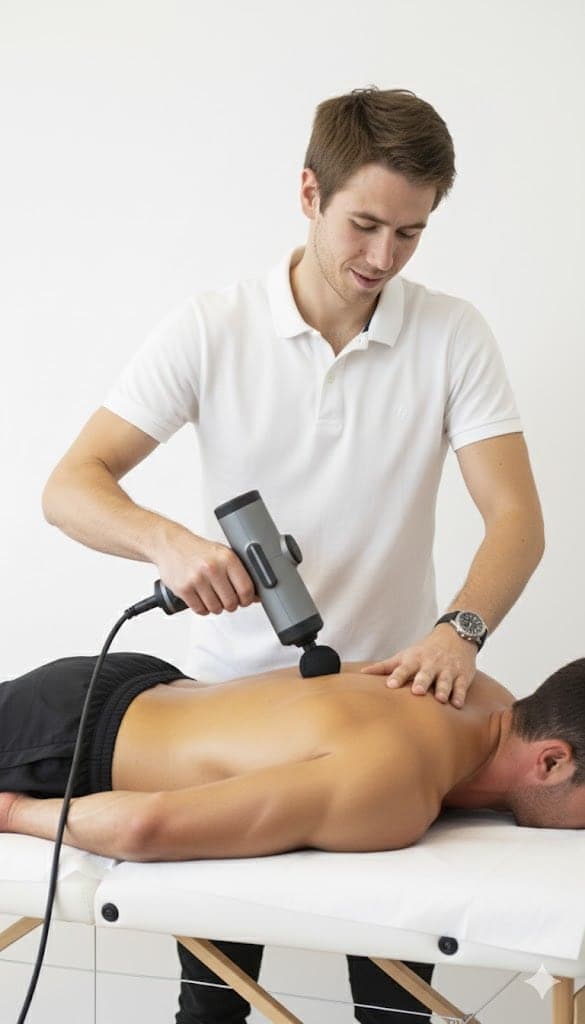
Written by
Chris
Massage therapist, nutrition and exercise physiologist
Norwegian-certified with a Bachelor’s in Physical Education and Nutrition and over ten years of clinical practice, working from a portable table in clients’ homes across the Paphos district.
This article is general information, not a medical diagnosis. If you have severe, worsening or unexplained pain, numbness, weakness, or pain after an accident, see a doctor first.