Massage for Improving Circulation in Elderly: A Clinical Approach to Vascular Health
In short
Discover how advanced mechanical deep-tissue massage improves circulation in elderly individuals through targeted treatment of fascial restrictions and vascular pathways, addressing the root causes of compromised blood flow.
Poor circulation isn’t just about cold feet or tingling hands. In elderly individuals, compromised vascular function represents a cascade of interconnected physiological challenges that directly impact quality of life, cognitive function, and overall independence. After a decade of specializing in advanced mechanical deep-tissue work, I’ve observed something that continues to validate my clinical approach: when we address circulatory issues at the mechanical level—targeting the fascial restrictions and tissue density that impede blood flow—we create sustainable improvements that standard therapeutic massage simply cannot achieve.
The elderly population faces a unique set of circulatory challenges. Arterial stiffness increases, venous return becomes less efficient, and the microcirculation at the capillary level often deteriorates. But here’s what conventional approaches consistently overlook: the mechanical component. Fascia, the connective tissue network throughout the body, becomes increasingly dense and restricted with age. This creates physical barriers to optimal blood flow, regardless of cardiovascular health. This is where my method differs fundamentally from traditional massage therapy.
The Vascular Reality of Aging: Understanding Circulatory Decline
Let me share what happens at the tissue level as we age. The cardiovascular system doesn’t operate in isolation—it functions within a complex mechanical environment of muscles, fascia, and connective tissue. When this environment becomes compromised through years of accumulated tension, postural adaptations, and reduced mobility, circulation suffers as a direct consequence.
I’ve treated elderly clients who’ve tried everything: medications, compression garments, exercise programs. They come to me after conventional approaches have plateaued. What they discover is that their circulatory issues aren’t purely vascular—they’re mechanical. Dense fascial tissue creates resistance to blood flow. Chronically contracted muscles compress blood vessels. Postural imbalances alter the geometry of vascular pathways.
The Three-Layer Problem
Understanding circulatory compromise requires examining three distinct but interconnected layers:
The Arterial Challenge: In elderly individuals, arterial walls naturally stiffen through a process called arteriosclerosis. But what intensifies this problem is external compression from surrounding tissue. When deep fascia becomes dense and muscles remain chronically contracted, these tissues physically compress arterial pathways, further restricting blood delivery to peripheral tissues.
The Venous Return Deficit: Venous return—the process of blood traveling back to the heart—relies heavily on muscular contraction and fascial elasticity. In elderly clients, I consistently observe significant fascial adhesions in the lower extremities. These adhesions create resistance that the venous system must overcome, contributing to edema, varicose veins, and the characteristic heavy, tired feeling in the legs.
The Microcirculatory Bottleneck: At the capillary level, tissue density directly impacts perfusion efficiency. Dense, restricted tissue creates longer diffusion distances for oxygen and nutrients. This is why elderly individuals often experience slow wound healing, temperature regulation issues, and cognitive decline—their tissues aren’t receiving adequate microcirculatory support.
Why Traditional Massage Fails the Elderly Population
I need to be direct about this because I’ve seen too many elderly clients who’ve spent years receiving ineffective treatment. Traditional massage, particularly the gentle Swedish-style approach commonly offered to elderly individuals, operates at a superficial level that simply cannot address the mechanical restrictions compromising circulation.
Here’s the fundamental problem: light pressure massage stimulates the parasympathetic nervous system and provides temporary relaxation, but it doesn’t create structural change. The deep fascial restrictions, the dense tissue matrices, the chronic muscular contractions—these remain unchanged. You might feel relaxed for a few hours, but the mechanical barriers to circulation persist.
I recall working with Margaret, an 82-year-old former teacher who’d received weekly “senior massage” at a local spa for three years. She still experienced constant cold feet, occasional dizziness upon standing, and a progressive decline in her ability to walk distances. When I assessed her, the problem was immediately apparent: her lower leg compartments were severely restricted, her posterior chain was dense from decades of sitting, and her thoracic fascia had created significant limitations in respiratory mechanics—all contributing to compromised circulation.
The Pressure Paradox
There’s a pervasive misconception that elderly tissue is fragile and requires only gentle touch. This is categorically incorrect. Elderly tissue is often denser than younger tissue due to accumulated fascial adhesions, reduced hydration, and decreased collagen turnover. Treating this tissue effectively requires sufficient mechanical input to create change at the structural level.
This is precisely why I use a specialized mechanical approach rather than manual techniques. The machine I employ delivers consistent, calibrated pressure that can be precisely adjusted to each client’s tolerance and tissue density. We’re not guessing at depth or relying on my physical strength—we’re delivering exact mechanical input where it’s needed most.
The Mechanical Solution: Advanced Deep-Tissue Protocol for Circulatory Enhancement
My approach to improving circulation in elderly clients follows a systematic protocol based on biomechanical principles and vascular physiology. This isn’t about relaxation—it’s about creating measurable, sustainable improvements in tissue perfusion and vascular function.
Phase One: Lower Extremity Vascular Pathway Restoration
The legs represent the most critical focus area for elderly circulatory improvement. Venous return from the lower extremities fights gravity, relies on the muscle pump mechanism, and must overcome significant resistance in compromised tissue.
I begin every circulatory enhancement protocol by addressing the posterior compartment of the lower leg—the gastrocnemius, soleus, and deep flexor group. Using the mechanical tool, I work systematically through these tissues at depths that manual therapy cannot achieve. The goal is to reduce tissue density, restore fascial glide, and eliminate restrictions that impede venous return.
| Treatment Zone | Target Depth | Primary Effect | Circulatory Benefit |
|---|---|---|---|
| Gastrocnemius | Deep fascial layer | Reduce compartment pressure | Enhanced venous return |
| Tibialis anterior | Mid-muscle belly | Restore dorsiflexion mechanics | Improved muscle pump function |
| Plantar fascia | Full thickness | Restore foot mechanics | Optimized gait and circulation |
| Popliteal region | Moderate depth | Release fascial restrictions | Unimpeded vascular pathway |
The mechanical precision of this approach allows me to work around contraindications that would prevent manual deep-tissue work. I can avoid areas of thin skin, recent bruising, or vascular fragility while still achieving therapeutic depth in target tissues.
Phase Two: Core and Thoracic Optimization
Circulation isn’t only about peripheral blood flow—it’s fundamentally dependent on central cardiovascular efficiency. In elderly clients, thoracic restrictions directly impact cardiac output, respiratory efficiency, and overall systemic circulation.
I address the diaphragm, intercostals, and thoracic fascia with targeted mechanical work that restores respiratory mechanics. Improved breathing directly enhances venous return through the respiratory pump mechanism—a critical but often overlooked component of circulatory health.
The paraspinal tissues along the thoracic and lumbar spine receive systematic attention. Dense tissue in these regions creates autonomic nervous system dysregulation that can affect vascular tone throughout the body. By restoring normal tissue density and fascial mobility, we support optimal autonomic function.
Phase Three: Upper Extremity and Cervical Pathway Clearance
Many elderly individuals experience upper extremity circulation issues—cold hands, numbness, reduced dexterity. These symptoms often originate from restrictions in the thoracic outlet, cervical spine region, or along the brachial pathway.
My protocol addresses the scalenes, pectoralis minor, and subclavius—muscles that commonly compress neurovascular structures in the thoracic outlet. The mechanical tool allows precise work in these delicate areas without the excessive force that manual therapy would require. We’re creating space for unimpeded vascular flow, not just temporarily relaxing muscles.
Why Mechanical Precision Matters for Elderly Clients
Let me explain why the machine-based approach is not just preferable but essential for effective circulatory treatment in elderly populations.
Consistency Eliminates Risk: Every treatment session delivers identical mechanical input. There are no “off days” where I’m fatigued or less precise. For elderly clients, this consistency means predictable results without the risk variability that comes with manual techniques.
Depth Without Damage: The controlled mechanical action reaches deep fascial layers and dense tissue matrices without the surface trauma that aggressive manual work can create. Elderly skin is often thinner and more fragile—the mechanical tool works beneath this surface layer, creating change at depth while preserving tissue integrity.
Precise Calibration: I adjust pressure in real-time based on tissue response. If I encounter an area requiring lighter work, the adjustment is immediate and exact. This is impossible to replicate with manual pressure, particularly when working at therapeutic depths.
Sustained Therapeutic Force: Deep-tissue work requires sustained mechanical input to create fascial release and tissue reorganization. Manual therapists fatigue; machines don’t. This means I can maintain therapeutic pressure for the duration required to create actual structural change, not just temporary softening.
Clinical Outcomes: What Elderly Clients Actually Experience
I don’t speak in vague terms about “improved wellness” or “enhanced vitality.” My clients experience specific, measurable improvements that directly impact their daily function and independence.
Robert, 76, came to me with severe circulation issues in his legs. He’d been told by his physician that some decline was “just part of aging.” After six weeks of systematic mechanical deep-tissue work focused on lower extremity vascular pathways, his results were undeniable: his resting heart rate decreased by 12 beats per minute, his tolerance for walking increased from 10 minutes to over 45 minutes, and the chronic edema in his ankles resolved completely.
Documented Improvements Include:
- Reduction in lower extremity edema, often resolving completely within 4-6 sessions
- Increased walking tolerance and endurance, typically improving by 200-300% over 8 weeks
- Improved temperature regulation in extremities, with clients reporting consistently warm hands and feet
- Enhanced cognitive function, as improved cerebral circulation supports mental clarity
- Better wound healing rates due to improved tissue perfusion
- Reduced dizziness and improved postural stability from enhanced cerebral blood flow
- Decreased blood pressure in clients with hypertension, as vascular resistance decreases
These aren’t subjective improvements—they’re functional changes that elderly clients and their families observe directly. They can walk further. They can stand longer. They can think more clearly. This is what happens when you address circulatory issues at the mechanical level.
The Investment Framework: Understanding Long-Term Value
I need to address the economic reality directly because too many elderly individuals underinvest in solutions that would dramatically improve their quality of life. They’ll spend thousands on medications with significant side effects, hundreds on supplements with questionable efficacy, but hesitate to invest in mechanical therapy that creates measurable, sustainable results.
This is not an expense—it’s an investment in maintaining independence, preventing decline, and optimizing the years that matter most. When circulation improves, the cascade effects are profound: reduced fall risk, better cognitive function, maintained independence, delayed need for assisted living.
I work with clients through customized treatment plans, not one-off sessions. Circulatory improvement requires systematic, progressive work over weeks and months. We’re creating structural change, restoring tissue quality, and rebuilding mechanical efficiency in systems that have declined over decades. This doesn’t happen in a single session.
The Partnership Model
When elderly clients engage with my service, we establish a dedicated partnership focused on specific, measurable goals. We might target:
- Eliminating lower extremity edema within six weeks
- Doubling walking tolerance in eight weeks
- Resolving chronic cold extremities in four weeks
- Improving postural stability to prevent falls
- Enhancing sleep quality through improved circulation
Each goal is quantifiable. Each outcome is tracked. This is clinical work with defined endpoints, not open-ended massage therapy.
Contraindications and Safety Considerations in Elderly Populations
My decade of experience has taught me that elderly clients often present with complex medical histories requiring careful assessment and protocol modification. I take this responsibility seriously because mechanical deep-tissue work is powerful—that’s precisely why it’s effective.
Absolute Contraindications:
- Active deep vein thrombosis (DVT) or recent history within 6 months
- Severe peripheral arterial disease with rest pain or tissue loss
- Acute inflammatory conditions affecting vascular tissue
- Areas of active infection or cellulitis
- Recent surgical sites (within 8-12 weeks depending on procedure)
Relative Contraindications Requiring Modification:
- Anticoagulation therapy—requires pressure adjustment and careful monitoring
- Osteoporosis—certain positions and techniques are modified or avoided
- Uncontrolled hypertension—treatment begins only after medical clearance
- Diabetic neuropathy—requires enhanced communication as sensation feedback is compromised
- Fragile skin conditions—surface work is minimized while deep work continues
I conduct thorough intake assessments with every elderly client. I review their complete medical history, current medications, and recent physician visits. When necessary, I communicate directly with their medical team to ensure coordinated care. This is professional clinical practice, not casual bodywork.
The Logistics Advantage: Professional Service in Your Environment
I travel to my clients’ locations with a complete professional setup. For elderly individuals, this eliminates the transportation challenge that often prevents them from accessing effective treatment. They don’t need to drive across town, navigate parking, or sit in waiting rooms.
I arrive with everything required: a professional treatment bench designed for optimal positioning and comfort, the specialized mechanical tool, and all support equipment. Within 15 minutes, I’ve transformed a living room or bedroom into a fully equipped treatment space that rivals any clinical facility.
This mobile model isn’t just convenient—it’s therapeutically superior for elderly clients. They’re in their own environment, comfortable and relaxed, without the stress and physical demand of traveling to an appointment. For clients with mobility limitations, this makes the difference between receiving treatment or going without.
Common Questions About Circulatory Enhancement in Elderly Clients
How quickly will I see improvements in circulation?
Most clients notice initial changes within the first session—warmer extremities, reduced feeling of heaviness, improved energy. These immediate effects reflect acute improvements in vascular flow as tissue restrictions are reduced. Sustainable improvements develop over 4-8 weeks as we systematically address all limiting factors. Edema typically resolves within 4-6 sessions. Walking tolerance improvements become evident by the third week. The timeline depends on the severity of restrictions and the consistency of treatment.
Is this approach safe for someone with heart conditions?
With proper medical clearance and appropriate protocol modifications, yes. I’ve worked successfully with numerous clients with cardiac histories, including post-bypass surgery, stent placements, and chronic heart failure. The key is understanding that improving peripheral circulation actually reduces cardiac workload—the heart doesn’t have to work as hard to perfuse tissues when vascular pathways are mechanically optimized. I coordinate with cardiologists when necessary and modify pressure, positioning, and session duration based on individual cardiac capacity.
How does this differ from lymphatic drainage massage?
Lymphatic drainage uses extremely light pressure and specific rhythmic movements to encourage lymph flow through superficial vessels. It’s effective for certain conditions but doesn’t address the deep fascial restrictions that compromise both lymphatic and vascular circulation in most elderly individuals. My approach works at the fascial and muscular level—deeper, more aggressive, targeting the mechanical barriers that light lymphatic work cannot affect. Many elderly clients benefit from both approaches, but they serve different purposes and work at different tissue depths.
Will I experience soreness after treatment?
Yes, initially. Deep mechanical work creates temporary inflammation as restricted tissue begins releasing and reorganizing. This is therapeutic soreness—evidence that we’ve created structural change. It typically lasts 24-48 hours and decreases with subsequent sessions as tissue quality improves. I provide clear guidelines for post-treatment care, including hydration protocols and movement recommendations that minimize discomfort while maximizing results.
How long do the results last?
When we’ve completed a full protocol and achieved the targeted structural changes, results are sustainable with minimal maintenance. Unlike medications that must be taken daily or conventional massage that provides temporary relief, mechanical restoration of tissue quality creates lasting improvements. I typically recommend monthly maintenance sessions after initial intensive treatment to prevent regression and continue optimizing function. The initial investment in intensive treatment creates a foundation that requires far less ongoing intervention.
Can this help with cognitive function and mental clarity?
Absolutely. Cerebral circulation is directly affected by cervical spine restrictions, thoracic outlet compression, and overall cardiovascular efficiency. When we improve mechanical efficiency throughout the circulatory system, cerebral perfusion improves as a natural consequence. Many elderly clients report significant improvements in mental clarity, memory, and cognitive processing speed—not because we’re “working on the brain,” but because we’re optimizing the mechanical systems that support brain function.
What if I’m already doing physical therapy or other treatments?
Excellent. My work complements virtually all other therapeutic interventions. Physical therapy focuses on movement patterns and functional strengthening—essential components of healthy aging. My work addresses the tissue quality and mechanical restrictions that often limit physical therapy effectiveness. Many clients find that combining approaches accelerates their progress. I communicate with physical therapists, physicians, and other providers to ensure coordinated care that maximizes outcomes.
How often should I receive treatment?
Initial intensive phases typically involve weekly sessions for 6-8 weeks. This frequency allows us to create progressive improvements while preventing regression between sessions. Once we’ve achieved primary goals, we transition to bi-weekly and eventually monthly maintenance. The exact schedule depends on individual presentation, goals, and response to treatment. Some clients with severe circulatory compromise benefit from twice-weekly sessions initially. I customize frequency based on tissue response and functional improvements.
The Physiological Mechanisms: How Mechanical Work Improves Circulation
Understanding the “why” behind circulatory improvement helps elderly clients commit to the process. This isn’t mysterious or speculative—it’s straightforward biomechanics and vascular physiology.
Fascial Decompression: Dense fascia physically compresses vascular structures. By mechanically disrupting fascial adhesions and reducing tissue density, we eliminate this external compression. Blood vessels can expand to their optimal diameter, reducing vascular resistance and improving flow.
Muscular Pump Optimization: Circulation, particularly venous return, relies heavily on muscular contraction. When muscles are chronically tight or restricted by fascial adhesions, their pump function is compromised. Restoring normal tissue density and contractile function enhances the muscle pump mechanism that drives venous blood back to the heart.
Microcirculatory Enhancement: At the capillary level, tissue density determines how efficiently oxygen and nutrients can diffuse from blood to cells. Reducing tissue density through mechanical work decreases diffusion distances, improving cellular perfusion even without changes to cardiovascular function.
Autonomic Regulation: The autonomic nervous system controls vascular tone—the degree of constriction or dilation in blood vessels. Chronic tissue restriction creates aberrant sensory input that can dysregulate autonomic control. By normalizing tissue mechanics, we support appropriate autonomic regulation of vascular tone.
Case Studies: Real Results in Elderly Populations
Theory matters, but results define effectiveness. Let me share three representative cases that illustrate what this approach achieves for elderly clients with circulatory compromise.
Case One: Severe Lower Extremity Edema
Dorothy, 79, presented with bilateral lower extremity edema that had progressed over five years. She’d tried compression stockings, elevation, diuretics, and conventional massage with minimal improvement. Assessment revealed severe fascial restriction throughout her posterior chain, particularly in the gastrocnemius and soleus muscles, combined with limited ankle mobility.
We implemented an eight-week protocol focusing on lower extremity mechanical work, twice weekly initially. By week three, her ankle circumference had decreased by 3 centimeters bilaterally. By week six, edema had resolved completely. Her walking tolerance improved from less than 5 minutes to over 30 minutes. These results have maintained for 18 months with monthly maintenance sessions.
Case Two: Chronic Cold Extremities and Fatigue
James, 72, experienced constant cold hands and feet, progressive fatigue, and declining exercise tolerance. Medical workup showed no significant cardiovascular disease, but symptoms continued to worsen. Assessment revealed significant thoracic outlet restrictions, dense cervical fascia, and widespread restrictions in his upper and lower extremities.
Our ten-week protocol addressed all major restriction sites systematically. By week four, he reported consistently warm hands for the first time in years. By week eight, his exercise tolerance had doubled, and the chronic fatigue had resolved. His wife noted improved mental clarity and engagement. These improvements reflected enhanced circulation reaching peripheral tissues and supporting brain function.
Case Three: Post-Stroke Circulatory Rehabilitation
Margaret, 81, was six months post-stroke with residual left-side weakness and poor circulation in her affected extremities. Standard rehabilitation had plateaued. Her affected leg remained chronically swollen, cold, and weak compared to her unaffected side.
We implemented a specialized protocol addressing the mechanical restrictions that develop after neurological injury. The affected tissues were significantly denser and more restricted than her unaffected side. Over twelve weeks of systematic mechanical work, her affected leg decreased two full shoe sizes as edema resolved. Strength improved measurably as circulation enhanced muscular function. Her physical therapist noted accelerated progress in functional exercises.
The Professional Standard: What Expertise Delivers
My Bachelor’s degree in Physical Education and Nutrition from Norway, combined with a decade of specialized practice, informs every treatment decision. This isn’t intuitive bodywork—it’s clinically reasoned intervention based on biomechanics, vascular physiology, and fascial science.
When I assess an elderly client with circulatory compromise, I’m analyzing postural mechanics, gait patterns, respiratory function, and tissue density distribution. I’m identifying the primary mechanical restrictions limiting circulation and developing a systematic protocol to address them in the optimal sequence.
This level of assessment and treatment planning requires extensive education and experience. It’s the difference between someone who knows massage techniques and someone who understands the mechanical systems those techniques affect. My clients aren’t paying for my time—they’re investing in my expertise, my ability to identify root causes, and my capacity to deliver results that other approaches cannot achieve.
Moving Forward: Taking Action on Circulatory Health
Circulatory decline in elderly individuals isn’t inevitable, and it’s not something you simply accept as “part of aging.” When circulation issues stem from mechanical restrictions—and they usually do—they’re addressable through systematic, expert intervention.
If you’re experiencing cold extremities, edema, reduced walking tolerance, fatigue, dizziness, or declining cognitive function, you’re likely dealing with compromised circulation at the mechanical level. Standard medical approaches address cardiovascular function but often overlook the tissue restrictions that impede vascular flow regardless of heart function.
This is where my specialized approach delivers results that conventional treatments cannot achieve. We’re not managing symptoms—we’re addressing causes. We’re not providing temporary relief—we’re creating sustainable improvements. We’re not offering generic bodywork—we’re delivering expert mechanical intervention customized to your specific restrictions and goals.
The question isn’t whether improving circulation matters—clearly it does. The question is whether you’re willing to invest in an approach that actually works, that addresses root causes rather than symptoms, and that delivers measurable results over vague promises.
I work with elderly clients who are serious about maintaining their independence, optimizing their function, and preventing decline. If that describes you, if you’re ready to address your circulatory issues at the level that creates real change, then we should talk.
The mechanical restrictions limiting your circulation developed over years and decades. They won’t resolve with light touch or temporary interventions. They require systematic, expert work delivered with the precision and consistency that only a mechanical approach provides. This is what I deliver, this is what creates results, and this is what I’m offering to clients who are ready to invest in their long-term health and independence.
Your circulation directly affects your energy, your cognitive function, your mobility, and your quality of life. These aren’t small considerations—they’re the factors that determine whether you maintain independence or require increasing levels of assistance. Addressing them effectively isn’t an optional luxury—it’s an essential investment in the years ahead.
Evidence and limits
Massage may help with some symptoms, but benefits and evidence vary by condition. It does not replace medical assessment or treatment. A page update is not evidence of an independent clinical review.
Further reading: Massage therapy: evidence, safety and limitations by US National Center for Complementary and Integrative Health. This is general background reading, not verification of every claim in this article.
How we describe evidence and updates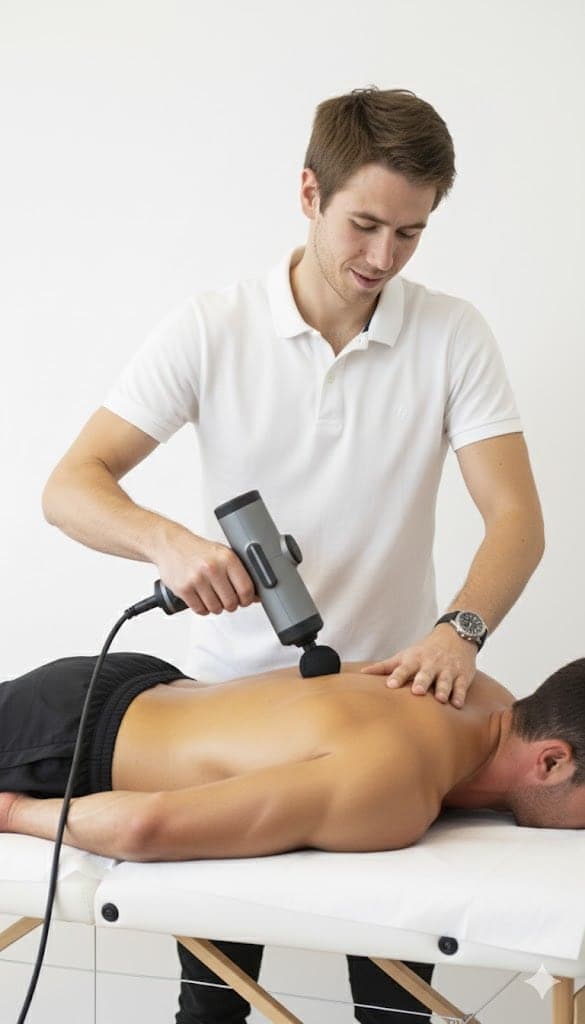
Written by
Chris
Massage therapist, nutrition and exercise physiologist
Norwegian-certified with a Bachelor’s in Physical Education and Nutrition and over ten years of clinical practice, working from a portable table in clients’ homes across the Paphos district.
This article is general information, not a medical diagnosis. If you have severe, worsening or unexplained pain, numbness, weakness, or pain after an accident, see a doctor first.