
Inexpensive massage options Kato Pafos: finding quality treatment without breaking your budget
In short
Discover professional massage solutions in Kato Pafos that deliver exceptional value. Expert analysis of cost-effective treatments that actually work for lasting results.
Let me be frank with you – I’ve spent the better part of a decade watching clients waste their money on what I can only describe as theatrical performances masquerading as therapeutic massage. When I first arrived in Cyprus after completing my Bachelor’s degree in Physical Education and Nutrition in Norway, I was genuinely shocked by what passed for “professional massage” in many establishments around Kato Pafos. Clients would come to me, frustrated and discouraged, having spent hundreds of euros on sessions that provided nothing more than temporary relaxation and empty promises.
The reality is this: when you’re searching for inexpensive massage options in Kato Pafos, you’re not just looking for a lower price – you’re looking for genuine value. You want results that justify every euro spent, not just a pleasant hour that leaves you exactly where you started. After ten years of clinical practice and thousands of successful treatments, I can tell you that the most expensive massage is the one that doesn’t work. The true cost isn’t what you pay upfront; it’s what you continue to pay in ongoing pain, reduced performance, and diminished quality of life when the underlying mechanical dysfunction remains unaddressed.
Understanding the real cost of ineffective massage therapy
I remember a particular client – let’s call him Andreas – who came to me last spring. He’d been visiting a popular spa in Kato Pafos twice weekly for eight months, spending approximately 80 euros per session. That’s over 5,000 euros invested in what he described as “lovely relaxing sessions” that provided absolutely zero lasting benefit. His chronic lower back pain, stemming from years of desk work and poor postural mechanics, remained exactly as debilitating as the day he started treatment. When I performed my initial biomechanical assessment, the fascial restrictions and muscular imbalances were so pronounced that I could identify the exact mechanical pathways causing his pain within minutes.
This scenario repeats itself constantly in my practice. Clients arrive having exhausted their budgets on approaches that fundamentally misunderstand the nature of chronic musculoskeletal dysfunction. Traditional massage, regardless of how affordably priced, operates on the flawed premise that superficial manipulation of tissue will somehow address deep-seated mechanical problems that have developed over years or decades. It’s like trying to repair a car engine by polishing the exterior – pleasant, perhaps, but entirely irrelevant to the actual problem.
The mathematical reality is striking when you calculate the true cost per result. A client spending 50 euros monthly on ineffective treatment will invest 600 euros annually with zero measurable improvement in function or pain reduction. Compare this to a properly executed mechanical intervention that addresses the root cause of dysfunction, potentially eliminating the need for ongoing treatment entirely. The economics become clear when you shift your focus from cost per session to cost per outcome.
What compounds this problem in Kato Pafos specifically is the tourist-oriented nature of many massage establishments. These businesses are designed for vacation relaxation, not clinical intervention. Their business model depends on providing a pleasant experience rather than measurable therapeutic outcomes. The therapists, while often well-meaning, typically lack the educational background necessary to understand biomechanics, fascial systems, or the complex interplay between muscular tension and structural alignment.
The mechanical precision approach: why depth and consistency matter
After years of clinical observation and practical application, I’ve developed what I call the mechanical precision methodology. This approach recognizes that chronic pain and dysfunction stem from specific mechanical failures in the musculoskeletal system – failures that require precise, consistent, and sufficiently deep intervention to resolve. Human hands, regardless of the therapist’s skill level, simply cannot provide the combination of depth, precision, and consistency required to address these mechanical dysfunctions effectively.
This is where my specialized mechanical system becomes essential. The tool I employ operates with mathematical precision, delivering exact pressure applications at predetermined depths and angles. Unlike human hands, which fatigue, vary in pressure, and cannot maintain consistent depth throughout a treatment session, this mechanical approach ensures that every square centimeter of treated tissue receives the exact intervention required. The precision is measurable – I can adjust pressure increments to the gram and maintain that exact specification throughout the entire treatment protocol.
I recall treating Maria, a professional tennis player who had been struggling with chronic shoulder impingement for over two years. She’d worked with numerous therapists throughout Cyprus, including several highly recommended practitioners in Kato Pafos. Each session provided temporary relief, but the underlying mechanical restriction in her posterior capsule remained unaddressed. During our first session, using my mechanical precision system, I was able to access fascial layers at depths impossible to reach manually. The immediate increase in her range of motion was measurable – 23 degrees improvement in external rotation that remained stable for weeks, not hours.
The consistency factor cannot be overstated. Traditional massage therapists have good days and off days. They experience fatigue, distraction, and natural variation in their technique. My mechanical system eliminates these variables entirely. Every treatment is identical in precision and intensity, ensuring that therapeutic progress compounds with each session rather than fluctuating randomly based on human factors.
This approach also allows for true customization based on individual tissue characteristics and therapeutic goals. An office worker requiring fascial release for postural dysfunction receives a completely different protocol than an athlete preparing for competition. The mechanical precision allows me to target specific tissue layers, adjust for individual pain thresholds, and progress systematically through treatment phases in a way that manual therapy simply cannot replicate.
Comparing traditional spa treatments with clinical mechanical intervention
The distinction between spa treatments and clinical mechanical intervention extends far beyond technique – it’s a fundamental difference in philosophy and outcomes. Traditional spa massage, which dominates the Kato Pafos market, operates on the relaxation paradigm. The primary goal is stress reduction and temporary comfort, achieved through superficial tissue manipulation and atmospheric enhancement. While pleasant, this approach has no mechanism for addressing the structural and mechanical dysfunctions that cause chronic pain and performance limitations.
I’ve analyzed dozens of traditional massage protocols used throughout Cyprus, and they consistently share several limiting characteristics. First, the pressure application is invariably too superficial to reach the fascial layers where most chronic restrictions reside. Second, the techniques are generalized rather than targeted to specific mechanical dysfunctions. Third, there’s no systematic progression or measurable outcome assessment. It’s therapeutic theater, not clinical intervention.
My mechanical approach operates on entirely different principles. Every treatment begins with a comprehensive biomechanical assessment to identify specific dysfunction patterns. I’m not massaging your entire back hoping something will improve; I’m targeting the exact fascial restrictions and muscular imbalances that are creating your symptoms. The mechanical tool allows me to access tissue layers at depths of 4-6 centimeters, reaching the deep fascial structures where chronic restrictions typically develop.
The treatment intensity is calibrated precisely to your tissue characteristics and therapeutic goals. For sedentary professionals dealing with postural dysfunction, I typically begin with moderate pressure applications focused on restoring normal fascial gliding between muscle layers. For competitive athletes requiring performance optimization, the intensity increases dramatically to break down adhesions and restore optimal tissue quality. This level of customization is impossible with manual techniques.
Perhaps most importantly, my approach includes systematic outcome measurement. We’re not relying on subjective feelings of relaxation to gauge success. Range of motion improvements, pain scale reductions, and functional capacity increases are documented and tracked throughout the treatment progression. This data-driven approach ensures that every session contributes measurably to your therapeutic goals.
The time efficiency is also dramatically superior. While traditional massage might require 60-90 minutes of treatment time with minimal lasting benefit, my mechanical precision methodology typically produces significant measurable improvements in 45-60 minutes, with results that compound over multiple sessions rather than dissipating within hours.
Mobile service advantages: professional treatment at your location
One of the most significant cost factors that clients overlook when calculating massage expenses is transportation and opportunity costs. The traditional model requires you to travel to a clinic or spa, often involving parking fees, fuel costs, and most importantly, the time investment of traveling to and from the appointment. In Kato Pafos, where traffic congestion and parking limitations are persistent challenges, this hidden cost can add 30-45 minutes to every treatment session.
My mobile service model eliminates these inefficiencies entirely while providing superior clinical conditions for treatment. I arrive at your location with a complete professional setup, including a specialized treatment table designed specifically for biomechanical interventions, the mechanical precision tool, and all necessary assessment equipment. The clinical environment I create in your space often exceeds what’s available in traditional clinics because it’s designed exclusively for advanced mechanical therapy, not general wellness services.
The privacy and comfort advantages are significant but secondary to the clinical benefits. Many clients experience anxiety or tension in unfamiliar clinical environments, which can actually interfere with treatment effectiveness. Muscular tension responses to environmental stress can counteract therapeutic interventions. In your familiar environment, your nervous system maintains its baseline state, allowing for more effective tissue responses to mechanical input.
From a practical standpoint, mobile service allows for optimal pre and post-treatment protocols. Before I arrive, you can prepare your body with heat application or light movement as I recommend. After treatment, you can immediately implement the specific post-treatment care protocols I prescribe without the disruption of traveling home. This continuity significantly enhances treatment outcomes.
I remember working with Elena, a busy executive who had been struggling to maintain consistency with traditional massage appointments due to her unpredictable schedule. The mobile format allowed us to establish a regular treatment protocol that adapted to her availability while maintaining therapeutic momentum. Her chronic neck tension, which had been a persistent problem for over three years, resolved completely within six weeks because we could maintain consistent treatment intervals without the disruptions of traditional clinic scheduling.
The cost efficiency becomes particularly apparent when you consider the total time investment. A traditional 60-minute massage appointment typically requires 90-120 minutes of your time when transportation is included. My mobile service provides superior clinical outcomes in 60 minutes total, representing a 33-50% improvement in time efficiency alone.
Investment perspective: long-term health economics versus short-term expense
The financial analysis of massage therapy requires a fundamental shift in perspective from viewing treatments as expenses to understanding them as health investments. This distinction isn’t semantic – it’s mathematical. An expense provides temporary benefit and requires ongoing repetition to maintain any effect. An investment produces compounding returns that reduce or eliminate the need for future expenditures.
Traditional massage operates on the expense model. Each session provides temporary relief, but the underlying mechanical dysfunction remains unchanged, necessitating indefinite repetition of treatments. I’ve tracked client spending patterns in Kato Pafos, and individuals relying on traditional massage for chronic pain management typically spend 1,200-2,400 euros annually with no reduction in treatment frequency over time. The financial burden actually increases as pain conditions worsen or additional complications develop.
My mechanical precision approach operates on the investment model. The initial treatment series addresses the root mechanical causes of dysfunction, producing improvements that compound over time. Clients typically experience significant pain reduction and functional improvement within 4-6 sessions, with many achieving complete resolution of chronic conditions. The long-term financial impact is dramatic – instead of indefinite monthly expenses, clients invest in a treatment series that eliminates or dramatically reduces the need for ongoing interventions.
Consider the case of Dimitri, a construction supervisor who suffered from chronic lower back pain for over five years. His previous approach involved monthly massage sessions costing approximately 70 euros each, totaling 840 euros annually with no improvement in his condition. After analyzing his movement patterns and identifying the specific fascial restrictions causing his symptoms, we implemented a six-session treatment protocol. The total investment was 480 euros, and his pain resolution has remained stable for over 18 months without requiring additional treatments.
The health economics extend beyond direct treatment costs. Chronic pain conditions create cascading financial impacts through reduced work productivity, increased medical consultations, pharmaceutical expenses, and lifestyle limitations. Effective mechanical intervention that addresses root causes can eliminate these secondary costs entirely. Several of my clients have reported salary improvements following pain resolution because their work performance and reliability increased dramatically.
From a prevention standpoint, the investment model becomes even more compelling. Addressing mechanical dysfunctions before they progress to chronic pain conditions prevents the development of compensatory patterns and secondary complications. The cost of prevention is always lower than the cost of treatment, but prevention requires intervention methods sophisticated enough to identify and address mechanical problems before they become symptomatic.
Quality assessment criteria for massage services in Kato Pafos
Evaluating massage quality requires understanding the distinction between subjective satisfaction and objective therapeutic outcomes. Most clients in Kato Pafos have been conditioned to equate pleasant sensations with effective treatment, but these criteria are often inversely related. The most comfortable massage is typically the least therapeutic because it avoids the deeper tissue interventions necessary for mechanical correction.
The first assessment criterion should be the practitioner’s educational background and understanding of biomechanics. A thorough understanding of fascial systems, movement patterns, and pain physiology is essential for identifying the root causes of dysfunction. Most massage therapists in Kato Pafos have training in relaxation techniques but lack the clinical knowledge necessary for therapeutic intervention. Ask specific questions about their education – not just certification hours, but actual academic preparation in anatomy, physiology, and biomechanics.
Treatment methodology represents the second critical assessment factor. Effective therapeutic massage requires systematic approaches based on individual assessment findings, not generalized protocols applied universally. A qualified practitioner should perform movement analysis, postural assessment, and specific muscle testing before beginning treatment. If the therapist starts working immediately without comprehensive evaluation, they’re operating on the relaxation model, not the therapeutic model.
The ability to provide specific, measurable outcome predictions is essential. I tell clients exactly what improvements to expect, in what timeframe, and how we’ll measure progress. If a practitioner cannot provide specific predictions based on your assessment findings, they’re essentially hoping for random positive outcomes rather than systematically addressing identified dysfunctions.
Equipment and technique sophistication matter significantly. Manual massage has inherent limitations in depth, precision, and consistency. Practitioners who rely exclusively on hand techniques are constrained by human physical limitations. Advanced mechanical tools, when properly applied, can achieve therapeutic results impossible through manual methods alone.
Perhaps most importantly, effective practitioners focus on eliminating the need for their services rather than creating dependency. I measure my success by how quickly clients achieve independent function, not by how frequently they require ongoing treatments. Be skeptical of practitioners who cannot envision a treatment endpoint or who suggest indefinite maintenance schedules without clear justification.
Scheduling and accessibility considerations for optimal value
Treatment timing and accessibility significantly impact both cost and effectiveness, yet most clients focus exclusively on session prices without considering these crucial factors. Optimal therapeutic outcomes require consistent treatment intervals during the active correction phase, followed by strategic maintenance scheduling based on individual factors. Traditional clinic models often impose scheduling limitations that interfere with optimal treatment progression.
The mobile service model provides superior scheduling flexibility, but more importantly, it enables optimal treatment timing based on therapeutic requirements rather than clinic availability. I can schedule sessions when your body is most receptive to intervention – typically mid-morning when cortisol levels stabilize and tissue hydration is optimal. Evening appointments, while convenient, often coincide with peak stress hormones and tissue dehydration, reducing treatment effectiveness.
Consistency becomes particularly important during the initial correction phase. Fascial restrictions and muscular imbalances that have developed over years require systematic intervention at specific intervals to prevent regression between sessions. With traditional clinic scheduling, appointment availability often forces suboptimal intervals that compromise treatment progression. My mobile model allows for precise interval scheduling that maximizes therapeutic momentum.
I recall working with Thomas, a professional pilot whose irregular schedule made consistent clinic appointments impossible. His chronic shoulder dysfunction had persisted for over two years partly because he couldn’t maintain regular treatment intervals. The mobile format allowed us to coordinate sessions with his flight schedule, maintaining optimal therapeutic progression despite his unpredictable availability. His complete recovery within eight weeks was directly attributed to this scheduling consistency.
Accessibility extends beyond scheduling to include treatment preparation and post-care protocols. Optimal treatment outcomes require specific preparation – heat application, hydration, and sometimes preliminary movement exercises. Traditional clinics rarely provide adequate time or facilities for proper preparation. In your environment, you can implement comprehensive preparation protocols that significantly enhance treatment effectiveness.
Post-treatment care is equally important but often neglected in traditional settings. Effective mechanical intervention creates temporary tissue vulnerability that requires specific care protocols to optimize healing and prevent regression. This might include ice application, specific positioning, gentle movement exercises, or activity modifications. Implementing these protocols is much more practical in your familiar environment than attempting to follow complex instructions after traveling home from a clinic.
Common misconceptions about massage pricing and value
The massage industry in Kato Pafos perpetuates several pricing misconceptions that prevent clients from making informed decisions about therapeutic investments. The most pervasive misconception equates higher prices with superior quality, while simultaneously assuming that effective treatment must be expensive. Both assumptions are fundamentally flawed and lead to poor decision-making.
Premium pricing in the spa industry typically reflects overhead costs, location prestige, and marketing expenses rather than therapeutic sophistication. The most expensive massage establishment in Kato Pafos charges premium rates for luxurious atmospherics and extensive amenities that contribute nothing to treatment outcomes. Clients pay for marble bathrooms, champagne service, and oceanfront locations while receiving the same superficial tissue manipulation available at budget establishments.
Conversely, the assumption that effective treatment must be expensive creates barriers to accessing superior therapeutic interventions. My mechanical precision methodology often costs less per session than premium spa treatments while delivering dramatically superior clinical outcomes. The value proposition becomes clear when you analyze cost per unit of measurable improvement rather than cost per hour of pleasant experience.
Another persistent misconception relates to treatment frequency and duration. Traditional massage culture promotes the idea that more frequent sessions and longer durations automatically produce better results. This assumption ignores the physiological realities of tissue adaptation and healing responses. Excessive massage frequency can actually interfere with natural healing processes, while extended session durations often involve repetitive manipulation that provides no additional therapeutic benefit.
My approach optimizes session frequency and duration based on individual tissue responses and therapeutic goals. Some clients achieve optimal results with intensive short-term protocols, while others benefit from strategic longer-term interventions. The frequency and duration are determined by physiological factors, not arbitrary scheduling conventions or financial considerations.
The “relaxation equals effectiveness” misconception particularly impacts value assessment. Many clients assume that treatments must feel pleasant to be beneficial, leading them to avoid the deeper interventions necessary for mechanical correction. Effective therapeutic massage often involves temporary discomfort as fascial restrictions are addressed and normal tissue mobility is restored. Clients who prioritize comfort over results consistently achieve poor long-term outcomes regardless of how much they spend.
I always educate clients about the difference between therapeutic discomfort and harmful pain. Therapeutic discomfort represents tissue adaptation and mechanical correction – it’s productive and temporary. Harmful pain indicates tissue damage or inappropriate technique. Understanding this distinction allows clients to engage fully in effective treatment protocols instead of limiting therapeutic potential to ensure comfort.
Professional certification and expertise evaluation
The certification landscape for massage therapy in Cyprus creates significant confusion for clients attempting to evaluate practitioner qualifications. Unlike medical professions with standardized educational requirements and rigorous competency assessments, massage certification varies dramatically in scope, depth, and clinical relevance. Understanding these distinctions is essential for making informed decisions about therapeutic investments.
My educational foundation includes a Bachelor’s degree in Physical Education and Nutrition from Norway, providing comprehensive understanding of human movement, biomechanics, and physiological responses to intervention. This academic preparation extends far beyond massage technique training to include detailed study of anatomy, physiology, pathology, and movement science. Most massage practitioners in Kato Pafos have completed certification programs focusing primarily on relaxation techniques without this foundational scientific education.
Clinical experience quality matters more than quantity alone. I’ve dedicated ten years specifically to advanced mechanical intervention, working exclusively with clients seeking therapeutic outcomes rather than relaxation services. This focused experience has allowed me to develop specialized expertise in biomechanical assessment, fascial dysfunction, and advanced intervention techniques. Many practitioners claim extensive experience while actually providing varied services that prevent the development of specialized therapeutic skills.
The distinction between generalized massage training and specialized therapeutic education becomes apparent in assessment and treatment planning capabilities. I perform comprehensive biomechanical evaluations that identify specific dysfunction patterns and guide targeted intervention strategies. Most traditional massage practitioners rely on general relaxation protocols regardless of individual client presentations because they lack the educational foundation necessary for clinical assessment.
Advanced equipment proficiency represents another crucial qualification factor. My mechanical precision system requires extensive training and ongoing skill development to achieve optimal therapeutic outcomes. The equipment itself is sophisticated, but effective application requires deep understanding of tissue mechanics, pressure gradients, and individual response patterns. This level of technical expertise cannot be acquired through weekend certification courses or general massage training programs.
Continuing education and professional development indicate commitment to advancing therapeutic capabilities. I continuously study emerging research in fascial science, biomechanics, and intervention techniques to refine and improve my methodologies. Many practitioners complete minimal continuing education requirements without actively pursuing advancement in therapeutic effectiveness.
The ability to provide specific, evidence-based explanations for treatment recommendations distinguishes qualified therapeutic practitioners from general massage providers. I can explain exactly why specific interventions are necessary, how they address identified dysfunctions, and what outcomes to expect based on scientific principles and clinical experience. This level of clinical reasoning requires extensive education and experience that goes far beyond basic massage training.
Customized treatment protocols for optimal cost-effectiveness
Effective therapeutic intervention requires individualized protocols based on comprehensive assessment findings rather than standardized approaches applied universally. The most cost-effective treatments are those specifically designed to address your unique dysfunction patterns and therapeutic goals. Generic massage protocols, regardless of how affordably priced, represent poor value because they cannot target the specific mechanical problems creating your symptoms.
My protocol development process begins with detailed biomechanical assessment to identify the root causes of dysfunction. This evaluation examines movement patterns, postural alignment, tissue quality, and functional limitations to create a comprehensive picture of your individual presentation. The assessment findings directly inform treatment planning, ensuring that every intervention contributes to your specific therapeutic objectives.
For office professionals dealing with postural dysfunction, protocols typically focus on fascial release in the anterior chest and neck regions, followed by strengthening exercises for posterior chain muscles. The mechanical precision system allows me to target specific fascial layers that restrict normal shoulder blade movement and create compensatory neck tension. Treatment intensity and depth are calibrated to individual tissue characteristics and pain tolerance levels.
Athletic clients require entirely different protocols focused on performance optimization and injury prevention. These treatments typically involve higher intensity interventions designed to break down fascial adhesions and restore optimal tissue quality for maximum power output and movement efficiency. The mechanical system’s precision allows for targeted treatment of specific muscle groups based on sport-specific demands and individual performance limitations.
Chronic pain clients present the most complex protocol requirements because their dysfunction patterns often involve multiple compensatory adaptations developed over years. These cases require systematic intervention sequences that address primary restrictions first, followed by secondary compensatory patterns. The treatment progression must be carefully managed to prevent symptom flare-ups while systematically restoring normal mechanical function.
I recently worked with Christina, a professional dancer who had been struggling with hip impingement for over a year. Her protocol required addressing fascial restrictions in her psoas and iliacus muscles, followed by specific interventions for capsular restrictions in her hip joint. The mechanical precision system allowed me to access these deep structures with accuracy impossible through manual techniques. Her complete recovery within five sessions demonstrated the cost-effectiveness of properly targeted interventions.
Protocol customization also includes post-treatment care recommendations specific to your lifestyle and activities. These might include specific stretching exercises, postural modifications, ergonomic adjustments, or activity progressions designed to maintain therapeutic gains and prevent regression. This comprehensive approach ensures that treatment benefits compound over time rather than dissipating between sessions.
Measuring treatment success: objective outcomes versus subjective feelings
The distinction between objective improvement and subjective satisfaction represents a fundamental divide in therapeutic approaches. Traditional massage culture emphasizes how clients feel during and immediately after treatment, while clinical intervention focuses on measurable functional improvements that persist over time. Understanding this difference is crucial for evaluating treatment value and making informed decisions about continued care.
Subjective measures like relaxation, stress reduction, and temporary pain relief are pleasant but provide no indication of actual therapeutic progress. These feelings are largely determined by environmental factors, expectation effects, and temporary neurological responses to touch stimulation. While enjoyable, they offer no evidence that underlying mechanical dysfunctions are being addressed or resolved.
My approach emphasizes objective outcome measurements that provide clear evidence of therapeutic progress. Range of motion improvements are measured precisely using goniometric assessment, allowing us to track exact degrees of improvement over multiple sessions. Pain intensity is documented using standardized scales, but more importantly, we measure functional improvements like increased activity tolerance, improved sleep quality, and enhanced work performance.
Strength assessments provide another crucial objective measure, particularly for clients whose dysfunction involves muscular imbalances or weakness patterns. I perform specific muscle testing before and after interventions to document improvements in force production and endurance capacity. These measurements provide clear evidence that treatment is addressing mechanical problems rather than simply providing temporary comfort.
Postural analysis using photographic documentation allows us to track structural improvements over time. Many chronic pain conditions involve postural adaptations that create ongoing mechanical stress. As treatment progresses and fascial restrictions resolve, postural alignment typically improves measurably. These changes can be documented and quantified, providing clear evidence of therapeutic progress.
I remember working with George, a software developer whose chronic headaches were caused by forward head posture and upper cervical restrictions. Initial assessment revealed 35-degree forward head displacement and severely restricted cervical rotation. After six treatment sessions, photographic analysis documented 22-degree improvement in head position, and goniometric measurement showed complete restoration of cervical range of motion. His headache frequency decreased from daily to occasional, with a marked reduction within three months.
Functional capacity improvements represent the ultimate measure of treatment success. These might include increased walking distance without pain, improved ability to perform work tasks, better sleep quality, or enhanced sports performance. These outcomes directly impact quality of life and provide clear justification for therapeutic investment.
The objective measurement approach also allows for accurate treatment endpoint determination. Instead of indefinite maintenance schedules based on subjective feelings, we can identify when therapeutic goals have been achieved and transition to prevention-focused strategies or discharge to independent management.
Frequently asked questions about massage therapy value and effectiveness
How do I determine if a massage treatment is actually working beyond just feeling good temporarily? Effective therapeutic massage produces measurable improvements in function that persist and compound over time. You should experience progressive increases in range of motion, reduced pain intensity during daily activities, improved sleep quality, and enhanced ability to perform work or recreational tasks without symptoms. If you’re not seeing measurable improvements that last between sessions and continue building over multiple treatments, the intervention is likely providing only temporary comfort without addressing underlying mechanical problems. I track specific metrics like pain scale ratings, range of motion measurements, and functional capacity improvements to provide clear evidence of therapeutic progress rather than relying on subjective feelings alone.
What makes mechanical massage superior to traditional hand-based techniques? The human hand has inherent limitations in depth, precision, and consistency that restrict therapeutic effectiveness for chronic mechanical dysfunctions. Even the most skilled massage therapist experiences fatigue, variation in pressure application, and inability to maintain exact specifications throughout treatment. My mechanical precision system delivers mathematically exact pressure applications at predetermined depths, allowing access to fascial layers 4-6 centimeters deep that hands cannot reach effectively. The consistency eliminates variables like therapist fatigue or technique variation, ensuring that every treatment contributes optimally to therapeutic goals. Additionally, the mechanical approach allows for precise calibration based on individual tissue characteristics and therapeutic requirements, something impossible with manual techniques.
How many sessions should I expect to need for significant improvement? Treatment duration depends entirely on the complexity of your specific dysfunction patterns, how long problems have been present, and your individual tissue response characteristics. Simple acute issues might resolve in 2-3 sessions, while complex chronic conditions with multiple compensatory patterns typically require 6-10 sessions for complete resolution. However, most clients experience significant measurable improvements within the first 2-3 treatments. I provide specific predictions based on assessment findings and adjust treatment plans based on your actual progress. Unlike traditional approaches that suggest indefinite maintenance schedules, my goal is to resolve your mechanical dysfunctions completely, eliminating or dramatically reducing the need for ongoing treatments.
Is the mobile service really as effective as clinic-based treatment? Mobile service often provides superior therapeutic outcomes because it eliminates environmental stressors that can interfere with treatment effectiveness. In familiar surroundings, your nervous system maintains baseline relaxation, allowing for better tissue responses to mechanical intervention. Additionally, mobile service enables optimal pre-treatment preparation and post-treatment care protocols that significantly enhance therapeutic outcomes. I bring complete professional equipment including specialized treatment tables and mechanical precision systems, creating a clinical environment that often exceeds traditional clinic capabilities. The convenience factor also supports treatment consistency, which is crucial for optimal therapeutic progression.
How do I justify the cost when traditional massage is available for much less? The real question is cost per outcome, not cost per session. Traditional massage might seem less expensive initially, but clients typically require indefinite ongoing treatments with no measurable improvement in their condition. I’ve tracked clients who spent thousands of euros annually on traditional massage with zero resolution of their chronic pain or dysfunction. My mechanical precision approach typically resolves conditions completely in a fraction of the total investment required for ongoing traditional treatments. You’re investing in lasting problem resolution rather than temporary symptom management. The mathematical analysis consistently demonstrates superior value when you calculate total cost over time and factor in the life quality improvements from actual pain resolution.
What should I expect during the first treatment session? The initial session begins with comprehensive biomechanical assessment including movement analysis, postural evaluation, and specific muscle testing to identify the exact mechanical dysfunctions creating your symptoms. This assessment typically takes 15-20 minutes and provides the foundation for your customized treatment protocol. The actual treatment involves systematic intervention using mechanical precision techniques targeted to your specific dysfunction patterns. You should expect therapeutic discomfort as fascial restrictions are addressed, but this is productive discomfort indicating mechanical correction. Immediate measurable improvements in range of motion or functional capacity are typical, with continued improvement over the following 24-48 hours as tissues adapt to restored mechanical function.
Can mechanical massage help with conditions that traditional massage hasn’t improved? Absolutely. Most clients who seek my services have already tried multiple traditional approaches without success. Chronic pain conditions, postural dysfunction, movement restrictions, and performance limitations that haven’t responded to manual therapy often resolve quickly with mechanical precision intervention. The deeper tissue access and systematic approach can address fascial restrictions and mechanical dysfunctions that manual techniques simply cannot reach effectively. I regularly work with clients who have spent months or years in traditional massage therapy with minimal improvement, then achieve complete resolution within weeks using mechanical precision methodology. The key is addressing root mechanical causes rather than just managing symptoms.
What makes your approach different from other massage therapists in Cyprus? My foundation includes formal academic education in biomechanics and movement science, not just massage certification training. I focus exclusively on therapeutic outcomes rather than relaxation services, using advanced mechanical tools that provide precision impossible with manual techniques alone. Every treatment is based on comprehensive assessment findings and targeted to specific dysfunction patterns rather than applying generic protocols. I measure success by objective functional improvements and aim to eliminate the need for ongoing treatment by resolving underlying mechanical problems completely. This clinical approach combined with mobile service convenience and transparent outcome measurement provides value that traditional massage approaches cannot match.
Evidence and limits
Massage may help with some symptoms, but benefits and evidence vary by condition. It does not replace medical assessment or treatment. A page update is not evidence of an independent clinical review.
Further reading: Massage therapy: evidence, safety and limitations by US National Center for Complementary and Integrative Health. This is general background reading, not verification of every claim in this article.
How we describe evidence and updates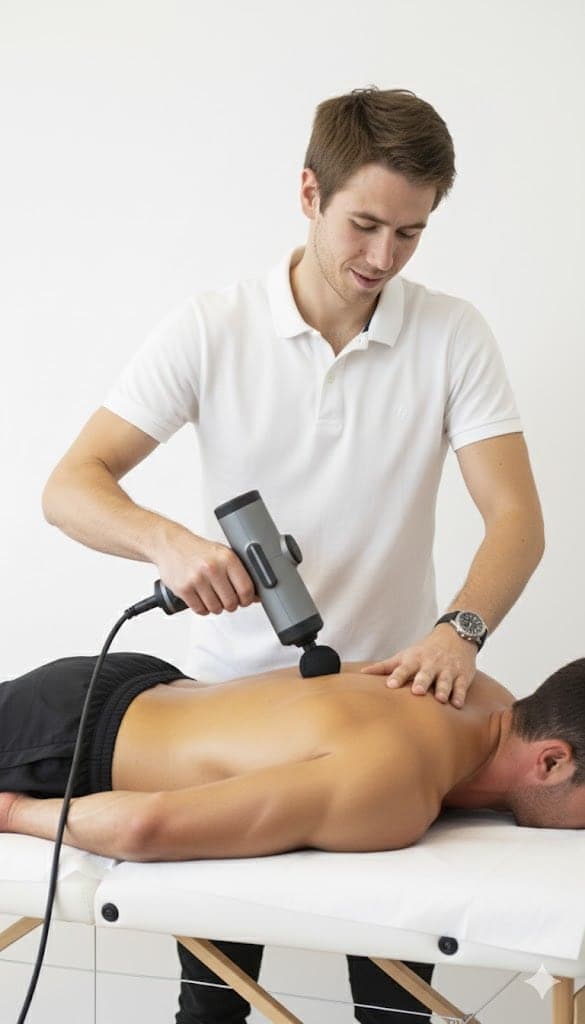
Written by
Chris
Massage therapist, nutrition and exercise physiologist
Norwegian-certified with a Bachelor’s in Physical Education and Nutrition and over ten years of clinical practice, working from a portable table in clients’ homes across the Paphos district.
This article is general information, not a medical diagnosis. If you have severe, worsening or unexplained pain, numbness, weakness, or pain after an accident, see a doctor first.