
Holistic Approaches to Back Pain in Cyprus: A Mechanical Deep-Tissue Perspective
In short
Discover how advanced holistic approaches to back pain in Cyprus combine mechanical precision with deep-tissue expertise, delivering lasting relief through scientific methods that address root causes, not symptoms.
Back pain doesn’t discriminate. I’ve worked with corporate executives who couldn’t sit through meetings, athletes whose careers hung by a thread, and retirees who simply wanted to walk their grandchildren to the beach without wincing. What united them wasn’t their age or occupation—it was the failed promise of temporary relief from conventional treatments. After a decade of specializing in body mechanics and advanced deep-tissue work across Cyprus, I’ve learned something fundamental: treating back pain holistically means addressing the mechanical dysfunction at its source, not merely managing symptoms with superficial interventions.
The Mediterranean lifestyle in Cyprus presents unique challenges for back health. Long driving commutes between coastal cities, sedentary office work in Nicosia’s business districts, manual labor in construction and hospitality sectors, and even the physical demands of maintaining properties in the heat—all create specific mechanical stress patterns. Traditional massage parlors offer relaxation. I offer biomechanical correction. There’s a profound difference, and understanding that distinction is the first step toward lasting relief.
The Mechanical Reality of Back Pain: What Most Practitioners Miss
Your back pain isn’t random. It’s the logical consequence of mechanical dysfunction accumulating over months or years. When I assess a client’s movement patterns, I’m not looking for where it hurts—I’m investigating why the tissue has adapted to produce that pain signal. This distinction separates effective treatment from endless maintenance sessions.
Consider the typical scenario: You’ve been sitting at a desk for eight hours daily. Your hip flexors shorten and tighten. This anterior pelvic tilt forces your lumbar spine into excessive lordosis. The erector spinae muscles along your lower back now work overtime to counterbalance this postural deviation. They become hypertonic, developing adhesions and trigger points. Eventually, inflammation sets in. You feel “back pain.”
A conventional massage therapist applies pressure to your lower back, temporarily reducing inflammation. You feel better for three days. Then the pain returns, because the mechanical cause—shortened hip flexors creating faulty pelvic positioning—remains unaddressed. This cycle continues indefinitely, costing you thousands of euros and countless hours, while the underlying dysfunction deepens.
The Holistic Mechanical Approach
Holistic approaches to back pain in Cyprus require a comprehensive understanding of how your entire kinetic chain functions as an integrated system. I don’t treat your lower back in isolation. I analyze:
- Hip mobility and pelvic positioning—the foundation of spinal alignment
- Thoracic spine mobility—how restriction in your mid-back forces compensation patterns
- Scapular mechanics—shoulder dysfunction creates compensatory tension throughout the posterior chain
- Core activation patterns—whether your deep stabilizers are functioning or if superficial muscles are overcompensating
- Fascial restrictions—how connective tissue adhesions create force transmission problems across multiple segments
This comprehensive assessment, informed by my education in Physical Education and Nutrition from Norway and refined through ten years of clinical practice, reveals the actual mechanical dysfunction generating your pain. Only then can treatment be precise, effective, and lasting.
Why Mechanical Deep-Tissue Work Surpasses Traditional Massage
I need to be direct about something the wellness industry avoids discussing: most massage cannot access the depth required to resolve chronic mechanical dysfunction. Human hands, no matter how skilled, have physiological limitations. Thumb pressure maxes out around 10-12 kilograms of force. For many chronic conditions—especially in larger muscle groups like the gluteals, quadratus lumborum, or deep hip rotators—this simply isn’t sufficient to release adhesions and restore proper tissue quality.
This isn’t a criticism of massage therapists. It’s biomechanical reality. And it’s why I invested years developing a specialized method using advanced mechanical tools that deliver what hands cannot: precision, power, and consistency.
Precision: Targeting the Exact Tissue Layer
When treating back pain, the difference between effective and ineffective treatment often comes down to millimeters. The multifidus muscles, critical stabilizers of individual vertebral segments, lie deep beneath superficial erector spinae muscles. Trigger points in the quadratus lumborum, a common source of lateral lower back pain, require precise angle and depth to access without causing guarding responses from superficial tissues.
My mechanical approach allows me to control not just pressure intensity but also the exact angle of force application and the specific tissue layer being addressed. This precision means I can work progressively deeper as tissues release, following the dysfunction to its mechanical origin rather than applying generalized pressure that may miss the actual problem.
Power: Accessing Chronic Adhesions
Let me share a recent case that illustrates this principle. A 42-year-old construction project manager came to me after two years of persistent lower back pain. He’d tried four different massage therapists, physiotherapy, and anti-inflammatory medications. His MRI showed no structural pathology—no disc herniation, no stenosis. Yet he couldn’t bend to tie his shoes without significant discomfort.
During assessment, I identified severe adhesions in his deep hip rotators, particularly the piriformis and gemellus muscles. These tissues had become so dense and fibrotic from years of compensatory overload that conventional massage simply couldn’t penetrate deeply enough to create change. Using controlled mechanical pressure—adjusted precisely to his tolerance—I worked systematically through the layers of dysfunction over four sessions.
By the third session, his hip internal rotation had improved from 15 degrees to 35 degrees. His pelvis could move properly again. The mechanical stress on his lumbar spine decreased. The pain disappeared. Six months later, it hasn’t returned, because we addressed the mechanical cause.
This level of tissue work isn’t possible with hands alone. It requires controlled, sustained pressure that can be held consistently for the duration necessary to create fascial release and adhesion breakdown. That’s what advanced mechanical deep-tissue work delivers.
Consistency: Eliminating Variables
Every manual therapist has off days. Fatigue, minor illness, or simple human variability affects treatment quality. I experienced this frustration in my early career years, knowing that my effectiveness fluctuated based on factors beyond my control. It compromised my ability to deliver reliable results.
Mechanical consistency solves this problem. Every treatment delivers the same precision and power. Your fourth session is as effective as your first. This reliability is essential for creating the progressive treatment plans that resolve chronic conditions durably.
The Scientific Framework Behind Holistic Back Pain Treatment
Evidence-based practice isn’t optional—it’s the foundation of ethical clinical work. The holistic approaches to back pain in Cyprus that I employ integrate established biomechanical principles with advanced soft tissue techniques, creating a systematic framework for lasting results.
Myofascial Continuity and Force Transmission
Your body isn’t organized into isolated muscles. It’s structured as continuous fascial networks that transmit force across multiple segments. The Superficial Back Line, for example, connects from the plantar fascia of your feet through your calves, hamstrings, and erector spinae, all the way to the occipital ridge of your skull. Restriction anywhere in this chain creates compensatory patterns elsewhere.
This explains why someone with chronic ankle stiffness from an old sprain might develop lower back pain years later. The fascial restriction in the lower leg alters gait mechanics. The pelvis compensates. The lumbar spine adapts. Eventually, pain emerges at the site of greatest mechanical stress—often the lower back, even though the original dysfunction lies elsewhere.
Effective treatment must address the entire kinetic chain, releasing restrictions systematically to restore normal force transmission patterns. This holistic perspective isn’t alternative medicine—it’s applied biomechanics based on well-established anatomical principles.
Neurological Reset Through Mechanical Input
Chronic pain involves neurological adaptation. Your nervous system becomes hypersensitive to mechanical stress in affected areas, creating a pain response disproportionate to actual tissue damage. This central sensitization maintains the pain cycle even after initial tissue injury has healed.
Deep mechanical work creates powerful sensory input that helps reset these maladaptive pain patterns. By working progressively deeper as tolerance increases, we send clear signals to the nervous system that the tissue is safe, functional, and capable of handling load. This neurological component is why clients often report not just pain reduction but improved movement quality and confidence in their bodies.
The Cyprus Context: Environmental and Lifestyle Factors
Working exclusively in Cyprus for years has taught me how local environmental and lifestyle factors influence back pain patterns. These contextual elements must inform treatment approaches to be genuinely holistic.
| Factor | Mechanical Impact | Treatment Consideration |
|---|---|---|
| Hot climate | Dehydration affects fascial tissue quality and increases inflammation | Deeper hydration protocols and modified treatment intensity during summer months |
| Driving culture | Extended sitting in cars with poor lumbar support creates specific hip flexor and lower back patterns | Focused hip flexor release and anterior chain work |
| Outdoor lifestyle | Beach activities, hiking, swimming create diverse movement demands | Treatment plans that support varied activity patterns rather than single-sport optimization |
| Construction/hospitality work | Repetitive manual labor with asymmetrical loading patterns | Emphasis on restoring bilateral symmetry and identifying occupational movement patterns |
Understanding these local factors allows me to ask the right questions during assessment and design treatment plans that account for your actual daily mechanical demands, not generic protocols.
Beyond Symptom Management: The Treatment Partnership Model
Here’s what frustrates me about the conventional wellness industry: the business model depends on you never getting better. Monthly massage memberships, ongoing “maintenance” sessions, perpetual treatment without resolution—this approach benefits the provider, not the client.
I operate differently because my education in Physical Education and biomechanics taught me to think like a clinician, not a service provider. Your goal isn’t to see me forever. Your goal is to resolve your dysfunction, optimize your movement capacity, and return to full function. My job is to make that happen as efficiently as possible.
The Dedicated Partnership Approach
When we begin working together, I’m not offering you a massage. I’m proposing a treatment partnership with a clear objective: lasting resolution of your mechanical dysfunction. This requires several elements:
Comprehensive Initial Assessment: I spend significant time in our first session analyzing your movement patterns, assessing tissue quality throughout your entire kinetic chain, and understanding your lifestyle demands. This isn’t billable therapy time—it’s essential diagnostic work.
Customized Progressive Protocol: Based on assessment findings, I design a specific treatment sequence. For some clients, this might be four sessions over six weeks. For others with more complex dysfunction, it might require eight sessions over three months. The protocol is individualized, not standardized.
Home Exercise Integration: Mechanical work in our sessions creates the foundation, but you must maintain the changes through specific movement practices. I provide targeted exercises—not generic stretching routines—that reinforce the mechanical corrections we’re making.
Outcome Measurement: We establish clear, measurable goals. Improved range of motion in specific joints. Reduced pain scores. Return to particular activities. These metrics guide treatment progression and determine when we’ve achieved our objective.
The Investment Perspective
Let me frame this economically. Ongoing monthly massage costs €80-120 per session in Cyprus. Over a year, that’s €960-1,440 for temporary relief that never resolves the underlying problem. Over five years, you’ve spent €4,800-7,200 and still have back pain.
My treatment partnerships typically require 4-8 intensive sessions to resolve chronic conditions durably. The investment is concentrated, but the outcome is lasting. You’re not purchasing temporary symptom relief. You’re investing in biomechanical correction that ends the pain cycle.
Which approach actually costs more? And more importantly, which one gives you your life back?
Case Studies: Holistic Approaches to Back Pain in Cyprus Applied
Theory matters, but results define effectiveness. Let me share three cases that illustrate how holistic mechanical treatment resolves different types of back pain.
The Athlete: Chronic Lower Back Tightness Limiting Performance
A 28-year-old competitive CrossFit athlete contacted me about persistent lower back tightness that was limiting his Olympic lifting performance. He could train, but his back felt “locked up” during overhead movements, and his squat depth had decreased over six months despite consistent mobility work.
Assessment revealed the issue wasn’t in his lower back at all. His thoracic spine had become severely restricted—only 15 degrees of rotation in either direction compared to a normal 40 degrees. This thoracic immobility forced his lumbar spine to compensate during rotational movements, creating the sensation of lower back tightness.
We spent three sessions systematically releasing his intercostal muscles, thoracic erector spinae, and the deep rotator muscles between his ribs and spine. I worked with controlled mechanical pressure that accessed tissue depths impossible with manual techniques. By session three, his thoracic rotation had improved to 35 degrees bilaterally.
The result? His lower back “tightness” disappeared because his lumbar spine was no longer compensating for thoracic restriction. His squat depth returned. His overhead position improved. He hit a personal record in the snatch two weeks later. The holistic approach—treating the actual mechanical cause rather than the symptomatic area—delivered the performance outcome he needed.
The Office Worker: Chronic Pain Despite “Everything”
A 45-year-old office manager in Limassol came to me after trying, in her words, “everything.” Two years of weekly massage. Physiotherapy. Chiropractor visits. Yoga classes. Ergonomic chair upgrades. Her lower back pain persisted, particularly after sitting for more than 30 minutes.
During assessment, I found what I call the “desk worker pattern”: severely shortened hip flexors, inhibited glutes, and anteriorly tilted pelvis creating excessive lumbar lordosis. But the real problem was deeper—her psoas muscles had become so chronically tight and adhered to surrounding structures that they were pulling her lumbar vertebrae into constant compression.
The psoas is a complex muscle to treat effectively. It lies deep in the abdominal cavity, requiring precise angle and significant depth to access properly. This is exactly where mechanical deep-tissue work excels. Over six sessions, I worked progressively through her abdominal wall, accessing the psoas systematically and releasing the chronic tension patterns that had developed over years of sitting.
We combined this with specific core activation exercises that retrained her deep stabilizers to maintain neutral pelvic position. By session five, she could sit comfortably for three hours. By session six, her pain had reduced from a daily 7/10 to occasional 2/10 discomfort that responded to the exercises I’d taught her.
She hasn’t needed treatment in eight months. That’s lasting resolution, not symptom management.
The Retiree: Age-Related Degeneration and Real-World Function
A 67-year-old retired teacher reached out because her lower back pain was limiting her ability to walk her dog and play with her grandchildren. Her doctor had shown her MRI images indicating “age-appropriate degenerative changes” and suggested she “learn to live with it.”
This medical approach frustrates me. Yes, structural changes occur with aging. But pain is a function of mechanical load exceeding tissue capacity, not merely the presence of structural changes. Many people have disc degeneration visible on MRI without any pain. The question isn’t whether degeneration exists—it’s whether we can improve tissue quality and movement patterns sufficiently to reduce mechanical stress below the pain threshold.
Assessment showed severe adhesions throughout her thoracolumbar fascia and gluteal muscles, with almost no hip extension range of motion. Years of reduced activity had created a cycle: pain limited movement, reduced movement decreased tissue quality, poor tissue quality increased pain.
We needed a different approach than with younger clients. Instead of aggressive deep work, I used moderate mechanical pressure consistently applied over longer sessions, working progressively as her tissue tolerance improved. We focused on restoring hip extension and improving the quality of her thoracolumbar fascia to distribute forces more evenly across her spine.
Progress was slower but steady. After ten sessions over four months, her walking tolerance increased from 10 minutes to 45 minutes. She could bend to pick up her grandchildren’s toys. She started swimming twice weekly. Her pain decreased from constant 6/10 to occasional 3/10 that didn’t limit her activities.
Did we reverse her disc degeneration? No. Did we optimize her mechanical function sufficiently that the degeneration no longer caused limiting pain? Absolutely. That’s the realistic, results-oriented approach that changes lives.
The Mobile Clinic Model: Professional Treatment at Your Location
Convenience matters, but that’s not why I travel to clients. The mobile model serves a therapeutic purpose: treating people in their actual living environment allows me to assess real-world movement patterns and lifestyle factors that office-based practitioners miss.
When I arrive at your home or hotel, I bring everything needed for professional treatment: a specialized massage bench engineered for optimal body positioning, the mechanical tools that enable my specific methodology, and the expertise developed over ten years and hundreds of cases. The environment is clinical and professional, just relocated to your space.
This approach particularly benefits clients dealing with acute flare-ups who find travel difficult, busy professionals who can’t spare commute time, and athletes who prefer treatment immediately after training when tissue is warm and responsive. The quality of treatment doesn’t compromise—only the location changes.
Integrating Holistic Elements: Beyond Mechanical Work
While mechanical tissue work forms the core of my practice, truly holistic approaches to back pain in Cyprus must consider additional factors that influence outcomes. My background in nutrition and physical education informs how I guide clients beyond our hands-on sessions.
Nutritional Considerations for Tissue Health
Inflammation is both a natural healing response and, when chronic, a perpetuator of pain cycles. Several nutritional factors directly impact tissue quality and inflammatory status:
Hydration: Fascial tissue requires adequate hydration for optimal glide and force transmission. In Cyprus’s hot climate, many clients operate in chronic mild dehydration, which increases tissue stiffness and adhesion formation.
Omega-3 Fatty Acids: The ratio of omega-6 to omega-3 fats significantly affects inflammatory signaling. I often find clients consuming diets heavy in omega-6 oils while lacking omega-3 sources, creating a pro-inflammatory baseline that slows healing.
Protein Intake: Tissue remodeling following deep mechanical work requires adequate protein. Older clients particularly often consume insufficient protein for optimal tissue repair.
I don’t provide detailed nutritional prescriptions—that exceeds my scope of practice. But I do educate clients about these factors and recommend consulting with nutrition professionals when appropriate. This integrated approach maximizes treatment effectiveness.
Movement Education: Sustaining Mechanical Corrections
The mechanical changes we create during treatment sessions must be reinforced through appropriate movement patterns. I provide specific, targeted exercises—not generic programs, but movements designed to address your particular mechanical dysfunction.
For the office worker with anterior pelvic tilt, this might include specific hip flexor stretching protocols and glute activation exercises performed multiple times daily. For the athlete with thoracic restriction, it includes rotational mobility drills that maintain the improvements we’ve created.
These aren’t optional suggestions. They’re essential components of the treatment protocol. My job is to create the foundation through mechanical work. Your job is to maintain and reinforce that foundation through consistent movement practice.
FAQ: Holistic Approaches to Back Pain in Cyprus
How is mechanical deep-tissue work different from regular massage?
Regular massage primarily addresses superficial muscle tissue using manual pressure, typically for relaxation and temporary tension relief. Mechanical deep-tissue work uses specialized tools to access deeper tissue layers with controlled, consistent pressure that hands cannot replicate. The objective is lasting correction of mechanical dysfunction, not temporary symptom relief. This distinction fundamentally changes both the treatment approach and the expected outcomes.
Is mechanical treatment painful?
Deep mechanical work addresses chronically dysfunctional tissue, which often creates intense sensation during treatment. However, I maintain precise control over pressure intensity, working within your tolerance while still achieving the depth necessary for results. Most clients describe the sensation as “intense but productive”—different from sharp pain, more like the feeling of restriction releasing. As tissue quality improves across sessions, treatments typically become less intense.
How many sessions will I need to resolve my back pain?
This depends entirely on your specific mechanical dysfunction, how long it’s existed, and your tissue quality. Acute conditions with recent onset might resolve in 3-4 sessions. Chronic patterns developed over years typically require 6-8 sessions for complete resolution. During initial assessment, I provide a realistic treatment timeline based on my findings. Unlike ongoing maintenance models, my goal is efficient resolution, not extended treatment duration.
Can you treat back pain if I have disc herniation or other structural issues?
Structural pathology requires medical evaluation and clearance before mechanical treatment. However, many clients with documented structural changes experience significant pain reduction through improved movement patterns and tissue quality that reduce mechanical stress on compromised structures. I work within appropriate parameters based on your specific condition. What’s crucial to understand is that structural changes don’t automatically mean lasting disability—optimizing the mechanics around those structures often dramatically improves function.
Do you only treat back pain, or can you address other areas?
While back pain represents a large portion of my practice, the mechanical approach I employ applies to dysfunction anywhere in the body. I regularly treat shoulder pain, hip issues, knee problems, and neck dysfunction. The methodology remains consistent: identify the mechanical cause through comprehensive assessment, address that cause through precise deep-tissue work, and provide movement education to maintain corrections. The principles of biomechanics apply to all joints and movement patterns.
How do I maintain results after treatment ends?
Lasting results require maintaining the mechanical corrections we create. This involves two elements: continuing the specific exercises I provide to reinforce proper movement patterns, and avoiding the behaviors that created the original dysfunction. For most clients, this means 10-15 minutes of targeted movement work 4-5 days weekly—a small investment to maintain pain-free function. I provide clear guidance about what’s necessary for your specific situation.
Why is your approach better than physiotherapy or chiropractic care?
Different approaches serve different purposes. Physiotherapy excels at post-surgical rehabilitation and exercise prescription. Chiropractic focuses on joint manipulation and alignment. My methodology specifically addresses soft tissue dysfunction—the chronic adhesions, fascial restrictions, and myofascial trigger points that create pain patterns. These conditions often respond poorly to other approaches because they require the depth and precision that mechanical deep-tissue work provides. Many clients find me after trying other modalities without resolution. The question isn’t which approach is “better” universally—it’s which approach addresses your specific mechanical dysfunction most effectively.
Is this treatment appropriate for older adults?
Absolutely. Age-related tissue changes require treatment modification—slower progression, longer sessions, more gradual depth increases—but the fundamental principles remain effective. I’ve worked successfully with clients in their seventies and eighties, helping them maintain independence and quality of life through optimized mechanical function. The goal adjusts to realistic expectations, but meaningful improvement is entirely possible regardless of age.
The Reality of Lasting Resolution
After ten years of clinical practice and hundreds of cases, I’ve learned that lasting pain resolution requires three elements working together: precise identification of mechanical dysfunction, aggressive treatment of that dysfunction using tools capable of creating real tissue change, and client commitment to maintaining the corrections through appropriate movement patterns.
Most back pain sufferers never experience this integrated approach. They receive symptom management from providers whose business model depends on their continued suffering. Or they’re told their structural changes mean lasting limitation. Or they waste months on generic treatment protocols that don’t address their specific dysfunction.
The holistic approaches to back pain in Cyprus that I’ve developed over years of dedicated practice offer a different path. Not easier—resolving chronic dysfunction requires intensive work and client participation. Not cheaper in the short term—concentrated treatment costs more than individual massage sessions. But honest, effective, and lasting.
I travel to your location with professional equipment and specialized expertise. We conduct comprehensive assessment to identify your specific mechanical dysfunction. We implement aggressive treatment using mechanical tools that access depths hands cannot reach. We integrate movement education that maintains corrections. We measure progress against clear objectives. And we end treatment when you’ve achieved lasting resolution, not when your membership expires.
This is clinical work informed by university education in biomechanics and refined through a decade of focused practice. It’s not relaxation therapy. It’s not wellness maintenance. It’s biomechanical correction aimed at lasting functional restoration.
Your back pain has a mechanical cause. That cause can be identified, treated, and resolved. The question is whether you’re ready to invest in actual resolution rather than continuing the cycle of temporary relief. The difference between these approaches isn’t subtle—it’s the difference between managing a problem indefinitely and eliminating it durably.
I’ve built my entire practice around delivering the second outcome. That’s the commitment I make to every client, and it’s why people who’ve tried everything else finally find resolution through mechanical deep-tissue work that addresses dysfunction at its source.
Evidence and limits
Massage may help with some symptoms, but benefits and evidence vary by condition. It does not replace medical assessment or treatment. A page update is not evidence of an independent clinical review.
Further reading: Massage therapy: evidence, safety and limitations by US National Center for Complementary and Integrative Health. This is general background reading, not verification of every claim in this article.
How we describe evidence and updates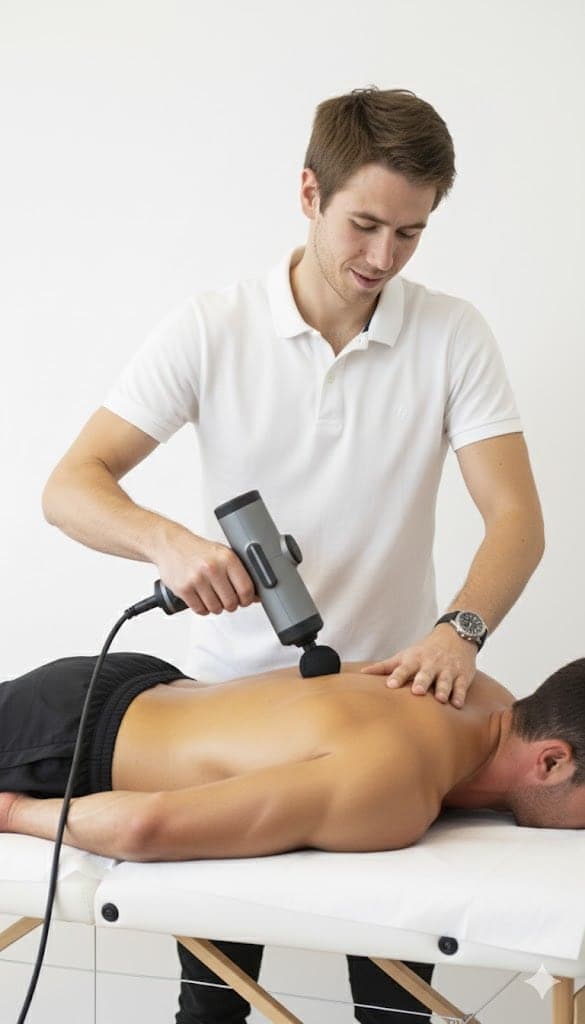
Written by
Chris
Massage therapist, nutrition and exercise physiologist
Norwegian-certified with a Bachelor’s in Physical Education and Nutrition and over ten years of clinical practice, working from a portable table in clients’ homes across the Paphos district.
This article is general information, not a medical diagnosis. If you have severe, worsening or unexplained pain, numbness, weakness, or pain after an accident, see a doctor first.