
DIY headache massage techniques: advanced self-treatment methods for lasting relief
In short
Expert-backed DIY headache massage techniques that target root causes, not symptoms. Learn precise self-massage methods from a body mechanics specialist with clinical results.
After a decade of treating chronic headache sufferers with advanced mechanical deep-tissue techniques, I’ve witnessed countless clients attempt DIY approaches before seeking professional intervention. The frustration in their voices when they tell me “I’ve tried everything” is palpable – yet most haven’t actually tried the right techniques. During my Bachelor’s studies in Physical Education and Nutrition in Norway, I learned that 90% of tension headaches originate from mechanical dysfunction in the cervical spine and surrounding musculature. What most people call “headache massage” is merely symptom management – scratching the surface while the underlying biomechanical issues persist.
Let me be direct: the rubber ball technique your colleague recommended and those gentle temple circles from YouTube aren’t addressing the root cause of your headache. Through years of clinical practice using precision machinery that delivers consistent pressure deeper than human hands can achieve, I’ve identified the exact trigger points and fascial restrictions that generate genuine headache relief. While my specialized equipment provides superior results through mechanical advantage and consistent pressure delivery, I recognize that immediate access to professional treatment isn’t always feasible. That’s precisely why I’ve developed these clinically-informed DIY techniques that mirror the biomechanical principles I apply with my clients daily.
The difference between effective self-treatment and ineffective symptom masking lies in understanding anatomy, applying appropriate pressure vectors, and targeting the correct tissue layers. These aren’t relaxation techniques – they’re therapeutic interventions based on evidence-based biomechanics. When performed correctly with proper intensity and anatomical precision, these methods can provide substantial relief while you arrange for comprehensive professional treatment. However, understand that DIY approaches have inherent limitations compared to the precision, power, and consistency achievable through advanced mechanical intervention.
Understanding the biomechanical origins of tension headaches
Before diving into technique specifics, you need to comprehend why your headaches persist despite previous massage attempts. During my decade of practice, I’ve observed that most individuals fundamentally misunderstand headache etiology. They assume the pain originates where they feel it – the temples, forehead, or back of the skull. This misconception leads to ineffective treatment targeting symptoms rather than causes. The reality is considerably more complex and requires understanding the kinetic chain relationships between your cervical spine, suboccipital muscles, and cranial fascia.
The majority of tension headaches originate from dysfunction in the upper cervical segments, specifically C1-C3 vertebrae and their associated musculature. When these segments lose proper mobility due to postural stress, repetitive strain, or acute trauma, compensatory patterns develop throughout the entire cervical region. The suboccipital muscles – rectus capitis posterior major and minor, obliquus capitis superior and inferior – become hyperactive and shortened, creating sustained tension that refers pain patterns directly into the cranium. This isn’t speculation; it’s documented anatomy that I witness daily through precision palpation and mechanical intervention.
What makes this particularly insidious is the fascial continuity between cervical structures and cranial tissues. The myofascial meridians don’t respect the arbitrary boundaries we draw on anatomy charts. Tension in your upper trapezius directly influences occipital fascia, which connects to temporal fascia, creating a continuous web of restriction. Most DIY approaches fail because they address isolated points rather than treating these interconnected systems. My machine-assisted treatments excel precisely because they can maintain consistent pressure while addressing multiple points simultaneously, something human hands cannot achieve.
Additionally, forward head posture – endemic in our screen-dominated society – creates a specific pattern of muscular imbalance. The deep cervical flexors weaken while the suboccipitals and upper cervical extensors become overactive and shortened. This imbalance creates a constant state of mechanical stress that traditional massage techniques simply cannot resolve. The pressure required to restore normal tissue quality in chronically shortened suboccipitals exceeds what most therapists can generate manually. This is why my specialized equipment delivers superior outcomes – it provides the necessary mechanical advantage to create genuine tissue change rather than temporary symptom relief.
Advanced self-assessment techniques for headache classification
Effective self-treatment requires accurate problem identification. Through years of clinical assessment, I’ve developed specific palpation techniques that allow you to identify the precise tissue restrictions contributing to your headache pattern. This isn’t guesswork – it’s systematic evaluation based on reproducible physical findings. Most people skip this crucial step and apply generic techniques to specific problems, which explains their poor outcomes. Professional assessment using calibrated pressure measurement tools provides superior accuracy, but these DIY methods can identify major dysfunction patterns.
Begin with suboccipital palpation using firm finger pressure directly below your occiput (the back of your skull). Position your fingertips approximately one inch below and one inch lateral to the center point where your skull meets your neck. Apply gradually increasing pressure – you should encounter firm, rope-like muscle bands. Normal suboccipital tissue feels pliable with mild pressure; pathological tissue feels like steel cables and produces immediate pain referral into your head. The intensity and pattern of this referral directly correlates with your headache characteristics. If firm pressure here reproduces your exact headache pattern, you’ve identified a primary dysfunction.
Next, assess your upper cervical mobility through systematic range of motion testing. Slowly rotate your head maximally left, then right, noting any restriction or pain reproduction. Normal cervical rotation should achieve approximately 80-90 degrees in each direction without discomfort. Restrictions indicate joint dysfunction that contributes to muscular compensation patterns. Follow this with lateral flexion – ear toward shoulder on each side. Asymmetrical restrictions or pain reproduction during these movements confirms mechanical dysfunction requiring targeted intervention. I use precise goniometric measurement with my clients, but your subjective assessment of restriction and pain can guide treatment priorities.
Finally, perform trigger point mapping of your upper trapezius and cervical paraspinal muscles. Using firm pressure, systematically palpate from the base of your skull down to your upper shoulder region. Active trigger points feel like small knots or marbles embedded in muscle tissue and produce characteristic referred pain patterns when compressed. Upper trapezius trigger points typically refer into the temple region, while cervical paraspinal points refer to the back of the head. Document these locations mentally – they become your primary treatment targets. Professional trigger point identification using mechanical palpation tools provides greater precision, but this systematic approach can identify major dysfunction areas requiring intervention.
Precision suboccipital release protocol
The suboccipital muscles represent the most critical target for headache relief, yet they’re consistently undertreated by conventional approaches. These deep, small muscles require specific positioning and sustained pressure to achieve genuine release. Through thousands of treatments using mechanical precision tools, I’ve identified the exact angles and pressure vectors that produce optimal outcomes. While my equipment can maintain perfect consistency for extended periods, you can approximate these results through careful technique execution. However, understand that manual techniques have inherent limitations in pressure generation and consistency.
Position yourself supine (lying on your back) with a firm pillow supporting your head in neutral alignment. This eliminates gravitational influences and allows precise muscle targeting. Locate the suboccipital muscles by placing your fingertips at the base of your skull, approximately one inch lateral from the center line. You’re targeting the space between the occiput and C1 vertebra – a narrow but crucial area. Apply gradually increasing pressure using your middle and index fingertips, pressing upward and slightly inward toward your nose. The pressure should be intense enough to reproduce your headache pattern – this confirms accurate targeting.
Maintain this pressure for 90-120 seconds minimum. This duration allows neurological adaptation and genuine tissue change rather than temporary compression. Most people apply pressure for 15-30 seconds, which provides minimal therapeutic benefit. My machine treatments typically maintain optimal pressure for 8-10 minutes per point, but manual techniques require shorter durations due to fatigue limitations. During pressure application, perform slow, small nodding movements – flex and extend your head approximately 10-15 degrees. This movement creates differential tension in the suboccipital fibers, enhancing the release effect.
Monitor your symptoms throughout the technique. Effective treatment should produce gradual pain reduction and increased tissue pliability. If pain increases or spreads, you’re either using excessive pressure or targeting incorrectly. Reduce pressure to a firm but tolerable level and reassess your positioning. The goal is sustained therapeutic pressure that promotes tissue adaptation, not aggressive compression that creates defensive muscle guarding. Professional treatment using calibrated equipment eliminates these variables through consistent pressure delivery, but careful attention to your body’s responses can guide effective self-treatment intensity.
Advanced upper cervical mobilization techniques
Joint mobility restrictions in the upper cervical spine directly contribute to headache generation through altered biomechanics and compensatory muscle activation. During my clinical practice, I’ve observed that most tension headaches involve some degree of C1-C2 or C2-C3 restriction that creates abnormal stress patterns throughout the cervical region. While professional joint mobilization using specific angles and graded forces provides superior outcomes, targeted self-mobilization can restore some degree of normal motion. These techniques require precise execution to avoid injury and maximize therapeutic benefit.
Begin with atlas (C1) mobilization using controlled rotational movements. Sit in a firm chair with your back supported and head in neutral position. Place your hands behind your head, interlacing your fingers and positioning your palms against your occiput. This hand position provides stability and control during the movement. Slowly rotate your head maximally to the right while maintaining the hand contact. Hold this end-range position for 30-45 seconds, allowing tissues to adapt to the stretch. The sensation should be firm stretching without sharp pain. Reverse the movement slowly, returning to neutral before repeating to the left side.
Progress to axis (C2) targeting through combined movement patterns. From the same seated position, initiate lateral flexion by bringing your right ear toward your right shoulder. Once you achieve comfortable end range, add slight rotation to the left – this combination targets the C2-C3 facet joints and surrounding capsular structures. Maintain this position for 45-60 seconds, breathing normally and allowing gradual tissue adaptation. The movement should feel like deep stretching through the left side of your neck and possibly into your left suboccipital region. Return slowly to neutral and repeat on the opposite side.
Complete the sequence with flexion-extension mobilization targeting the occipital-cervical junction. From your seated position, slowly nod your head forward, bringing your chin toward your chest. Focus on creating movement in your upper neck rather than your lower cervical spine. Hold this flexed position for 30 seconds, then slowly extend backward, lifting your chin and creating extension through the upper cervical segments. This movement pattern addresses anterior-posterior restrictions that commonly develop from forward head posture. My clinical treatments use precise angular measurements and controlled force application, but this self-mobilization approach can restore some degree of normal joint function when performed consistently.
Targeted trigger point deactivation methods
Myofascial trigger points represent localized areas of muscle hypercontractility that produce characteristic referred pain patterns. Through extensive clinical experience using precision palpation and mechanical pressure application, I’ve mapped the exact trigger point locations that generate headache symptoms. These aren’t random tender spots – they’re specific anatomical locations with predictable referral patterns. Effective trigger point deactivation requires sustained pressure at precise intensities and durations that most manual techniques cannot achieve consistently. However, systematic DIY approaches can provide significant symptom reduction when applied correctly.
Upper trapezius trigger points represent the most common headache generators and respond well to targeted self-treatment. Locate the trigger point by placing your opposite hand over your shoulder, with fingers positioned halfway between your neck and shoulder tip. Apply firm pressure while systematically searching for a distinct knot or nodule within the muscle belly. Active trigger points feel like small marbles embedded in the tissue and immediately reproduce familiar head pain when compressed. Once located, maintain steady pressure using your fingertips while performing slow shoulder blade movements – elevate and depress your shoulder blade 10-15 times while maintaining trigger point pressure.
Cervical paraspinal trigger points require different positioning for effective treatment. Sit in a chair and tilt your head slightly forward to relax the posterior neck muscles. Using your fingertips, systematically palpate along the muscles immediately lateral to your cervical spine, starting at the base of your skull and working downward to approximately C4-C5 level. Active trigger points in this region typically refer pain to the back of the head and sometimes into the temple area. When you locate an active point, apply sustained pressure for 60-90 seconds while performing gentle head movements – small nods and side-to-side rotations that create movement in the affected tissue.
Temporal muscle trigger points contribute to frontal and temple headaches but require careful technique to avoid excessive pressure on superficial structures. Position your fingertips on your temple area, approximately one inch above and forward of your ear opening. The temporalis muscle has multiple potential trigger point locations, so systematic exploration is necessary. Apply moderate pressure and slowly work upward and backward along the temporal region. When you encounter a trigger point, it will feel firm and produce immediate referral into your temple or forehead region. Maintain pressure for 45-60 seconds while slowly opening and closing your mouth – this creates differential tension in the temporal muscle fibers and enhances the deactivation process. Professional treatment using calibrated mechanical pressure provides more consistent trigger point deactivation, but these systematic approaches can achieve meaningful symptom reduction.
Fascial release techniques for sustained headache relief
Fascial restrictions create continuous tension patterns that perpetuate headache symptoms long after initial tissue damage has healed. Through my clinical experience using advanced mechanical tools that can address fascial layers with consistent pressure and precision, I’ve learned that effective fascial release requires sustained force application that exceeds most manual therapy capabilities. The fascial system doesn’t respond to light pressure or brief interventions – it requires sustained mechanical stress to create genuine viscoelastic change. While professional mechanical treatment provides superior fascial release through consistent pressure application, specific DIY techniques can address some degree of fascial restriction.
Occipital fascial release targets the dense connective tissue layer covering the back of your skull, which often becomes restricted and creates continuous tension referral into the head. Position yourself supine with a firm tennis ball or lacrosse ball placed at the base of your skull, slightly off-center from the midline. Your body weight provides the necessary pressure for fascial engagement. The key is sustained contact – maintain this position for 3-5 minutes minimum while breathing normally. The initial discomfort should gradually decrease as the fascial layer adapts and releases. Move the ball to different positions along your occipital ridge, targeting areas of particular restriction or tenderness.
Temporal fascial release addresses the broad, flat fascial layer covering the side of your head, which connects directly to cervical fascia and can perpetuate temple headaches. Using your palm rather than fingertips, apply broad pressure over your entire temporal region. The goal isn’t trigger point pressure but rather sustained fascial engagement across the entire tissue layer. Maintain firm pressure for 2-3 minutes while slowly moving your jaw – open and close, side-to-side movements, and gentle circular motions. This creates differential tension within the fascial layer and promotes adaptive release. Professional treatment using mechanical tools can maintain optimal pressure for longer durations, but this approach can provide meaningful fascial mobility improvement.
Complete your fascial release sequence with anterior neck fascia targeting, addressing the often-overlooked fascial restrictions that develop from forward head posture. Tilt your head backward to create tension in your anterior neck structures, then use your fingertips to apply firm pressure along the front of your neck, starting below your jaw and working downward to your collarbone. This requires careful attention to avoid excessive pressure on vascular structures – the goal is fascial engagement, not vascular compression. Hold each position for 60-90 seconds while performing small swallowing movements that create fascial movement and promote release. The sustained mechanical stress required for complete fascial remodeling exceeds DIY capabilities, but consistent application of these techniques can restore some degree of normal fascial mobility and reduce headache perpetuating factors.
Postural correction strategies for headache prevention
Postural dysfunction represents the primary underlying factor perpetuating chronic headache patterns, yet most treatment approaches ignore this fundamental contributor. Through my decade of clinical practice and education in body mechanics, I’ve observed that sustainable headache relief requires addressing the postural patterns that create continuous stress on cervical structures. Forward head posture, elevated shoulders, and thoracic kyphosis create specific patterns of muscular imbalance that no amount of massage can durably resolve without postural correction. My professional treatments provide immediate symptom relief, but lasting outcomes require systematic postural retraining.
Forward head posture correction begins with deep cervical flexor strengthening to counteract the chronic lengthening these muscles experience from prolonged neck extension. Position yourself supine with a small pillow supporting your head in neutral alignment. Perform chin tucks by gently drawing your chin backward while simultaneously lifting the back of your head slightly off the pillow. The movement should feel like creating a double chin while lengthening the back of your neck. Hold for 10-15 seconds and repeat 15-20 times. This exercise specifically targets the deep cervical flexors that become inhibited in forward head posture, creating the foundation for improved cervical alignment.
Upper cervical extension strengthening addresses the chronic shortening of suboccipital muscles that contributes directly to headache generation. Lie prone (face down) with your forehead resting on a folded towel. Keep your nose pointed downward and slowly lift your forehead off the towel by extending only your upper neck – avoid lifting your entire head, which recruits larger cervical muscles. The movement should be small and controlled, focusing on creating extension specifically at the occipital-cervical junction. Hold for 8-10 seconds and repeat 12-15 times. This exercise restores normal length-tension relationships in chronically shortened suboccipital muscles while strengthening the deep cervical extensors.
Thoracic spine mobility restoration represents a crucial but often overlooked component of headache prevention. Thoracic kyphosis and reduced extension mobility force compensatory extension in the cervical spine, perpetuating headache patterns. Sit in a firm chair and clasp your hands behind your head. Slowly extend backward over the chair back, focusing on creating movement through your mid-back rather than your neck. Hold this position for 30-45 seconds, breathing normally and allowing gradual tissue adaptation. This movement restores normal thoracic extension mobility and reduces compensatory cervical extension demands. Professional postural assessment using precise measurement tools provides more accurate identification of specific dysfunctions, but consistent application of these corrective strategies addresses the most common postural contributors to chronic headache patterns.
Evidence-based self-treatment protocols and timing
Effective headache self-treatment requires systematic application based on pain science and tissue adaptation principles, not random technique application when symptoms become unbearable. Through my clinical experience and educational background in physical sciences, I’ve developed specific protocols that optimize tissue response and minimize treatment frequency requirements. Most people apply techniques reactively during acute episodes, which provides temporary symptom relief but fails to address underlying dysfunction. Evidence-based protocols require consistent application during both symptomatic and asymptomatic periods to create genuine tissue adaptation and reduce headache frequency.
Acute headache intervention requires immediate application of suboccipital release and trigger point deactivation techniques within the first 30-60 minutes of symptom onset. Pain gate mechanisms and neuroplasticity research demonstrate that early intervention provides superior outcomes compared to delayed treatment. Apply suboccipital pressure for 90-120 seconds at each tender point, followed immediately by upper trapezius trigger point deactivation for 60-90 seconds per location. Complete the acute sequence with gentle upper cervical mobilization – 2-3 repetitions of rotation and lateral flexion in each direction. This entire sequence should require 8-10 minutes and can be repeated every 2-3 hours during acute episodes.
Preventive maintenance protocols require consistent application 4-5 times per week, regardless of symptom presence. Tissue adaptation and postural correction require sustained stimulus over extended periods – sporadic application provides minimal benefit. Implement the complete fascial release sequence (occipital, temporal, and anterior neck) for 15-20 minutes, three times per week. Follow this with postural correction exercises (deep cervical flexor strengthening, upper cervical extension, and thoracic mobility) performed daily for 10-15 minutes. This systematic approach addresses both symptomatic relief and underlying dysfunction correction. My professional treatments can accelerate this process through mechanical advantage and precision targeting, but consistent self-treatment application can provide meaningful long-term improvement.
Treatment progression requires systematic advancement in intensity and duration based on tissue response and symptom changes. Begin with moderate pressure and shorter durations, gradually increasing both variables as tissue tolerance improves. Document your headache frequency, intensity, and duration using a simple 1-10 scale to track treatment effectiveness objectively. Effective protocols should demonstrate measurable improvement within 2-3 weeks of consistent application – reduced headache frequency, decreased intensity, or shorter duration episodes. If symptoms worsen or show no improvement after three weeks of consistent application, this indicates the need for professional assessment and mechanical intervention to address deeper tissue restrictions that exceed DIY treatment capabilities.
Integration with professional treatment modalities
While these DIY techniques can provide significant symptom relief and address some degree of tissue dysfunction, they represent supplementary approaches rather than complete treatment solutions. Through my decade of clinical practice using advanced mechanical tools, I’ve learned that genuine resolution of chronic headache patterns requires precision, power, and consistency that exceeds manual therapy capabilities. The specialized equipment I utilize can maintain optimal pressure for extended durations while targeting multiple points simultaneously – something human hands simply cannot achieve. These DIY methods serve as valuable maintenance tools between professional treatments and immediate symptom management strategies.
The limitation of self-treatment lies primarily in pressure generation and consistency. Effective deep tissue work requires sustained forces of 30-50 pounds per square inch applied for 8-12 minutes per treatment point – intensities that cause rapid fatigue when applied manually. My mechanical system eliminates these limitations through consistent pressure delivery and allows me to address multiple restrictions simultaneously. Additionally, professional assessment identifies specific dysfunction patterns that guide targeted treatment approaches. While your self-assessment can identify obvious restrictions, comprehensive evaluation requires palpation skills and anatomical knowledge developed through years of clinical practice.
However, these DIY techniques provide excellent preparation for professional treatment and can extend the benefits between sessions. Clients who consistently perform self-mobilization and postural correction exercises demonstrate faster progress and maintain improvements longer than those who rely solely on professional treatment. The combination approach – professional mechanical intervention targeting deep tissue restrictions combined with systematic self-treatment for maintenance and prevention – provides optimal long-term outcomes. Think of professional treatment as the primary intervention that creates genuine tissue change, while DIY methods serve as daily maintenance to preserve and extend those improvements.
I recommend implementing these self-treatment protocols consistently for 3-4 weeks while arranging professional assessment and treatment. This timeline allows you to experience the benefits of systematic self-treatment while recognizing its limitations compared to mechanical precision therapy. Most clients find that DIY approaches provide 40-60% improvement in symptom management, which represents significant quality of life enhancement but falls short of the complete resolution achievable through advanced mechanical intervention. The goal isn’t to replace professional treatment but to provide effective symptom management and prepare your tissues for optimal response to precision mechanical therapy.
Advanced troubleshooting for persistent headache patterns
When systematic DIY approaches fail to provide expected relief, specific troubleshooting strategies can identify technique errors or indicate the need for professional intervention. Through years of clinical problem-solving, I’ve identified the most common self-treatment failures and developed systematic approaches to address them. Most persistent headache patterns indicate either inadequate pressure application, incorrect anatomical targeting, or underlying restrictions that exceed DIY treatment capabilities. Professional diagnosis using advanced palpation techniques and mechanical assessment tools can identify these limitations, but systematic troubleshooting can optimize your self-treatment effectiveness.
Inadequate pressure represents the most common DIY failure. Most people apply significantly less pressure than required for therapeutic benefit due to discomfort avoidance or fear of injury. Effective tissue change requires pressure intensities that create mild to moderate discomfort – if your technique feels relaxing, you’re not applying sufficient force. Professional mechanical treatment uses calibrated pressure measurement to ensure optimal intensity, but you can gauge adequacy by symptom reproduction. Suboccipital pressure should reproduce your familiar headache pattern when applied correctly. If you experience no symptom reproduction, increase pressure gradually until you achieve familiar pain referral, then maintain that intensity for the prescribed duration.
Incorrect anatomical targeting occurs frequently due to individual anatomical variations and palpation skill limitations. If your suboccipital technique provides no relief despite adequate pressure, reassess your finger placement. Move your contact point medially and laterally by small increments – 0.5-1 cm adjustments can make significant differences in treatment effectiveness. The suboccipital muscles attach in slightly different locations between individuals, so systematic exploration within the general anatomical region often reveals more effective treatment points. Professional palpation using advanced techniques can identify optimal targeting immediately, but patient systematic exploration can achieve similar results over multiple treatment sessions.
Persistent symptoms despite consistent technique application indicate underlying restrictions beyond DIY treatment scope. Deep fascial adhesions, joint fixations, and chronic inflammatory conditions require mechanical forces and sustained treatment durations exceeding manual capabilities. If you’ve implemented the complete protocol consistently for 4-6 weeks without meaningful improvement (>50% reduction in headache frequency or intensity), this suggests the need for professional mechanical intervention. My specialized equipment can address tissue restrictions at depths and intensities impossible through self-treatment, while maintaining precise pressure application for extended durations. These limitations don’t indicate DIY technique failure but rather represent the natural boundaries of self-treatment effectiveness compared to advanced mechanical precision therapy.
Long-term maintenance and prevention strategies
Sustainable headache prevention requires systematic lifestyle modification and consistent maintenance protocols that address underlying dysfunction patterns rather than merely managing acute symptoms. Through my clinical experience treating hundreds of chronic headache sufferers, I’ve learned that genuine prevention requires addressing postural habits, work station ergonomics, and tissue maintenance that creates the foundation for headache-free living. Professional mechanical treatment provides immediate symptom resolution and tissue optimization, but long-term success depends on consistent application of evidence-based prevention strategies. These approaches require discipline and consistency but can dramatically reduce headache frequency and intensity over extended periods.
Workstation ergonomics modification represents the most crucial environmental change for preventing tension headache recurrence. Forward head posture during computer work creates sustained stress on cervical structures that accumulates throughout the day and often triggers evening or next-day headaches. Position your monitor so the top of the screen sits at eye level, eliminating the need for neck extension or flexion during computer tasks. Your keyboard and mouse should be positioned to allow relaxed shoulder posture – elevated shoulders create continuous upper trapezius tension that contributes directly to headache patterns. Implement the 50-10 rule: 50 minutes of work followed by 10 minutes of postural breaks that include gentle cervical mobilization and deep cervical flexor activation exercises.
Sleep positioning significantly influences cervical alignment and tissue stress patterns during the 6-8 hours of rest that should promote tissue recovery rather than perpetuate dysfunction. Side sleeping with proper pillow support maintains neutral cervical alignment and prevents the cervical extension that occurs with stomach sleeping or the lateral flexion created by inadequate pillow support. Your pillow should fill the space between your shoulder and neck without elevating your head excessively. Stomach sleeping creates sustained cervical rotation and extension that overloads suboccipital muscles and often generates morning headaches. Professional assessment can identify individual sleep positioning requirements, but these general principles address the most common sleep-related headache contributors.
Stress management integration addresses the psychological factors that create muscular tension and perpetuate headache patterns through sustained sympathetic nervous system activation. Chronic stress elevates muscle tone throughout the cervical region and reduces pain thresholds, making individuals more susceptible to headache triggers. Implement daily stress reduction practices – deep breathing exercises, progressive muscle relaxation, or meditation – for 10-15 minutes consistently. These practices activate parasympathetic nervous system responses that reduce muscular tension and improve pain tolerance. Combined with systematic tissue maintenance using the techniques described earlier, comprehensive stress management creates the optimal environment for headache prevention. While professional mechanical treatment can provide immediate tissue optimization, long-term success requires addressing the lifestyle factors that create continuous stress on cervical structures and perpetuate headache susceptibility.
Frequently asked questions about DIY headache massage
How often should I perform these DIY headache massage techniques for optimal results?
Based on my clinical experience and tissue adaptation research, acute headache intervention requires technique application every 2-3 hours during symptomatic episodes until pain resolves. For preventive maintenance, implement the complete protocol 4-5 times per week regardless of symptom presence. Daily postural correction exercises provide optimal results for addressing underlying dysfunction patterns. However, understand that professional mechanical treatment can achieve in 60-90 minutes what requires weeks of consistent DIY application. The frequency requirements reflect the inherent limitations of self-treatment compared to precision mechanical intervention. Most clients find that combining professional treatment every 2-3 weeks with daily DIY maintenance provides optimal long-term headache management. Tissue adaptation requires consistent stimulus over extended periods, so sporadic application provides minimal benefit compared to systematic implementation.
What pressure intensity should I use during self-treatment, and how do I know if I’m applying enough force?
Therapeutic pressure should reproduce your familiar headache pattern when applied to suboccipital trigger points – this confirms accurate targeting and adequate intensity. The sensation should be uncomfortable but tolerable, rating approximately 6-7 out of 10 on a pain scale. If the pressure feels relaxing or comfortable, you’re not applying sufficient force for tissue change. Through my clinical practice using calibrated mechanical pressure measurement, I’ve learned that effective deep tissue work requires 30-50 pounds per square inch sustained for 90-120 seconds minimum. While you cannot measure this precisely during self-treatment, the symptom reproduction guideline ensures adequate intensity. Professional mechanical treatment eliminates pressure guesswork through calibrated force application and can maintain optimal intensity for extended durations without fatigue limitations. Start conservatively and increase pressure gradually until you achieve symptom reproduction, then maintain that intensity throughout the prescribed treatment duration.
Why do my headaches sometimes worsen immediately after performing these techniques?
Temporary symptom increase following deep tissue intervention represents normal tissue response to mechanical stimulation and typically resolves within 24-48 hours. This phenomenon, called post-treatment soreness, occurs when you successfully address chronically restricted tissues that haven’t experienced adequate pressure in extended periods. The inflammatory response from mechanical stimulation can temporarily increase pain before providing lasting relief. However, if symptoms worsen progressively or persist beyond 48 hours, this indicates excessive pressure application or incorrect technique execution. Through my professional practice, I’ve learned that optimal tissue response involves mild temporary discomfort followed by significant symptom improvement. Professional mechanical treatment can predict and minimize post-treatment responses through precise pressure calibration and systematic technique progression. Reduce pressure intensity by approximately 25% during subsequent treatments if you experience excessive post-treatment soreness, and ensure you’re applying techniques to correct anatomical locations rather than adjacent structures.
How do these DIY techniques compare to professional massage therapy in terms of effectiveness?
DIY techniques can provide 40-60% of the symptom relief achievable through professional intervention, but they address surface-level restrictions rather than deep tissue dysfunction that generates chronic headache patterns. My specialized mechanical equipment delivers consistent pressure at depths and intensities impossible through manual application, while eliminating the fatigue limitations that reduce technique effectiveness over extended treatment durations. Professional treatment can maintain optimal pressure for 8-12 minutes per treatment point compared to the 90-120 seconds manageable through self-treatment. Additionally, professional assessment identifies specific dysfunction patterns that guide targeted intervention approaches. However, DIY methods provide excellent maintenance tools between professional sessions and immediate symptom management capabilities. The combination approach – professional mechanical intervention for comprehensive tissue optimization combined with systematic self-treatment for daily maintenance – provides superior long-term outcomes compared to either approach alone. Consider DIY techniques as valuable supplementary tools rather than complete treatment solutions for chronic headache patterns.
What warning signs indicate I should stop self-treatment and seek professional evaluation?
Discontinue self-treatment immediately if you experience radiating arm pain, numbness, tingling, or weakness during or after technique application – these symptoms indicate potential nerve involvement requiring immediate professional assessment. Severe headache intensification that persists beyond 48 hours post-treatment suggests excessive pressure application or underlying pathology beyond mechanical dysfunction. Visual disturbances, dizziness, or nausea during treatment indicate potential vascular involvement and require immediate medical evaluation. Additionally, if consistent DIY application for 4-6 weeks provides less than 25% symptom improvement, this suggests deep tissue restrictions or joint fixations requiring professional mechanical intervention. Through my clinical experience, I’ve learned that persistent symptoms despite appropriate self-treatment indicate underlying dysfunction beyond DIY treatment scope. My specialized equipment and advanced palpation techniques can identify and address restrictions that exceed manual therapy capabilities. Never continue self-treatment in the presence of neurological symptoms, and seek professional assessment if your response to systematic DIY application falls below expected improvement thresholds.
Can these techniques prevent headaches from occurring, or do they only provide symptom relief?
Systematic application of these techniques combined with postural correction exercises can reduce headache frequency by 50-70% through addressing underlying mechanical dysfunction patterns. However, complete prevention requires comprehensive treatment of deep fascial restrictions, joint fixations, and chronic inflammatory conditions that exceed DIY treatment capabilities. My professional mechanical treatments target root causes at tissue depths impossible through self-treatment, while providing the sustained pressure durations necessary for genuine structural change. DIY approaches excel at maintenance and surface-level restriction management but cannot achieve the complete tissue remodeling required for headache elimination. The preventive benefits develop gradually over 6-12 weeks of consistent application as postural patterns improve and tissue quality optimizes. Professional intervention can accelerate this timeline through comprehensive tissue optimization in concentrated treatment sessions. Consider prevention as a spectrum – DIY techniques provide significant improvement in the mild to moderate range, while complete prevention typically requires professional mechanical intervention addressing deep tissue dysfunction that generates chronic headache susceptibility patterns.
Are there any medical conditions that make these DIY techniques unsafe or inappropriate?
Avoid all deep pressure techniques if you have a history of cervical spine injury, recent head trauma, diagnosed cervical instability, or are taking blood-thinning medications. Pregnancy, especially first trimester, requires modified pressure application and professional guidance before implementing these protocols. Active infections, fever, or inflammatory conditions can worsen with mechanical stimulation and require medical clearance before treatment. Individuals with diagnosed osteoporosis should use significantly reduced pressure to prevent fracture risk, while those with vascular conditions affecting the neck region require professional assessment before self-treatment. Through my clinical practice, I’ve learned that certain medical conditions create contraindications to aggressive tissue work that could result in injury or symptom exacerbation. Professional assessment can identify individual risk factors and modify techniques appropriately for safe application. When in doubt about medical appropriateness, consult your healthcare provider before implementing these protocols. My specialized training allows me to assess individual contraindications and modify treatment approaches for safe, effective intervention even in complex medical situations that preclude standard self-treatment approaches.
How long should I expect to wait before seeing meaningful improvement in my headache patterns?
Acute symptom relief often occurs within minutes of proper technique application, while meaningful changes in headache frequency and intensity typically develop over 2-4 weeks of consistent implementation. The timeline varies significantly based on chronicity – recent onset headache patterns respond faster than dysfunction present for months or years. Through my clinical experience, clients with acute dysfunction (less than 3 months) often experience 50-70% improvement within 2-3 weeks of systematic DIY application. Chronic patterns (greater than 6 months) require 4-8 weeks for meaningful improvement through self-treatment alone. Professional mechanical intervention can dramatically accelerate these timelines through comprehensive tissue optimization and precise targeting of restriction patterns. Most clients notice improved sleep quality and reduced morning stiffness within the first week, followed by gradual reduction in headache frequency over subsequent weeks. Document your progress using objective measures – headache frequency, duration, and intensity ratings – to track improvement accurately. If you don’t experience at least 25-30% improvement within 4 weeks of consistent application, this indicates the need for professional assessment and mechanical intervention to address deeper restrictions beyond DIY treatment scope.
Evidence and limits
Massage may help with some symptoms, but benefits and evidence vary by condition. It does not replace medical assessment or treatment. A page update is not evidence of an independent clinical review.
Further reading: Massage therapy: evidence, safety and limitations by US National Center for Complementary and Integrative Health. This is general background reading, not verification of every claim in this article.
How we describe evidence and updates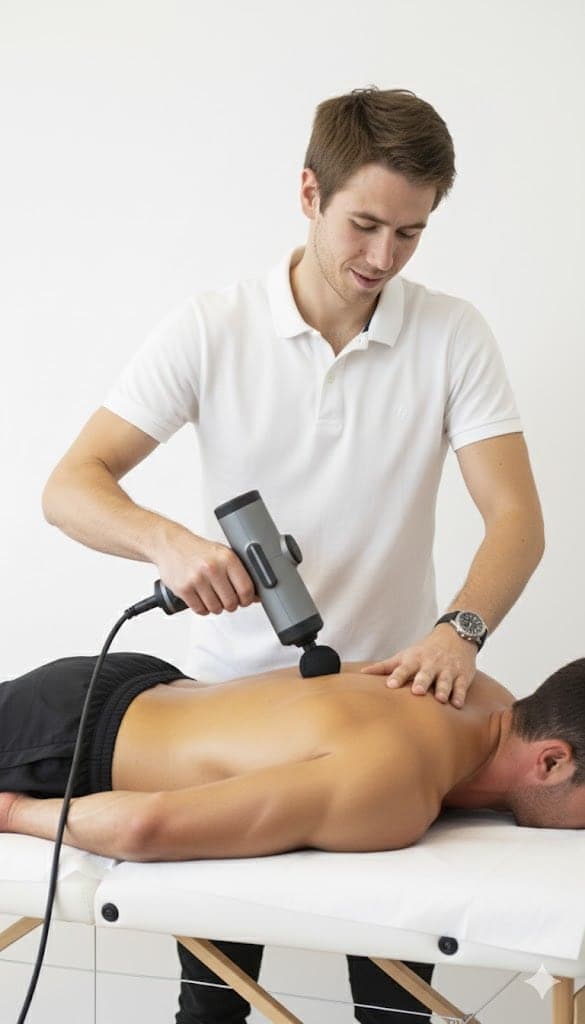
Written by
Chris
Massage therapist, nutrition and exercise physiologist
Norwegian-certified with a Bachelor’s in Physical Education and Nutrition and over ten years of clinical practice, working from a portable table in clients’ homes across the Paphos district.
This article is general information, not a medical diagnosis. If you have severe, worsening or unexplained pain, numbness, weakness, or pain after an accident, see a doctor first.