
Deep Tissue Massage Techniques: A Clinical Guide to Lasting Pain Relief
In short
Discover the advanced deep tissue massage techniques that deliver lasting results. Learn from a decade of clinical experience how precision mechanical methods outperform traditional approaches.
I remember the first time a client told me their chronic shoulder pain had completely disappeared after three weeks of treatment. Not “felt better.” Not “manageable.” Gone. That moment confirmed what I’d suspected throughout my education in Physical Education and Nutrition: most people are receiving the wrong type of massage for their actual problems.
After ten years of working exclusively with deep tissue techniques, I’ve learned something that contradicts much of what the wellness industry promotes: relaxation massage and deep tissue work are fundamentally different disciplines requiring completely different skills, tools, and expectations. One helps you unwind for a few hours. The other rebuilds your body’s mechanical function for years to come.
Deep tissue massage techniques are not simply “harder pressure” versions of Swedish massage. They represent a systematic, anatomically-informed approach to releasing chronic muscular tension, breaking down scar tissue, and restoring proper biomechanical patterns. When applied correctly, these techniques don’t just relieve symptoms temporarily—they eliminate the structural causes of pain.
Understanding Deep Tissue Massage Techniques at a Mechanical Level
The human musculoskeletal system operates on principles of tension, load distribution, and compensatory patterns. When one muscle group develops chronic tightness—whether from repetitive strain, injury, or postural dysfunction—the body automatically redistributes mechanical load to surrounding structures. This creates a cascade effect: secondary tension points, fascial restrictions, and eventually, pain that seems to migrate or worsen over time.
Traditional massage addresses surface-level muscle tension. Deep tissue massage techniques target the myofascial layers where chronic problems actually live. We’re talking about the dense connective tissue surrounding muscle fibers, the fascial planes between muscle groups, and the attachment points where tendons meet bone. This is where your body stores years of accumulated tension.
I’ve worked with professional athletes whose performance plateaued not because of training deficiencies, but because deep fascial restrictions limited their range of motion by 15-20 degrees. I’ve treated office workers whose “computer posture” had created such profound pectoral shortening that their shoulders were literally pulled forward, creating a mechanical cascade down their entire posterior chain.
The Biomechanical Reality of Chronic Tension
Your body doesn’t randomly develop tight spots. Every chronic tension point represents either a compensation pattern or a site of repetitive microtrauma. When I assess a client, I’m not looking for “knots”—I’m identifying mechanical inefficiencies in their movement system.
Consider the typical desk worker with neck pain. The superficial problem appears to be tight upper trapezius muscles. But the actual cause usually involves:
- Shortened pectoral muscles pulling the shoulders forward
- Weak deep cervical flexors failing to stabilize the head
- Fascial restrictions in the anterior shoulder limiting external rotation
- Compensatory hyperactivity in the upper trapezius attempting to maintain head position
Surface-level massage might temporarily relax the trapezius, providing a few hours or days of relief. Deep tissue massage techniques systematically address each component of this mechanical dysfunction, restoring normal movement patterns and eliminating the need for compensation.
Core Deep Tissue Massage Techniques: Clinical Applications
Myofascial Release and Fascial Manipulation
Fascia is the connective tissue network that wraps every muscle, organ, and structure in your body. When healthy, it’s supple and allows smooth, unrestricted movement. When restricted—through injury, inflammation, or chronic tension—it becomes dense, dehydrated, and adhesive.
Effective myofascial release requires sustained, directional pressure that literally reorganizes the collagen fibers within the fascial matrix. I apply this through my specialized mechanical tool, which maintains consistent pressure at depths and durations that human hands simply cannot sustain.
The technique involves:
- Identifying the primary restriction through palpation and movement assessment
- Applying graduated pressure perpendicular to the fascial plane
- Maintaining consistent force for 90-120 seconds to allow fascial reorganization
- Following the release with specific stretching to reinforce new tissue patterns
I’ve used this approach to treat everything from frozen shoulder syndrome to plantar fasciitis. The key is precision: targeting the exact fascial plane where restriction exists, not just pressing hard and hoping for results.
Trigger Point Therapy and Neuromuscular Technique
Trigger points are hyperirritable spots within taut bands of skeletal muscle that produce referred pain patterns. A trigger point in your gluteus medius doesn’t just cause hip pain—it can create referred pain down your entire lateral thigh, mimicking sciatic symptoms.
Traditional trigger point work involves applying ischemic pressure to deactivate these points. My approach integrates this with a deeper understanding of why the trigger point formed initially. A trigger point isn’t random; it develops because that muscle is under chronic mechanical stress, usually as a compensation for dysfunction elsewhere.
The mechanical advantage of my specialized tool transforms trigger point work. Human thumbs and elbows fatigue after minutes of sustained pressure. They also cannot maintain the exact angle and depth needed for optimal release. My equipment delivers:
| Factor | Manual Technique | Mechanical Technique |
|---|---|---|
| Pressure Depth | Variable, limited by therapist strength | Consistent, adjustable to millimeter precision |
| Duration | 2-3 minutes maximum before fatigue | Unlimited, maintaining consistent force |
| Precision | Affected by hand position, fatigue | Exact angle and depth maintained throughout |
| Consistency | Varies session to session | Identical results every treatment |
I recently treated a competitive cyclist with chronic IT band syndrome. Manual therapy had provided temporary relief but never resolved the underlying issue. Using precision mechanical trigger point work on his tensor fasciae latae and gluteus medius—combined with addressing hip flexor restrictions—we eliminated his pain completely within four weeks. He’s now training at higher volumes than before without recurrence.
Cross-Fiber Friction and Scar Tissue Remodeling
Scar tissue formation is your body’s emergency repair mechanism. When muscle fibers tear—whether from acute injury or chronic microtrauma—your body lays down collagen in a haphazard pattern to quickly close the gap. This creates areas of restricted, inflexible tissue that limit movement and create persistent pain.
Cross-fiber friction is the gold standard technique for breaking down pathological scar tissue and promoting organized collagen remodeling. The technique requires applying pressure perpendicular to muscle fiber direction while simultaneously creating controlled micro-trauma that stimulates proper healing.
This isn’t gentle work. It’s uncomfortable. But the results are transformative. I’ve treated chronic tendinopathies that had persisted for years, resistant to rest, stretching, and conventional therapy. The key is controlled aggression: enough force to remodel tissue without creating new injury.
My mechanical approach allows me to maintain the exact pressure and rhythm needed for optimal tissue remodeling across entire muscle groups. We’re not just “loosening” the area—we’re literally reorganizing the tissue structure at a cellular level.
Structural Integration and Postural Realignment
Your body is a tensegrity structure—a network of compression and tension elements that distribute force efficiently when properly balanced. Chronic pain almost always involves loss of this structural balance.
Structural integration techniques address full-body patterns, not isolated symptoms. When someone presents with lower back pain, I assess their entire posterior chain: foot mechanics, ankle mobility, hamstring length, hip flexor tightness, thoracic extension capability, and shoulder position. The lower back pain is usually the symptom of a pattern that extends far beyond the painful area.
I use sequential deep tissue work to systematically restore optimal alignment. This might involve:
- Releasing shortened anterior hip structures pulling the pelvis into anterior tilt
- Lengthening the erector spinae to reduce compensatory hyperactivity
- Mobilizing thoracic fascia to restore proper spinal curves
- Addressing shoulder girdle positioning to optimize weight distribution
This isn’t a one-session fix. Structural integration requires a planned sequence of treatments, each building on the previous session’s results. But unlike symptom-focused massage that provides temporary relief, this approach creates lasting changes in how your body distributes force and maintains position.
The Mechanical Advantage: Why Traditional Hands-On Techniques Have Inherent Limitations
I respect manual therapists. I learned traditional techniques during my education and early career. But after a decade of clinical work, I’ve reached an unavoidable conclusion: human hands have biomechanical limitations that compromise treatment effectiveness.
The Fatigue Factor
A therapist’s hands, thumbs, and elbows can deliver significant force—for a few minutes. Effective deep tissue work often requires sustained pressure at specific depths for 60-120 seconds or longer. Even well-conditioned therapists experience strength degradation and precision loss as they fatigue throughout a session.
Your third client of the day receives demonstrably less effective treatment than your first client, regardless of skill or intention. The seventh client? Even more compromised. This isn’t a failing of the therapist—it’s a biomechanical reality.
I’ve eliminated this variable entirely. My specialized mechanical tool delivers identical force, depth, and precision in minute one and minute sixty. Your treatment doesn’t depend on whether I’m fresh or fatigued. It doesn’t vary based on the time of day or how many clients I’ve seen previously.
Depth and Penetration Limitations
The deepest layers of muscular dysfunction often exist at depths that hands simply cannot effectively access. When a therapist applies maximum pressure, they’re limited by their own body weight and leverage. More importantly, they’re limited by pain tolerance—both yours and theirs.
The mechanics of thumb pressure illustrate this perfectly. To generate 40 pounds of focused pressure, a therapist must apply approximately 80-100 pounds of force through their thumb joint. This creates significant stress on their own tissues, limiting how long they can maintain that pressure and how precisely they can control it.
My mechanical technique applies 40 pounds of precisely calibrated pressure directly to the target tissue without any compromise. I can work at depths of 3-5 centimeters into dense muscle groups like the gluteus medius or quadratus lumborum—depths that would require body weight and elbow techniques manually, which sacrifice precision for depth.
Consistency and Reproducibility
The human variable creates inconsistency. Even the same therapist, treating the same client, will deliver slightly different treatment session to session. Pressure varies. Angles shift. Duration fluctuates. This makes it difficult to isolate what’s actually working and ensure progressive treatment intensity.
Mechanical precision eliminates this problem. When we identify the exact protocol that produces results for your specific condition, I can reproduce it perfectly in subsequent sessions. This allows for true progressive overload—systematically increasing depth, duration, or intensity to continue driving adaptation without guesswork.
Advanced Deep Tissue Massage Techniques for Specific Conditions
Chronic Lower Back Pain: Addressing the Lumbo-Pelvic-Hip Complex
Lower back pain is rarely about the lower back. In my experience, approximately 80% of chronic lumbar pain originates from restrictions and imbalances in the hip complex and its fascial connections.
The treatment approach targets:
Psoas Major and Iliacus: These hip flexors attach directly to the lumbar vertebrae. When chronically shortened—common in anyone who sits extensively—they create continuous anterior pull on the spine, forcing the erector spinae into compensatory hyperactivity. Releasing these structures requires precise work through the abdominal cavity that manual techniques struggle to achieve safely and effectively.
Quadratus Lumborum: This deep postural muscle connects the pelvis to the lower ribs. When one side becomes hypertonic, it creates lateral tilt and rotation that manifests as “one-sided” back pain. Effective release requires sustained pressure at depths of 4-5 centimeters through overlying muscle layers.
Thoracolumbar Fascia: This massive fascial sheet connects your lower extremities to your upper body. Restrictions here create global movement dysfunction that no amount of spinal manipulation can durably resolve.
I treated a construction worker who’d suffered intermittent back pain for eight years. He’d tried everything: chiropractic, physical therapy, anti-inflammatories, even contemplated surgery. Within six weeks of systematic deep tissue work targeting his hip complex and thoracolumbar fascia—not his symptomatic lower back—his pain completely resolved. Two years later, it hasn’t returned.
Shoulder Dysfunction: Rotator Cuff and Scapular Mechanics
Shoulder pain typically represents one of two patterns: anterior shoulder tightness restricting external rotation, or scapular dyskinesis causing impingement.
For anterior restrictions, the critical targets are:
- Pectoralis minor: pulling the scapula forward and downward
- Subscapularis: the internal rotator that becomes chronically shortened in forward-shoulder posture
- Anterior deltoid and biceps tendon: contributing to anterior humeral head positioning
The subscapularis presents a particular challenge. It’s hidden beneath the scapula, requiring precise work from the anterior shoulder and axilla. Manual work here is limited by access and the therapist’s ability to maintain position while generating adequate force.
My mechanical technique allows me to work at angles impossible to achieve manually, maintaining consistent pressure while the client moves through range-of-motion patterns. This active-release approach produces faster, more complete results than passive manual work.
Athletic Performance Enhancement: Hip Mobility and Power Generation
Athletes don’t need relaxation. They need mechanical efficiency. Every degree of restricted hip extension costs power in sprinting. Every millimeter of reduced ankle dorsiflexion compromises squat depth and force transmission.
I work with serious athletes to identify and eliminate mechanical restrictions that limit performance. This involves detailed assessment of movement patterns followed by targeted deep tissue work on specific limiting factors.
For a competitive runner I recently treated, we identified severe hip flexor restrictions limiting stride length. Three focused sessions on his psoas, rectus femoris, and anterior hip capsule increased his hip extension by 18 degrees. His 5K time improved by 47 seconds without changing his training program—purely from improved mechanical efficiency.
The Science Behind Effective Deep Tissue Massage Techniques
Tissue Adaptation and Mechanotransduction
Muscle and fascia respond to mechanical stress through a process called mechanotransduction. When you apply sustained pressure to tissue, you trigger cellular-level responses:
Fibroblast Activation: Sustained pressure stimulates fibroblasts—the cells responsible for producing collagen—to reorganize tissue structure. This is how we break down pathological scar tissue and promote functional collagen alignment.
Increased Local Circulation: Deep pressure creates reactive hyperemia—a flood of fresh blood to the area following release. This delivers nutrients and removes metabolic waste, accelerating tissue healing.
Neurological Reset: Sustained pressure on hypertonic muscle triggers the Golgi tendon organ reflex, causing the nervous system to reduce muscle firing. This isn’t just temporary relaxation—we’re reprogramming the neuromuscular setting that maintains chronic tension.
Why Depth and Duration Matter More Than Pressure Intensity
Inexperienced therapists often equate deep tissue work with maximum pressure. This is precisely wrong. Effective deep tissue massage techniques require optimal pressure—enough to reach target tissues and trigger adaptation, but not so much that the body’s protective mechanisms engage.
When you apply excessive pressure, the nervous system responds with protective muscle guarding. The target muscle contracts to prevent perceived tissue damage. This is counterproductive—you’re actually increasing tension while trying to release it.
The mechanical solution involves calibrated pressure at precise depths, maintained long enough for tissues to undergo genuine adaptation without triggering protective responses. My equipment allows me to find this optimal pressure point and maintain it perfectly, maximizing tissue response while minimizing discomfort and protective guarding.
Specialized Deep Tissue Massage Techniques for Common Conditions
IT Band Syndrome: Beyond the Foam Roller Myth
The iliotibial band is fascia, not muscle. It doesn’t “stretch” or “release” in the way muscles do. Yet countless people waste hours on foam rollers, creating temporary numbness they mistake for relief.
Effective treatment targets the structures that tension the IT band:
Tensor Fasciae Latae: The small muscle at the hip that tensions the IT band like a guitar string. Release here immediately reduces IT band tension.
Gluteus Medius and Minimus: When weak or inhibited, these hip stabilizers force the TFL into compensatory overwork, increasing IT band tension.
Lateral Thigh Fascia: The fascial connections between the IT band and quadriceps that transmit forces and create restriction patterns.
I can achieve in three targeted sessions what months of foam rolling cannot: genuine mechanical release of the structures causing IT band tension. The difference lies in precision—working the actual causative tissues, not just mashing the symptomatic area.
Frozen Shoulder: Capsular Restriction and Adhesive Capsulitis
Frozen shoulder involves actual shortening and thickening of the joint capsule, combined with severe muscular guarding. This condition requires aggressive, systematic deep tissue work combined with progressive loading.
The treatment sequence targets:
- Anterior capsule release through sustained pressure on subscapularis and anterior deltoid
- Posterior capsule work via infraspinatus and teres minor
- Scapular mobilization through releasing serratus anterior and rhomboid restrictions
- Progressive end-range loading to remodel capsular tissue
Traditional physical therapy often fails with frozen shoulder because the manual techniques cannot generate sufficient force to remodel capsular tissue. My mechanical approach delivers the necessary intensity while maintaining safety through precise control.
I treated a 52-year-old woman who’d suffered with frozen shoulder for 18 months. Previous therapy had plateaued at 90 degrees of flexion. Within eight weeks of systematic mechanical deep tissue work, she’d regained full overhead range—165 degrees of flexion—and returned to competitive swimming.
Plantar Fasciitis: Releasing the Entire Posterior Chain
Heel pain from plantar fasciitis is almost never just a foot problem. The plantar fascia is the terminal point of a fascial continuity that runs from the bottom of your foot, up through your Achilles, posterior leg, hamstrings, and all the way to your skull.
Effective treatment addresses:
- Plantar fascia itself: breaking down fibrotic tissue at the calcaneal attachment
- Achilles tendon: releasing restrictions that tension the plantar fascia
- Soleus and gastrocnemius: addressing muscular components of posterior leg tightness
- Hamstrings: releasing proximal restrictions in the posterior fascial chain
The mechanical advantage is critical for plantar work. The plantar fascia is incredibly dense tissue requiring significant sustained pressure. Manual thumb work fatigues within seconds and lacks the penetration needed for genuine tissue remodeling.
Assessment and Treatment Planning: The Clinical Approach
Comprehensive Movement Assessment
Before applying any deep tissue massage techniques, I conduct a systematic assessment to identify the actual mechanical problems driving your symptoms. This isn’t intuitive guesswork—it’s structured evaluation of:
Postural Analysis: Static positioning reveals chronic adaptation patterns and load distribution imbalances.
Range of Motion Testing: Active and passive ROM identifies which structures limit movement and whether restrictions are muscular, fascial, or capsular.
Functional Movement Screening: How you squat, lunge, and rotate reveals compensatory patterns and identifies primary movement dysfunctions.
Palpation and Tissue Quality Assessment: Identifying areas of fibrosis, trigger points, and fascial restriction through detailed manual examination.
This assessment determines not just where to work, but in what sequence. Releasing a secondary compensation before addressing the primary restriction often increases symptoms temporarily. Proper sequencing—addressing root causes before secondary adaptations—produces faster, more complete results.
Progressive Treatment Protocols
Effective deep tissue work follows progressive intensity principles. You don’t begin with maximum depth on session one. Your nervous system needs time to adapt to deep mechanical work.
My typical protocol structure:
Sessions 1-2: Establish baseline tissue quality, begin superficial to moderate depth work, assess tissue response and recovery.
Sessions 3-5: Increase depth and duration progressively, target primary restrictions identified in assessment, begin addressing compensatory patterns.
Sessions 6-8: Maximum depth work on primary restrictions, integrate movement training with tissue work, focus on lasting pattern correction.
Maintenance: Monthly or quarterly sessions to maintain optimal tissue quality and address new restrictions before they become chronic.
This structured approach produces genuine, lasting change. It’s not about booking endless sessions—it’s about systematically solving your mechanical problems so you don’t need continuous treatment.
Deep Tissue Massage Techniques vs. Other Manual Therapies
How Deep Tissue Differs from Swedish Massage
Swedish massage operates primarily on the nervous system, promoting parasympathetic activation and general relaxation. The techniques—effleurage, petrissage, tapotement—work superficial to moderate tissue layers with rhythmic, flowing movements.
Deep tissue massage techniques work on the structural system: muscles, fascia, tendons, and their attachment points. The goal isn’t relaxation—it’s mechanical change. The techniques are slower, more focused, and significantly deeper.
The confusion between these modalities creates unrealistic expectations. People book “deep tissue massage” expecting relaxation with harder pressure. What they actually need is therapeutic deep tissue work targeting specific dysfunctions. These are fundamentally different services requiring different skills, tools, and treatment approaches.
Deep Tissue Massage vs. Physical Therapy
Physical therapy emphasizes active rehabilitation: exercises, stretching, movement pattern correction. These are valuable approaches. But they assume your tissues are capable of performing the prescribed movements correctly.
When severe fascial restrictions or trigger points limit range of motion, prescribing stretching or strengthening exercises is often ineffective. You cannot strengthen muscles through their full range if fascial restrictions prevent accessing that range. You cannot correct movement patterns when chronic tension forces compensation.
Deep tissue massage techniques create the tissue conditions that make physical therapy effective. By releasing restrictions first, we enable proper movement patterns and full-range strengthening. This is why combining deep tissue work with targeted exercise produces superior results to either approach alone.
Deep Tissue vs. Chiropractic Adjustment
Chiropractic manipulation addresses joint position and mobility. When effective, it can immediately restore range of motion and reduce pain. But if muscular and fascial restrictions pull the joint back into dysfunction, the adjustment won’t hold.
I frequently work with clients who’ve experienced temporary relief from chiropractic care but find their symptoms return within days or weeks. The adjustment was appropriate, but without addressing the soft tissue restrictions that caused the joint dysfunction, the pattern simply reasserts itself.
The optimal approach often combines both: deep tissue work to release muscular and fascial restrictions, followed by chiropractic adjustment to restore proper joint alignment. This addresses both the soft tissue and skeletal components of dysfunction.
Client Education: Understanding What to Expect from Deep Tissue Massage Techniques
Sensation During Treatment
Deep tissue work is not comfortable in the conventional sense. You’ll experience sensations ranging from “productive discomfort” to “that’s intense but tolerable.” This is normal and expected. We’re working at depths and intensities that trigger genuine tissue adaptation.
The key distinction: discomfort should be productive, not damaging. You should feel deep pressure and strong sensation, but not sharp, shooting, or burning pain. I constantly calibrate intensity to maintain optimal pressure—deep enough to be effective, controlled enough to avoid protective responses.
Many clients describe the sensation as “hurts so good”—uncomfortable in the moment but followed by immediate improvement in mobility and pain reduction. This is the hallmark of effective deep tissue work done at appropriate intensity.
Post-Treatment Response and Recovery
After deep tissue massage techniques, your body continues responding for 48-72 hours. Expect:
Immediate Effects: Increased range of motion, reduced pain, sensation of “lightness” or improved posture.
24-48 Hour Response: Possible soreness similar to post-exercise muscle soreness. This is tissue remodeling, not damage. Hydration and light movement facilitate recovery.
72+ Hours: Progressive improvement as tissues complete initial adaptation and compensatory patterns begin releasing.
I always provide specific post-treatment protocols: hydration targets, movement recommendations, and indicators of normal vs. concerning responses. This ensures optimal tissue adaptation and prepares your body for progressive treatment.
Treatment Frequency and Duration
The question I hear most: “How many sessions will I need?”
Honest answer: It depends entirely on chronicity and complexity. Recent onset tension (weeks to months) typically responds within 3-5 focused sessions. Chronic dysfunction (years of accumulated tension and compensation) requires 8-12 sessions minimum for lasting resolution.
I don’t believe in endless maintenance massage. My goal is to solve your mechanical problems, teach you how to maintain the results, and reduce treatment frequency to occasional optimization sessions. If you’re seeing me weekly for months without progressive improvement, something is wrong with either the diagnosis or the treatment approach.
The Investment Perspective: Cost vs. Value in Deep Tissue Work
Comparing Treatment Approaches
Let’s be direct about economics. Quality deep tissue massage techniques aren’t cheap. A single session with me costs more than multiple sessions at a spa. But we’re not offering comparable services.
| Approach | Typical Duration | Results Timeline | Permanence |
|---|---|---|---|
| Spa Massage | Ongoing weekly/monthly | Hours to days | Temporary relief only |
| Standard Physical Therapy | 2-3 sessions/week for 6-8 weeks | Weeks to months | Moderate if exercises continued |
| Chiropractic | Variable, often 2-3x/week initially | Days to weeks | Variable without soft tissue work |
| Specialized Mechanical Deep Tissue | 6-12 sessions over 2-3 months | Progressive improvement weekly | Lasting when properly maintained |
When you calculate total cost and time investment, intensive short-term treatment that produces lasting results represents far better value than indefinite maintenance of chronic conditions.
Quantifying Results
I track objective measures with every client:
- Range of motion changes (measured in degrees)
- Pain levels (0-10 scale, tracked across activities)
- Functional capacity (activities previously limited or impossible)
- Treatment frequency reduction over time
A typical successful case progression: Session 1-3 show 30-40% improvement in primary symptoms. Sessions 4-6 achieve 60-80% resolution. Sessions 7-10 reach full functional restoration. Maintenance becomes quarterly or less.
Compare this to ongoing weekly massage that provides temporary relief but never resolves underlying dysfunction. Over a year, you might spend equivalent amounts, but with deep tissue work, you’re progressing toward resolution rather than managing chronic symptoms indefinitely.
Self-Care Integration: Maintaining Deep Tissue Massage Results
Movement Homework: Not Optional
Deep tissue massage techniques create the tissue conditions for proper movement. But if you return to the same positions and patterns that created the dysfunction initially, restriction will redevelop.
I provide every client with specific movement homework:
Positional Awareness: Understanding the positions that created your dysfunction and consciously modifying them.
Targeted Stretching: Not generic flexibility work, but specific stretches maintaining the length we’ve created in shortened structures.
Activation Exercises: Strengthening weak, inhibited muscles to prevent compensatory patterns from reasserting.
Progressive Loading: Gradually increasing demands on the newly-restored movement patterns to solidify adaptations.
This isn’t a 45-minute daily routine. Most clients need 10-15 minutes of targeted work, ideally twice daily initially, then once daily for maintenance. Small investment, massive return.
Hydration and Tissue Quality
Fascia is a collagen matrix suspended in ground substance—essentially a gel-like medium that allows tissue sliding and force transmission. When dehydrated, this ground substance becomes more viscous, increasing friction and restriction.
Proper hydration isn’t just about drinking water. It requires:
- Adequate total fluid intake (minimum 0.5 oz per pound of body weight)
- Electrolyte balance to facilitate cellular hydration
- Movement to promote fluid circulation through fascial layers
I’ve seen dramatically different treatment responses between well-hydrated and chronically dehydrated clients. Proper hydration can reduce required treatment sessions by 30-40% because tissues respond more completely to intervention.
The Role of Sleep in Tissue Remodeling
Tissue adaptation happens during recovery, not during treatment. The deep tissue massage techniques I apply initiate the remodeling process, but actual structural change occurs during sleep when growth hormone and other anabolic processes peak.
Clients who sleep poorly see significantly slower progress. If you’re serious about resolving chronic pain or optimizing performance, sleep quality is non-negotiable. I often recommend sleep position modifications to avoid recreating the tension patterns we’re working to eliminate.
Advanced Applications: Sport-Specific Deep Tissue Protocols
Cycling: Addressing Hip Flexor Dominance and Anterior Chain Restrictions
Cyclists develop predictable dysfunction patterns. Extended time in hip flexion shortens the psoas and rectus femoris while the glutes weaken from underutilization. This creates anterior pelvic tilt, lower back compression, and eventually chronic pain.
The cycling-specific protocol targets:
- Aggressive psoas release to restore neutral pelvic positioning
- Quadriceps work focusing on rectus femoris and vastus intermedius
- Adductor release to improve hip abduction capacity
- Glute activation integration to prevent pattern recurrence
I worked with a competitive ultra-endurance cyclist who’d developed severe lower back pain limiting him to 3-hour rides maximum. His limitation wasn’t cardiovascular or muscular endurance—it was mechanical dysfunction from years of hip flexor shortening. Eight weeks of intensive deep tissue work focused on his anterior hip complex restored his capacity to 8+ hour rides pain-free.
Running: Posterior Chain Optimization and Gait Mechanics
Running economy depends heavily on posterior chain function: glutes, hamstrings, and calf complex must work in coordinated sequence to generate propulsion efficiently. Restrictions anywhere in this chain compromise performance and increase injury risk.
Running-specific deep tissue work addresses:
Hamstring Quality: Not just length, but tissue quality and the ability to eccentrically control force during the late swing phase.
Calf Complex Function: Both gastrocnemius and soleus require optimal length and the ability to store and release elastic energy efficiently.
Hip Extension Capacity: Limited by hip flexor tightness, this is often the primary restriction limiting running economy.
The mechanical precision I apply allows work at depths and intensities that would be impossible manually, particularly in dense tissue like the gastrocnemius and hamstring origins. This produces measurably improved running mechanics, not just symptomatic pain relief.
Strength Sports: Recovery and Mobility for Maximum Performance
Powerlifters and weightlifters accumulate dense scar tissue and fascial restrictions from repeated high-load training. These restrictions don’t just limit mobility—they create asymmetries that increase injury risk and reduce force production.
The strength athlete protocol emphasizes:
- Pectoral and anterior shoulder work to maintain thoracic extension for optimal bench press mechanics
- Deep hip work preserving hip flexion depth and reducing compensatory lumbar flexion in squats
- Upper back and lat mobility maintaining optimal pulling positions
- Targeted recovery work on muscles showing chronic tension or reduced function
I’ve helped multiple strength athletes add 10-15% to their competition totals purely through improved positioning enabled by better tissue quality and mobility. This isn’t about making them “feel better”—it’s about optimizing the mechanical system that generates force.
Common Misconceptions About Deep Tissue Massage Techniques
Myth: Deeper Is Always Better
Maximum pressure is not the goal. Optimal pressure—enough to reach target tissues and trigger adaptation without causing protective guarding—produces superior results. I’ve seen therapists create extensive bruising and trauma while achieving minimal therapeutic benefit because they equated intensity with effectiveness.
The mechanical approach allows me to calibrate pressure precisely to your tissue tolerance and needs. We work at the depth that produces results, not the depth that proves toughness.
Myth: Pain Should Disappear Immediately
While you’ll often experience immediate improvements in range of motion and pain reduction, complete resolution of chronic conditions requires time. Tissues that developed restrictions over months or years need weeks to fully remodel and adapt.
Setting realistic expectations is crucial. I tell clients: “You’ll feel different after session one. You’ll feel significantly better by session three. You’ll feel like a different person by session eight.” This timeline reflects the biological reality of tissue adaptation, not marketing promises.
Myth: Once Fixed, Problems Never Return
Deep tissue massage techniques can durably resolve specific restrictions and dysfunctions. But if you return to the exact movement patterns, postures, and loads that created the problem initially, restriction will eventually redevelop.
Maintenance isn’t about indefinite weekly massage. It’s about:
- Maintaining movement quality through targeted daily exercises
- Modifying problematic positions and patterns
- Periodic tune-up sessions to address new restrictions before they become chronic
Clients who integrate movement homework maintain results indefinitely with minimal maintenance work. Those who don’t inevitably redevelop problems.
Frequently Asked Questions About Deep Tissue Massage Techniques
How much pain should I expect during treatment?
You’ll experience significant pressure and discomfort, particularly when working areas of severe restriction or trigger points. On a 0-10 scale, we typically work in the 6-7 range: clearly uncomfortable but not intolerable. This intensity is necessary to trigger tissue adaptation. However, sharp, burning, or radiating pain indicates excessive intensity and should be immediately reported. The mechanical precision of my tool allows instant pressure modulation to maintain optimal intensity throughout treatment.
How is mechanical deep tissue work different from manual techniques?
Manual techniques are limited by human biomechanical constraints: therapist strength, endurance, and precision all degrade during treatment. My specialized mechanical tool maintains identical force, depth, and angle indefinitely. This means deeper penetration into dense tissues, longer sustained pressure for complete fascial release, and perfect consistency across all treatments. The result is faster, more complete resolution of chronic restrictions compared to even the most skilled manual work.
Can deep tissue massage techniques help with conditions doctors haven’t been able to resolve?
Many chronic pain conditions that resist conventional medical treatment involve mechanical dysfunction that imaging and standard examinations don’t identify. I’ve worked with clients who’ve undergone extensive medical workups showing “nothing wrong” structurally, yet they suffer daily pain and limitation. Often, these cases involve complex fascial restriction patterns or trigger point networks that only respond to systematic deep tissue intervention. While I’m not diagnosing or treating medical conditions, I’m addressing mechanical dysfunction that frequently underlies unexplained chronic pain.
How long do results from deep tissue massage last?
Immediate improvements in range of motion and pain reduction can last days to weeks after a single session. Complete resolution of chronic patterns requires completing a full treatment protocol—typically 8-12 sessions—and creates lasting structural change. However, maintenance depends on your daily movement patterns and load management. Clients who integrate movement homework maintain results indefinitely with quarterly or less frequent tune-up sessions. Those who return to problematic patterns will eventually redevelop restrictions, though usually less severe than initially.
Is deep tissue massage safe for everyone?
Deep tissue massage techniques are contraindicated in certain conditions: active infection or inflammation, recent surgery or acute injury, bleeding disorders, or certain medications affecting tissue integrity. Osteoporosis, advanced age, and certain chronic conditions require modified approaches. I conduct thorough health history assessment before treatment and adjust protocols based on individual factors. The mechanical precision actually increases safety for many populations because I can work effectively at lighter intensities, avoiding the excessive force sometimes used in manual work attempting to achieve depth.
What makes your approach different from other deep tissue therapists?
Three factors distinguish my work: mechanical precision eliminating human inconsistency, systematic protocols based on biomechanical assessment rather than symptom chasing, and a results-driven philosophy focused on lasting resolution rather than ongoing management. I travel to your location with professional equipment, conduct comprehensive movement assessment, develop customized treatment plans, and integrate education ensuring you maintain results independently. This is therapeutic intervention, not wellness massage.
How should I prepare for a deep tissue massage session?
Optimal preparation includes: adequate hydration (begin increasing fluid intake 24 hours before), avoiding large meals within 2 hours of treatment, wearing comfortable clothing allowing access to treatment areas, and completing any pre-session movement assessment tasks I’ve assigned. Importantly, don’t stretch aggressively or apply heat immediately before treatment—these can alter tissue quality and affect assessment accuracy. Post-session, plan for light activity rather than intense training, as your tissues will be actively remodeling for 48-72 hours following treatment.
Can deep tissue massage techniques prevent future injuries?
Absolutely. Many injuries result from accumulated mechanical dysfunction that creates compensatory movement patterns and asymmetrical loading. By maintaining optimal tissue quality, range of motion, and movement mechanics through periodic deep tissue work, you significantly reduce injury risk. I work with numerous athletes who’ve eliminated chronic recurring injuries—hamstring strains, shoulder impingements, IT band syndrome—through systematic deep tissue maintenance addressing the mechanical root causes rather than repeatedly treating acute symptoms.
The Clinical Realities: What Deep Tissue Massage Can and Cannot Do
Realistic Expectations for Chronic Pain Resolution
I can resolve muscular and fascial dysfunction. I can restore optimal tissue quality, eliminate trigger points, and restore full range of motion. These interventions frequently relieves chronic pain that’s persisted for years and resisted other treatments.
I cannot repair damaged joints, reverse degenerative disc disease, or cure neurological conditions. When structural pathology exists—genuine herniation, advanced osteoarthritis, nerve damage—deep tissue work may improve function and reduce compensatory pain, but it won’t reverse the underlying pathology.
Proper assessment distinguishes between cases where deep tissue massage techniques will produce complete resolution and cases where they’ll provide significant improvement within inherent limitations. I’m transparent about these distinctions during initial consultation.
When to Pursue Medical Evaluation
Certain presentations warrant medical evaluation before or concurrent with deep tissue treatment:
- Pain that worsens progressively despite appropriate treatment
- Neurological symptoms: numbness, tingling, weakness, or loss of coordination
- Pain accompanied by unexplained weight loss, fever, or systemic illness
- Trauma-related pain or suspected fracture
- Pain that significantly disrupts sleep despite position modification
I maintain relationships with orthopedic specialists, neurologists, and physical therapists for appropriate referrals when indicated. Effective care sometimes requires multidisciplinary approaches, and recognizing these situations is part of professional practice.
Conclusion: The Path to Mechanical Excellence
Deep tissue massage techniques, properly applied with mechanical precision and biomechanical understanding, represent one of the most effective interventions for chronic musculoskeletal dysfunction. The difference between temporary symptom relief and lasting problem resolution lies in systematic application of techniques targeting actual mechanical causes rather than surface-level symptoms.
My decade of clinical experience has taught me that most people are receiving the wrong treatment for their problems. They’re getting relaxation massage when they need therapeutic intervention. They’re addressing symptoms when the cause lies elsewhere in the kinetic chain. They’re accepting ongoing management when lasting resolution is achievable.
The specialized mechanical techniques I’ve developed eliminate the inherent limitations of manual therapy: inconsistency, fatigue, and depth restrictions. This allows me to deliver genuinely superior results—not through more effort or better intentions, but through biomechanical advantages that make effective treatment possible.
If you’ve been managing chronic pain or restriction for months or years, if you’ve tried multiple approaches without lasting results, if you’re ready to invest in lasting resolution rather than temporary relief, this is the approach that will finally deliver the results you’ve been seeking.
I bring professional equipment to your location, conduct comprehensive assessment, develop customized protocols, and work with you until we’ve resolved your mechanical dysfunction completely. This is not relaxation therapy. This is clinical intervention producing measurable, lasting improvements in how your body moves and functions.
The question isn’t whether deep tissue massage techniques can help your specific condition. The question is whether you’re ready to commit to the process required for genuine resolution. Because unlike temporary symptom management, lasting mechanical change requires sustained effort, tolerance for productive discomfort, and integration of movement practices that maintain the results we create together.
That’s the honest reality of deep tissue work done properly. And that’s exactly why it works when other approaches fail.
Evidence and limits
Massage may help with some symptoms, but benefits and evidence vary by condition. It does not replace medical assessment or treatment. A page update is not evidence of an independent clinical review.
Further reading: Massage therapy: evidence, safety and limitations by US National Center for Complementary and Integrative Health. This is general background reading, not verification of every claim in this article.
How we describe evidence and updates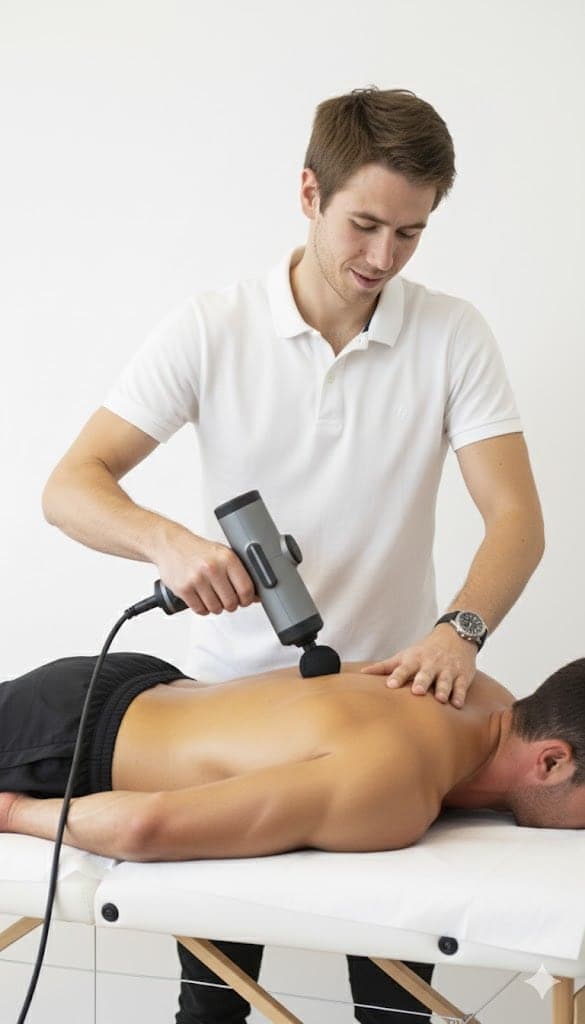
Written by
Chris
Massage therapist, nutrition and exercise physiologist
Norwegian-certified with a Bachelor’s in Physical Education and Nutrition and over ten years of clinical practice, working from a portable table in clients’ homes across the Paphos district.
This article is general information, not a medical diagnosis. If you have severe, worsening or unexplained pain, numbness, weakness, or pain after an accident, see a doctor first.