
Couples Massage at Home Chloraka: Professional Deep Tissue Treatment for Two
In short
Experience clinical-grade couples massage at home in Chloraka with advanced mechanical deep-tissue therapy. Unlike traditional spa treatments, this results-driven approach targets pain at its source for lasting relief.
When couples in Chloraka contact me about booking a massage together, they typically expect a relaxing spa experience with aromatherapy and soft music. I tell them immediately: that’s not what I do. What I offer is something fundamentally different—a clinical, results-driven mechanical deep-tissue treatment that addresses the actual biomechanical dysfunction causing your pain and limitation. And yes, I can treat both of you simultaneously in the comfort of your own home.
After ten years specializing in advanced body mechanics and treating everyone from chronic pain sufferers to elite athletes, I’ve seen countless couples struggling with the same issue: they’ve tried conventional massage, yoga retreats, and wellness packages, yet the underlying problems persist. The reality is simple—traditional hands-on massage, no matter how skilled the therapist, cannot achieve the depth, precision, and consistency required to durably resolve most musculoskeletal dysfunctions.
Why Couples in Chloraka Choose Mechanical Deep Tissue Over Traditional Massage
I earned my Bachelor’s degree in Physical Education and Nutrition in Norway, where I studied the intricate relationship between biomechanics, muscle function, and systemic health. Throughout my career, I’ve worked with bodies that had been through years of “relaxation massage” without meaningful improvement. The pattern became undeniable: gentle, superficial techniques simply cannot access the deep fascial restrictions and trigger points that generate chronic pain patterns.
The specialized mechanical system I use delivers three critical advantages that human hands physiologically cannot match:
Precision That Targets the Root Cause
When I treat couples at their home in Chloraka, I begin with a detailed assessment of each person’s specific mechanical dysfunctions. One partner might present with chronic cervical tension from desk work, while the other suffers from lumbar strain due to poor lifting mechanics. The machine I employ allows me to work with millimeter-level accuracy, targeting exactly the adhesions, trigger points, and fascial restrictions causing the symptoms—not just rubbing the surface where pain is perceived.
Last month, I worked with a couple in their forties who had been dealing with matching shoulder problems. She had frozen shoulder developing for two years; he had rotator cuff impingement from tennis. Traditional massage therapists had worked on their shoulders repeatedly without success. Within three sessions using my mechanical protocol, both experienced significant range-of-motion improvements because we addressed the actual fascial restrictions in the subscapularis, infraspinatus, and surrounding structures—tissue layers that hands simply cannot effectively penetrate.
Power to Reach Therapeutic Depth
Here’s what most people don’t understand about muscle tissue: the problems causing your chronic pain typically exist 3-5 centimeters beneath the skin surface, embedded in deep fascial layers. Human thumbs and elbows, regardless of the therapist’s strength, face anatomical limitations. They fatigue. They cannot maintain consistent pressure at therapeutic depth for extended periods. And frankly, attempting to do so often causes compensatory injuries to the therapist themselves.
The mechanical system I’ve refined over the past decade delivers consistent, controllable force that can be adjusted from gentle superficial work up to powerfully deep athletic treatment. For couples massage at home in Chloraka, this means I can customize the intensity precisely to each partner’s tolerance and therapeutic requirements within the same session.
Consistency That Guarantees Results
I don’t have “off days.” The machine doesn’t get tired. Every treatment delivers exactly the same quality, pressure, and effectiveness. When I commit to treating a couple, they receive identical therapeutic intensity whether it’s our first session or our fifteenth. This consistency is paramount for achieving lasting results, not temporary relief that disappears within 48 hours.
| Treatment Aspect | Traditional Hands-On Massage | Mechanical Deep Tissue Protocol |
|---|---|---|
| Maximum Effective Depth | 1-2 cm (superficial fascia only) | 4-6 cm (deep fascial layers and attachments) |
| Pressure Consistency | Decreases as therapist fatigues | Perfectly consistent throughout session |
| Precision Targeting | General area (palm/thumb width) | Millimeter-level accuracy |
| Treatment Focus | Symptom relief (temporary) | Root cause resolution (lasting) |
| Results Duration | 24-72 hours of relief | Progressive, cumulative improvement |
| Customization Range | Limited by therapist’s strength | Fully adjustable from light to athletic intensity |
What Couples Can Expect During a Home Treatment in Chloraka
I travel to your location with everything required: professional treatment benches, the specialized mechanical system, and all necessary equipment. This isn’t a compromise in quality—it’s actually superior to working in a clinic environment because you’re in your own comfortable space, and the logistics of coordinating schedules for two people become dramatically simpler.
The session begins with a comprehensive assessment. I examine both partners’ posture, range of motion, and movement patterns. Where are the mechanical compensations? What postural distortions have developed? Which muscle groups are hypertonic and restricting proper biomechanics? This evaluation informs a customized treatment plan for each individual.
The Treatment Process
I work systematically through the dysfunctional chains in the body. If one partner presents with chronic lower back pain, I’m typically treating the hip flexors, quadratus lumborum, and erector spinae group—but I’m also addressing the hamstrings, glutes, and thoracolumbar fascia. Pain is rarely caused by the location where it’s perceived. It manifests at the weakest point in a dysfunctional kinetic chain.
The mechanical system allows me to maintain therapeutic pressure at the precise depth and angle required to release fascial adhesions without causing tissue damage or excessive inflammation. Clients often describe the sensation as “intense but productive”—there’s a clear distinction between therapeutic discomfort and harmful pain. Throughout the treatment, I adjust intensity based on real-time feedback and tissue response.
For couples massage at home in Chloraka, the advantage of simultaneous treatment becomes evident: partners can share the experience, understand each other’s physical challenges, and commit together to the necessary lifestyle modifications that support long-term results.
Why Special Occasions Require More Than Relaxation
Many couples contact me specifically for anniversaries, birthdays, or before important events. They want something meaningful—not just candles and essential oils. What I offer is an investment in your actual physical wellbeing, something that continues delivering value long after the session ends.
I worked with a couple last year who booked treatment before their hiking trip through the Akamas Peninsula. Both were in their fifties with decades of accumulated postural dysfunction and movement restrictions. Three sessions of mechanical deep tissue work prepared their bodies properly: we resolved chronic knee tracking issues, addressed hip mobility limitations, and eliminated the shoulder tension that had plagued them for years. They completed the hike pain-free and sent me photos from the top. That’s the difference between treating symptoms and optimizing function.
The Investment Mindset
I’m direct with clients: this is not an expense; it’s an investment in your long-term physical capacity. The question isn’t “How much does it cost?” but rather “What’s the cost of not addressing these dysfunctions?” Chronic pain doesn’t improve with time—it compounds. Biomechanical inefficiencies create compensatory patterns that cascade throughout the kinetic chain, generating additional problems.
When couples in Chloraka choose this treatment, they’re committing to a partnership focused on measurable outcomes. I don’t offer one-off “feel-good” sessions. I develop customized protocols based on each person’s specific dysfunctions, with clear benchmarks for improvement: increased range of motion, reduced pain scales, enhanced performance in daily activities.
Common Conditions I Address in Couples Treatments
The beauty of working with couples simultaneously is that I often see complementary dysfunction patterns. Office workers develop similar postural distortions. Active couples accumulate parallel overuse injuries. Here are the conditions I most frequently address during couples massage at home in Chloraka:
- Chronic cervical tension and forward head posture from prolonged computer use
- Lumbar pain and sacroiliac dysfunction from sitting, driving, or repetitive bending
- Shoulder impingement syndromes and rotator cuff restrictions
- Hip flexor tightness and mobility limitations affecting gait patterns
- Thoracic outlet syndrome and nerve compression issues
- Plantar fasciitis and ankle mobility restrictions
- Sports-related overuse injuries in runners, cyclists, and tennis players
- Post-injury rehabilitation requiring deep fascial release
The Biomechanical Approach to Pain Resolution
My methodology is grounded in understanding that pain is almost always a mechanical problem requiring a mechanical solution. When I assess a client complaining of knee pain, I’m examining ankle dorsiflexion, hip internal rotation, and pelvic alignment. The knee is simply manifesting dysfunction originating elsewhere in the kinetic chain.
This is why conventional massage fails so consistently: therapists treat the painful area without addressing the root cause. They work on your tight upper trapezius without releasing the levator scapulae, pectoralis minor, and scalenes that are causing the compensatory pattern. Temporary relief occurs, but the dysfunction persists.
With mechanical deep tissue, I can systematically work through the entire dysfunctional chain at therapeutic depth, releasing the restrictions that are generating the problem. Results aren’t just subjective—they’re measurable in range of motion, strength testing, and functional movement patterns.
The Chloraka Advantage: Home Treatment Logistics
Chloraka’s residential layout makes home treatment particularly convenient. I bring professional-grade equipment directly to your property, whether you’re in a villa near the coast or an apartment in the village center. The setup takes approximately ten minutes, and the treatment environment is fully professional—this isn’t a compromise.
For couples, the home setting eliminates the coordination challenges of traveling to a clinic, waiting in reception areas, and managing post-treatment logistics. You’re immediately in your comfortable environment after the session, which is actually therapeutically beneficial. The body continues processing the treatment for 24-48 hours, and being in a familiar, relaxed setting supports optimal recovery.
What I Provide
When I arrive at your location in Chloraka, I bring:
- Two professional treatment benches with appropriate positioning supports
- The specialized mechanical deep tissue system with adjustable intensity controls
- All necessary sanitation and hygiene protocols
- Assessment tools for measuring range of motion and functional improvements
- Post-treatment protocols and self-care recommendations customized to your specific dysfunctions
The only requirement from you is adequate space—typically a bedroom or living area with approximately 4×4 meters of floor space for two benches and movement around them. Climate control is helpful but not essential; I work effectively in various environmental conditions.
Progressive Treatment Plans for Lasting Results
I don’t believe in one-off treatments. Couples massage at home in Chloraka works best as a structured program with measurable benchmarks. The first session establishes baseline function and begins releasing superficial restrictions. Subsequent treatments progressively address deeper fascial layers and more complex dysfunctional patterns.
A typical progression might look like this:
| Session Phase | Treatment Focus | Expected Outcomes |
|---|---|---|
| Sessions 1-2 | Assessment and superficial fascial release | Initial pain reduction, improved surface mobility |
| Sessions 3-5 | Deep fascial restrictions and trigger point resolution | Significant range of motion gains, reduced compensatory patterns |
| Sessions 6-8 | Kinetic chain optimization and performance enhancement | Restored functional movement, enhanced daily performance |
| Maintenance | Monthly sessions preventing dysfunction recurrence | Sustained results, continued optimization |
The commitment required varies based on the severity and chronicity of dysfunction. Someone with acute strain from a recent injury might need 3-4 sessions. A client with decades of accumulated postural dysfunction and multiple compensatory patterns might require 8-10 sessions to achieve full resolution. I provide honest assessments based on what I observe during the initial evaluation.
Who Benefits Most from This Approach
I’m not the right therapist for everyone. If you’re seeking purely recreational relaxation massage with aromatherapy, there are dozens of spas in the Paphos region that provide that service. What I offer is clinical treatment for people serious about resolving actual physical dysfunctions.
Ideal Client Profiles
Couples who benefit most from my services typically fall into these categories:
- Chronic Pain Sufferers: You’ve tried conventional massage, physiotherapy, and medication without lasting relief. Your pain has persisted for months or years, and you’re ready to address the actual mechanical cause.
- Active Couples: You’re runners, cyclists, tennis players, or fitness enthusiasts dealing with overuse injuries, performance limitations, or recurring strains that keep interrupting your training.
- Desk Workers: Both partners work in office environments and have developed matching postural dysfunctions: forward head posture, rounded shoulders, lower back pain, and hip tightness.
- Pre-Event Preparation: You have an important physical event approaching—a hiking trip, sports competition, or extended travel—and want your bodies functioning optimally.
- Results-Oriented Individuals: You’re not interested in temporary relief; you want lasting resolution of the biomechanical problems causing your symptoms.
What Disqualifies Someone
I’m equally clear about who isn’t appropriate for this treatment. If you have acute inflammation, recent surgery, certain systemic conditions, or unstable cardiovascular issues, mechanical deep tissue work may be contraindicated. I conduct thorough health screening during the initial consultation to identify any risk factors.
Additionally, if your expectation is purely relaxation without therapeutic intervention, we’re not a good match. I don’t provide gentle, superficial massage designed to help you fall asleep. I provide intensive mechanical treatment designed to durably resolve dysfunction.
The Science Behind Mechanical Deep Tissue
Understanding why this approach works requires basic knowledge of fascial anatomy and biomechanics. Fascia is the connective tissue system that surrounds and interpenetrates every muscle, organ, nerve, and blood vessel in your body. When fascia becomes restricted through injury, inflammation, repetitive strain, or postural dysfunction, it generates enormous tensile forces—up to 2,000 pounds per square inch.
These restrictions create dysfunctional movement patterns. Your body compensates around them, generating secondary problems throughout the kinetic chain. Over time, you develop a cascade of dysfunction: restricted hip mobility causes altered gait mechanics, which overloads the knee, which creates compensatory ankle stiffness, which eventually generates plantar fasciitis. The foot pain is real, but the cause originated in the hip.
Why Depth Matters
Superficial massage techniques—Swedish, relaxation, aromatherapy—work exclusively in the top 1-2 centimeters of tissue. They affect skin, superficial fascia, and the outermost muscle layers. This can temporarily reduce cortisol, improve circulation, and create subjective feelings of relaxation. It does not resolve deep fascial restrictions.
The mechanical system I use, applied with appropriate clinical knowledge, can effectively treat tissue at 4-6 centimeters depth. This reaches the deep fascial planes, tendinous attachments, and trigger points that generate most chronic pain patterns. The difference in therapeutic outcome is not incremental—it’s categorical.
I worked with an engineer in Chloraka last year who appreciated this mechanical explanation. He’d been dealing with chronic hip pain for five years, had tried every conventional treatment, and was contemplating surgery. Within six sessions of targeted mechanical deep tissue work on his iliopsoas, rectus femoris, and deep hip rotators, his range of motion normalized and pain resolved completely. Two years later, he remains pain-free because we addressed the actual restriction, not just the symptom.
Addressing Common Concerns About Mechanical Treatment
I’ve answered these questions hundreds of times from couples in Chloraka considering this treatment:
Is It Painful?
There’s therapeutic discomfort, yes. Deep fascial release involves working at intensities that create strong sensations—clients describe it as “intense,” “productive,” or “the right kind of pain.” This is fundamentally different from harmful pain. Throughout treatment, you maintain complete control. If intensity exceeds your tolerance, I adjust immediately. The goal is working at the therapeutic threshold, not causing tissue damage or excessive inflammation.
How Is This Different from Deep Tissue Massage?
What most therapists call “deep tissue massage” is still hands-on work with the same anatomical limitations I’ve described. They press harder, use elbows instead of palms, but they’re still constrained by human physiology. The mechanical system I employ generates consistent therapeutic force at precise angles that hands cannot replicate. It’s not just “deeper”—it’s mechanically superior in every measurable parameter.
Why Haven’t I Heard of This Before?
Mechanical deep tissue is still relatively uncommon because it requires specialized equipment, extensive training in biomechanics, and a clinical mindset rather than a spa/relaxation orientation. Most massage therapists are trained in conventional techniques and lack the educational background in anatomy, physiology, and movement science necessary to apply mechanical protocols effectively. Additionally, the equipment represents significant investment, and the treatment takes longer than standard massage sessions, making it less scalable for spa businesses focused on volume.
Preparing for Your Couples Massage at Home in Chloraka
Optimal preparation enhances treatment effectiveness. Here’s what I recommend to couples before their first session:
Pre-Treatment Guidelines
- Hydration: Drink 2-3 liters of water in the 24 hours before treatment. Hydrated tissue responds better to mechanical manipulation.
- Avoid Anti-Inflammatories: Don’t take NSAIDs immediately before treatment. These medications mask pain signals that provide important feedback during the session.
- Light Eating: Have a light meal 2-3 hours before treatment. Avoid arriving on an empty stomach or immediately after heavy eating.
- Comfortable Clothing: Wear or have available clothing that allows easy access to treatment areas. Loose athletic wear works well.
- Space Preparation: Clear adequate floor space and ensure comfortable room temperature (21-23 degrees Celsius is ideal).
Post-Treatment Protocols
The treatment continues working for 24-48 hours after the session ends. I provide specific protocols including:
- Continued hydration (3+ liters daily for two days post-treatment)
- Gentle movement and stretching—specific exercises targeting treated areas
- Avoiding intense physical activity for 24 hours while tissue remodels
- Application of heat or ice based on tissue response
- Sleep position modifications supporting optimal recovery
These aren’t optional suggestions—they’re integral to achieving optimal outcomes. The mechanical treatment creates the conditions for fascial release and tissue remodeling, but your body’s recovery processes determine the final result.
Frequently Asked Questions About Couples Massage at Home in Chloraka
How long does each treatment session last?
A thorough couples treatment typically requires 90-120 minutes total. I spend approximately 45-60 minutes with each person, though the exact duration varies based on the specific dysfunctions being addressed. Initial sessions often take longer due to comprehensive assessment protocols.
Can you treat two people with completely different problems simultaneously?
Absolutely. I commonly work with couples where one partner has chronic neck tension from desk work while the other deals with athletic injuries. The mechanical system allows me to customize intensity, depth, and targeting for each individual’s specific dysfunction. While I’m treating one partner, the other can be performing prescribed stretches or simply resting between treatment phases.
Do we need to book multiple sessions, or can we try just one?
You can certainly book a single session to experience the approach, but I’m honest about expectations: one treatment rarely resolves chronic dysfunction that has developed over months or years. You’ll likely experience immediate improvements in range of motion and pain reduction, but sustainable results require progressive treatment addressing the entire dysfunctional chain. Most couples benefit from a minimum 3-4 session protocol.
Is this treatment appropriate for older couples?
Age itself isn’t a limiting factor—I’ve successfully treated clients from their twenties to their seventies. What matters is overall health status and specific contraindications. Older clients often benefit tremendously because they’ve accumulated decades of fascial restrictions and compensatory patterns. The mechanical system’s adjustability allows me to work at appropriate intensities regardless of age or tissue sensitivity.
What if one partner is skeptical about mechanical treatment?
Skepticism is healthy, actually. I’d rather work with someone asking critical questions than someone accepting claims without evidence. The treatment proves itself through measurable results: increased range of motion, reduced pain scales, improved functional movement. I conduct before-and-after assessments that objectively demonstrate change. Many of my most satisfied clients started as skeptics who became convinced through direct experience.
Do you offer any guarantee of results?
I guarantee that I’ll apply ten years of expertise and the most effective mechanical protocols available to address your specific dysfunctions. What I cannot guarantee is your body’s response—healing capacity varies based on genetics, lifestyle factors, compliance with protocols, and chronicity of dysfunction. However, the vast majority of clients experience significant, measurable improvement. If someone follows the treatment plan and prescribed protocols without seeing meaningful progress within 3-4 sessions, that’s an indicator we need to adjust approach or consider whether additional medical evaluation is warranted.
What’s the cost structure for couples treatment?
Investment varies based on treatment intensity, session duration, and whether you’re booking individual sessions or a comprehensive program. I provide specific pricing during initial consultation after assessing your particular requirements. What I emphasize is that this represents an investment in long-term physical function, not a recurring expense for temporary symptom management. Resolving dysfunction durably eliminates the need for ongoing treatments indefinitely.
How soon can we expect to feel results?
Most clients notice immediate improvements in range of motion and pain reduction after the first treatment. However, tissue remodeling continues for 48-72 hours, with progressive improvements as restrictions release. Sustainable, lasting results emerge over the course of a treatment program as we systematically address the entire dysfunctional chain rather than just superficial symptoms.
Moving Forward: Scheduling Your Treatment in Chloraka
If you’ve read this far, you’re likely someone who recognizes the difference between superficial symptom management and actual resolution of physical dysfunction. Couples massage at home in Chloraka isn’t about candles and relaxation music—it’s about two people committing together to addressing the biomechanical problems limiting their quality of life.
I work with clients who are ready to invest in their long-term physical capacity, who understand that meaningful change requires progressive treatment and compliance with protocols, and who want measurable results rather than temporary relief. If that describes you and your partner, we should talk.
The consultation process begins with a detailed conversation about your specific dysfunctions, goals, and health history. I assess current functional limitations, identify the mechanical patterns generating your symptoms, and design a customized treatment protocol. You’ll understand exactly what we’re addressing, why this approach works, and what timeline to expect for measurable improvement.
My schedule in Chloraka typically books 2-3 weeks in advance, particularly during peak seasons. Special occasions and anniversaries can be accommodated with advance planning. The key is committing to the process—not just booking a single treatment, but engaging in the partnership required to achieve lasting results.
This is the fundamental distinction between what I offer and conventional massage services available throughout Paphos: I’m not selling relaxation sessions; I’m providing clinical treatment that durably resolves the mechanical dysfunctions causing your pain and limitation. For couples ready to make that investment in their shared physical future, the results speak for themselves.
Evidence and limits
Massage may help with some symptoms, but benefits and evidence vary by condition. It does not replace medical assessment or treatment. A page update is not evidence of an independent clinical review.
Further reading: Massage therapy: evidence, safety and limitations by US National Center for Complementary and Integrative Health. This is general background reading, not verification of every claim in this article.
How we describe evidence and updates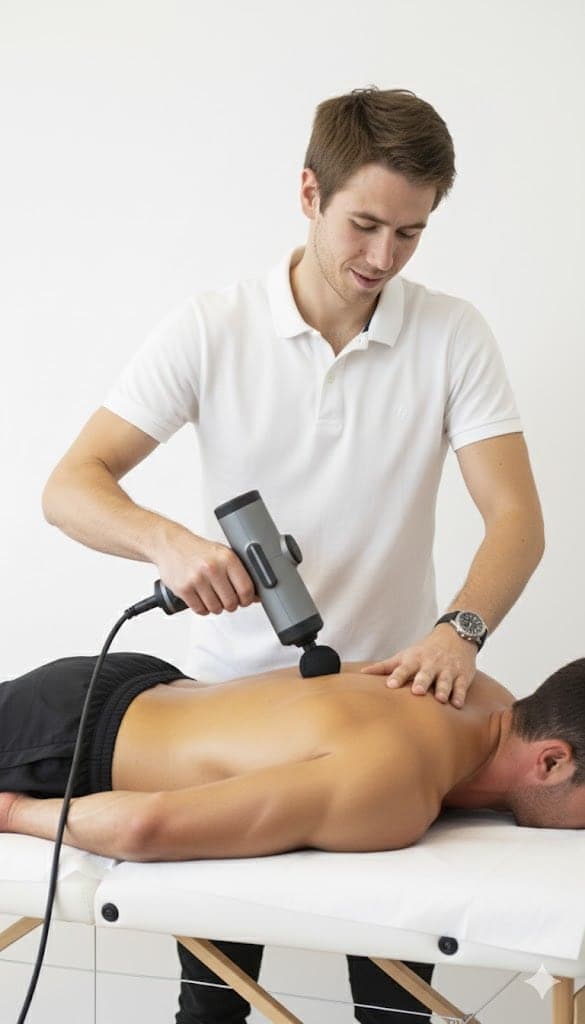
Written by
Chris
Massage therapist, nutrition and exercise physiologist
Norwegian-certified with a Bachelor’s in Physical Education and Nutrition and over ten years of clinical practice, working from a portable table in clients’ homes across the Paphos district.
This article is general information, not a medical diagnosis. If you have severe, worsening or unexplained pain, numbness, weakness, or pain after an accident, see a doctor first.