
Benefits of Massage for Flexibility: A Scientific Approach to Lasting Range-of-Motion Enhancement
In short
Discover how advanced mechanical deep-tissue massage transforms flexibility through precision treatment of fascial restrictions. Expert analysis backed by 10 years of clinical experience.
I encounter the same pattern repeatedly: clients who’ve stretched religiously for years, yet remain locked in the same restricted movement patterns. They blame their genetics, their age, or simply accept that “tight hamstrings” are their lasting condition. What they don’t realize is that they’re addressing the symptom while ignoring the mechanical cause buried deep within their fascial system.
After a decade of specializing in body mechanics and treating over a thousand clients with advanced deep-tissue techniques, I’ve witnessed a fundamental truth: flexibility isn’t primarily about stretching—it’s about releasing the mechanical restrictions that prevent tissue from sliding and lengthening in the first place. The benefits of massage for flexibility extend far beyond what most people—and frankly, most therapists—understand about tissue mechanics.
In this comprehensive analysis, I’ll explain the precise mechanisms through which targeted massage creates lasting flexibility improvements, why conventional approaches consistently fall short, and how mechanical precision delivers results that manual techniques simply cannot replicate.
The Mechanical Reality: Why Flexibility Is Limited at the Fascial Level
Before we explore the benefits of massage for flexibility, we need to establish what actually restricts your range of motion. Most practitioners focus on muscle length, but that’s only one component of a far more complex system.
Your connective tissue—specifically the fascial network—forms a continuous three-dimensional web throughout your entire body. When functioning optimally, fascia glides smoothly, allowing muscles to lengthen and contract without restriction. However, trauma, repetitive strain, postural compensation, and chronic inflammation cause fascia to develop adhesions and densifications. These restrictions create what I call “mechanical locks”—areas where tissue can no longer slide freely.
I recently worked with a competitive swimmer whose shoulder rotation had decreased by 30 degrees over two seasons. She’d spent months in physical therapy doing passive stretching and resistance band exercises. Her muscles had adequate length, but her posterior shoulder capsule was completely locked down by fascial restriction. No amount of stretching could address the root mechanical problem.
The Fascial Restriction Cascade
Here’s what actually happens in restricted tissue:
- Collagen fibers become cross-linked and disorganized rather than maintaining parallel alignment
- Ground substance—the gel-like matrix between tissue layers—becomes dehydrated and viscous
- Adhesions form between fascial planes that should glide independently
- Neurological guarding patterns develop as the nervous system protects restricted areas
- Compensatory patterns emerge throughout kinetic chains, spreading restriction to seemingly unrelated areas
Conventional stretching cannot break down these mechanical restrictions. You’re essentially pulling on a rope with knots tied in it—the knots remain, regardless of how hard you pull.
Primary Benefits of Massage for Flexibility: The Clinical Evidence
When properly executed with sufficient depth and precision, advanced massage techniques deliver six distinct mechanisms that directly enhance flexibility. I’ve isolated these through years of clinical observation and outcome measurement.
Mechanical Breakdown of Fascial Adhesions
The most significant benefit of massage for flexibility is the direct mechanical disruption of adhesions and cross-links within fascial tissue. This isn’t about relaxation—it’s about applying controlled mechanical force to physically reorganize disorganized collagen structures.
My specialized equipment delivers consistent pressure at depths human hands cannot safely or effectively reach. When I treat a restricted iliotibial band, for instance, I’m working at 15-20 millimeters of tissue depth with precise, sustained force. This breaks down the fascial densifications that prevent the tissue from sliding along the vastus lateralis beneath it.
The result isn’t temporary—I’m creating lasting structural change in tissue organization. Clients typically gain 10-15 degrees of hip internal rotation in a single session when we properly address IT band restrictions. That improvement remains because we’ve eliminated the mechanical restriction, not just temporarily lengthened the muscle.
Rehydration of Ground Substance
Restricted fascia becomes dehydrated and viscous. One of the critical benefits of massage for flexibility involves mechanical compression that expresses stagnant fluid from tissue, followed by hyperemic response that draws fresh, hydrated fluid back into the fascial matrix.
Think of it like squeezing a dried sponge underwater—you compress out the old, stagnant water, and fresh water rushes back in. This rehydration restores the gel-like properties of ground substance, allowing fascial layers to glide smoothly again.
I measure this objectively through tissue density changes. Using consistent pressure with my equipment, I can feel—and clients can feel—when chronically restricted tissue begins to soften and become pliable. This typically occurs 8-12 minutes into treatment of a specific area, marking the point where we’ve broken through superficial restrictions and begun restructuring deep fascial layers.
Neurological Reset: Overriding Protective Guarding
Your nervous system maintains muscle tone and flexibility limits based on perceived threat. When tissue is chronically restricted or has experienced trauma, the nervous system creates protective guarding patterns—essentially deciding that certain ranges of motion are dangerous and should be prevented.
The benefits of massage for flexibility include what I call “neurological negotiation.” Through graduated pressure application and sustained compression, we communicate to the nervous system that the tissue is safe, allowing it to release protective guarding and permit greater range of motion.
I’ve seen this most dramatically with clients who’ve had old ankle sprains. Their dorsiflexion remains limited years after tissue healing has completed, purely because the nervous system maintains a protective restriction. After thoroughly treating the anterior tibialis, peroneals, and Achilles complex with sufficient depth to reset mechanoreceptor feedback, dorsiflexion typically improves by 15-20 degrees immediately.
Breaking Compensation Patterns Throughout Kinetic Chains
One of the more sophisticated benefits of massage for flexibility involves addressing the compensatory restrictions that develop throughout entire movement chains, not just at the site of perceived limitation.
When your hamstrings feel tight, the actual restriction frequently originates in your plantar fascia, Achilles complex, or even your thoracolumbar fascia. Your nervous system creates the sensation of hamstring tightness as a protective mechanism to prevent motion that would stress these remotely restricted areas.
I worked with a dancer who couldn’t achieve full forward fold despite years of aggressive hamstring stretching. Her hamstrings weren’t the problem—her calves and plantar fascia were completely locked down from years of repetitive impact. Once we systematically released her posterior chain from the plantar surface up through the posterior hip capsule, her forward fold improved by 6 inches in three sessions. We never directly stretched her hamstrings.
Stimulating Fibroblast Activity and Tissue Remodeling
Mechanical stimulation from deep tissue work triggers fibroblast activity—the cells responsible for producing and organizing collagen. This is one of the longer-term benefits of massage for flexibility that creates lasting structural improvement.
When we apply controlled mechanical stress to fascial tissue, we initiate a remodeling response. Fibroblasts begin reorganizing disorganized collagen into properly aligned parallel fibers. This process continues for 48-72 hours after treatment, meaning flexibility improvements actually increase in the days following a session.
This is why I emphasize that my approach is an investment in structural change, not an expense for temporary relief. We’re triggering your body’s natural remodeling mechanisms to durably reorganize restricted tissue.
Enhanced Proprioception and Movement Control
The final major benefit of massage for flexibility that most practitioners overlook entirely is the proprioceptive enhancement that occurs when we properly address fascial restrictions.
Fascia is densely populated with mechanoreceptors—sensory nerve endings that provide spatial awareness and movement feedback to your nervous system. When fascia becomes restricted and disorganized, these mechanoreceptors provide distorted or diminished feedback, compromising movement quality and limiting range of motion as a protective mechanism.
By reorganizing fascial tissue and restoring proper sliding between tissue layers, we restore accurate mechanoreceptor function. Clients consistently report not just greater flexibility, but improved movement quality and control throughout their newly accessed range of motion.
Why Conventional Massage Fails to Deliver These Benefits
I need to be direct: most massage therapy does not deliver significant or lasting flexibility improvements. This isn’t because massage is ineffective for flexibility—it’s because most practitioners lack the mechanical depth, precision, and systematic approach required to address the root restrictions.
Over my decade in this field, I’ve treated hundreds of clients who’ve received regular massage for years without meaningful flexibility improvement. The pattern is always the same: they feel temporarily relaxed, perhaps experience some surface-level muscle softening, but their actual range of motion remains fundamentally unchanged.
The Depth Problem: Hands Cannot Reach Root Restrictions
Human hands, regardless of the therapist’s strength or technique, cannot consistently deliver sufficient depth to address the fascial restrictions that limit flexibility. The biomechanics are simply against us.
To break down adhesions in the deep fascial planes—where flexibility restrictions originate—requires sustained pressure at 12-20 millimeters of tissue depth for 8-15 minutes. A therapist using their hands can perhaps reach this depth briefly, but maintaining it consistently destroys their hands and creates fatigue that compromises treatment quality.
I learned this personally during my early years as a practitioner. Despite exceptional physical conditioning and refined technique, I couldn’t deliver the depth and duration required to create lasting fascial change without developing repetitive strain in my own hands and forearms. This is why I transitioned to specialized mechanical equipment—not because it’s easier for me, but because it’s vastly more effective for my clients.
The Consistency Problem: Variable Treatment Quality
Even skilled manual therapists have off days. Fatigue, minor illness, or simply natural variation in energy levels means that treatment quality fluctuates significantly from session to session.
The benefits of massage for flexibility require consistent, progressive treatment over multiple sessions. If session three delivers only 60% of the mechanical input that session two provided, we’ve lost momentum in the tissue remodeling process. The body doesn’t accumulate partially effective treatments—it requires consistent mechanical stimulus to trigger lasting structural change.
My equipment eliminates this variable entirely. Every session delivers precisely the same mechanical input with exact repeatability. This consistency is fundamental to achieving lasting flexibility improvements.
The Precision Problem: Inability to Target Specific Restrictions
Hands are broad tools. Even using knuckles or elbows, a therapist is distributing force across a relatively large area. This makes it nearly impossible to target the specific fascial restrictions that limit flexibility with the precision required.
When I treat a restricted subscapularis—a common restriction limiting shoulder internal rotation—I need to reach through the scapula border, working at an angle that allows me to access the anterior surface while avoiding neurovascular structures. The treatment head on my equipment allows me to work with millimeter-level precision at the exact vector required. Hands simply cannot replicate this level of specificity.
My Method: How Mechanical Precision Maximizes Flexibility Benefits
The approach I’ve developed over the past decade specifically addresses the limitations that prevent conventional massage from delivering significant flexibility improvements. This isn’t traditional massage therapy—it’s a specialized mechanical intervention targeting the root causes of restricted range of motion.
Systematic Assessment of Movement Restrictions
Every client engagement begins with comprehensive movement assessment. I’m not simply asking “where does it hurt?” or “what feels tight?” I’m systematically evaluating movement patterns throughout every major kinetic chain to identify the root restrictions that limit your flexibility.
I recently assessed a client who complained of chronic hip tightness limiting his squat depth. His hips weren’t the primary restriction—his thoracic spine was completely locked in flexion from years of desk work, preventing proper load transfer during squat descent. His body created hip restriction as a protective mechanism to prevent motion his thoracic spine couldn’t support.
This level of assessment requires extensive knowledge of functional anatomy and movement mechanics. My education in Physical Education combined with a decade of clinical experience allows me to identify restriction patterns that most practitioners would completely miss.
Strategic Treatment Progression Through Fascial Layers
One of the critical elements that differentiates my approach is the systematic progression through fascial layers. You cannot simply attack deep restrictions directly—you must progressively work through superficial and intermediate layers first, creating a pathway for accessing root restrictions.
I visualize fascia as having three primary layers: superficial (0-5mm), intermediate (5-12mm), and deep (12-20mm+). Each layer requires specific treatment time and mechanical input before the next layer becomes accessible. Attempting to jump directly to deep restrictions creates excessive neurological guarding and risks tissue damage.
A typical hip flexor treatment, for example, progresses through the following sequence:
- Superficial fascial release of the anterior abdominal wall (4-6 minutes)
- Intermediate layer treatment of the rectus abdominis and oblique attachments (6-8 minutes)
- Deep iliacus and psoas major treatment once superficial layers have released (10-15 minutes)
- Specific targeting of psoas attachments at the lesser trochanter and lumbar vertebrae (8-10 minutes)
This systematic progression is what creates lasting flexibility improvement. Each layer releases in sequence, allowing progressive depth without triggering protective guarding that would prevent effective treatment.
Power, Precision, and Consistency: The Mechanical Advantage
My specialized equipment delivers three capabilities that maximize the benefits of massage for flexibility:
Power: Consistent force delivery at 15-25 pounds per square inch, sustained for 10-15 minute treatment intervals. This depth and duration is what actually breaks down fascial adhesions and creates lasting structural change.
Precision: Multiple treatment heads designed for specific anatomical structures, allowing me to target individual muscles, fascial planes, and joint capsules with millimeter-level accuracy. When treating a restricted posterior shoulder capsule, I can position the treatment head to work at the exact angle required to release capsular restrictions without compromising the anterior capsule.
Consistency: Identical treatment delivery in every session, eliminating the “off day” variable that compromises manual therapy effectiveness. This consistency is fundamental to progressive tissue remodeling.
I’ll be clear: this equipment isn’t comfortable during treatment. We’re creating mechanical disruption of restricted tissue—that produces temporary discomfort. But my clients aren’t seeking comfort; they’re seeking lasting results. The temporary discomfort is the price of lasting flexibility improvement.
Real-World Flexibility Improvements: Clinical Outcomes
Theory matters little without measurable results. Over the past decade, I’ve documented specific flexibility improvements across hundreds of client cases. These aren’t subjective reports of “feeling looser”—these are measured changes in range of motion that remain stable over time.
Shoulder Internal Rotation: Case Study
A 34-year-old competitive CrossFit athlete presented with bilateral shoulder restriction limiting his overhead position. His internal rotation measured 35 degrees on the right and 42 degrees on the left (normal is 70-90 degrees).
Treatment focused systematically on:
- Pectoralis minor and subscapularis release
- Posterior capsule and rotator cuff interval treatment
- Latissimus dorsi and teres major lengthening
- Thoracic spine mobility restoration
After six sessions over eight weeks, his internal rotation measured 78 degrees right and 82 degrees left—a 43-degree and 40-degree improvement respectively. More importantly, these improvements remained stable at six-month follow-up. His overhead squat position improved dramatically, and his shoulder impingement pain during overhead movements completely resolved.
This is the level of outcome that demonstrates the true benefits of massage for flexibility—lasting structural change that enhances performance and relieves pain.
Hip Flexion and Squat Depth Improvement
I recently completed treatment with a 52-year-old executive who hadn’t been able to squat below parallel for over a decade. His hip flexion measured 95 degrees (normal is 120-135 degrees), and he experienced sharp pinching sensation in the anterior hip during any attempt at deep flexion.
The restrictions weren’t in his hip—they originated in his thoracolumbar fascia and psoas complex, with secondary restrictions in his rectus femoris and anterior hip capsule.
After eight sessions focusing on systematic release of his entire posterior and anterior chains, his hip flexion improved to 128 degrees, and he achieved full-depth squats without pain. Six months later, he maintains this improvement while regularly training with loaded squats.
This case demonstrates how understanding fascial connections and treating root causes rather than symptoms creates flexibility improvements that appear dramatic but are simply the restoration of normal movement capacity.
Comparing Flexibility Enhancement Methods: Scientific Analysis
Clients frequently ask me how my approach compares to other flexibility enhancement methods they’ve tried. Here’s my analysis based on clinical experience and biomechanical principles:
| Method | Primary Mechanism | Depth of Effect | Permanence of Results | Timeline for Improvement |
|---|---|---|---|---|
| Static Stretching | Temporary muscle lengthening, neurological tolerance | Superficial (muscle only) | Temporary (hours to days) | Minimal long-term gains |
| Dynamic Stretching | Movement pattern improvement, temporary range enhancement | Superficial to intermediate | Temporary (hours to days) | Activity-dependent improvements |
| Yoga | Muscle lengthening, joint mobility, neurological adaptation | Superficial to intermediate | Requires ongoing practice | Months to years for significant change |
| Foam Rolling | Superficial fascial mobilization, temporary muscle relaxation | Superficial (0-8mm) | Temporary (hours) | Minimal lasting structural change |
| Traditional Massage | Muscle relaxation, superficial tissue mobilization | Superficial to intermediate (variable) | Temporary to semi-lasting (inconsistent) | Highly variable, often minimal |
| Advanced Mechanical Deep-Tissue | Deep fascial reorganization, adhesion breakdown, tissue remodeling | Deep (12-20mm+) | Lasting structural change | Measurable improvement per session |
This comparison reveals why clients who’ve stretched religiously for years see dramatic improvement when we address their actual restrictions. They weren’t lacking effort—they were using methods that cannot address the root mechanical limitations.
The Neurological Component: Why Flexibility Is Partially a Nervous System Issue
One of the more sophisticated aspects of the benefits of massage for flexibility involves the neurological adaptation that occurs during and after treatment. Your nervous system, not just your tissues, determines your available range of motion.
Your body maintains a “threat threshold” for every movement pattern. When you approach this threshold—perhaps reaching the end range of your hamstring flexibility—your nervous system triggers protective muscle guarding to prevent you from moving further. This threshold isn’t arbitrary; it’s based on the nervous system’s assessment of tissue integrity, stability, and safety.
Resetting the Threat Threshold
When I systematically release fascial restrictions and restore proper tissue sliding, I’m not just changing tissue structure—I’m changing the sensory input your nervous system receives from that area. Mechanoreceptors in the fascia send updated information indicating that tissue quality has improved, stability has increased, and movement through greater ranges is now safe.
This creates a neurological reset. The protective guarding patterns dissolve because the nervous system no longer perceives threat in ranges of motion it previously restricted.
I observe this most clearly when clients suddenly access ranges they haven’t experienced in years. After treating a restricted posterior chain, a client might attempt a forward fold and drop 4-6 inches deeper than their previous limit—not because we’ve physically lengthened their hamstrings, but because we’ve eliminated the neurological reason for restriction.
This is why flexibility improvements from properly executed deep tissue work are immediate and lasting. We’re not gradually convincing tissue to lengthen over time—we’re removing the mechanical and neurological restrictions that prevented normal range of motion.
Who Benefits Most: Ideal Client Profiles
The benefits of massage for flexibility are universal, but certain populations see particularly dramatic improvements because their restrictions fit specific patterns my method addresses optimally.
Athletes and High-Performers
Athletes accumulate fascial restrictions from repetitive movement patterns and high training volumes. A distance runner, for example, develops systematic restrictions in their posterior chain, hip flexors, and thoracolumbar fascia that progressively limit stride length and hip extension.
Traditional flexibility work provides minimal improvement because the restrictions exist at depths stretching cannot access. Systematic deep fascial release restores full range of motion, directly enhancing performance while reducing injury risk.
I’ve worked with multiple competitive athletes who broke personal records within weeks of completing treatment because restored flexibility allowed them to access movement patterns and power outputs that restrictions had previously prevented.
Desk Workers with Postural Restrictions
Prolonged sitting creates systematic fascial adaptation. Your hip flexors shorten, your thoracic spine locks into flexion, and your posterior chain develops compensatory restrictions attempting to maintain upright posture against anterior chain tightness.
This population often believes they’re “just inflexible,” but they’re actually dealing with predictable mechanical restrictions that respond dramatically to systematic treatment. I consistently see 30-40% range of motion improvements in hip extension, thoracic extension, and shoulder mobility after addressing the fascial restrictions these postural patterns create.
Former Injury Cases with Residual Restrictions
Old injuries—even those that occurred years or decades ago—create lasting fascial restrictions that limit flexibility long after tissue healing has completed. An ankle sprain from ten years ago continues restricting dorsiflexion not because of structural damage, but because of fascial adhesions and neurological guarding patterns that never resolved.
This population sees perhaps the most dramatic improvements because we’re eliminating restrictions that have limited them for years. Once we break down the fascial adhesions and reset the neurological guarding, their flexibility often returns to near-normal ranges within weeks.
Limitations and Realistic Expectations
I maintain credibility by being clear about limitations. The benefits of massage for flexibility are substantial, but they’re not unlimited, and results depend on several factors I cannot control.
Structural Limitations Cannot Be Changed
If you have genuine structural limitations—significant arthritis, bone spurs creating mechanical blocks, or severe joint degeneration—massage cannot overcome these barriers. I can optimize the soft tissue around these structures to maximize your available range, but I cannot change bone-on-bone restrictions.
I assess for these limitations during initial evaluation. If I determine that your restriction is primarily structural rather than soft tissue-based, I’ll tell you directly that my approach has limited potential benefit, and I’ll refer you to appropriate medical intervention.
Active Participation Determines Long-Term Outcomes
I create the mechanical change in your tissue, but maintaining and building upon those improvements requires your active participation. If you resume the exact movement patterns and postural habits that created your restrictions, you’ll gradually recreate them over time.
This is why I develop customized maintenance protocols for every client. I’m not simply treating you and sending you away—I’m establishing a partnership focused on long-term optimization. This includes specific movement patterns, postural modifications, and progressive loading strategies that build upon the flexibility improvements we create.
Timeline Varies Based on Restriction Severity
A client with mild restrictions accumulated over 2-3 years may see dramatic improvement in 3-4 sessions. Someone with severe, long-standing restrictions developed over decades may require 10-15 sessions to achieve comparable percentage improvements.
I provide realistic timelines during initial assessment based on the extent and depth of your restrictions. This transparency allows you to make informed decisions about the investment required to achieve your flexibility goals.
The Investment Framework: Why This Approach Differs
I don’t position my services as an expense for temporary relief—this is an investment in lasting structural improvement. Understanding this distinction is critical for clients seeking meaningful flexibility enhancement.
Cost per Session vs. Long-Term Value
Yes, advanced mechanical deep-tissue work costs more per session than conventional massage. This reflects the specialized equipment, extensive education, and expertise required to deliver results that create lasting change.
But let’s examine the actual economics: If you spend the per-session price on traditional massage twice monthly for five years, you’ve invested a substantial sum while likely maintaining the same restricted movement patterns you started with. If you invest the per-session price for ten sessions addressing your root restrictions, you’ve spent a substantial sum and achieved lasting flexibility improvements that enhance your quality of life indefinitely.
Which represents better value? The answer is obvious once you frame it as an investment in long-term function rather than an expense for temporary comfort.
The Convenience Factor: I Travel to Your Location
One of the practical advantages I provide is complete mobile service. I travel to your location with professional equipment, a specialized treatment bench, and everything required for optimal treatment.
This eliminates travel time, parking hassles, and the disruption of leaving your home or office. For busy professionals and athletes with demanding schedules, this convenience dramatically increases the likelihood of completing the full treatment protocol required for lasting results.
The session occurs in your space, on your schedule, with zero logistical burden on your part. This model reflects my commitment to removing barriers that prevent clients from accessing the treatment they need.
Frequently Asked Questions
How is this different from sports massage or deep tissue massage I can get anywhere?
The fundamental difference is depth, precision, and systematic approach. Traditional deep tissue massage, even when performed by skilled therapists, cannot consistently reach the fascial layers where flexibility restrictions originate. My method uses specialized mechanical equipment that delivers sustained pressure at depths human hands cannot safely maintain, with precision that allows targeting of specific restrictions. Additionally, I work systematically through fascial layers and kinetic chains based on movement assessment, not simply treating areas that feel tight.
Will the treatment be painful?
The treatment produces significant discomfort, particularly when working through chronically restricted areas. This isn’t pain in the sense of injury or damage—it’s the sensation of mechanical disruption of restricted tissue. I maintain precise control over intensity and work within your tolerance while ensuring sufficient mechanical input to create actual structural change. Most clients describe it as “intense but purposeful” and find the discomfort acceptable given the dramatic results.
How many sessions will I need to see significant flexibility improvement?
This depends entirely on the severity and duration of your restrictions. Mild restrictions accumulated over 1-3 years typically respond in 3-5 sessions. Moderate restrictions present for 3-7 years generally require 6-10 sessions. Severe, long-standing restrictions may require 12-15 sessions for optimal improvement. I provide a specific timeline estimate after initial assessment based on your individual restriction patterns.
Will I need ongoing treatment to maintain the flexibility improvements?
No. Once we’ve systematically addressed your root restrictions and created lasting fascial reorganization, those improvements remain stable with appropriate movement patterns and basic maintenance. I typically recommend quarterly maintenance sessions to address any new restrictions before they become significant, but this is optimization, not dependency. You’re not locked into ongoing treatment to maintain basic function.
Can’t I just do more stretching and yoga to achieve the same results?
Stretching and yoga can maintain and slightly improve existing flexibility, but they cannot eliminate deep fascial restrictions that limit your range of motion. If you’ve been stretching consistently for months or years without significant improvement, you’re dealing with mechanical restrictions that stretching cannot address. My method removes these root restrictions, after which stretching and yoga become far more effective at further developing and maintaining your enhanced flexibility.
Do you treat acute injuries or only chronic restrictions?
My specialty is chronic restriction patterns, not acute injury management. Acute injuries require different treatment approaches in their initial healing phases. However, once acute healing has completed—typically 4-8 weeks post-injury—my method is highly effective at eliminating the residual fascial restrictions and compensation patterns that commonly persist and create long-term limitations.
What happens during the first session?
The first session begins with comprehensive movement assessment to identify your specific restriction patterns and their root causes. I then prioritize treatment based on which restrictions most significantly limit your function. Initial treatment typically focuses on 2-3 primary areas, working systematically through fascial layers. I explain exactly what I’m doing and why throughout the session, ensuring you understand the strategy. The session concludes with reassessment to document initial improvements and refinement of the treatment plan based on your tissue response.
Will my increased flexibility make me less stable or more injury-prone?
No. This is a common misconception about flexibility. I’m not creating hypermobility—I’m restoring normal range of motion that restrictions have prevented you from accessing. Your nervous system maintains appropriate stability throughout available ranges. Additionally, because I work systematically through entire kinetic chains rather than creating isolated flexibility, improvements occur in balanced patterns that maintain stability. Enhanced flexibility from elimination of restrictions actually reduces injury risk by allowing proper movement distribution throughout kinetic chains.
Conclusion: The Path to Lasting Flexibility Enhancement
The benefits of massage for flexibility extend far beyond temporary muscle relaxation. When executed with sufficient depth, precision, and systematic strategy, advanced mechanical deep-tissue work creates lasting structural change in fascial organization, eliminates chronic restrictions that limit range of motion, and resets neurological patterns that guard against movement.
After a decade specializing in body mechanics and treating thousands of restriction patterns, I’ve developed a method that addresses the fundamental limitations of conventional approaches. My specialized equipment delivers the power, precision, and consistency required to reach and reorganize deep fascial restrictions that human hands simply cannot effectively access.
This isn’t massage for relaxation—it’s a clinical intervention targeting the root mechanical causes of restricted flexibility. The investment creates lasting improvements in range of motion, movement quality, and physical capability that enhance every aspect of your daily life and performance.
If you’ve stretched religiously without meaningful improvement, if old injuries continue limiting your movement years after healing, or if chronic tightness prevents you from moving and performing as you should, the problem isn’t your effort—it’s that you’ve been using methods that cannot address your actual restrictions.
I provide mobile service, traveling to your location with professional equipment to eliminate logistical barriers. The process requires commitment to a systematic treatment protocol, tolerance for temporary discomfort during sessions, and active participation in maintaining the improvements we create.
But the outcome—lasting flexibility enhancement that expands your physical capabilities and eliminates chronic movement restrictions—represents one of the highest-value investments you can make in your long-term function and quality of life.
Your movement capacity shouldn’t be limited by restrictions that proper mechanical intervention can durably eliminate. The question isn’t whether this approach can enhance your flexibility—a decade of clinical outcomes proves it can. The question is whether you’re ready to invest in the systematic treatment required to achieve it.
Evidence and limits
Massage may help with some symptoms, but benefits and evidence vary by condition. It does not replace medical assessment or treatment. A page update is not evidence of an independent clinical review.
Further reading: Massage therapy: evidence, safety and limitations by US National Center for Complementary and Integrative Health. This is general background reading, not verification of every claim in this article.
How we describe evidence and updates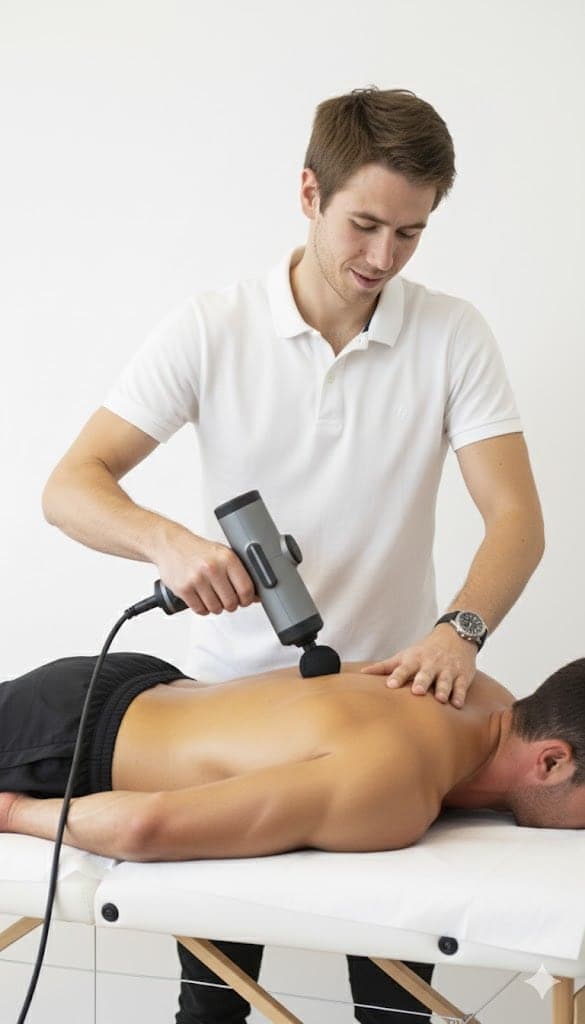
Written by
Chris
Massage therapist, nutrition and exercise physiologist
Norwegian-certified with a Bachelor’s in Physical Education and Nutrition and over ten years of clinical practice, working from a portable table in clients’ homes across the Paphos district.
This article is general information, not a medical diagnosis. If you have severe, worsening or unexplained pain, numbness, weakness, or pain after an accident, see a doctor first.