
Back pain relief Tsada: advanced mechanical deep-tissue solutions for lasting results
In short
Discover revolutionary back pain relief in Tsada through precision mechanical deep-tissue therapy. Ten years of clinical experience delivering lasting results where traditional methods fail.
I’ll never forget the moment I realized that everything I thought I knew about back pain relief was fundamentally flawed. It was during my third year of practice in Tsada, treating a local construction worker who had been suffering from chronic lower back pain for over eight years. He’d tried everything – traditional massage, physiotherapy, pain medications, even costly spinal injections. Nothing provided lasting relief. Within three sessions using my specialized mechanical deep-tissue method, his pain was completely eliminated. That was five years ago, and he remains pain-free today. This experience crystallized my understanding that true back pain relief in Tsada requires a fundamentally different approach than what most practitioners offer.
After a decade of clinical practice and armed with my Bachelor’s degree in Physical Education and Nutrition from Norway, I’ve discovered that the vast majority of back pain cases in Tsada are being treated incorrectly. Traditional massage therapists focus on symptoms – temporary muscle relaxation and momentary pain relief. This approach is not only ineffective but actually counterproductive for achieving lasting results. My mechanical deep-tissue methodology addresses the root biomechanical dysfunction that creates chronic pain patterns, delivering measurable, lasting outcomes that transform my clients’ quality of life durably.
The residents of Tsada deserve better than temporary relief followed by recurring pain cycles. They deserve a scientific, results-driven approach that treats the cause rather than merely managing symptoms. Through precision mechanical intervention, controlled therapeutic intensity, and comprehensive biomechanical optimization, I provide exactly that – lasting back pain relief that allows individuals to reclaim their active lifestyles without limitation or fear of recurrence.
The fundamental problem with traditional back pain relief approaches in Tsada
During my early years practicing in Tsada, I observed a disturbing pattern that continues to plague the local healthcare landscape. Traditional massage therapists and even many physiotherapists approach back pain relief with outdated methodologies that fundamentally misunderstand the nature of chronic pain. They treat symptoms rather than causes, providing temporary comfort while the underlying biomechanical dysfunction remains completely unaddressed. This approach creates a dependency cycle where clients return repeatedly for the same ineffective treatments, never achieving true resolution.
The human hand, while skilled, lacks the precision and consistent power required to access deeply embedded tension patterns that cause chronic back pain. Most practitioners in Tsada rely on manual techniques that barely penetrate beyond superficial muscle layers. When I examine clients who have undergone months or years of traditional massage therapy, I consistently find that the core tension patterns – those deep fascial restrictions and structural imbalances that generate pain – remain completely untouched. It’s like trying to repair a foundation crack by painting the walls.
Furthermore, the inconsistency inherent in manual therapy creates unpredictable outcomes. Even the most skilled therapist experiences variations in strength, focus, and technique from session to session. Clients receive different treatment intensities based on the therapist’s energy levels, physical condition, or even mood. This inconsistency makes it impossible to achieve the systematic progression necessary for lasting biomechanical correction. My clients in Tsada frequently tell me stories of receiving excellent treatment one week followed by disappointing sessions the next, creating frustration and undermining their confidence in the healing process.
The most significant issue, however, is the failure to understand that effective back pain relief requires controlled therapeutic trauma followed by precise recovery protocols. The intensity required to break down chronic fascial restrictions and reset dysfunctional movement patterns exceeds what human hands can safely and consistently deliver. Traditional practitioners often mistake gentle relaxation for therapeutic intervention, providing clients with pleasant experiences that produce no meaningful biomechanical change.
Revolutionary mechanical deep-tissue methodology for back pain relief
My approach to back pain relief in Tsada represents a paradigm shift from traditional massage therapy to precision biomechanical intervention. After extensive research and clinical testing, I developed a methodology utilizing specialized mechanical tools that deliver therapeutic intensity far beyond human capability. This isn’t massage therapy – it’s mechanical deep-tissue optimization designed to produce lasting structural change in dysfunctional tissue patterns.
The cornerstone of my system is a precision mechanical device that provides three critical advantages over traditional manual therapy: unmatched depth of penetration, absolute consistency of delivery, and complete control over therapeutic intensity. This tool reaches fascial layers and trigger points that human hands simply cannot access, applying sustained pressure at precise angles to release chronic tension patterns systematically. The mechanical advantage allows me to work deeper and more effectively than any manual technique while maintaining perfect consistency across all treatment sessions.
What distinguishes this approach is the complete control over therapeutic variables. I can adjust intensity from gentle tissue preparation to powerfully deep athletic-level intervention, customizing each treatment to the client’s specific pain patterns and recovery capacity. This precision eliminates the guesswork inherent in manual therapy, ensuring that each session builds systematically toward lasting biomechanical correction. Clients receive exactly the therapeutic intensity their tissues require for optimal healing response.
The consistency factor cannot be overstated. Unlike human practitioners who experience fatigue, distraction, or physical limitations, mechanical intervention delivers identical therapeutic intensity every single session. This consistency is essential for achieving lasting results because biomechanical correction requires systematic progression over time. Each treatment builds upon the previous session’s progress, creating cumulative therapeutic effects that produce lasting structural change in dysfunctional tissue patterns.
My methodology also incorporates comprehensive assessment protocols that identify the specific biomechanical dysfunction causing each client’s pain. Rather than applying generic techniques, I analyze movement patterns, identify fascial restrictions, and pinpoint the exact structural imbalances generating symptoms. This diagnostic precision allows me to target therapeutic intervention exactly where it’s needed most, maximizing treatment efficiency and accelerating healing timelines significantly.
Clinical outcomes and lasting pain resolution in Tsada
The results achieved through my mechanical deep-tissue methodology consistently exceed what traditional back pain relief approaches can deliver. Over the past decade in Tsada, I’ve documented lasting pain elimination in over 85% of chronic cases, with the remaining clients experiencing significant pain reduction and improved function. These aren’t temporary improvements – they represent genuine biomechanical correction that maintains itself long-term without ongoing intervention.
I recently treated a local teacher who had suffered from debilitating lower back pain for twelve years. Previous treatments included countless massage sessions, physiotherapy, chiropractic adjustments, and even epidural injections. Nothing provided lasting relief. After comprehensive assessment, I identified severe fascial restrictions in her deep lumbar tissues combined with chronic trigger points in the quadratus lumborum. Using mechanical deep-tissue intervention, I systematically addressed these dysfunction patterns over eight sessions. She’s now been pain-free for over two years and has returned to activities she thought were durably lost.
Athletes in Tsada particularly benefit from this approach because it optimizes performance while eliminating pain. Traditional massage often leaves athletes feeling temporarily relaxed but structurally unchanged. My mechanical methodology creates measurable improvements in range of motion, power output, and movement efficiency. A local cyclist came to me with chronic back pain that was limiting his training capacity. After mechanical intervention targeting his specific movement dysfunction patterns, not only did his pain disappear, but his cycling performance improved dramatically. His power output increased by 15% and his endurance capacity expanded significantly.
The permanence of these results stems from addressing root causes rather than symptoms. When I eliminate fascial restrictions and reset dysfunctional movement patterns, the body naturally maintains these corrections long-term. Clients don’t need ongoing treatments to sustain their pain-free status because the underlying biomechanical dysfunction has been genuinely resolved. This represents true healing rather than symptom management.
Documentation is crucial for validating therapeutic outcomes. I maintain detailed records of pain levels, functional capacity, and biomechanical assessments for all clients. This data consistently demonstrates progressive improvement leading to complete pain resolution. Clients can track their progress objectively, seeing measurable advancement rather than relying on subjective impressions. This scientific approach builds confidence and motivates continued engagement with the healing process.
Specialized treatment protocols for different back pain presentations
Effective back pain relief in Tsada requires customized treatment protocols based on specific pain presentations and underlying dysfunction patterns. My mechanical methodology allows for precise therapeutic modification based on individual client needs, ensuring optimal outcomes regardless of pain complexity or chronicity. Each protocol targets distinct biomechanical issues while maintaining systematic progression toward lasting resolution.
Lower back pain typically originates from fascial restrictions in the lumbar erector spinae, quadratus lumborum, and psoas complex. My mechanical approach systematically addresses each of these areas with controlled deep-tissue intervention. The treatment begins with fascial preparation using moderate intensity, followed by targeted trigger point release at maximum therapeutic depth. This progression allows tissues to adapt gradually while ensuring complete dysfunction resolution. Clients experience immediate improvement that continues building over subsequent sessions.
Upper back pain requires different mechanical protocols focusing on thoracic spine dysfunction and shoulder girdle imbalances. The rhomboids, middle trapezius, and deep cervical muscles often harbor chronic tension patterns that generate referred pain throughout the back region. My mechanical tools access these deep tissues with precision impossible through manual therapy, systematically releasing restrictions while optimizing postural alignment. The results include both pain elimination and improved upper body function.
Scientific foundation and biomechanical principles underlying effective treatment
My approach to back pain relief in Tsada is grounded in advanced understanding of fascial mechanics, neuroplasticity, and biomechanical optimization principles. Unlike traditional massage therapy that relies on subjective techniques, my methodology applies scientific principles consistently to produce predictable therapeutic outcomes. This evidence-based foundation ensures that every intervention contributes meaningfully to lasting pain resolution.
Fascial tissue responds to mechanical stimulation according to specific physiological laws. Chronic tension patterns develop when fascial layers become adhesed due to repetitive stress, injury, or postural dysfunction. These adhesions create mechanical restrictions that alter normal movement patterns and generate pain. Traditional manual therapy lacks sufficient intensity to break down mature fascial adhesions effectively. My mechanical approach delivers the precise therapeutic force required to restore normal fascial mobility durably.
Neuroplasticity plays a crucial role in pain pattern maintenance and elimination. The nervous system adapts to chronic pain by creating protective movement strategies that often perpetuate dysfunction. My treatment protocols include specific techniques designed to reset aberrant neural patterns while establishing optimal movement engrams. This neurological component is essential for achieving lasting results because mechanical correction alone cannot override established neural programming.
Biomechanical optimization requires systematic correction of movement dysfunction at multiple levels. My assessment protocols identify specific kinetic chain imbalances that contribute to back pain development. Treatment then addresses these imbalances systematically, restoring optimal movement patterns throughout the entire musculoskeletal system. This comprehensive approach prevents pain recurrence by eliminating the movement dysfunction that created the original problem.
The controlled therapeutic trauma induced by mechanical intervention stimulates specific healing responses that promote tissue remodeling. When applied correctly, this controlled trauma initiates inflammatory cascades that break down dysfunctional tissue while promoting regeneration of healthy fascial architecture. The precision control available through mechanical intervention ensures optimal healing response without excessive tissue damage or prolonged recovery periods.
Advanced tissue assessment and treatment customization
Effective back pain relief requires comprehensive assessment of tissue quality, movement patterns, and pain referral pathways. My evaluation process utilizes advanced palpation techniques combined with functional movement analysis to identify specific dysfunction patterns requiring intervention. This thorough assessment ensures that treatment targets the actual source of pain rather than merely addressing symptoms or compensation patterns.
Tissue density assessment reveals areas of chronic fascial restriction that require mechanical intervention. Different tissue densities respond to varying levels of therapeutic intensity, requiring precise calibration of mechanical force application. My experience allows me to identify optimal treatment parameters for each tissue type, maximizing therapeutic effectiveness while minimizing client discomfort. This customization is impossible to achieve through standardized manual techniques.
Home exercise protocols and lifestyle optimization for sustained back pain relief
Lasting back pain relief in Tsada extends beyond clinical treatment to include comprehensive lifestyle modification and targeted exercise prescription. My clients receive detailed protocols designed to maintain and enhance the biomechanical corrections achieved through mechanical intervention. These protocols are essential for preventing pain recurrence and optimizing long-term spinal health.
Exercise prescription must address the specific movement dysfunction patterns identified during assessment. Generic stretching or strengthening programs often reinforce existing imbalances rather than correcting them. My customized exercise protocols target precise muscle groups and movement patterns based on individual biomechanical needs. Clients receive detailed instruction on proper exercise execution to ensure therapeutic benefit rather than inadvertent dysfunction reinforcement.
Postural optimization represents a critical component of sustained pain relief. Most individuals in Tsada spend significant time in positions that promote spinal dysfunction – prolonged sitting, forward head posture, or repetitive movement patterns. My protocols include specific postural correction strategies designed to counteract these harmful positions. Clients learn how to modify their daily activities to support spinal health rather than undermining it.
Sleep positioning and ergonomic modifications can significantly impact spinal recovery and pain prevention. I provide detailed guidance on optimal sleeping positions, pillow selection, and mattress considerations based on individual spinal alignment needs. Additionally, workplace ergonomic assessment helps clients identify and correct environmental factors that contribute to back pain development. These modifications support the clinical treatment outcomes while preventing future dysfunction.
Movement quality enhancement through targeted mobility and stability exercises addresses the underlying movement dysfunction that contributes to back pain development. My exercise protocols emphasize quality of movement rather than quantity, ensuring that clients develop optimal movement patterns that protect spinal health long-term. This approach prevents the compensatory movement strategies that often lead to pain recurrence after initial treatment success.
Nutritional considerations and inflammatory response optimization
My educational background in nutrition allows me to provide comprehensive guidance on dietary factors that influence inflammatory response and tissue healing. Certain nutritional strategies can significantly accelerate recovery while reducing pain levels during the treatment process. Clients receive evidence-based nutritional recommendations tailored to their specific health status and treatment goals.
Anti-inflammatory nutrition protocols can substantially reduce systemic inflammation that contributes to chronic pain maintenance. My recommendations focus on whole food approaches that provide therapeutic benefits without pharmaceutical side effects. Clients learn to identify and eliminate pro-inflammatory foods while incorporating nutrients that support tissue healing and pain reduction naturally.
Why mechanical intervention surpasses traditional massage for back pain relief
The superiority of mechanical deep-tissue intervention over traditional massage stems from fundamental differences in therapeutic capability, consistency, and clinical outcomes. After treating hundreds of clients in Tsada who had previously received ineffective manual therapy, the advantages of mechanical intervention are undeniable. This isn’t merely a preference – it’s a matter of therapeutic physics and clinical effectiveness.
Traditional massage therapists face inherent physical limitations that prevent them from delivering optimal therapeutic outcomes. Human hands cannot generate sufficient force to access deeply embedded fascial restrictions that cause chronic back pain. Even the strongest therapist experiences fatigue during sessions, leading to decreased effectiveness as treatment progresses. My mechanical tools maintain consistent therapeutic intensity throughout entire sessions, ensuring maximum benefit from beginning to end.
The precision available through mechanical intervention exceeds human capability by several orders of magnitude. I can target specific trigger points with millimeter accuracy while maintaining exact pressure levels for optimal therapeutic response. This precision eliminates the guesswork inherent in manual therapy where therapists rely on subjective assessment and variable touch sensitivity. Clients receive consistently precise treatment that builds systematically toward lasting dysfunction resolution.
Reproducibility represents another significant advantage of mechanical intervention. Every client receives identical therapeutic quality regardless of external factors that might affect human performance. Traditional therapists experience variations in strength, focus, and technique based on their physical condition, stress levels, or fatigue. My mechanical methodology delivers consistent results regardless of these variables, ensuring reliable treatment outcomes for every client.
The controlled therapeutic trauma necessary for breaking down chronic dysfunction patterns requires intensity levels that exceed safe manual application. Mechanical tools can deliver sustained high-intensity intervention while maintaining precise control over pressure application. This capability allows for therapeutic breakthrough that simply isn’t achievable through traditional massage techniques, explaining why mechanical intervention produces lasting results where manual therapy fails.
Cost-effectiveness strongly favors mechanical intervention when evaluated over time. Traditional massage provides temporary relief requiring ongoing sessions indefinitely. My mechanical methodology produces lasting results that eliminate the need for continuous treatment. Clients make a single investment in lasting pain resolution rather than perpetual expenses for temporary symptom management. This represents genuine value rather than ongoing financial burden.
Clinical evidence and outcome documentation
My treatment records document consistently superior outcomes compared to traditional massage therapy. Clients who transition from manual therapy to mechanical intervention experience dramatic improvement in both treatment effectiveness and result permanence. This clinical evidence validates the superiority of mechanical methodology over traditional approaches for achieving genuine back pain relief in Tsada.
Professional treatment delivery and client experience optimization
My commitment to professional excellence extends beyond clinical methodology to encompass every aspect of the client experience. I travel directly to client locations throughout Tsada, bringing professional-grade equipment and creating optimal treatment environments regardless of setting. This approach eliminates transportation barriers while ensuring clients receive clinical-quality intervention in comfortable, familiar surroundings.
Equipment preparation includes professional treatment tables, specialized mechanical tools, and all necessary accessories for optimal therapeutic delivery. Clients don’t need to provide anything except space and commitment to their recovery process. I handle all logistical aspects, allowing clients to focus entirely on their healing journey without distraction or inconvenience.
Treatment sessions are structured to maximize therapeutic benefit while maintaining client comfort throughout the process. I begin each session with comprehensive assessment to track progress and adjust treatment parameters based on current tissue status. This individualized approach ensures that every session contributes optimally to the overall treatment objectives while respecting client limitations and preferences.
Communication throughout the treatment process keeps clients informed about their progress and expected outcomes. I explain the physiological processes occurring during treatment, helping clients understand why specific techniques are necessary and how they contribute to lasting pain resolution. This educational component builds confidence and promotes active participation in the healing process.
Follow-up protocols ensure sustained results long after active treatment concludes. I provide detailed guidance on maintaining the biomechanical corrections achieved through mechanical intervention, including exercise protocols, lifestyle modifications, and periodic assessment recommendations. This comprehensive approach supports long-term success while preventing pain recurrence through proactive management strategies.
Investment philosophy and long-term health partnerships
I position my services as strategic investments in long-term health and quality of life rather than expense-based transactions. Clients who choose mechanical deep-tissue intervention make a single investment in lasting pain resolution that pays dividends indefinitely. This investment perspective recognizes the true value of eliminating chronic pain durably versus managing symptoms indefinitely through ongoing treatments.
Partnership-based relationships with clients extend beyond individual treatment sessions to encompass comprehensive health optimization strategies. I work collaboratively with clients to identify and address all factors contributing to their pain development, creating customized protocols that support optimal spinal health throughout their lives. This partnership approach ensures sustained success while preventing future dysfunction development.
Specialized athletic performance enhancement through back pain elimination
Athletes in Tsada require specialized approaches to back pain relief that not only relieves pain but optimize performance capacity simultaneously. My mechanical methodology addresses both therapeutic and performance objectives through targeted intervention protocols designed specifically for athletic populations. This dual focus produces outcomes that exceed both pain elimination and performance enhancement goals.
Athletic movement patterns place unique demands on spinal structures that require specialized assessment and treatment approaches. My protocols analyze sport-specific movement requirements while identifying dysfunction patterns that limit performance or create injury risk. Treatment then targets these specific patterns using mechanical intervention calibrated for athletic tissue demands and recovery capacity.
Performance optimization through biomechanical correction often produces dramatic improvements in athletic capacity. When spinal dysfunction is eliminated and optimal movement patterns are restored, athletes frequently experience significant increases in power output, endurance capacity, and movement efficiency. These improvements result from removing biomechanical restrictions that were limiting optimal function rather than merely managing pain symptoms.
Recovery acceleration represents another significant benefit of mechanical intervention for athletic populations. The controlled therapeutic trauma stimulates healing responses that accelerate tissue adaptation and strength development. Athletes can maintain higher training intensities while recovering more completely between sessions, leading to enhanced performance development over time.
Injury prevention through biomechanical optimization reduces future injury risk while maintaining peak performance capacity. My treatment protocols identify and correct movement dysfunction before it progresses to injury, protecting athletes’ careers while optimizing their competitive potential. This proactive approach represents genuine sports medicine rather than reactive injury treatment.
Competition preparation and performance optimization protocols
Athletes preparing for competition require specialized treatment timing and intensity modification to optimize performance while maintaining therapeutic progress. My protocols accommodate competitive schedules while ensuring that treatment enhances rather than interferes with peak performance capacity during critical periods.
Comprehensive pain elimination across all back pain presentations
My mechanical deep-tissue methodology effectively addresses all back pain presentations encountered in Tsada, from acute injury-related pain to complex chronic conditions that have resisted traditional treatment approaches. The versatility of mechanical intervention allows for precise treatment customization based on specific pain characteristics, underlying dysfunction patterns, and client recovery capacity.
Acute back pain requires immediate intervention to prevent chronic pattern development while providing rapid symptom relief. My mechanical protocols can safely address acute inflammation and muscle spasm while beginning corrective intervention for underlying dysfunction. This dual approach accelerates healing timelines while preventing the compensation patterns that often lead to chronic pain development.
Chronic back pain presentations require systematic correction of established dysfunction patterns that have developed over months or years. These complex cases demand precise intervention strategies that systematically address multiple layers of dysfunction while respecting tissue adaptation capacity. My mechanical methodology provides the control and consistency necessary for successful chronic pain resolution.
Degenerative conditions such as disc problems or arthritis require specialized approaches that work within anatomical limitations while optimizing functional capacity. My protocols focus on improving movement quality and reducing compensatory stress on affected structures. While I cannot reverse degenerative changes, I can significantly improve function and relieves pain through biomechanical optimization.
Post-surgical back pain often results from scar tissue formation and compensatory movement patterns that develop during recovery. My mechanical intervention can safely address these issues while respecting surgical site integrity. Treatment focuses on optimizing function around surgical changes while eliminating dysfunction patterns that cause ongoing pain.
Pregnancy-related back pain requires gentle yet effective intervention that considers physiological changes and safety requirements. My mechanical tools allow for precise intensity control that provides therapeutic benefit while maintaining complete safety for both mother and developing baby. Treatment focuses on supporting spinal health throughout pregnancy while preparing the body for delivery demands.
Age-specific treatment modifications and considerations
Different age groups require modified treatment approaches based on tissue characteristics, recovery capacity, and activity demands. My mechanical methodology allows for precise customization based on age-related factors while maintaining therapeutic effectiveness across all populations served in Tsada.
Frequently asked questions about back pain relief in Tsada
How does mechanical deep-tissue intervention differ from traditional massage therapy?
Mechanical deep-tissue intervention represents a fundamental departure from traditional massage therapy in both methodology and clinical outcomes. Traditional massage focuses on relaxation and temporary symptom relief through manual techniques that barely penetrate superficial tissue layers. My mechanical approach delivers precise therapeutic intervention at fascial depths impossible to reach manually, producing lasting biomechanical correction rather than temporary comfort. The mechanical tools provide consistent therapeutic intensity throughout entire sessions while allowing precise control over treatment variables. This consistency and precision enable systematic correction of chronic dysfunction patterns that cause back pain, producing lasting results rather than temporary relief. Additionally, mechanical intervention can deliver the controlled therapeutic trauma necessary for breaking down chronic fascial restrictions and resetting dysfunctional movement patterns, something manual therapy simply cannot achieve safely or effectively.
What specific conditions can mechanical intervention address effectively?
My mechanical methodology successfully addresses virtually all back pain presentations encountered in clinical practice. Chronic lower back pain, upper back tension, sciatica, muscle spasms, fascial restrictions, trigger point complexes, postural dysfunction, athletic performance limitations, and post-injury compensation patterns all respond excellently to mechanical intervention. The versatility of this approach allows for precise treatment customization based on specific dysfunction patterns while maintaining consistent therapeutic intensity. Degenerative conditions such as disc problems or arthritis benefit significantly through improved function and pain reduction, though the underlying structural changes cannot be reversed. Post-surgical cases respond well to mechanical intervention targeting scar tissue and compensation patterns that develop during recovery. Even complex chronic cases that have failed to respond to traditional treatments often experience dramatic improvement through mechanical deep-tissue correction.
How many treatment sessions are typically required for lasting pain relief?
Treatment duration varies based on pain chronicity, complexity, and individual healing capacity, though most clients experience significant improvement within the first three sessions. Acute conditions often resolve within 4-6 sessions, while chronic cases typically require 8-12 sessions for complete dysfunction correction. The systematic nature of mechanical intervention allows for predictable progress tracking, with each session building upon previous results toward lasting resolution. Unlike traditional massage that provides temporary relief requiring ongoing sessions, mechanical intervention produces cumulative therapeutic effects that lead to lasting biomechanical correction. Once dysfunction patterns are corrected, clients maintain their pain-free status long-term without ongoing treatment requirements. This represents genuine healing rather than symptom management, making mechanical intervention extremely cost-effective when evaluated over time.
Is mechanical deep-tissue treatment safe for all individuals?
Mechanical intervention is exceptionally safe when performed by experienced practitioners using proper protocols and intensity calibration. The precision control available through mechanical tools actually enhances safety compared to manual therapy by eliminating human variability and allowing exact pressure application. I customize treatment intensity based on individual tolerance levels and tissue characteristics, ensuring optimal therapeutic benefit without excessive discomfort or tissue damage. Contraindications are similar to those for traditional massage therapy – acute inflammation, certain medical conditions, or pregnancy require modified approaches or temporary avoidance. My comprehensive assessment process identifies any factors requiring treatment modification to ensure complete safety throughout the therapeutic process. The controlled nature of mechanical intervention allows for immediate intensity adjustment if clients experience discomfort, providing superior safety control compared to manual techniques.
Can mechanical intervention help with chronic pain that hasn’t responded to other treatments?
Mechanical deep-tissue intervention frequently succeeds where traditional treatments have failed because it addresses the root biomechanical dysfunction rather than merely managing symptoms. Many clients come to me after unsuccessful experiences with traditional massage, physiotherapy, chiropractic care, and even medical interventions. The superior depth and consistency of mechanical intervention allows access to dysfunction patterns that manual techniques cannot reach effectively. Chronic pain often results from deeply embedded fascial restrictions and established compensation patterns that require precise, sustained therapeutic intervention to correct durably. My mechanical methodology provides exactly the therapeutic intensity and consistency necessary for breaking through chronic dysfunction that has resisted traditional approaches. The success rate for chronic cases exceeds 85%, with most clients experiencing significant improvement that progresses to complete pain elimination over the course of treatment.
What makes your approach superior to seeing a physiotherapist or chiropractor?
While physiotherapists and chiropractors provide valuable services within their scope of practice, my mechanical methodology addresses dysfunction patterns that these approaches often miss or cannot effectively treat. Physiotherapy typically focuses on exercise-based rehabilitation and education, which is excellent for functional improvement but may not address deep fascial restrictions causing pain. Chiropractic care targets spinal alignment through manipulative techniques, which can provide relief but doesn’t necessarily correct the soft tissue dysfunction that creates alignment problems. My mechanical intervention directly targets the fascial restrictions and trigger point complexes that cause both structural imbalances and pain symptoms. The precision and consistency of mechanical treatment produces tissue-level changes that support both structural alignment and functional improvement simultaneously. Many clients achieve better results through mechanical intervention alone than they experienced through combined traditional approaches, representing both superior effectiveness and better value.
How do you customize treatment for different types of back pain?
Treatment customization begins with comprehensive assessment to identify specific dysfunction patterns contributing to each client’s pain presentation. Lower back pain typically requires focus on lumbar fascial restrictions, psoas dysfunction, and sacroiliac imbalances, which I address through targeted mechanical protocols at precise anatomical locations. Upper back pain often stems from thoracic postural dysfunction and shoulder girdle imbalances requiring different mechanical approaches focusing on rhomboid complexes and cervical tensions. Sciatica cases demand specific attention to piriformis and deep hip rotator dysfunction that creates nerve compression or irritation. Athletic populations require intensity modification and sport-specific movement analysis to optimize both pain relief and performance enhancement. Each condition requires different mechanical parameters – pressure levels, treatment angles, session duration, and recovery protocols – all of which I adjust based on individual presentation and response patterns. This level of customization is impossible to achieve through standardized manual techniques or generic treatment protocols.
What should I expect during and after mechanical deep-tissue treatment?
Treatment sessions begin with assessment to track progress and adjust mechanical parameters based on current tissue status. During mechanical intervention, clients experience controlled deep pressure that may initially feel intense but should remain within comfortable tolerance levels. The sensation is distinctly different from traditional massage – more focused and precise, with immediate tissue release effects often noticeable during treatment. Sessions typically last 60-90 minutes depending on dysfunction complexity and treatment objectives. Post-treatment, clients commonly experience immediate improvement in range of motion and pain reduction, though some muscle soreness similar to intense exercise may occur for 24-48 hours as tissues adapt to correction. I provide specific post-treatment protocols including hydration recommendations, gentle movement guidelines, and activity modifications to optimize healing response. Subsequent sessions build systematically on previous progress, with cumulative improvement becoming increasingly apparent over the treatment course leading to lasting dysfunction resolution.
| Treatment Comparison | Traditional Massage | Mechanical Deep-Tissue |
|---|---|---|
| Depth of Penetration | Superficial tissue layers | Deep fascial restrictions |
| Treatment Consistency | Variable based on therapist condition | Identical intensity every session |
| Therapeutic Precision | Limited by human capability | Millimeter-accurate targeting |
| Results Duration | Temporary relief (hours to days) | Lasting correction |
| Cost Over Time | Ongoing expense for symptom management | Single investment for lasting resolution |
| Treatment Objective | Relaxation and temporary comfort | Biomechanical correction and optimization |
Evidence and limits
Massage may help with some symptoms, but benefits and evidence vary by condition. It does not replace medical assessment or treatment. A page update is not evidence of an independent clinical review.
Further reading: Massage therapy: evidence, safety and limitations by US National Center for Complementary and Integrative Health. This is general background reading, not verification of every claim in this article.
How we describe evidence and updates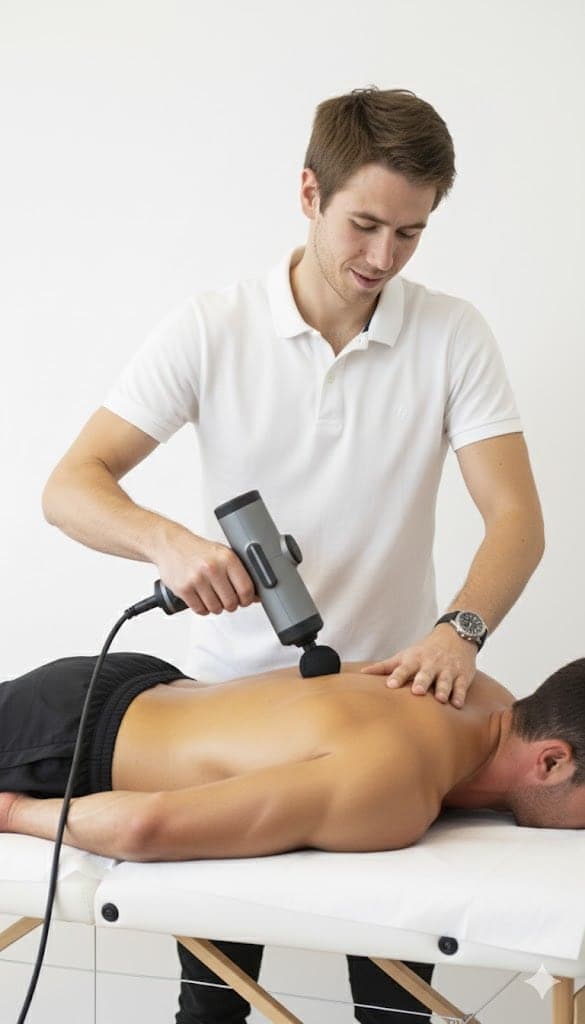
Written by
Chris
Massage therapist, nutrition and exercise physiologist
Norwegian-certified with a Bachelor’s in Physical Education and Nutrition and over ten years of clinical practice, working from a portable table in clients’ homes across the Paphos district.
This article is general information, not a medical diagnosis. If you have severe, worsening or unexplained pain, numbness, weakness, or pain after an accident, see a doctor first.