
When a local business owner in Coral Bay came to me last year, she’d been dealing with chronic lower back pain for eight years. She’d tried everything—yoga, stretching routines, generic physiotherapy exercises. Nothing created lasting change. Within three sessions using my specialized mechanical deep-tissue method, we identified the precise fascial restrictions causing her symptoms. Six weeks later, she was pain-free for the first time in nearly a decade.
This isn’t an isolated case. In my 10 years specializing in mechanical deep-tissue therapy across Coral Bay and the surrounding region, I’ve witnessed a fundamental truth: most people approach back pain exercises with outdated methodology. They focus on symptoms rather than mechanical dysfunction. They stretch tight muscles without addressing why those muscles tightened in the first place. And they wonder why relief remains temporary.
My approach to back pain exercises in Coral Bay differs fundamentally from conventional methods. With a Bachelor’s degree in Physical Education and Nutrition from Norway and a decade of clinical practice, I’ve developed a results-driven system that identifies and eliminates the root mechanical causes of back pain. This article will explain exactly how effective back pain management works, why most exercise protocols fail, and what you need to achieve lasting relief.
Understanding the Mechanical Reality of Back Pain in Coral Bay
Most back pain doesn’t originate where you feel it. This concept challenges what most people believe about their symptoms, but it’s supported by decades of biomechanical research and my own clinical observations with hundreds of clients.
The human spine functions as an integrated kinetic chain. When fascial tissue—the connective tissue surrounding muscles—becomes restricted in one area, it creates compensatory patterns throughout the entire system. These compensations eventually manifest as pain, typically in areas far removed from the original restriction.
In Coral Bay’s active community, I frequently see back pain stemming from:
- Thoracolumbar fascial restrictions from prolonged sitting or driving
- Hip flexor tightness creating anterior pelvic tilt and subsequent lumbar strain
- Shoulder girdle dysfunction transmitting tension down the spine
- Respiratory pattern dysfunction affecting core stability
- Post-injury compensation patterns that persist years after the original trauma
Traditional back pain exercises fail because they address surface-level tightness without resolving these deeper mechanical dysfunctions. You can stretch your hamstrings daily for months, but if the underlying fascial restriction in your thoracolumbar region remains untreated, you’ll continue experiencing pain.
The Fascial System: Your Body’s Forgotten Network
Understanding fascia changes everything about how we approach back pain. This continuous web of connective tissue transmits force throughout your body, maintains structural integrity, and—when restricted—creates the precise pain patterns you’re experiencing.
Fascial restrictions don’t release through conventional stretching or massage. They require sustained, precise mechanical pressure at specific depths and angles. This is where my specialized approach becomes critical.
Why Traditional Back Pain Exercises Provide Only Temporary Relief
I need to be direct about something most practitioners won’t tell you: if you’ve been doing back pain exercises for months without achieving lasting relief, the problem isn’t your dedication. The problem is the methodology.
Here’s what I’ve observed after treating hundreds of cases in Coral Bay:
The Stretch-Tighten Cycle
Most people with back pain stretch aggressively. They assume tightness is the enemy. But muscular tightness is usually a protective response to underlying instability or fascial restriction. When you stretch a muscle that’s tight for protective reasons, you may achieve temporary relief, but the nervous system quickly re-establishes that protective tension. You’re stuck in a cycle of temporary improvement followed by regression.
Surface-Level Intervention
Standard exercises and manual therapy rarely penetrate deep enough to address root causes. Human hands, no matter how skilled, have physiological limitations. They cannot maintain consistent pressure at the depths required to release chronic fascial restrictions. They cannot work with the precision needed to target specific tissue layers without fatiguing.
This isn’t a criticism of manual therapists—it’s simply biomechanical reality. I recognized these limitations years ago, which drove me to develop a more effective approach.
The Generic Protocol Problem
Most back pain exercise programs follow standardized protocols. “Do these ten exercises twice daily.” But your back pain has a unique mechanical signature. The fascial restrictions, compensatory patterns, and underlying dysfunctions in your system differ from every other person’s.
Effective treatment requires precise assessment and customized intervention. Anything less is guesswork.
The Advanced Mechanical Approach to Back Pain Exercises Coral Bay
After years of clinical practice and continuous refinement, I’ve developed a system that consistently delivers lasting results. This system combines advanced assessment methodology with specialized mechanical intervention.
Precision Assessment
Every client begins with comprehensive mechanical assessment. I’m not looking at symptoms; I’m analyzing the entire kinetic chain to identify primary restrictions. This involves:
- Detailed movement analysis to identify compensatory patterns
- Palpation assessment of fascial quality and mobility throughout the spine and adjacent structures
- Load testing to determine which positions and movements exacerbate or relieve symptoms
- Historical analysis connecting current symptoms to previous injuries, postural habits, and activity patterns
This assessment typically reveals dysfunctions the client never suspected. A 42-year-old tradesman I treated recently believed his lower back pain originated from heavy lifting. Assessment revealed the primary restriction was in his right shoulder girdle—the result of a motorcycle accident fifteen years earlier. His body had been compensating for that restriction for over a decade, eventually overloading his lumbar spine.
Mechanical Deep-Tissue Intervention
Once we’ve identified the primary mechanical dysfunctions, I utilize specialized equipment that delivers results impossible to achieve through conventional methods. This isn’t standard massage or generic physiotherapy—it’s advanced mechanical therapy designed specifically to address deep fascial restrictions.
The system I use provides three critical advantages:
Depth and Precision
The specialized machine works at tissue depths human hands simply cannot reach consistently. We can target specific fascial layers at precise angles, maintaining sustained pressure that allows chronic restrictions to release. This precision is essential—working even a few degrees off the optimal angle or a centimeter away from the restriction point dramatically reduces effectiveness.
Consistent Power
Unlike manual therapy, which varies based on the practitioner’s energy level, the machine delivers consistent force throughout the entire session. This consistency is crucial for releasing chronic restrictions that have been present for months or years. These tissues require sustained mechanical input to reorganize.
Controlled Intensity
Every client has different tolerance levels and requirements. Athletes often need powerfully deep intervention to address tissue quality built up through years of training. Office workers may require gentler initial sessions that progressively deepen as tissue quality improves. The machine allows precise intensity adjustment, ensuring optimal therapeutic effect without overwhelming the nervous system.
Progressive Treatment Protocol
Lasting relief doesn’t occur in a single session. It requires progressive treatment that systematically addresses each layer of dysfunction.
Here’s how the process typically unfolds:
| Phase | Focus | Expected Outcome |
|---|---|---|
| Initial Assessment & Treatment | Identify primary restrictions and begin releasing superficial layers | Immediate reduction in acute symptoms, improved mobility |
| Deep Fascial Release | Address chronic restrictions at deeper tissue layers | Significant pain reduction, restoration of functional movement patterns |
| Compensation Pattern Correction | Retrain movement patterns and address secondary restrictions | Sustained pain relief, improved performance in daily activities |
| Optimization & Maintenance | Fine-tune mechanical function, prevent recurrence | Complete resolution of symptoms, enhanced quality of life |
This progressive approach respects your body’s healing timeline while systematically eliminating the mechanical causes of pain.
Effective Back Pain Exercises to Complement Professional Treatment
While mechanical intervention addresses root causes, specific exercises play a supporting role in maintaining results and preventing recurrence. These aren’t generic stretches—they’re targeted movements designed to reinforce proper mechanical function.
Foundation Exercises for Back Pain Relief
The exercises I recommend to clients in Coral Bay focus on restoring fundamental movement patterns rather than isolated muscle strengthening. Here are the core movements that support lasting relief:
Controlled Breathing with Diaphragmatic Engagement
Proper respiratory mechanics are foundational to spinal stability. Most people with chronic back pain have developed dysfunctional breathing patterns that compromise core stability.
Practice this daily: Lie supine with knees bent, feet flat. Place one hand on your chest, one on your abdomen. Breathe slowly through your nose, ensuring the abdominal hand rises while the chest hand remains relatively still. Focus on 360-degree expansion of the ribcage—front, sides, and back. Perform for five minutes twice daily.
This seemingly simple exercise reestablishes proper diaphragmatic function, which is essential for maintaining intra-abdominal pressure and spinal stability during all daily activities.
Hip Flexor Mobilization
Chronic hip flexor tightness creates anterior pelvic tilt, placing excessive load on lumbar structures. But aggressive stretching rarely provides lasting relief. Instead, I recommend controlled mobilization that addresses both muscular and fascial components.
From a kneeling lunge position, maintain neutral pelvic alignment rather than pushing forward into stretch. Focus on contracting the glute of the rear leg while maintaining a gentle forward position. Hold for 30-45 seconds, breathing normally. This creates reciprocal inhibition of the hip flexor while encouraging proper pelvic mechanics.
Thoracic Extension Mobility
Modern life creates thoracic kyphosis—excessive forward curvature of the upper spine. This dysfunction affects the entire spinal column, often manifesting as lower back pain.
Using a foam roller positioned horizontally across the mid-back, extend backward over the roller while supporting your head with your hands. Move through small ranges of motion, focusing on specific segments that feel restricted. Spend 3-5 minutes daily on this mobilization, avoiding areas of acute pain.
Advanced Integration Exercises
Once foundation patterns are reestablished through professional treatment, these integration exercises help maintain optimal function:
Dead Bug Variations
This exercise trains anti-extension core stability—essential for protecting the spine during daily activities. Lie supine with arms extended toward ceiling and hips and knees at 90 degrees. Slowly lower opposite arm and leg while maintaining neutral spine position. The key is control and maintaining proper alignment, not repetition count.
Bird Dog with Tempo Control
From quadruped position, extend opposite arm and leg while maintaining neutral spine. Hold for 5-10 seconds, focusing on stability rather than range of motion. This exercise addresses rotational stability and coordination between upper and lower body.
Loaded Carries
Once basic stability is established, loaded carries provide functional integration. Walking while carrying weight (groceries, dumbbells, or uneven loads) trains your body to maintain spinal stability during real-world activities. Start with light loads and gradually progress as tolerance improves.
What Makes the Coral Bay Approach Different
After working with clients throughout Coral Bay for years, I’ve refined not just the treatment methodology but the entire service delivery model. This isn’t about booking appointments at a clinic and fitting into predetermined time slots. It’s about creating a dedicated partnership focused on your lasting relief.
Treatment Comes to You
I travel directly to your location with professional equipment. This eliminates the stress of commuting while experiencing pain, ensures treatment occurs in your comfortable environment, and allows scheduling flexibility that traditional clinic models cannot provide. Whether you’re in Coral Bay proper or the surrounding area, professional treatment is accessible without additional burden.
Customized Plans, Not Generic Protocols
Every client receives an individualized treatment plan based on comprehensive assessment. I don’t work from standardized protocols or predetermined session counts. Your plan evolves based on how your body responds, what mechanical changes occur, and what your specific goals require.
This customization extends beyond treatment sessions. I provide specific guidance on positioning during sleep, ergonomic adjustments for work environments, and modifications for recreational activities. Lasting relief requires addressing all factors that contribute to mechanical dysfunction.
Education and Empowerment
Throughout treatment, I explain exactly what I’m finding, why specific restrictions developed, and how the intervention addresses them. You’re not a passive recipient of treatment—you’re an active participant who understands their body’s mechanical function.
This education empowers you to make informed decisions about daily activities, recognize early warning signs of dysfunction, and maintain results long-term.
Investment in Lasting Relief, Not Temporary Expense
I need to address something directly: professional mechanical therapy requires investment. It costs more than generic massage. It requires more commitment than watching YouTube stretching videos. But here’s what I’ve witnessed repeatedly over ten years—the cost of not addressing chronic pain properly far exceeds the investment in effective treatment.
Consider what chronic back pain actually costs you:
- Reduced productivity at work due to constant discomfort and limited movement
- Decreased quality of life—activities you’ve stopped doing, social events you’ve avoided
- Progressive deterioration as compensation patterns create additional dysfunction
- Ongoing expenses for temporary relief methods that never address root causes
- Potential medical interventions as dysfunction progresses—injections, surgeries, long-term medication
The businessman I mentioned earlier had spent over a substantial sum across four years on various treatments before working with me. None provided lasting relief. Our work together cost less than his previous year of ineffective treatment, yet delivered lasting results. He calculated that the improvement in his work performance alone recouped the investment within three months.
This isn’t about justifying cost—it’s about recognizing value. Lasting relief from chronic pain isn’t an expense; it’s an investment in your long-term health, performance, and quality of life.
Common Questions About Back Pain Treatment in Coral Bay
How long does it take to see results from back pain exercises and treatment?
Most clients experience noticeable improvement after the first session—reduced pain intensity, improved mobility, or both. However, lasting relief requires progressive treatment. Acute issues (present for weeks or months) typically resolve within 4-6 sessions. Chronic dysfunction (present for years) may require 8-12 sessions as we systematically address multiple layers of restriction and compensatory patterns. The timeline depends on how long dysfunction has been present and how many compensatory patterns have developed.
Can back pain exercises alone relieves chronic pain?
Exercises are essential for maintaining results, but they rarely relieves chronic pain without first addressing underlying fascial restrictions. Think of it this way: if your foundation is cracked, painting the walls won’t stabilize the house. Mechanical intervention repairs the foundation; exercises maintain structural integrity once that foundation is sound. Attempting exercise alone often reinforces dysfunctional patterns rather than correcting them.
What makes mechanical deep-tissue therapy more effective than traditional massage?
Traditional massage primarily affects superficial tissue layers and provides temporary relaxation. It’s valuable for stress relief but limited for addressing chronic mechanical dysfunction. Mechanical deep-tissue therapy reaches fascial layers that manual therapy cannot consistently access. It delivers sustained, precise pressure at specific depths and angles required to release chronic restrictions. The consistency eliminates variability—every session delivers optimal therapeutic effect regardless of practitioner fatigue or “off days.”
Is the treatment painful?
There’s a critical distinction between therapeutic discomfort and harmful pain. Releasing chronic fascial restrictions creates sensation—clients often describe it as “intense but good” or “hurts but feels right.” I work within your tolerance, progressively increasing depth as tissue quality improves. The sensation should never be intolerable or create protective guarding. Most clients report that the relief following treatment far outweighs any temporary discomfort during sessions.
How do I know if I need professional treatment or just better exercises?
If you’ve been doing back pain exercises consistently for more than six weeks without significant improvement, you likely have underlying mechanical dysfunction requiring professional intervention. Other indicators include: pain that moves or changes location, morning stiffness lasting more than 30 minutes, pain that worsens with specific postures, or symptoms that have been present for more than three months. These signs suggest fascial restrictions or compensation patterns that exercise alone won’t resolve.
What should I expect during the first session?
Initial sessions focus on comprehensive assessment and beginning treatment. We’ll discuss your complete history—when symptoms started, what makes them better or worse, previous injuries, daily activities. I’ll perform movement and palpation assessment to identify primary restrictions. Then we begin treatment, starting with superficial layers and progressively working deeper based on your tolerance. The first session typically produces noticeable relief while establishing baseline for progressive treatment.
Do results last, or will pain return?
When we address root mechanical causes rather than just symptoms, results are lasting. However, “lasting” doesn’t mean your body becomes invincible. If you return to activities or postures that created dysfunction originally without making modifications, symptoms may eventually redevelop. That’s why education and customized maintenance strategies are integral to treatment. Most clients require occasional maintenance sessions (quarterly or semi-annually) to address minor restrictions before they become problematic.
Can this approach help with specific conditions like sciatica or herniated discs?
Many conditions labeled as sciatica are actually fascial restrictions referring pain down the leg. True sciatic nerve compression is less common than most people believe. I’ve worked with numerous clients diagnosed with “sciatica” who achieved complete relief through releasing fascial restrictions in the hip, glute, and lumbar regions. Regarding herniated discs, mechanical therapy can address muscular and fascial components contributing to symptoms, though disc pathology itself requires careful assessment. Many people with documented disc herniations are actually symptomatic from surrounding fascial dysfunction, not the disc itself.
Taking the Next Step Toward Lasting Relief
If you’ve read this far, you likely recognize that your current approach to back pain isn’t delivering the results you need. You understand that temporary relief isn’t sufficient—you want lasting resolution.
Here’s what I know after ten years of clinical practice: chronic back pain is solvable. Not manageable—solvable. But solution requires the right methodology, progressive treatment, and partnership with someone who understands the mechanical reality of your symptoms.
Back pain exercises in Coral Bay should be part of a comprehensive approach that addresses root causes, not just symptoms. They should complement professional mechanical intervention that releases the fascial restrictions and corrects the compensatory patterns creating your pain.
The difference between living with chronic pain and experiencing lasting relief often comes down to a single decision—the decision to invest in effective treatment rather than continuing with methods that haven’t worked.
I’ve helped hundreds of clients throughout Coral Bay move from chronic pain to complete relief. Business owners who thought they’d never work pain-free again. Athletes who believed their performance days were behind them. Parents who’d given up playing with their children because movement hurt too much.
These aren’t miraculous transformations—they’re the predictable result of applying proper mechanical understanding, advanced intervention methodology, and customized treatment protocols.
Your body is capable of healing. It’s capable of functioning without pain. But it needs the right intervention to break the cycle of compensation and restriction that’s perpetuating your symptoms.
Lasting relief begins with understanding what’s actually causing your pain—not where you feel it, but what mechanical dysfunctions created it. It continues with progressive treatment that systematically addresses those dysfunctions at the tissue depth required for lasting change. And it’s maintained through education, targeted exercises, and occasional professional intervention to prevent recurrence.
This is the advanced approach to back pain exercises and treatment in Coral Bay. It’s not the easiest path—it requires investment, commitment, and active participation. But it’s the path that leads to lasting relief, enhanced performance, and dramatically improved quality of life.
The question isn’t whether your back pain can be resolved. After ten years and hundreds of successful cases, I know it can. The question is whether you’re ready to invest in the methodology that actually works.
Evidence and limits
Massage may help with some symptoms, but benefits and evidence vary by condition. It does not replace medical assessment or treatment. A page update is not evidence of an independent clinical review.
Further reading: Massage therapy: evidence, safety and limitations by US National Center for Complementary and Integrative Health. This is general background reading, not verification of every claim in this article.
How we describe evidence and updates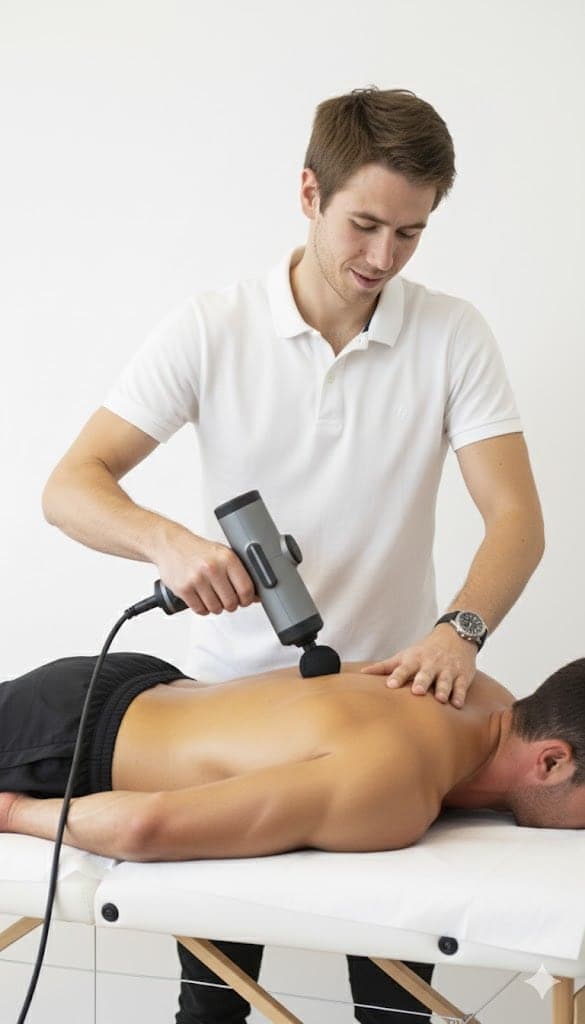
Written by
Chris
Massage therapist, nutrition and exercise physiologist
Norwegian-certified with a Bachelor’s in Physical Education and Nutrition and over ten years of clinical practice, working from a portable table in clients’ homes across the Paphos district.
This article is general information, not a medical diagnosis. If you have severe, worsening or unexplained pain, numbness, weakness, or pain after an accident, see a doctor first.